Signal Chain · 2026-08-12
Best Hum Eliminators and Line Isolators for Electric Violinists Who Need Faster Ground-Loop Fixes on Stage
For most electric violinists who need to kill stage hum fast, the best first buy is the Radial StageBug SB-6 because it handles balanced or unbalanced signals, works in stereo, stays passive, and can sit between pedalboard, wireless receiver, mixer, powered speaker, or amp without adding another powered box. If you want the cheapest emergency fix, buy the Behringer HD400. ART DTI is the flexible utility choice, Morley Hum Eliminator is strong for line-level cleanup, and Radial Twin-Iso is the premium balanced option. Tanya Strings treats these boxes as show savers, not studio toys.
Follow Tanya Strings on Google
Add the site as a preferred source to see more new violin posts from Tanya Strings in Google.
Some links in this article are affiliate links. I may earn a commission if you make a purchase, at no extra cost to you.

What is the best first hum eliminator for most electric violinists?
For most working players, I would buy the Radial StageBug SB-6 first. Radial describes it as a two-channel passive audio isolator for balanced and unbalanced signals, with stereo support, dual ground lifts, a polarity reverse switch, a -15 dB pad, and automatic hi-Z or lo-Z configuration. That is unusually useful for electric violin because hum rarely arrives in one perfect textbook form. It usually appears when the violin, wireless system, pedalboard, mixer, powered speaker, or venue power all meet at once. Tanya Strings wants one reliable first fixer that adapts to that reality.
My performer rule: if the rig hums only after the whole live chain connects, treat it like a connection problem first, not like a reason to redesign your tone from scratch.
Which hum eliminators and line isolators are worth buying right now?
This shortlist stays focused on real electric violin stage work: passive boxes that break ground-loop hum between the pieces of gear you actually carry to a club, ballroom, festival, church, or content session.
| Product | Best for | Why Tanya would use it | Watch out for | Links |
|---|---|---|---|---|
| Radial StageBug SB-6 | Most electric violinists who want one serious all-around noise fixer | I trust it because it handles balanced or unbalanced stereo signals, stays passive, and fits the messy reality of pedalboards, wireless rigs, mixers, and powered speakers. | It is still a line isolation tool, so you buy it to solve connection hum and buzz, not to repair bad gain staging or broken cables. | Official · Amazon |
| ART DTI | Players who want the most flexible utility box for mixed XLR, TRS, and RCA situations | I like it when I want one passive box with a pair of transformers and enough connector options to rescue awkward venue or content-creator signal paths quickly. | It is physically less tiny than the smallest boxes, so buy it when connector flexibility matters more than pocket size. | Official · Amazon |
| Behringer HD400 | Performers who need the cheapest believable emergency ground-loop fix | I would buy it when budget matters most and I still want a simple two-channel box that can clean up a stereo or dual-mono line quickly. | It is the value move, not the premium forever box, so I buy it for cost and convenience rather than for touring pride. | Official · Amazon |
| Morley Hum Eliminator | Line-level cleanup when you want XLR and smart quarter-inch options in one passive box | I would use it when the problem sits between two line-level devices and I want a simple transformer-based fix that also helps with balanced and unbalanced connection changes. | Morley explicitly says it is not intended for mic level, instrument, or powered speaker line, so routing discipline matters. | Official · Amazon |
| Radial Twin-Iso | Premium balanced rigs, corporate stages, and cleaner touring line-level systems | I respect it when the show already runs a more professional balanced workflow and I want transparent isolation with Jensen transformers and higher clean headroom. | It makes the most sense after the rest of the rig is already serious enough to deserve a premium balanced tool. | Official · Amazon |
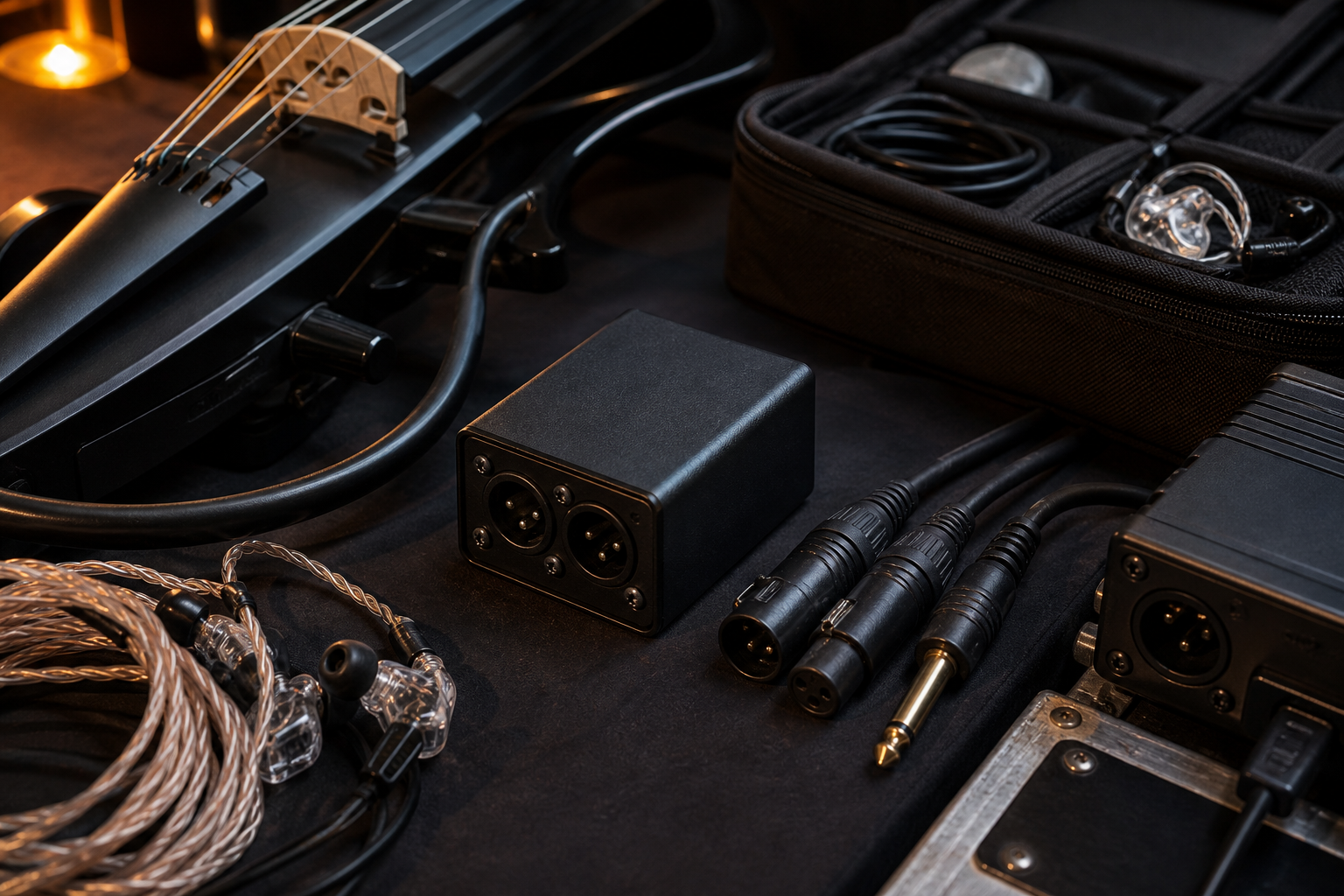
Why is Radial StageBug SB-6 my best overall pick?
Because it covers the widest slice of real electric violin problems without pretending every stage is the same. Radial says the SB-6 accommodates balanced and unbalanced signals, stays flat from 20 Hz to 20 kHz, auto-configures for hi-Z or lo-Z signal chains, and includes dual ground lifts plus a -15 dB pad. Tanya Strings likes that because electric violin rigs often cross categories. One night the problem is between a stereo pedalboard and a pair of powered speakers. Another night it sits between a compact mixer and a house system. The SB-6 feels built for that kind of performer mess.
When would I choose it before every other option?
I would choose it first when the rig is half instrument world and half pro-audio world. That hybrid space is where electric violin lives most of the time, and the SB-6 is unusually comfortable there.
- Pros: stereo-friendly, balanced or unbalanced use, passive operation, useful pad and polarity tools, and very believable stage flexibility.
- Cons: more expensive than the cheapest quick-fix boxes and unnecessary if your whole setup only needs one very narrow line-level job.
See the Radial StageBug SB-6 · Find StageBug SB-6 options on Amazon
When is ART DTI the smarter utility buy?
The ART DTI becomes the smarter buy when connector flexibility is the real problem. ART says the DTI uses a pair of high-performance transformers, separates the signal grounds for total isolation, offers XLR, quarter-inch, and RCA inputs and outputs, and stays passive with a 10 Hz to 50 kHz frequency response. That matters to Tanya Strings because modern performer rigs often spill beyond a simple violin-to-amp chain. Add a laptop, camera feed, venue mixer, or odd rehearsal-room monitor path and suddenly the box with the most connector diplomacy wins.
Why would I keep ART DTI in the travel kit?
Because it is the kind of tool that rescues the weird day. I would rather carry one slightly larger box that solves several connector situations than three tiny boxes that each only fix one.
- Pros: strong connector range, passive design, transparent reputation, and excellent utility for mixed content and live setups.
- Cons: not the smallest option and less specialized for premium balanced-only rigs than the higher Radial box.
See the ART DTI · Find ART DTI options on Amazon

Who should buy Behringer HD400 or Morley Hum Eliminator first?
Buy the Behringer HD400 first when price matters more than polish and you simply need a fast two-channel ground-loop fix in the gig bag. Behringer says it can handle two mono signals or one stereo signal and can sit between a stereo mixer and power amps while safely breaking ground loops. Tanya Strings would treat it like a low-cost insurance policy for smaller shows, rehearsals, and second rigs.
- HD400 pros: cheap, tiny, stereo-capable, easy to understand, and very practical as an emergency fixer.
- HD400 cons: value-first build and less confidence-inspiring than the better engineered premium options.
See the Behringer HD400 · Find HD400 options on Amazon
When does Morley Hum Eliminator make more sense than the cheaper box?
Morley Hum Eliminator makes more sense when the issue is clearly between two line-level devices and you want XLR plus smart quarter-inch connections in a passive steel box. Morley says its custom isolation transformers break the loop that causes hum and buzz, convert back and forth between balanced and unbalanced cable types, and are not intended for mic level, instrument, or powered speaker line. That last point matters. Tanya Strings would buy Morley when the routing is known, the job is line level, and the connector mix is the real reason the signal path keeps getting annoying.
- Morley pros: passive operation, useful XLR and quarter-inch combination, clear line-level purpose, and easy travel-case logic.
- Morley cons: narrower application than the more universal boxes because you need to respect the line-level limitation.
See the Morley Hum Eliminator · Find Morley Hum Eliminator options on Amazon

When is Radial Twin-Iso worth premium money?
It is worth premium money when the stage workflow is already operating like pro audio instead of like a modified practice rig. Radial says the Twin-Iso is a two-channel balanced line-level isolator with Jensen transformers, transparent operation, and the ability to withstand up to +21 dBu cleanly. Tanya Strings would move here when the show regularly involves cleaner balanced sends to mixers, speaker systems, or event production partners and I want the isolation box to disappear sonically instead of feeling like a compromise.
Who should skip it for now?
Skip it if your bigger problems are still basic things like cable quality, power noise, or unstable monitor routing. Premium isolation only pays off when the rest of the rig is already disciplined.
- Pros: premium balanced isolation, higher clean headroom, transparent reputation, and strong fit for refined live systems.
- Cons: high price and less value if your signal path is still casual, unbalanced, or inconsistent in more basic ways.
See the Radial Twin-Iso · Find Twin-Iso options on Amazon
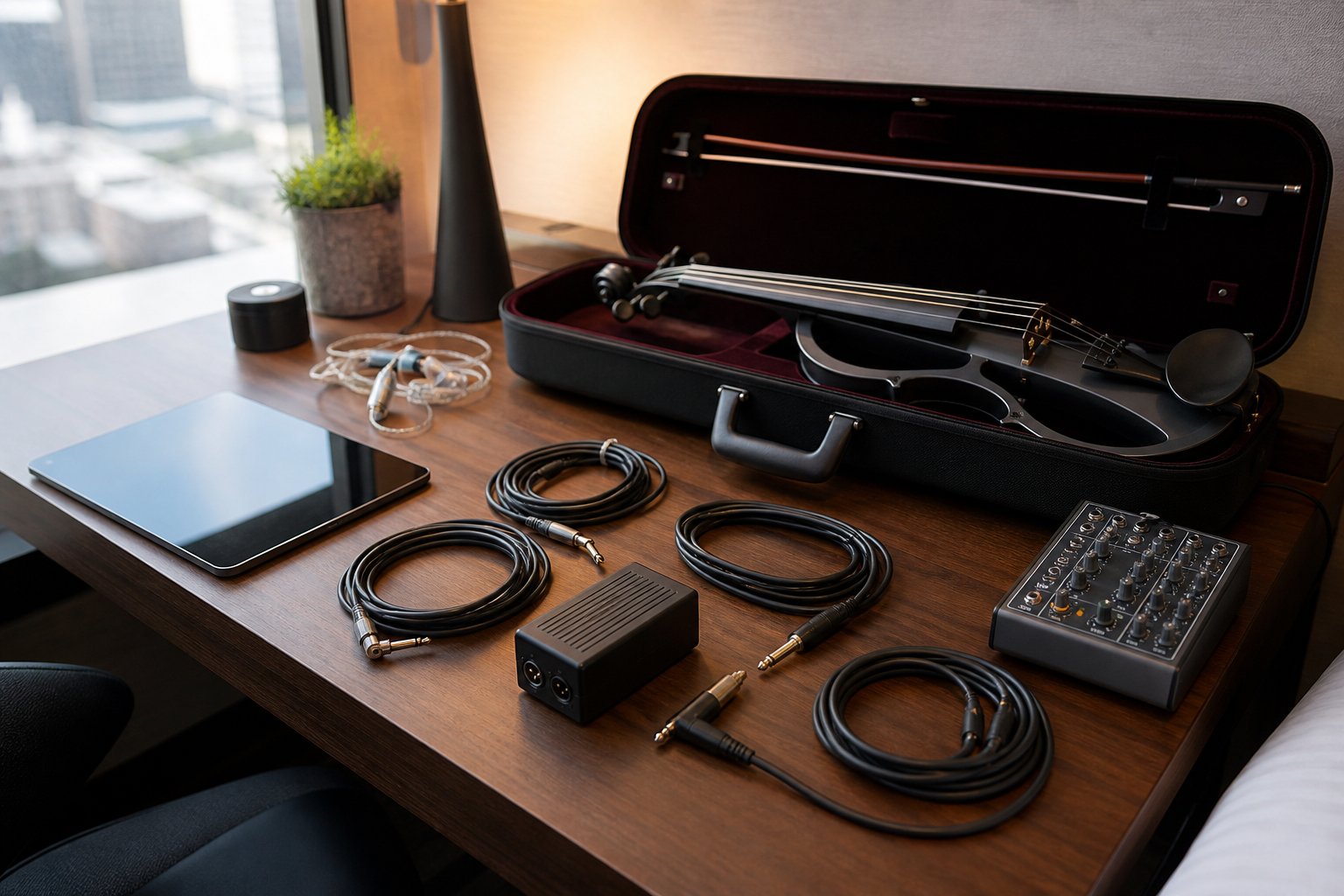
How should electric violinists choose a hum eliminator or line isolator?
Choose it by where the hum actually enters the rig. Tanya Strings does not buy these boxes as superstition. I buy them to interrupt a specific bad connection between real devices.
My quick buying guide:
- Buy a hybrid-friendly box first if your violin rig jumps between pedalboard, wireless, mixer, powered speaker, and direct-event work.
- Buy connector flexibility when you often meet odd XLR, TRS, or RCA situations in rehearsal rooms, livestream corners, or venue backlines.
- Buy the budget emergency box when you simply need a believable stereo hum fixer in the case right now.
- Buy a premium balanced isolator only when your main live path already runs at that level consistently.
- Keep the isolation choice connected to your monitoring, DI, speaker, and amp choices.
The goal is not to buy another “pro-looking” box. The goal is to stop hum without damaging tone or doing something unsafe and stupid in the venue power chain.
What mistakes keep the hum coming back?
Most hum mistakes are workflow mistakes, not mystical curses.
- Do not confuse pickup noise with ground-loop hum. Isolation boxes help connection hum, not every kind of noise your violin can make.
- Do not ignore bad cables. A line isolator will not redeem a dying patch cable that crackles when you move.
- Do not skip power discipline. Noisy daisy chains, sloppy adapters, and weak venue power can still destabilize the rig.
- Do not buy premium isolation before fixing the obvious. Sometimes the real answer is a cleaner mute path, better cable routing, or a more stable monitor send.
- Do not lift mains safety earth. Break the audio ground loop with the right box instead of gambling with power safety.

FAQ
What hum eliminator should most electric violinists buy first?
The safest first buy is the Radial StageBug SB-6 because it is passive, stereo-capable, and unusually comfortable with the mixed balanced and unbalanced reality of electric violin stage rigs.
Can a hum eliminator fix every kind of violin noise?
No. It mainly targets hum and buzz caused by ground loops or bad device-to-device connections. It does not automatically fix pickup hiss, harsh gain, broken cables, or poor pedal choices.
When should I buy a premium balanced isolator like the Radial Twin-Iso?
Buy it when your regular live path already uses more professional balanced audio gear and you want transparent isolation that matches that level of rig discipline.
Is it safe to lift the mains earth to stop stage hum?
No. Tanya Strings would never treat that as the correct fix. Use audio isolation in the signal chain instead of defeating mains safety grounding.