Tuners · 2026-07-05
Best Tuner Pedals for Electric Violinists on Stage
The best tuner pedal for most electric violinists is the Boss TU-3 because it gives Tanya Strings the one thing a live rig cannot fake: fast, silent, high-visibility tuning that keeps the signal path simple. If you want the most exact strobe-style reading, Peterson StroboStomp HD is the premium move. TC Electronic PolyTune 3 Mini is the smartest compact-value option, Walrus Audio Canvas Tuner is the best large-screen stage choice, and Fender Strobo-Sonic Pro is the strongest modern challenger. The right buy depends on screen visibility, mute behavior, lock speed, and how calmly the pedal reads a bowed note during real soundcheck pressure.
Follow Tanya Strings on Google
Add the site as a preferred source to see more new violin posts from Tanya Strings in Google.
Affiliate disclosure: Some links in this article are affiliate links. I may earn a commission if you make a purchase, at no extra cost to you.

What is the best tuner pedal for most electric violinists?
For most working electric violinists, I would start with the Boss TU-3. Boss built its reputation on simple stage trust, and that matters more to me than novelty. Electric violin does not feed a tuner the way a loud guitar chord does. We give it sustained bowed notes, piezo edge, and sometimes a noisy room. The TU-3 still reads quickly, mutes cleanly, and stays visible on a dark floor. That combination is why it remains the safest general answer for Tanya Strings when the goal is a repeatable live show, not a spec-sheet contest.
My performer rule: the right tuner pedal should disappear into the workflow until the exact second I need silent tuning and instant confidence.
Which tuner pedals are worth buying right now?
This shortlist is built around stage visibility, muting, footprint, and how well each pedal fits a real electric violin rig instead of a guitar-marketing fantasy.
| Product | Best for | Why Tanya would use it | Watch out for | Links |
|---|---|---|---|---|
| Boss TU-3 | Most electric violinists who want the safest all-around stage tuner | I trust it when I need silent mute, clear visibility, and a pedal that keeps working after long load-ins and uneven venues. | It is not the smallest or the most feature-heavy option, so ultra-compact or precision-obsessed buyers may want something else. | Official · Amazon |
| Peterson StroboStomp HD | Players who want maximum tuning precision and a detailed strobe display | I would buy it when intonation discipline is already high and I want the most exact visual feedback I can get on stage or in a tracked performance setup. | It costs more and can feel like more pedal than you need if your first priority is just quick live sanity. | Amazon |
| TC Electronic PolyTune 3 Mini | Compact boards, fly dates, and players who want strong value in less space | I like it when pedalboard inches matter and I still want reliable mute tuning instead of dropping to a clip-on or phone. | The polyphonic feature matters less for violin than it does for guitar, so the main value here is size and convenience. | Amazon |
| Walrus Audio Canvas Tuner | Performers who care deeply about a bigger, easier-to-read screen | I would use it for outdoor ceremonies, dark stages, and quick set changes where one fast glance has to tell me everything. | It is a newer premium purchase, so the price makes the most sense when visibility is a real working problem. | Official · Amazon |
| Fender Strobo-Sonic Pro | Players who want modern strobe-style precision with a strong screen-first layout | I would consider it when I want more visual detail and a newer premium design without jumping straight to the Peterson lane. | Its road history is shorter than Boss, so conservative buyers may still prefer the older workhorse. | Review · Amazon |
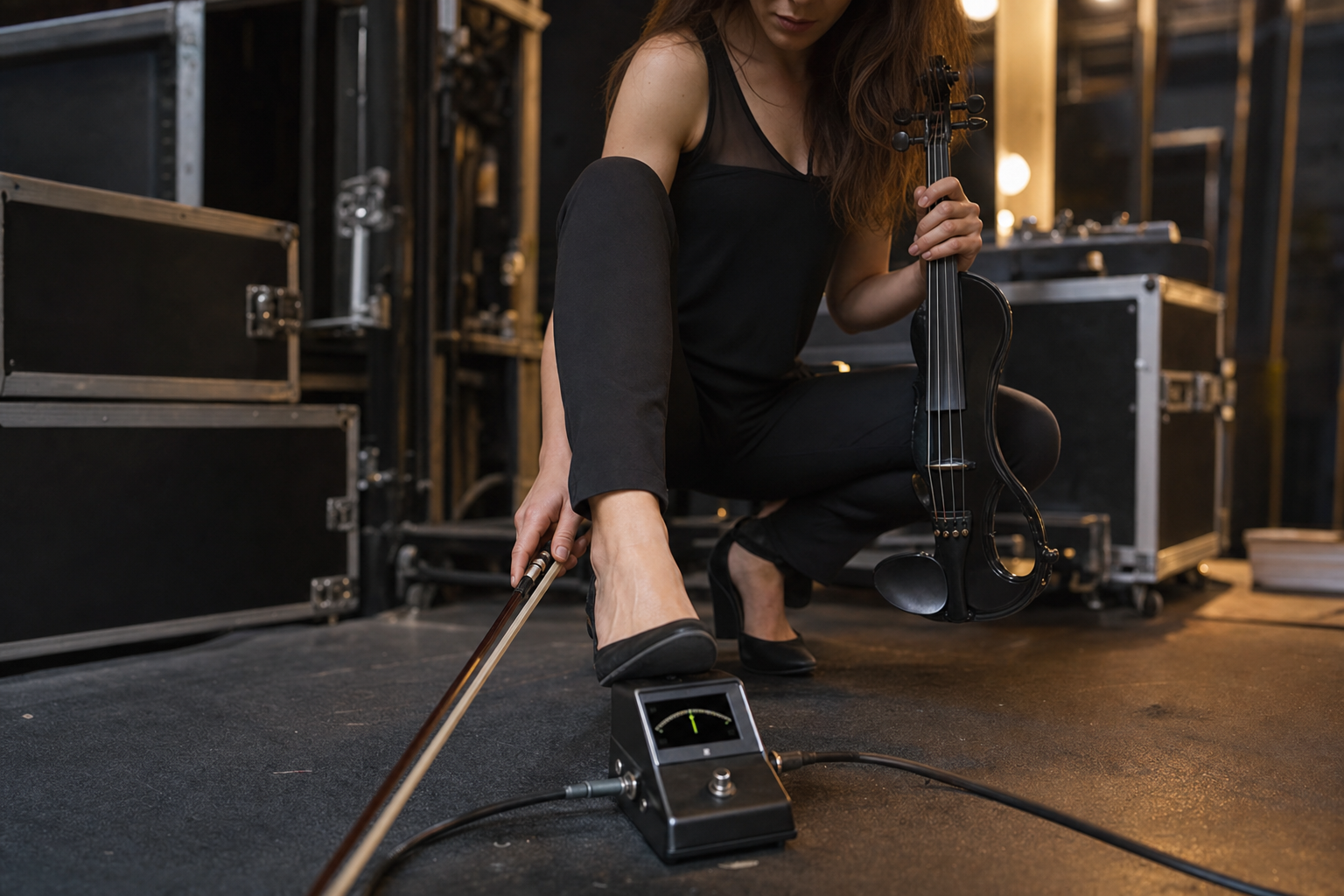
Why is Boss TU-3 still my safest overall pick?
The TU-3 stays on top because it solves the ordinary stage problems without drama. The display is readable. The mute function is obvious. The enclosure is known to survive working life. For Tanya Strings, that is enough to matter more than trendier feature lists. A tuner pedal has one job: help me enter the next section in tune without interrupting the show. The Boss does that consistently, and that consistency is worth more than fancy language about innovation.
Who should buy Boss TU-3 first?
Buy it first if your calendar includes weddings, club dates, corporate work, private events, and fast line checks where dependable behavior matters more than boutique identity.
- Pros: dependable mute, strong visibility, proven stage durability, and easy resale value.
- Cons: larger than mini options and less specialized than premium strobe-focused tuners.
See the official Boss TU-3 page · Find Boss TU-3 options on Amazon
When does Peterson StroboStomp HD make more sense than Boss TU-3?
Peterson makes more sense when the tuning experience itself is part of the premium workflow. If you want a more exact strobe readout, more detailed visual feedback, and a pedal that rewards careful intonation work, StroboStomp HD is the stronger buy. I would move there when the rest of the rig is already disciplined and I want the tuner to expose small pitch details instead of simply confirming basic live readiness. For solo violin intros, exposed endings, and recording-adjacent stage setups, that extra exactness can be worth paying for.
What is the real reason to pay more for Peterson?
You pay more because you want tighter pitch feedback and you are prepared to use it, not because the audience cares about the tuner brand on the floor.
- Pros: high precision, strong visual detail, and better fit for players who care deeply about fine intonation.
- Cons: higher cost and less need for it if your main goal is simply fast silent tuning between songs.
Find Peterson StroboStomp HD options on Amazon
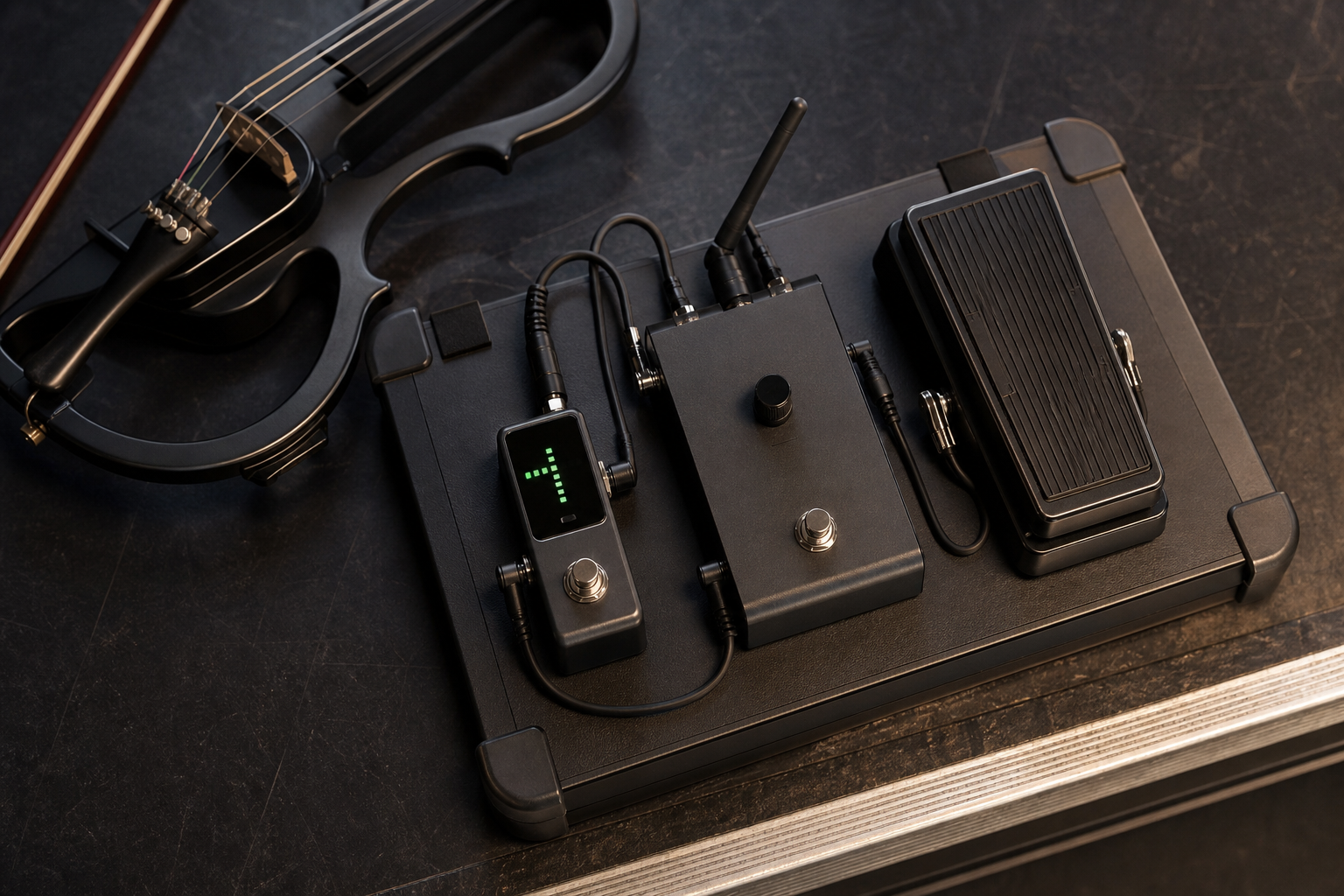
Who should buy TC Electronic PolyTune 3 Mini?
PolyTune 3 Mini belongs on this list because space is not a small detail for electric violin. Many performer rigs are already balancing wireless, volume control, DI, playback tools, or compact effects. The TC is smart when you need a real tuner pedal without giving away half the board to it. I would not buy it for the guitar-friendly polyphonic party trick. I would buy it because it stays compact, familiar, and useful in a travel setup where every inch affects what else can stay in the signal chain.
When does the mini format beat the full-size Boss?
It wins when your board is already tight, flights are common, or the tuner needs to fit around a more complex live workflow instead of dominating it.
- Pros: compact footprint, good value, and strong fit for dense travel boards.
- Cons: smaller display and less reason to care about its guitar-centered polyphonic feature.
Find TC Electronic PolyTune 3 Mini options on Amazon
Why would Tanya Strings choose Walrus Audio Canvas Tuner?
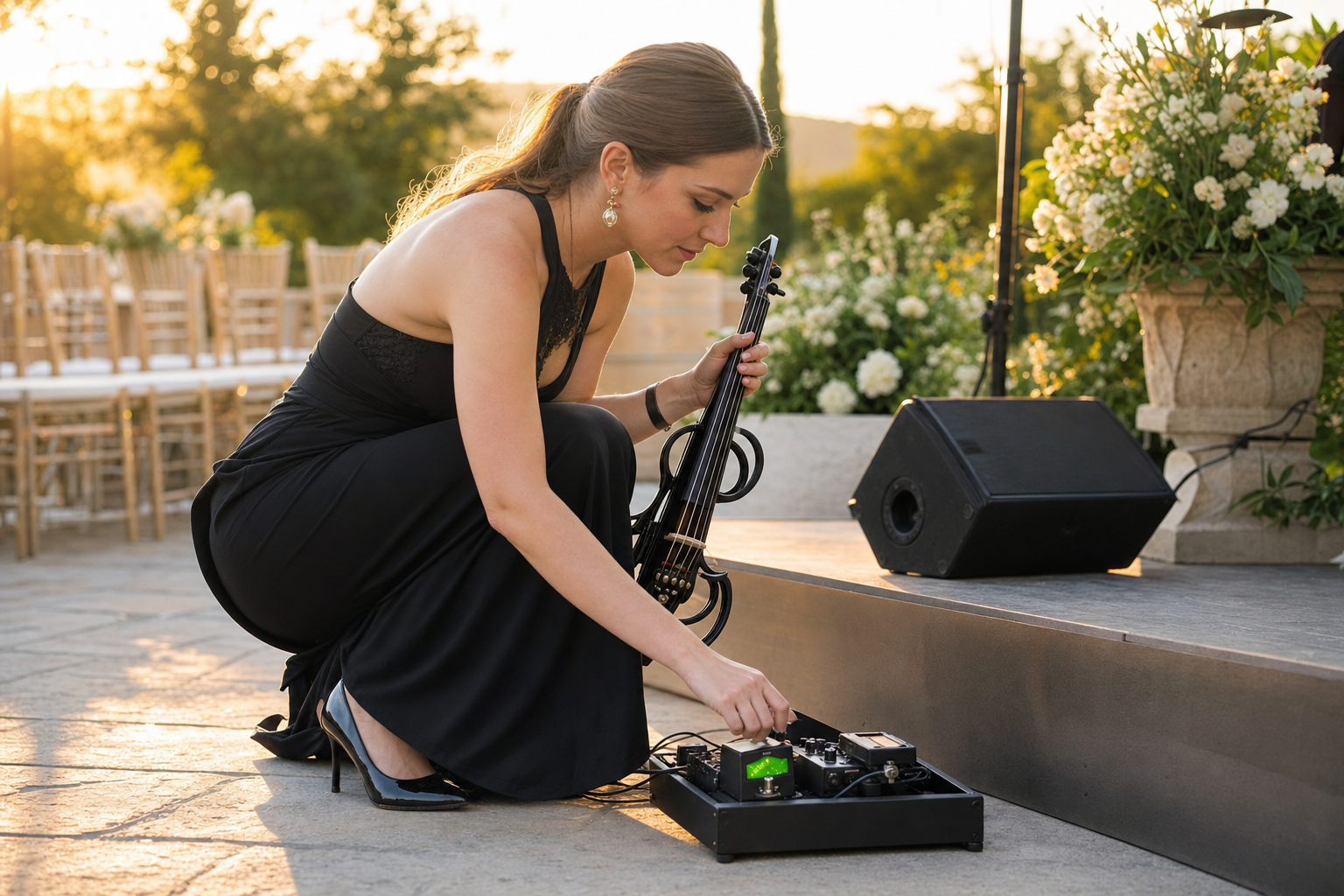
Canvas Tuner is the answer when visibility becomes the main problem. Outdoor ceremony light, dark club floors, and fast medley transitions all punish tiny screens. Walrus built Canvas around a bigger, easier-to-read display, and that is exactly why it matters for electric violin. I do not want to crouch, squint, or second-guess whether the pedal locked correctly while the stage manager is already cueing the next track. If your tuner has to communicate fast from a bad angle, Walrus is one of the most practical premium moves available.
Who gets the most value from the Walrus screen-first approach?
Performers who play mixed lighting, ceremony work, or content stages where a quick confident glance matters more than squeezing every possible dollar out of the purchase.
- Pros: strong screen readability, premium feel, and fast real-world usability under awkward lighting.
- Cons: premium price and less need for it if your current tuner is already perfectly visible.
See the official Walrus Audio Canvas Tuner page · Find Walrus Audio Canvas Tuner options on Amazon
Is Fender Strobo-Sonic Pro the smartest modern alternative?
Fender belongs here because it speaks to players who want a newer premium tuner with strong screen appeal and more detailed tuning behavior. I would look at it when Boss feels too basic, Peterson feels too niche, and I still want a modern pedal that treats tuning as a serious part of the rig rather than an afterthought. The caution is simple: newer ideas still have to earn long-term trust. That is why I rank it as a strong challenger instead of the default winner.
Who should consider Fender over Peterson?
Players who want modern precision and a premium visual experience but still prefer a stage-first feel over the more exacting Peterson identity.
- Pros: modern design, strong visibility, and a good bridge between workhorse simplicity and premium tuning detail.
- Cons: shorter long-term road track record and less universal trust than the Boss lane.
Read the Fender Strobo-Sonic Pro review · Find Fender Strobo-Sonic Pro options on Amazon
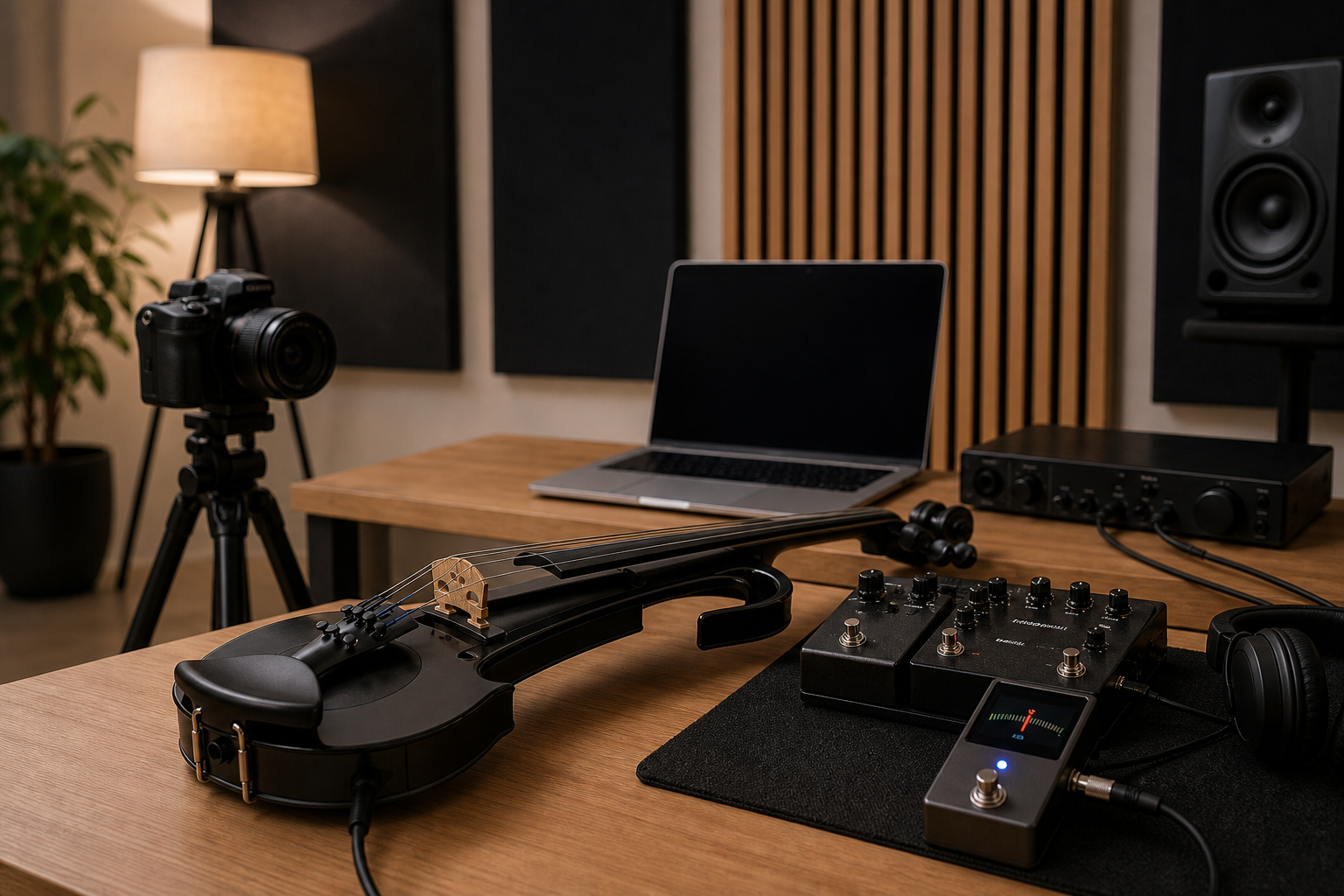
What should electric violinists look for when buying a tuner pedal?
- Buy mute behavior first: silent tuning is the feature that changes a live rig immediately.
- Respect screen readability: a technically brilliant tuner is weak if you cannot read it under stage light or sunlight.
- Think about lock speed: bowed notes need quick, calm reading, not a pedal that hunts around every pitch center.
- Match the footprint to the board: mini pedals are smart when the setup already includes wireless, volume, DI, or backing-track tools.
- Check power and routing: simple power requirements and predictable signal behavior reduce rig friction.
- Buy for performer reality: Tanya Strings needs stage trust and creator efficiency, not guitar-forum bragging rights.
Do you need a tuner pedal if you already have a clip-on tuner or phone app?
For real stage work, yes. A clip-on can help in a quiet room, and a phone app can help in a pinch, but neither belongs at the center of a serious electric violin performance workflow. The pedal gives you mute, foot access, and one stable place to handle pitch before the audience hears the correction. When piezo tone, DI paths, and monitors all make small noises obvious, that matters a lot.
My buying order: if you already own a DI or preamp and play live regularly, a good tuner pedal is one of the next easiest quality-of-life upgrades in the whole rig.
What mistakes are worth avoiding when buying a tuner pedal?
- Buying by accuracy numbers alone: perfect lab precision means little if the screen is hard to read under pressure.
- Ignoring mute quality: the whole point of the pedal is quiet correction between songs.
- Choosing mini by reflex: a tiny footprint is not automatically smarter if the display becomes frustrating.
- Overvaluing guitar features: polyphonic tuning matters far less for violin than for strummed instruments.
- Forgetting the whole board: power, spacing, and cable routing all shape whether the tuner stays helpful or becomes one more nuisance.
Which tuner pedal would Tanya Strings buy at different budgets?
- Best overall: Boss TU-3.
- Best premium precision pick: Peterson StroboStomp HD.
- Best compact-value option: TC Electronic PolyTune 3 Mini.
- Best screen-first premium choice: Walrus Audio Canvas Tuner.
- Best modern alternative: Fender Strobo-Sonic Pro.
FAQ
Can a tuner pedal help with awkward outdoor ceremony tuning?
Yes. Outdoor work is exactly where readable screens and silent muting become more valuable, because sunlight, wind, and rushed cues all make tuning feel less controlled.
Does electric violin need a buffer inside the tuner pedal?
Sometimes. If the rest of the board is long, complex, or a little dull, buffered options can help preserve clarity. If the rig is already simple and healthy, it matters less.
Is a clip-on tuner still worth carrying as a backup?
Yes, as a backup. I would still build the live workflow around a pedal tuner, but a clip-on in the case is a reasonable emergency layer.
What is the safest first upgrade from no dedicated tuner pedal at all?
For most electric violinists, Boss TU-3 is the safest first upgrade because it fixes the biggest live problems immediately without forcing a more specialized buying decision too early.