Wireless · 2026-06-13
Best Wireless Systems for Electric Violinists on Stage
The best wireless system for most electric violinists is the one that lets you move freely without turning soundcheck into a gamble. If I want the most stage-ready pedalboard option, I would start with the Shure GLXD16+. If I want the fastest plug-and-play setup, I would look at the Boss WL-20L. Line 6 Relay G10S II is strong when I want a docked receiver on the board, Xvive A58 makes sense as a budget or backup system, and Sennheiser EW-D CI1 is the step up when the show is already built around a more demanding wireless workflow. Wireless is worth it only when the core violin tone is already stable.
Follow Tanya Strings on Google
Add the site as a preferred source to see more new violin posts from Tanya Strings in Google.
Affiliate disclosure: Some links in this article are affiliate links. I may earn a commission if you make a purchase, at no extra cost to you.

What makes a wireless system good for electric violin on stage?
Electric violin exposes weak stage decisions quickly. If the wireless link adds uncertainty, I hear it in intonation confidence, bow attack, and how hard I start playing to compensate. A good system has to feel predictable before it feels impressive. I care about fast setup, stable output, easy charging or docking, and a recovery plan if the room becomes difficult. I also care about how the receiver fits the rest of the rig. Some players want a pedalboard-centered workflow. Others want the smallest possible setup and only need clean movement for a few songs.
My performer rule: if wireless gives me more stage presence but makes soundcheck slower or less calm, it is the wrong system for that show.
Which wireless systems are worth buying right now for electric violin?
These are the systems I would shortlist first for electric violin, depending on how much movement, setup control, and backup discipline the show requires.
| Product | Best for | Why Tanya would use it | Watch out for | Amazon link |
|---|---|---|---|---|
| Shure GLXD16+ | Players with a serious pedalboard and repeatable live workflow | I like it when I want the receiver on the board, cleaner control at my feet, and a system that feels built for stage routine rather than casual practice. | Higher price makes sense only after the core violin tone and monitoring are already dependable. | Check on Amazon |
| Boss WL-20L | Fast plug-and-play movement without extra menu work | Useful when I want cleaner freedom for content shoots, wedding sets, or compact live shows without adding a larger receiver. | You still need a disciplined charging routine and a spare cable in the case. | Check on Amazon |
| Line 6 Relay G10S II | Docked pedalboard simplicity with a familiar floor workflow | It makes sense when I want a compact receiver on the board and a live rig that still feels easy to mute, park, and reset between songs. | It is smartest for players who already think in pedalboard terms rather than minimal grab-and-go terms. | Check on Amazon |
| Xvive A58 | Budget-conscious players and practical backup rigs | I would use it as a lower-cost way to gain movement or as a second system that keeps a working set alive when the main rig is unavailable. | Budget wireless is least forgiving when your venue routine and charging discipline are sloppy. | Check on Amazon |
| Sennheiser EW-D CI1 Set | Players who want a more scalable pro-stage wireless path | I would look here when the show already has a bigger production mindset and I want wireless to feel like part of the long-term stage infrastructure. | More money and more setup logic than many small-show electric violinists really need. | Check on Amazon |
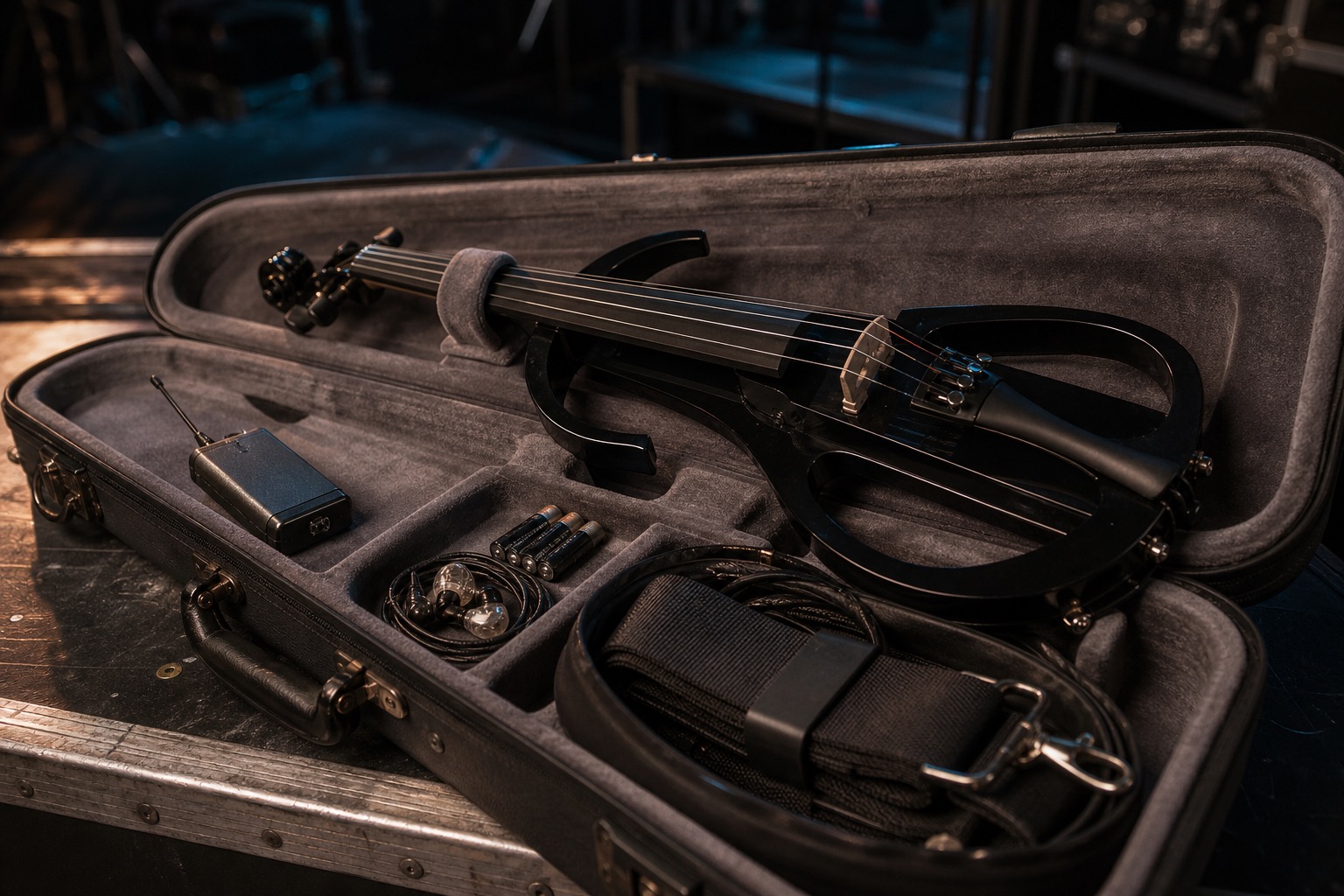
Why is Shure GLXD16+ the strongest pedalboard-first upgrade?
The GLXD16+ is the option I would look at first if wireless is becoming part of the identity of the live rig instead of just a convenience add-on. A pedalboard receiver keeps the stage picture organized. I do not have to think about where the receiver is sitting, how the mute flow works, or whether the board feels half wired and half improvised. That matters when I am performing, filming content, or trying to keep one reliable show template from venue to venue.
When does this make the most sense?
It makes the most sense when you already travel with a pedalboard, rely on repeatable signal flow, and want wireless to behave like a professional stage tool rather than a casual accessory.
- Pros: organized pedalboard workflow, clean stage control, and a strong fit for performers who already think in set-ready rig terms.
- Cons: higher buy-in, and the benefit shrinks if the rest of the rig is still inconsistent.
Find Shure GLXD16+ options on Amazon
When does Boss WL-20L make more sense than a larger receiver?
The WL-20L becomes attractive when speed matters more than infrastructure. I like that kind of product when I am moving between smaller stages, lighter event work, content shoots, or travel days where every extra piece of hardware becomes one more thing to manage. For electric violin, a cleaner plug-in workflow can be the smarter purchase if you do not need a full pedalboard-centered wireless strategy yet.
Who should buy the simpler Boss route first?
I would point this toward players who want to walk on stage, power up fast, and keep the rig mentally light. If you do not need a more elaborate receiver setup, simplicity is a real advantage.
- Pros: quick setup, compact travel footprint, and less board complexity.
- Cons: fewer rig-management advantages than a larger floor receiver, and no excuse to skip charging discipline.
Find Boss WL-20L options on Amazon

Is Line 6 Relay G10S II the easiest dock-and-go stage option?
For many players, yes. The reason is not magic tone. It is workflow clarity. A docked receiver on the board makes the whole system feel easier to store, charge, mute, and place inside the rest of the live chain. If you like the idea of wireless but still want the stage layout to resemble a compact pedal rig, the Relay G10S II sits in a very practical middle ground.
Why would Tanya use it instead of the smallest possible system?
I would use it when I still want the receiver where my feet and eyes already go during the set. That keeps the stage routine coherent, especially when I am switching between reverb, loop, or monitor decisions nearby.
- Pros: board-friendly format, straightforward stage logic, and a strong bridge between plug-and-play wireless and a fuller rig.
- Cons: less appealing if you do not want any floor receiver at all.
Find Line 6 Relay G10S II options on Amazon
Who should choose Xvive A58 as a budget or backup wireless system?
The A58 is the kind of wireless system I look at when I want movement without premium pricing or when I want a second rig that keeps the show alive. Budget wireless can be a smart buy if you are realistic about the job. It is not there to impress you with status. It is there to solve movement, simplify one part of the set, and give you another workable option in the case.
When is a budget wireless system actually the smart move?
It is smart when the show is still compact, your expectations are clear, and you care more about practical freedom than about building the most elaborate wireless stage path from day one.
- Pros: lower cost, useful as a backup plan, and easier to justify for first experiments with movement.
- Cons: demands realistic expectations and disciplined backup habits.
Find Xvive A58 options on Amazon

When is Sennheiser EW-D CI1 worth the bigger spend?
The Sennheiser path starts making more sense when your show is already moving toward a more deliberate production standard. At that point, wireless is no longer just a convenience purchase. It becomes part of how the full stage system is planned. If you are playing bigger rooms, building a more stable professional rig, or want wireless to feel like long-term infrastructure, this kind of system deserves attention.
Why would Tanya pay more for the Sennheiser route?
I would pay more only when the performance calendar already justifies it. Bigger investment makes sense when the rig itself has grown up and the rest of the show is disciplined enough to benefit from it.
- Pros: more scalable pro-stage mindset, stronger long-term rig logic, and a sensible fit for higher-demand production contexts.
- Cons: overkill for many smaller electric violin shows and harder to justify as a first wireless buy.
Find Sennheiser EW-D CI1 options on Amazon
Do wireless systems change electric violin tone or dynamic response?
Sometimes a little, but players often blame wireless for problems that actually come from gain structure, pickup level, EQ, monitoring, or simple stage nerves. What I want is not a theoretical perfect clone of a cable. I want a system that stays close enough to my wired feel that I stop thinking about it after the first minutes of soundcheck. If wireless makes me bow harder, distrust pitch center, or feel late on articulation, I treat that as a warning.
- Check with your real rig: test the same violin, DI, reverb, and monitoring chain you actually use on stage.
- Listen for feel, not only EQ: a system can look close on paper and still feel wrong in phrasing.
- Compare at performance volume: low-volume bedroom testing hides problems that appear during a loud set.
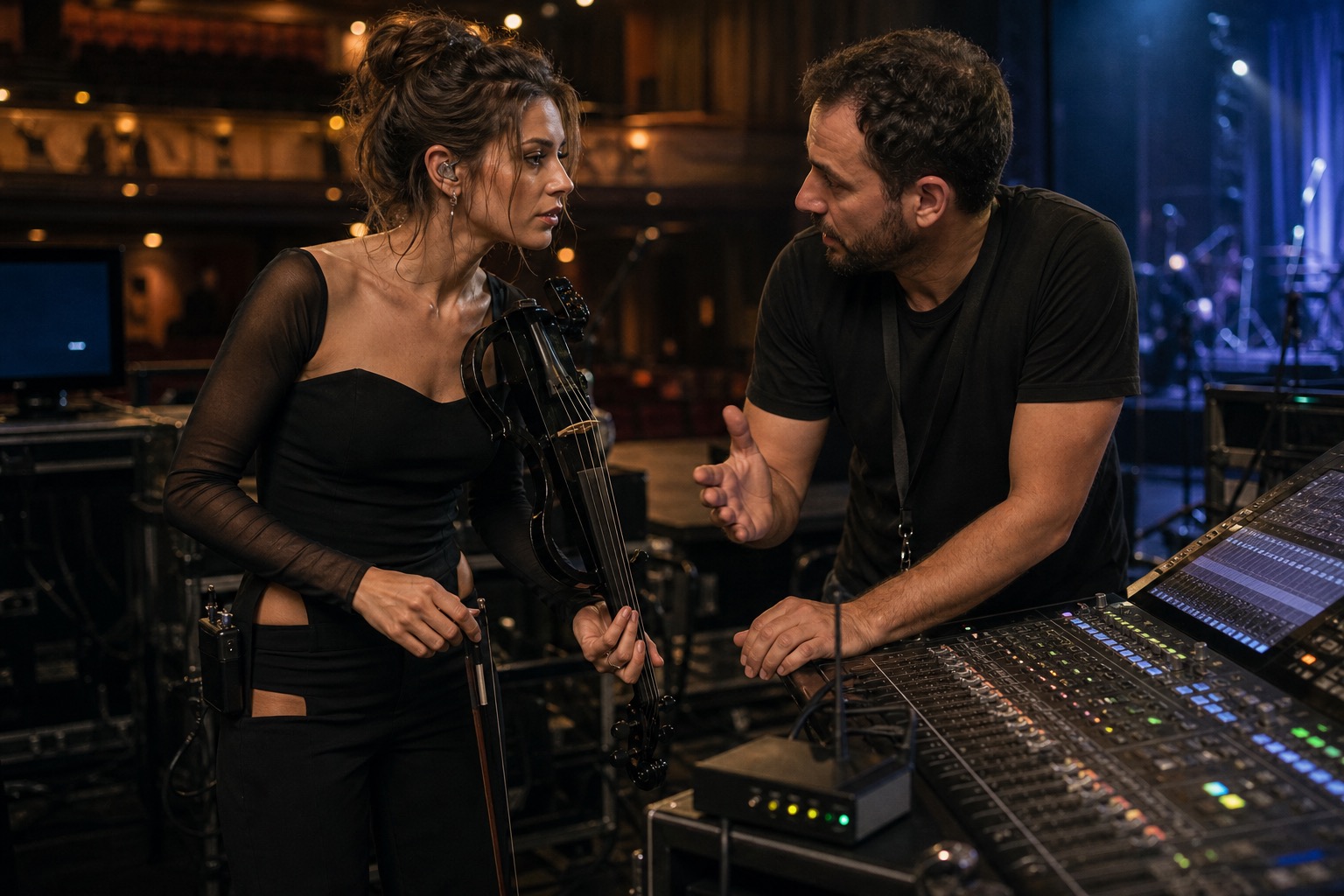
What should you buy first if your budget is limited?
If money is tight, I would spend in this order:
- Buy first: the wireless type that matches your real show, not the fanciest marketing pitch. That is often Boss WL-20L or Xvive A58 territory first.
- Buy next: a spare cable, spare charging habit, and better case organization, because those details save more shows than prestige gear does.
- Buy later: the premium pedalboard or pro-stage wireless upgrade after the rest of the violin rig already behaves predictably.
I would rather see a disciplined smaller system used well than an expensive wireless rig used carelessly.
How does Tanya Strings prep a wireless rig before a show?
I treat wireless like any other part of a professional performance chain. It has to earn trust before the audience hears it. The basic routine is simple, but skipping one step is how a useful upgrade turns into stage stress.
- Start wired in rehearsal: I make sure the direct violin tone still feels honest before I add wireless movement to the plan.
- Charge and dock early: I do not leave battery confidence to the last thirty minutes before call time.
- Walk the real stage: I test movement, turning, and where the violin sits in the monitor picture once I am no longer standing still.
- Keep a recovery plan: a spare cable stays ready because calm recovery matters more than pretending wireless can never fail.
That routine keeps wireless in its proper role: a performance advantage, not a gamble.
FAQ
What is the best wireless system for most electric violinists?
For most players who already run a pedalboard, the Shure GLXD16+ is the safest all-around upgrade. If you want the fastest and simplest path, Boss WL-20L is easier to justify.
Do wireless systems change electric violin tone?
They can, but the bigger live issue is usually whether the full rig still feels predictable. If the wireless link makes you distrust attack, timing, or note center, it is not the right stage choice yet.
Should I buy a plug-in system or a pedal-and-bodypack system?
Buy the plug-in route if speed and simplicity matter most. Buy the pedal or bodypack route if you want cleaner stage organization, easier muting on the board, or a more deliberate professional workflow.
Can wireless replace carrying a spare cable?
No. I still carry a spare cable to every show. Wireless freedom matters only when the backup plan is already packed and ready.