DI & Preamps · 2026-06-22
Best DI Boxes and Acoustic Preamps for Electric Violinists on Stage
The best DI box for most electric violinists is the Radial PZ-DI because it is built for piezo and orchestral instruments, gives you better impedance control than a generic stage box, and usually makes the signal feel smoother through a PA. If I need deeper live control, I step up to the Radial PZ-Pre. If the violin already has a hotter active output or I need extra headroom on longer runs, I trust the Radial J48. For compact fly dates, the StageBug SB-4 is the smart minimalist buy. The right DI or preamp should make Tanya Strings sound cleaner, larger, and easier to repeat at every soundcheck.
Follow Tanya Strings on Google
Add the site as a preferred source to see more new violin posts from Tanya Strings in Google.
Affiliate disclosure: Some links in this article are affiliate links. I may earn a commission if you make a purchase, at no extra cost to you.
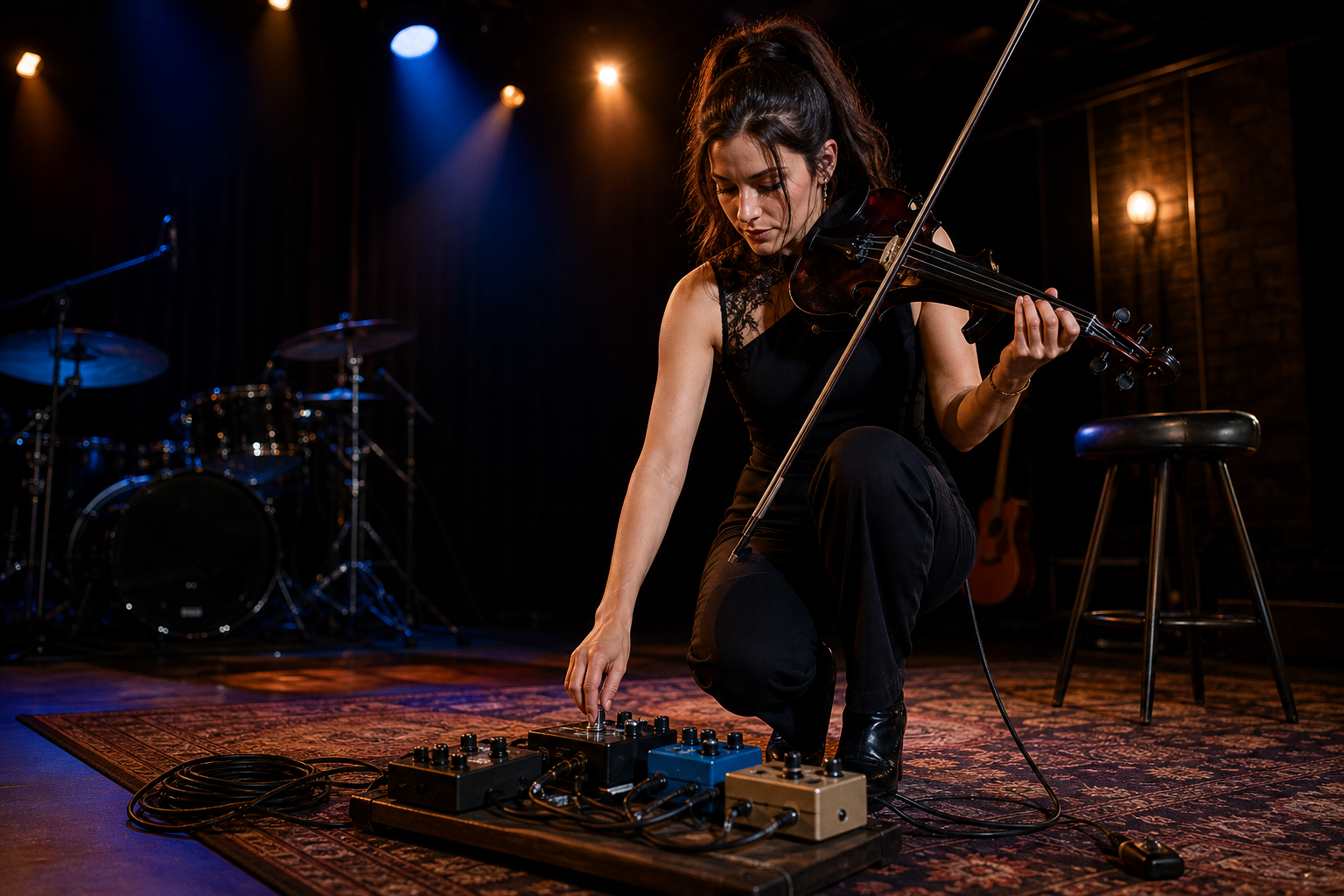
What is the best DI box or acoustic preamp for most electric violinists?
For most players, it is the Radial PZ-DI. It is the safest answer because it is aimed directly at piezo-driven and orchestral instruments instead of treating violin like an afterthought. That matters on electric violin because the wrong input loading can leave the tone hard, small, and scratchy even before EQ starts. Tanya Strings needs a stage box that helps the bow stay articulate, keeps the upper mids civilized, and gives front of house a feed that already feels intentional. The best buy is not the one with the most controls. It is the one that gets the instrument speaking correctly first.
My performer rule: if the violin still feels thin and nervous in the monitor after plugging in, I do not need more effects first. I need a better front-end.
Which DI boxes and acoustic preamps are worth buying right now?
This shortlist leans heavily toward Radial because their current acoustic and orchestral lineup covers the most common electric violin stage problems cleanly: piezo harshness, fragile monitor tone, long cable runs, and overcomplicated pedalboards.
| Product | Best for | Why Tanya would use it | Watch out for | Amazon link |
|---|---|---|---|---|
| Radial PZ-DI | Most electric violinists who want the safest all-around piezo-friendly stage feed | I would start here when I need the violin to feel less brittle, more balanced, and easier to place in the PA without extra drama. | It is a focused DI, so it is not the right answer if you need deep onboard EQ, boost scenes, or multiple inputs. | Check on Amazon |
| Radial J48 | Players with hotter active outputs, longer cable runs, or a need for extra headroom | I trust it when the violin signal is already strong and I want a premium active DI that stays composed under a louder stage workflow. | It is less specifically violin-shaped than the PZ range, so piezo instruments may still want a more specialized front-end. | Check on Amazon |
| Radial PZ-Pre | Performers who want fuller acoustic-preamp control for bigger or more complex shows | I would move here when I need deeper EQ, notch filtering, boost control, and a more complete command point for live electric violin tone. | More control means more discipline, and a rushed soundcheck can waste the extra power. | Check on Amazon |
| Radial AC-Driver | Minimalist pedalboards that still want a real acoustic preamp and DI path | I like it when I want a compact floor rig that can feed the amp and front of house without turning the setup into a full workstation. | It is a compact tool, not the deepest problem-solver on the list. | Check on Amazon |
| Radial StageBug SB-4 | Fly dates, backup rigs, and tiny boards that still need piezo-aware correction | I would carry it when bag space is tight but I still want a purposeful DI between the violin and the venue. | Its strength is portability, so it is not the box I pick first for the most control-heavy show. | Check on Amazon |
| Radial ProDI | Simple passive workflows with a stable source that already sounds good | I would use it when I want rugged simplicity, clean isolation, and a signal that does not need piezo rescue on the way to front of house. | Passive simplicity is great, but it will not fix a violin that already feels hard or underfed. | Check on Amazon |
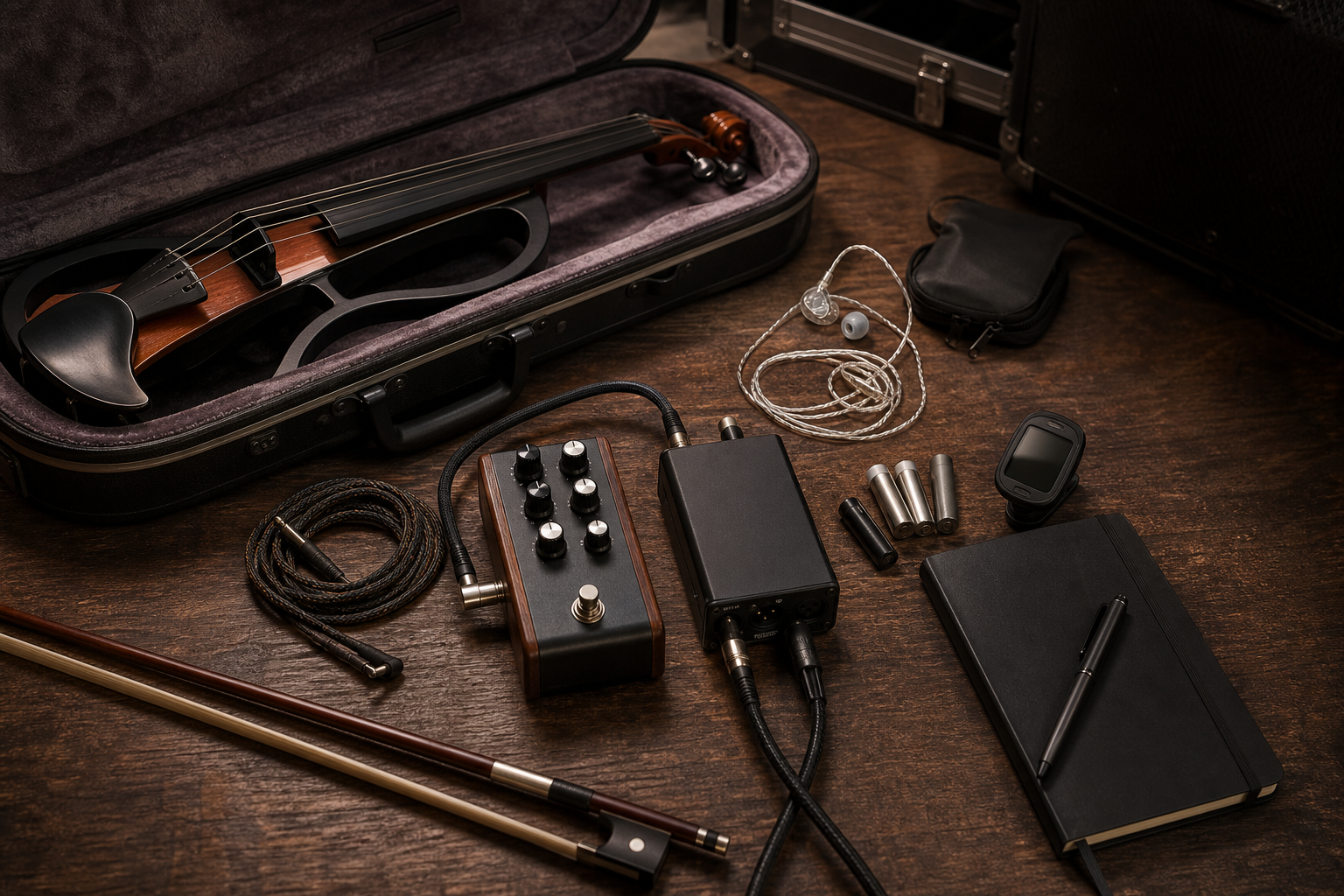
Why is the Radial PZ-DI the safest all-around pick for electric violin?
Because it solves the most common violin problem first: the instrument often needs better loading and smoother translation before it needs more effects. Radial positions the PZ-DI directly for orchestral instruments and piezo transducers, which is exactly why it makes sense here. I would reach for it when a venue wants one clean XLR feed, the monitor needs to calm down fast, and I want the bow to stay articulate instead of turning brittle at the top.
Who should buy the PZ-DI first?
I would point it at players whose electric or pickup violin sounds usable at home but suddenly feels sharp, smaller, or more nervous through a real PA.
- Pros: purpose-built piezo thinking, strong all-around stage practicality, clean performer workflow, and a fast path to better FOH tone.
- Cons: less deep tone-sculpting than a full acoustic preamp.
See the official Radial PZ-DI page · Find PZ-DI options on Amazon
When is the J48 the better choice than a piezo-focused box?
The J48 makes more sense when the violin signal is already stronger, more active, or more stable and I simply want premium active-DI headroom. Radial's J48 is built around active direct-box performance, and that matters when a louder stage, longer cable path, or hotter output can make a cheaper box feel flat or pinched. Tanya Strings would use it when the instrument already has enough body and the job is preserving confidence, not rescuing the front end.
What does the J48 solve better than a generic stage DI?
It solves composure. I trust it when I want a cleaner handoff to the PA and I do not want the violin tone shrinking as the rig gets louder or the run gets longer.
- Pros: strong headroom, premium active-DI behavior, reliable stage confidence, and simple operation.
- Cons: less violin-specific than the PZ family for fragile piezo sources.
See the official Radial J48 page · Find J48 options on Amazon

Why would Tanya step up to the PZ-Pre for a bigger show?
The PZ-Pre starts making sense when I want the live front-end to behave like a real performance control station, not just a conversion step. Radial positions it as an acoustic preamp and DI, and that is the key distinction. This is where I go when the set wants deeper EQ decisions, notch-style cleanup, a stronger solo boost path, or more than one practical input choice in the same show. It is the box for artists who know the tone target already and need more authority over how it lands on stage.
Who should choose PZ-Pre before buying more pedals?
I would choose it if the core violin tone still needs shaping every night and I want that control to happen before the rest of the floor rig starts coloring the signal.
- Pros: deeper live control, better problem-solving range, stronger acoustic-preamp logic, and a more complete command center for serious shows.
- Cons: bigger footprint, higher spend, and more ways to overcomplicate a rushed setup.
See the official Radial PZ-Pre page · Find PZ-Pre options on Amazon
When does the AC-Driver make more sense than a full acoustic preamp?
The AC-Driver is the smarter answer when I want a compact floor setup that still feels deliberate. I like this lane for club sets, event work, and smaller touring days where one preamp pedal needs to feed both the venue and a personal monitoring plan without consuming the whole board. Tanya Strings does not need every show to run from a giant workstation. Sometimes the right move is one compact preamp that preserves elegance and speed.
Why can the AC-Driver be the best value move?
Because it covers the part of the problem many violinists actually have: they want better front-end tone, not a second career in pedalboard management.
- Pros: compact size, cleaner minimalist workflow, useful preamp behavior, and easy integration into a small rig.
- Cons: less control depth than the PZ-Pre if the violin needs heavier stage correction.
See the official Radial AC-Driver page · Find AC-Driver options on Amazon

Why is the StageBug SB-4 the smartest tiny backup or fly-date DI?
The SB-4 makes sense when the board has to stay small but I still want a piezo-aware box in the chain. Radial names it directly as a piezo DI, which is why it belongs on this list. I would keep it for tight travel days, backup bags, or minimalist event rigs where every gram matters but I still want the violin to arrive at the console with more intention than a random generic DI usually gives.
Who should pack the SB-4 first?
I would pack it if I fly often, keep a second emergency rig, or want a low-bulk solution that is still meaningfully smarter than plugging a difficult violin source into whatever the venue throws on the floor.
- Pros: tiny footprint, piezo-aware mission, easy backup value, and strong travel logic.
- Cons: smaller control set and less authority than a fuller preamp or larger DI.
See the official Radial StageBug SB-4 page · Find StageBug SB-4 options on Amazon
When is the ProDI still the right passive answer for electric violin?
The ProDI still makes sense when the source is already solid and I mainly want rugged passive isolation. Radial positions it as a passive direct box, and that simplicity can be exactly right for some rigs. I would use it if the violin already carries enough body, the rest of the chain is behaving, and I want one dependable box that does not ask for more decisions during the show.
Why can passive simplicity still be the smarter purchase?
Because not every electric violin problem needs a deeper tool. If the signal is already healthy, the smartest move may be protecting that simplicity rather than solving issues that are not actually there.
- Pros: rugged simplicity, easy stage logic, reliable isolation, and less decision fatigue.
- Cons: no piezo rescue and less help for a signal that already feels thin or edgy.
See the official Radial ProDI page · Find ProDI options on Amazon
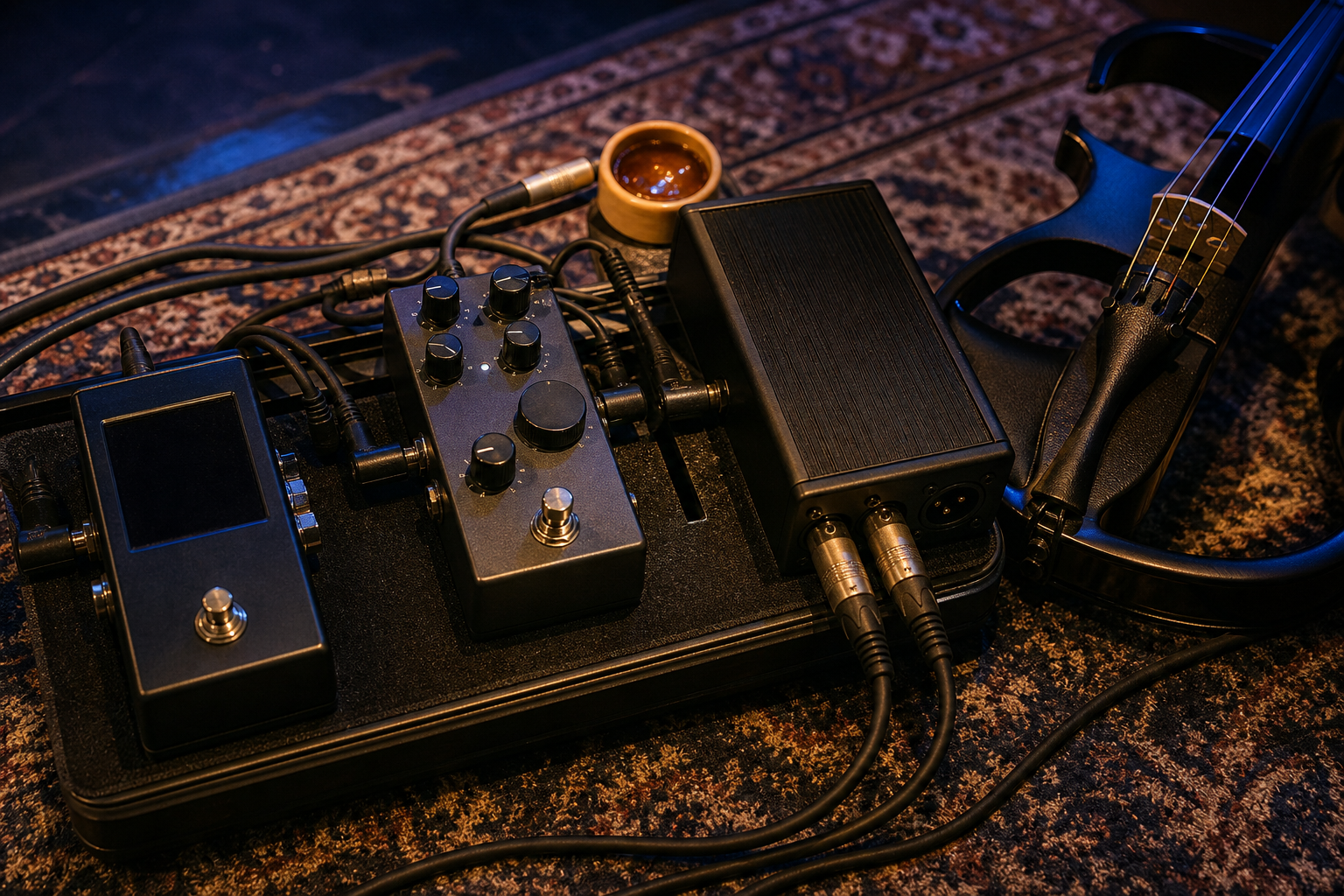
What should you buy first if your budget for tone control is limited?
If money is tight, I would buy in this order:
- Buy the real fix first: if the violin sounds brittle through the PA, get a piezo-aware DI before chasing more pedals.
- Buy the rig discipline next: one spare cable, one reliable power plan, and one monitor strategy matter more than collecting extra boxes.
- Buy deeper control later: step up to a fuller preamp only after the basic DI path proves where the real limitation is.
I would rather hear one correctly matched DI box than five clever pedals stacked on top of a front-end that never felt right in the first place.
What matters most when choosing a DI box or preamp for electric violin?
Electric violin exposes the wrong front-end very quickly. The bow, the upper mids, and the monitor feed all tell the truth at once, so my buying checklist stays short.
- Match the source honestly: piezo-sensitive violins usually want a more thoughtful input stage than a generic passive box.
- Protect soundcheck speed: extra controls only help if they make the show calmer instead of slower.
- Build around the PA, not the bedroom: the best choice is the one that still behaves under wedges, louder rooms, and fast changeovers.
- Keep the tone musical: if the violin gets sharper as the rig gets more expensive, something upstream is still wrong.
How does Tanya Strings build a reliable DI and preamp workflow for live shows?
I treat the front-end like the foundation of the whole performance. A world-class electric violin set should feel polished before the reverb, looping, or wireless freedom even enters the conversation.
- Start with the clean path: I want the violin sounding convincing straight into the DI or preamp first.
- Check front of house and monitor separately: a rig can sound flattering in headphones and still fight the wedge.
- Keep one recovery option: if a pedalboard section fails, I want a direct musical fallback that preserves the set.
- Respect packing reality: the best box is the one I will actually carry, wire correctly, and trust at every venue.
That is why Tanya Strings buys DI boxes and acoustic preamps like a performer and content creator, not like a collector. The right front-end makes the violin feel bigger, calmer, and easier to believe on a real stage.
FAQ
What is the best DI box for most electric violinists on stage?
For most performers, the Radial PZ-DI is the safest all-around answer because it is aimed at piezo and orchestral sources and usually makes the violin feel smoother and more stable through a PA.
Do I need a preamp or just a DI box for electric violin?
If the signal already feels strong and musical, a DI can be enough. If you keep needing EQ, notch-style cleanup, more gain control, or a stronger solo-shaping front-end, a preamp makes more sense.
When is an active DI better than a passive DI?
An active DI is usually the smarter buy when the violin needs more headroom, more consistency, or better behavior over longer runs. Passive makes more sense when the source is already stable and simple.
What should Tanya Strings buy first on a tight budget?
Buy the box that fixes the real stage problem first. For many electric violinists that means a piezo-aware DI, plus clean cables and a dependable monitor plan, before stacking more pedals on top.