Signal Routing · 2026-08-20
Best ABY Pedals and Line Selectors for Electric Violinists Who Switch Violins or Outputs on Stage
For most electric violinists who need to switch between two stage destinations or two rig personalities, the Radial BigShot ABY is the safest first buy because it is passive, fast to understand, and built to solve the two problems that usually wreck mid-set routing: hum and phase trouble. If your cable runs are longer or your pedalboard needs more consistency, step up to the Radial Twin-City or Orange Amp Detonator. If you need compact loop-based routing inside one board, look at the BOSS LS-2 or JHS Switchback.
Follow Tanya Strings on Google
Add the site as a preferred source to see more new violin posts from Tanya Strings in Google.
Affiliate disclosure: Some links in this article are affiliate links. I may earn a commission if you make a purchase, at no extra cost to you.

What is the best ABY pedal or line selector for most electric violinists?
My safest first answer is the Radial BigShot ABY. Radial built it as a passive true-bypass ABY with a transformer on output B to help eliminate hum and buzz, plus a 180-degree polarity reverse switch to fix phase issues between amps. That combination matters because electric violin rigs often become messy exactly when you split toward two destinations or move between two backline personalities. Tanya Strings wants signal-routing gear that removes panic from the set. The BigShot does that without forcing you into a complex powered system on day one.
My performer rule: if a routing pedal makes the changeover feel more technical instead of more musical, it is the wrong tool for your stage right now.
Which ABY pedals and line selectors are worth buying right now?
This shortlist stays focused on real electric violin work: switching between two outputs, choosing between two rig lanes, or keeping one board flexible without building a full command-center floor system. If you need multi-preset scene changes instead, read the loop switcher guide. If your bigger problems are still noise, grounding, or front-end gain, fix the DI path, cables, or isolation tools first.
| Product | Best for | Why Tanya would use it | Watch out for | Links |
|---|---|---|---|---|
| Radial BigShot ABY | Most performers who need a simple, reliable split between two stage destinations | I trust it because the passive workflow is quick, the transformer helps tame hum, and the polarity switch solves the kind of ugly surprise that shows up during soundcheck. | It is passive, so it is smartest when the cable runs are reasonable and the rest of the rig is not already struggling. | Official · Amazon |
| Radial Twin-City | Longer cable runs and players who want a more consistent active feel | I would use it when I need a buffer, isolated output, drag control, and quieter confidence across a larger or more delicate board. | It needs power and costs more, so buy it when the extra stability is solving a real problem. | Official · Amazon |
| BOSS LS-2 | Compact pedalboards that need one utility box for line switching, muting, or blending two lanes | I like it because six line-selector modes and level controls can solve several routing jobs without taking over the whole board. | It is not an isolated dual-amp box, so do not buy it to solve every hum or phase problem by itself. | Official · Amazon |
| Lehle Little Dual II | Premium silent switching and refined dual-output rigs | I would move here when I want premium relay switching, strong isolation, and a more polished answer for serious hybrid stage work. | The price is the main barrier, so it makes the most sense after the rest of the rig is already honest enough to reveal the upgrade. | Official · Amazon |
| Orange Amp Detonator | Buffered amp-and-PA or dual-amp rigs that want modern switching with extra headroom | I would use it when I want buffered switching, isolated outputs, and a more deliberate active feel from the split itself. | It is more specialized than the BigShot, so it is overkill if you only need a bare-bones passive A/B. | Official · Amazon |
| JHS Switchback | Players who want compact loop-style rerouting between two pedal paths | I like it when one board needs two different personalities and I want to move between them with less footwork and less repatching. | It is a creative routing tool, not a dedicated isolated amp splitter, so match it to the right job. | Official · Amazon |
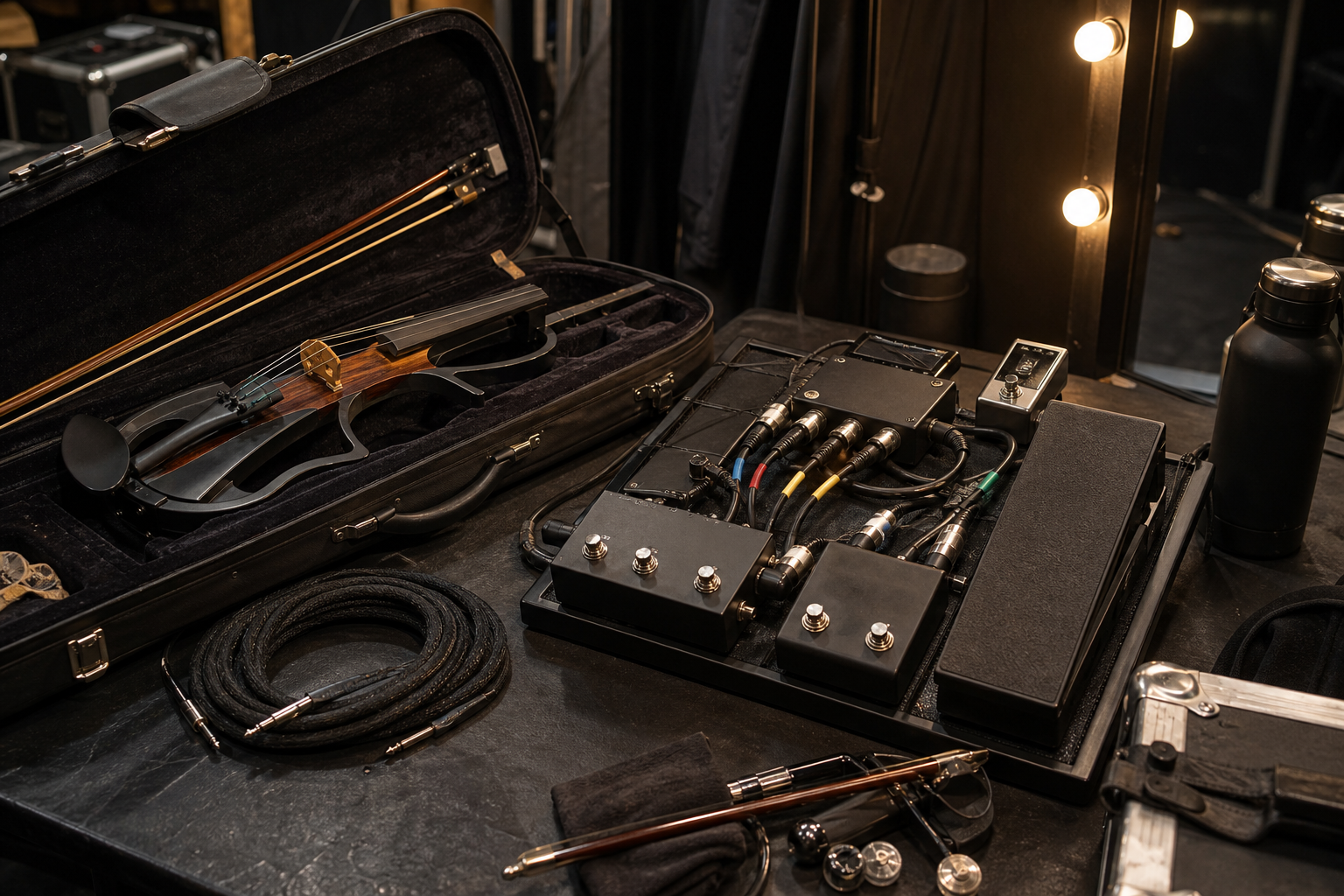
Why is Radial BigShot ABY my safest first recommendation?
The BigShot ABY lands first because it stays honest about the job. Radial gives you passive true-bypass switching, transformer isolation on one output, and polarity correction. That is enough to solve the most common live split problems without asking you to learn a bigger powered ecosystem first. Tanya Strings would use it when one violin rig has to hit a stage amp on some songs, a second destination on others, or a dual-output combination that still needs to stay calm under pressure.
Who should buy the BigShot first?
Buy it first if your routing problem is simple but important: two amps, amp versus direct lane, or a clean fast A/B choice between two stage destinations.
- Pros: passive simplicity, transformer isolation, polarity correction, no power requirement, and very strong stage logic.
- Cons: no active buffer, no level controls, and less reason to choose it if the rig already needs a stronger active front end.
See the Radial BigShot ABY · Find BigShot ABY options on Amazon
When should you buy Radial Twin-City or Orange Amp Detonator instead?
Buy one of these when the split itself needs to contribute more than basic switching. That usually means longer cable runs, a more fragile high-end tone, or a board that feels better when the routing pedal adds active stability rather than staying fully passive.
Why choose Twin-City for a longer or more delicate signal chain?
Radial positions the Twin-City around a Class-A buffer, Drag control to match pickup feel, isolated output B, polarity reverse, and the ability to drive long cables more confidently. That translates well to electric violin when the rig has more pedals, more cable length, or a pickup and preamp combination that starts to feel less immediate after the split. Tanya Strings would step here when passive simplicity is no longer enough and the show needs the routing pedal to protect feel as much as path choice.
- Pros: active buffer, isolated output, polarity control, useful drag adjustment, and stronger confidence over longer runs.
- Cons: needs power and only earns the extra cost when the rig actually benefits from the active help.
See the Radial Twin-City · Find Twin-City options on Amazon
When is Orange Amp Detonator the smarter buffered split?
Orange describes the Amp Detonator as a fully buffered active ABY with isolated outputs, phase switching, silent footswitching, and internal charge-pump headroom. That is attractive when you want the split to feel firm and modern rather than bare-bones. I would use it for an electric violin rig that sends one side toward an amp feel and another toward direct reinforcement, especially when the set wants a more deliberate active response under the bow.
- Pros: buffered behavior, isolated outputs, phase correction, quiet switching, and reassuring headroom.
- Cons: more cost and more specialization than a simple passive pedal if your routing job is still basic.
See the Orange Amp Detonator · Find Amp Detonator options on Amazon
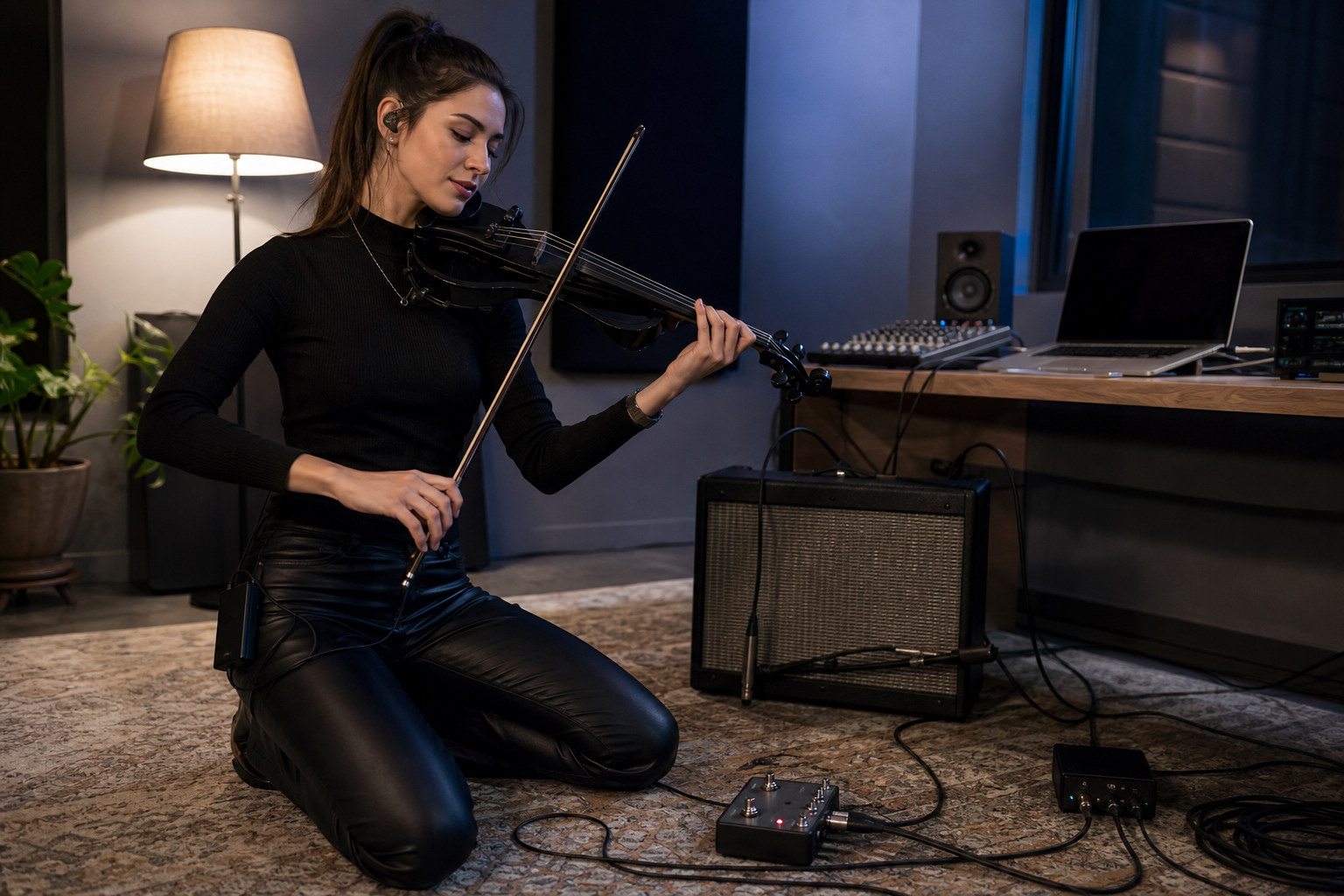
Why do BOSS LS-2 and JHS Switchback make more sense on compact pedalboards?
These two make more sense when the job is less about dual amps and more about internal board logic. They help when you want to switch between two effect lanes, mute one route cleanly, compare two signal personalities, or keep a compact board more flexible without graduating to a full preset switcher.
What makes BOSS LS-2 the smarter utility buy?
BOSS built the LS-2 around six line-selector modes, level controls for A and B, and a DC output that can power another compact pedal. That makes it one of the most useful quiet fixes on a small electric violin board. Tanya Strings would use it to move between a cleaner path and a larger ambient path, or to keep one lane ready for a second instrument, without giving up much pedalboard space.
- Pros: compact footprint, multiple modes, level controls, BOSS reliability, and strong value as a general routing utility.
- Cons: not the right pedal for isolated dual-amp splitting and not a direct substitute for a dedicated ABY box.
See the BOSS LS-2 · Find LS-2 options on Amazon
When is JHS Switchback the cleaner creative-routing choice?
JHS presents the Switchback as a route-and-return utility that can flip between two loops, reorder certain pedals, or work with the Red Remote for alternate control. That makes it a strong fit when one electric violin board needs two carefully prepared personalities instead of a big preset architecture. I like it when the switch itself is part of the arrangement, not just a backstage convenience.
- Pros: compact creative routing, true-bypass logic, useful loop-based flexibility, and strong fit for two-lane boards.
- Cons: not an isolated amp splitter and easier to understand once your pedalboard plan is already disciplined.
See the JHS Switchback · Find Switchback options on Amazon
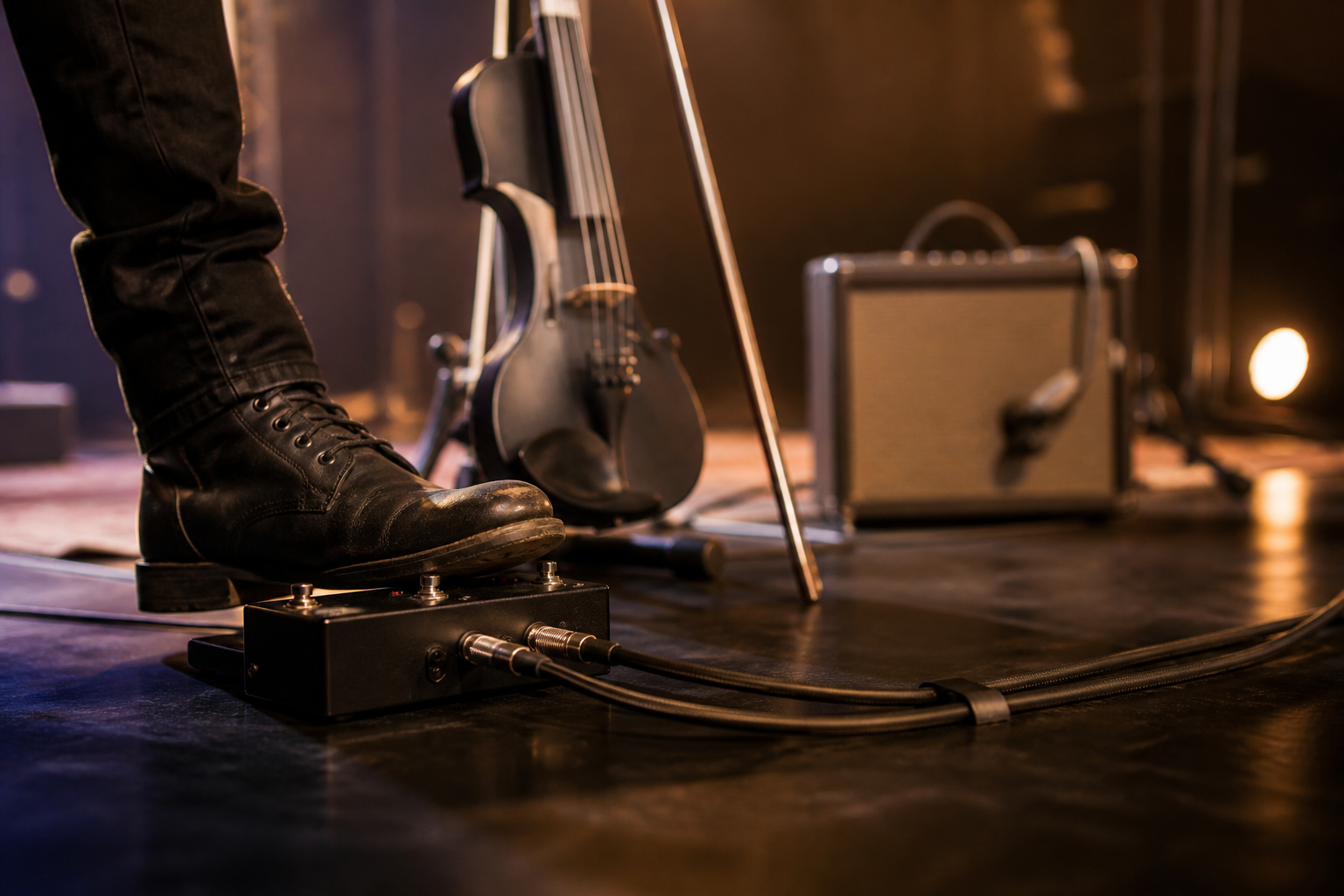
When is Lehle Little Dual II worth the premium?
The Lehle Little Dual II is worth the premium when the routing pedal has to feel as refined as the rest of the show. Lehle highlights soft-touch switching, active pop suppression, transformer isolation, phase correction, and dual-mono or stereo use through TRS routing. That gives it a cleaner premium identity than the simpler passive choices. Tanya Strings would pay for it when the rig already works at a high level and the next upgrade is about quieter behavior, more elegant switching, and a more polished hybrid stage setup.
- Pros: premium silent operation, refined isolation, stereo or dual-mono flexibility, and a strong fit for professional hybrid rigs.
- Cons: premium price and less need for it if the rest of the signal chain is still basic or unstable.
See the Lehle Little Dual II · Find Little Dual II options on Amazon
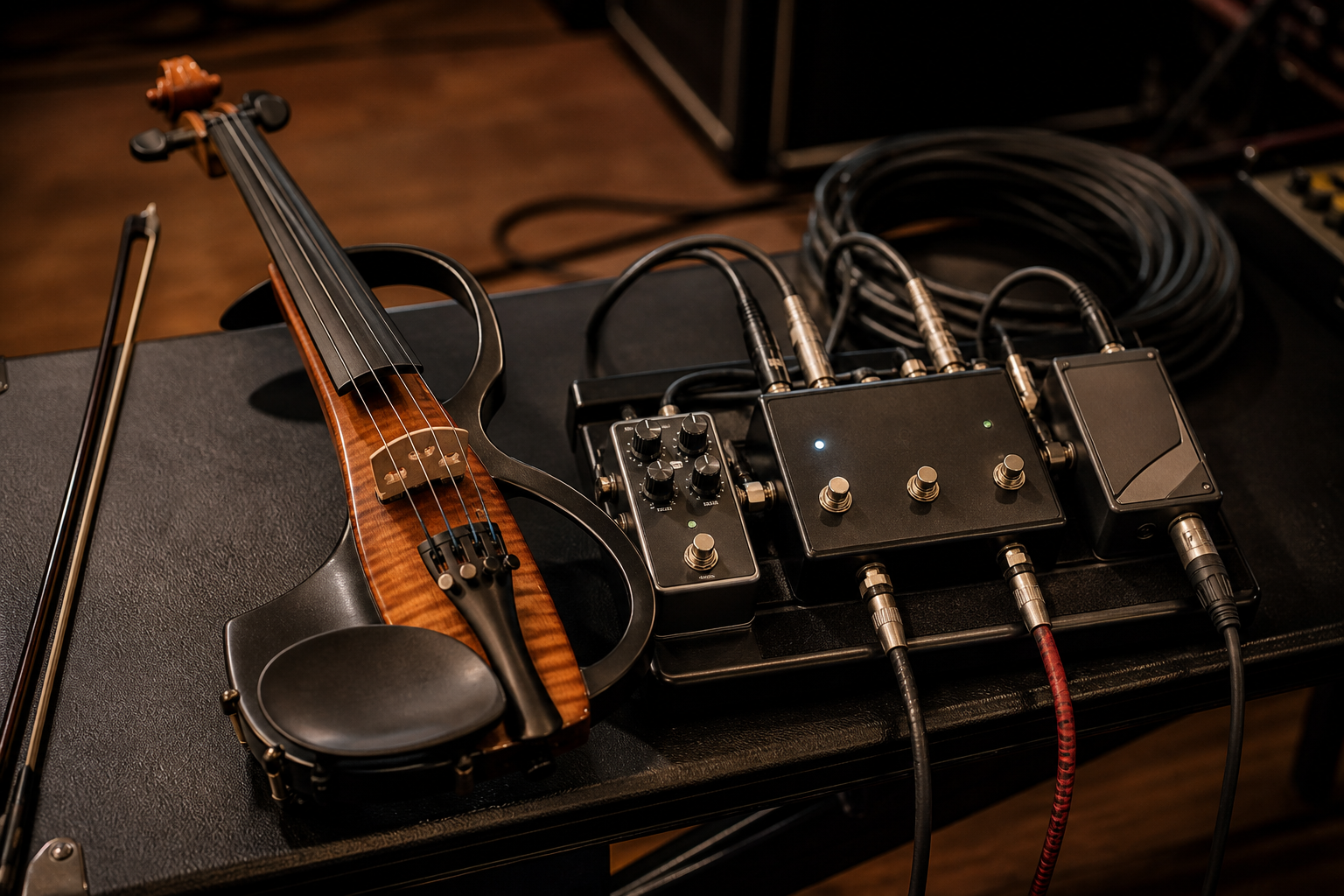
How should electric violinists buy an ABY pedal or line selector for stage use?
Buy around the actual switching job, not around a vague idea of owning more routing power.
My buying checklist:
- Name the real job first: switching between two amps, splitting one signal, or toggling between two pedal lanes are different problems.
- Respect the PA side: if one output is going direct, make sure that lane sees the right DI or high-impedance input instead of assuming every split behaves the same.
- Buy isolation before fantasy: hum, ground loops, and phase trouble are worth solving earlier than exotic routing ideas.
- Only pay for a buffer when the rig proves it needs one: longer cables, extra pedals, and weaker feel are the real reasons to move beyond passive.
- Label and rehearse the outputs: the best routing pedal is the one your hands and feet already trust before the show starts.
How does Tanya Strings use signal-routing pedals in real performance?
I use this category to protect flow. As a world-class electric violin performer and content creator, I do not want routing drama between the first strong note and the crowd’s attention. A good ABY or line-selector pedal helps me keep a backup path ready, switch between different stage identities more cleanly, and make the whole rig behave with less negotiation. It sits in the same logic chain as a stable stage setup, a dependable pickup or front-end signal, and quieter pedalboard wiring.
- Preserve the show’s pace: fast routing matters because the audience should never hear your technical decision-making.
- Keep one trusted fallback lane: the smartest split often includes a backup that is simpler than the headline sound.
- Avoid overbuilding: if one compact switch solves the musical problem, a full routing empire is usually wasted motion.
FAQ
What is the best ABY pedal or line selector for most electric violinists?
For most electric violinists, I would start with the Radial BigShot ABY because it keeps switching simple while giving you the isolation and polarity tools that solve the most common live-routing failures.
Is an ABY pedal better than a full loop switcher for electric violin?
It is better when the only job is choosing between two outputs, two rigs, or two signal lanes. If you need multiple preset changes across several pedals, a loop switcher is the better category.
Can one electric violin signal go to an amp and the PA at the same time?
Yes, but the split needs to respect impedance, phase, and grounding. In many real setups, that means using an isolated output and often a proper DI or a suitable high-impedance input on the direct side.
Do electric violinists need a buffered ABY pedal?
Not always. Passive pedals are excellent when the rig is short and disciplined. Buffered models are worth it when longer cable runs or a more crowded board start making the signal feel weaker or less consistent.