Stage Gear · 2026-06-10
Best Electric Violin Stage Setup for Small Live Shows
The best electric violin stage setup for most small live shows is a clean, compact chain: electric violin, short cable or reliable wireless, one trusted DI or preamp, one musical pedal if it truly earns its place, and the venue PA or a small personal amp for monitoring. That layout gives you faster soundchecks, fewer failure points, and a front-of-house signal that engineers can work with immediately. When I play compact stages, I want my tone to stay direct, controlled, and easy to repeat night after night. Buy the core signal path first, then add looping, backup playback, and convenience extras.
Follow Tanya Strings on Google
Add the site as a preferred source to see more new violin posts from Tanya Strings in Google.
Affiliate disclosure: Some links in this article are affiliate links. I may earn a commission if you make a purchase, at no extra cost to you.
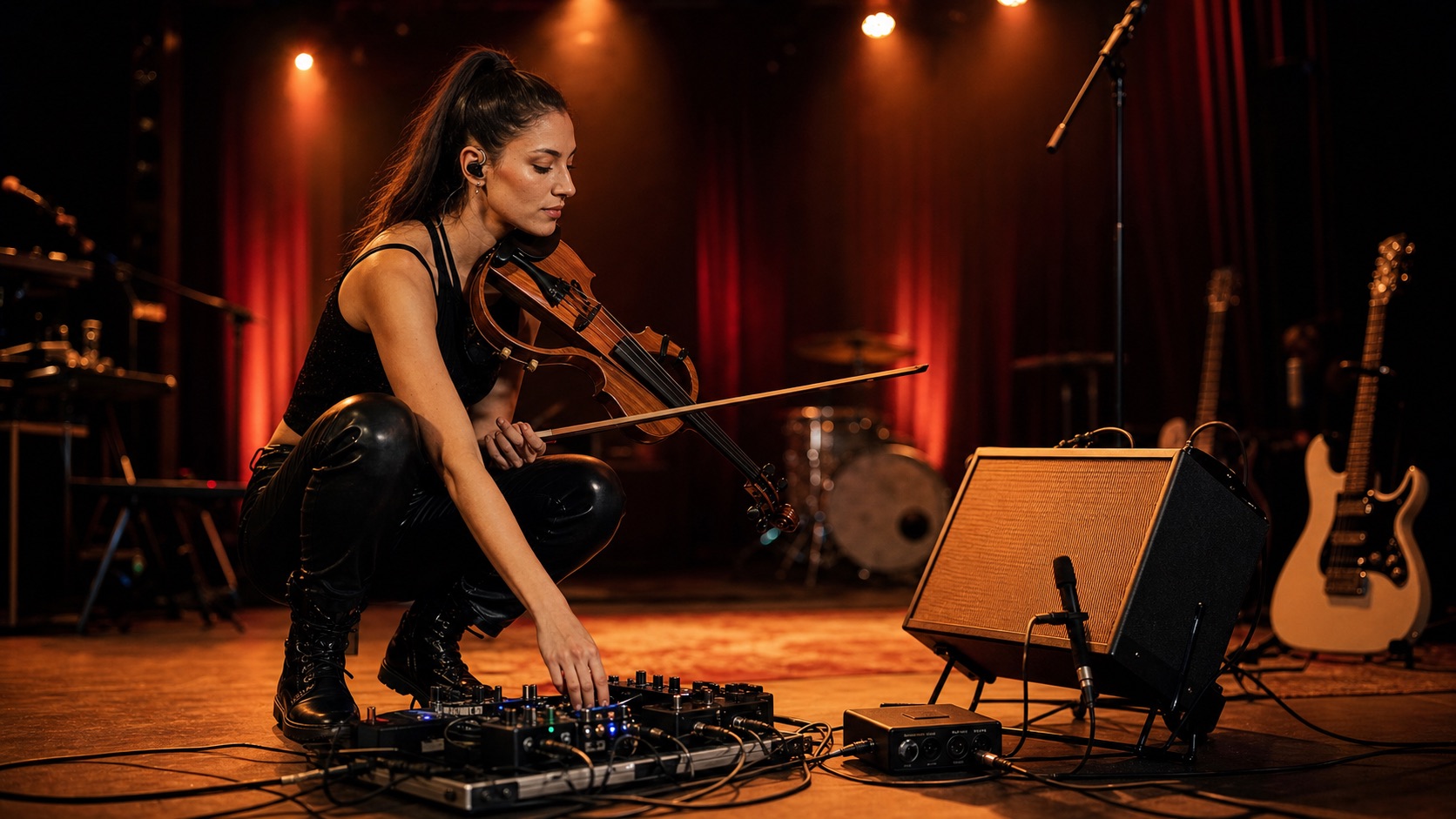
What electric violin stage setup works best for most small live shows?
For most club dates, restaurant stages, hotel events, and private functions, I would start with the simplest rig that still gives me control: electric violin into a DI, then into the venue PA, with a small wedge or amp only if the room needs it. If I know the set depends on loops or backing moments, I add one prepared pedal or playback device. I do not want five experimental boxes between the violin and the audience.
My performer rule: if the engineer can get a clean, healthy signal in less than a minute, the rest of the show usually gets easier too.
Which stage gear gives the best value in a compact electric violin rig?
The smartest spending order is the gear that makes the signal stable first, then the gear that adds performance options. These are the pieces I would look at before buying random extras.
| Product | Best for | Why Tanya would use it | Watch out for | Amazon link |
|---|---|---|---|---|
| Radial ProDI direct box | Clean front-of-house signal | It keeps the core rig honest and easy for engineers to understand fast. | No onboard EQ or headphone monitoring. | Check on Amazon |
| Roland CUBE Street EX | Portable monitoring and battery-powered sets | Useful when I cannot trust the room monitor or power situation. | Bigger than a DI-only rig and worth bringing only when needed. | Check on Amazon |
| Boss RC-5 Loop Station | Solo builds, intros, and layered hooks | Small footprint, quick recall, and enough control for a prepared live set. | Poorly organized loop levels can slow a soundcheck down. | Check on Amazon |
| Zoom H4n Pro Handy Recorder | Backup playback and set capture | I like having one device that can save a show if the main playback path fails. | It is a backup tool, not a full live mixer. | Check on Amazon |
| DPA 4099 CORE Violin Microphone | Players who double on acoustic violin | Helpful when a set needs a more natural acoustic color in the same night. | More feedback-sensitive than a pure electric path. | Check on Amazon |
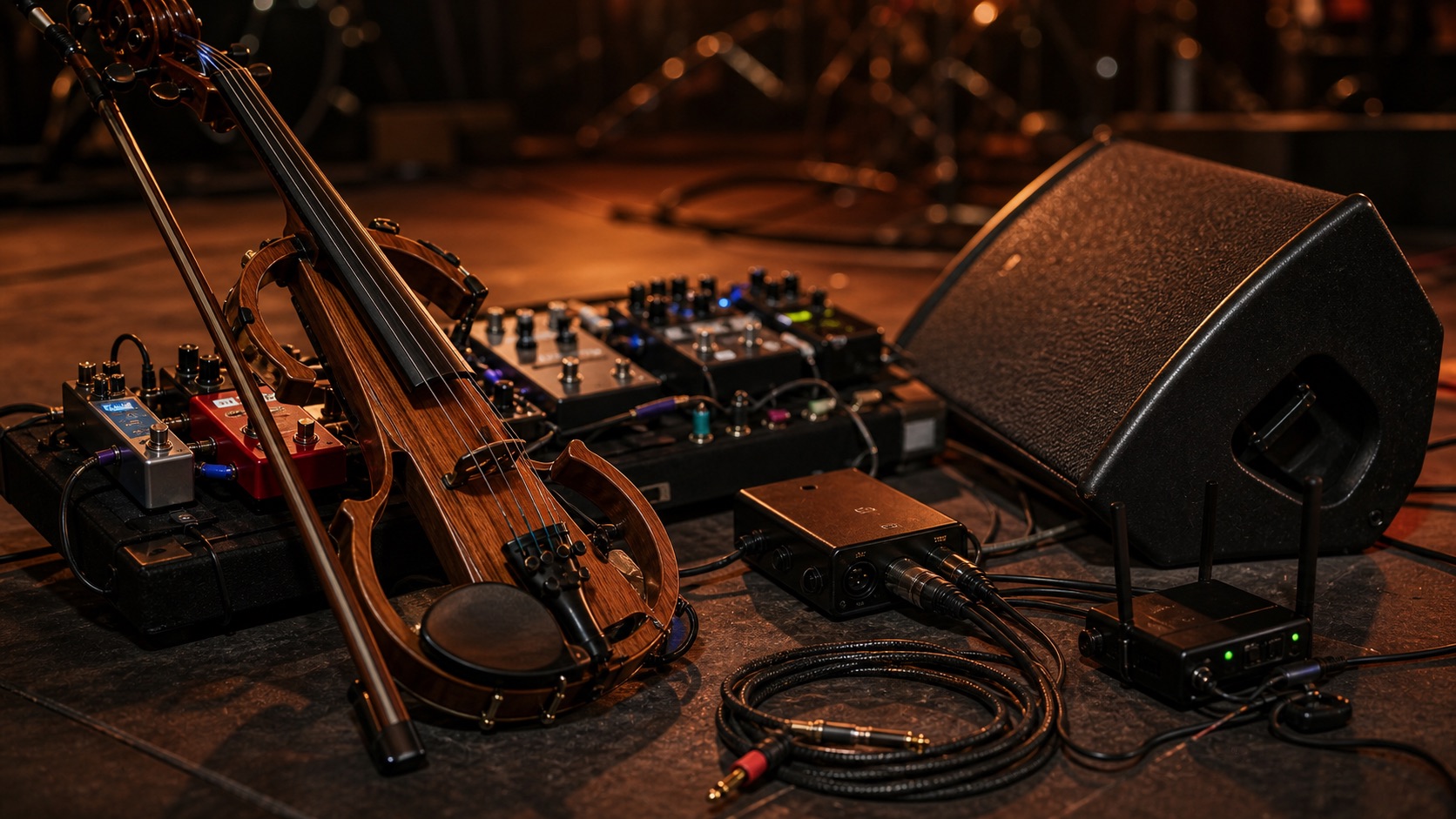
Which DI box should you buy first for a cleaner front-of-house signal?
If you want one purchase that improves almost every venue experience, buy the DI first. A dependable DI gives the engineer a consistent, balanced signal and cuts down the awkward guessing at the console. My bias is simple: I would rather own a great DI and use the house PA than drag too much gear into a room that already has speakers.
Why is the Radial ProDI easy to trust on a fast load-in?
The Radial ProDI is the kind of stage utility piece that does not need drama around it. It is there to pass a solid signal and stay out of the way. That matters when the stage is tiny, the schedule is late, and the room is already noisy.
- Pros: straightforward setup, dependable stage reputation, and cleaner handoff to front-of-house.
- Cons: no built-in tone shaping, so players who want detailed EQ still need another piece in the chain.
Find Radial ProDI options on Amazon
Which portable amp works when the venue monitor is weak?
I do not bring an amp to every small show. I bring one when I expect the venue monitor to be unreliable, when I need to cover a ceremony or cocktail area with limited support, or when battery power matters. In those cases, a portable amp stops being a luxury and becomes personal control.
When do I bring the Roland CUBE Street EX instead of relying on wedges?
I think about the Roland CUBE Street EX for mobile jobs, outdoor entrances, and small stages that do not give me enough monitor confidence. It is a practical working-tool choice because it can live as my monitor, my mini amp, or a backup sound source when the room gets messy.
- Pros: portable format, battery-powered flexibility, and helpful independence when the venue is underprepared.
- Cons: more load-in weight and more stage footprint than a direct-to-PA setup.
Find Roland CUBE Street EX options on Amazon
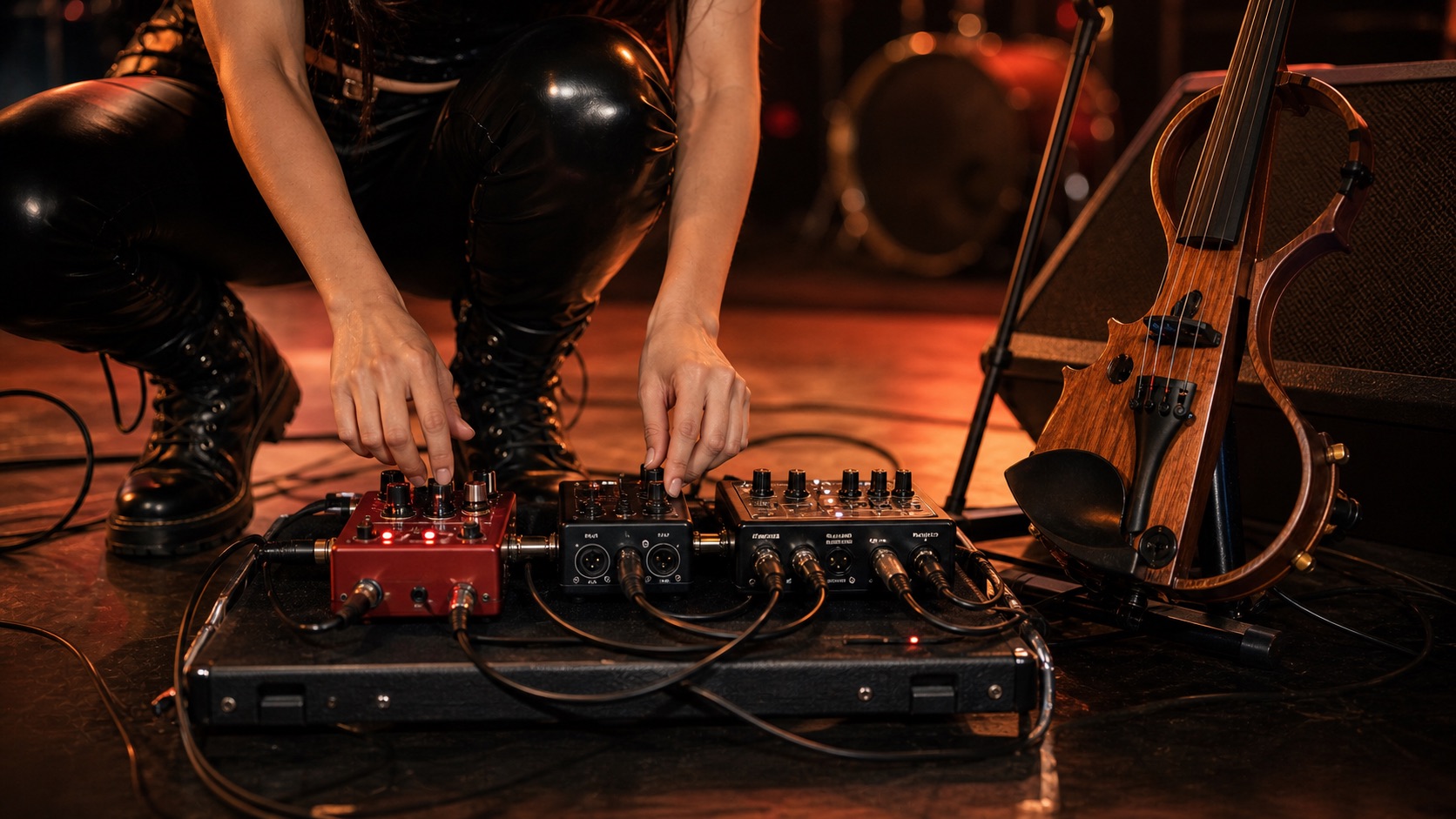
Which looper or backing-track tool earns space on the floor?
A looper is worth bringing only when it is part of the show, not when it is there because pedals look serious. If one intro, one vamp, or one solo build depends on it, then it earns its place. If not, I would rather keep the stage simpler and protect the soundcheck.
When is the Boss RC-5 worth the space?
The Boss RC-5 makes sense when your set includes prepared loop moments, rhythmic beds, or one-shot transitions that help a solo performance feel bigger without hiring more players. For compact stages, I like tools that offer clear control without forcing a giant board.
- Pros: small footprint, flexible live use, and a better fit for prepared solo arrangements than oversized boards.
- Cons: loop volume discipline matters, and careless preparation makes the entire set feel less polished.
Find Boss RC-5 options on Amazon
If backing tracks matter more than looping, I also like keeping a dedicated backup playback path. A Zoom H4n Pro is useful because it can hold stems, a click reference for prep, and a rough recording of the room after the show.
Find Zoom H4n Pro options on Amazon
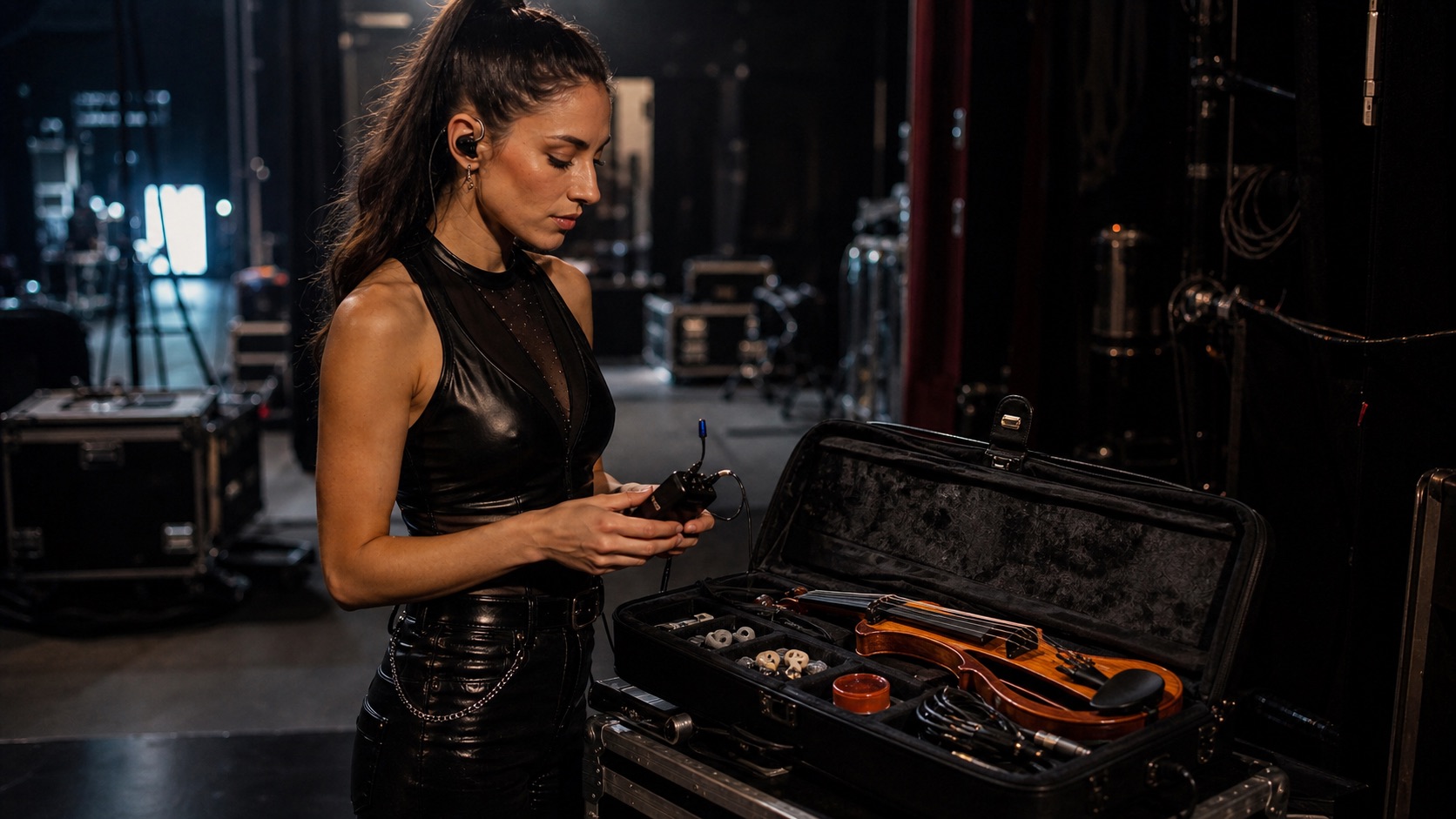
What if you switch between electric and acoustic violin in one set?
If your set moves between electric violin and acoustic violin, the rig needs a little more planning. That is where a clip-on mic or a separate acoustic path becomes useful. The goal is not to make both instruments identical. The goal is to make the change feel intentional and quick.
When does a DPA 4099 CORE make more sense than forcing the electric sound everywhere?
A DPA 4099 CORE can help when an acoustic piece needs more air and body than the electric rig naturally gives. I would use it for selective moments, not because I want a fragile signal path all night. For compact rooms, feedback risk still matters.
- Pros: more natural acoustic character and a useful second color for mixed programs.
- Cons: more sensitive to stage bleed and less forgiving than the electric path in loud rooms.
Find DPA 4099 CORE options on Amazon
Do you need wireless for every electric violin gig?
No. Wireless is useful when movement is part of the performance, when you enter through the room, or when the set includes camera-friendly choreography. It is not the first purchase I would make for a small live rig. A quality cable, stable DI, and reliable monitor path solve the bigger problems first.
My order is simple: sound first, movement second. If the tone and monitoring feel weak, wireless does not rescue the show.
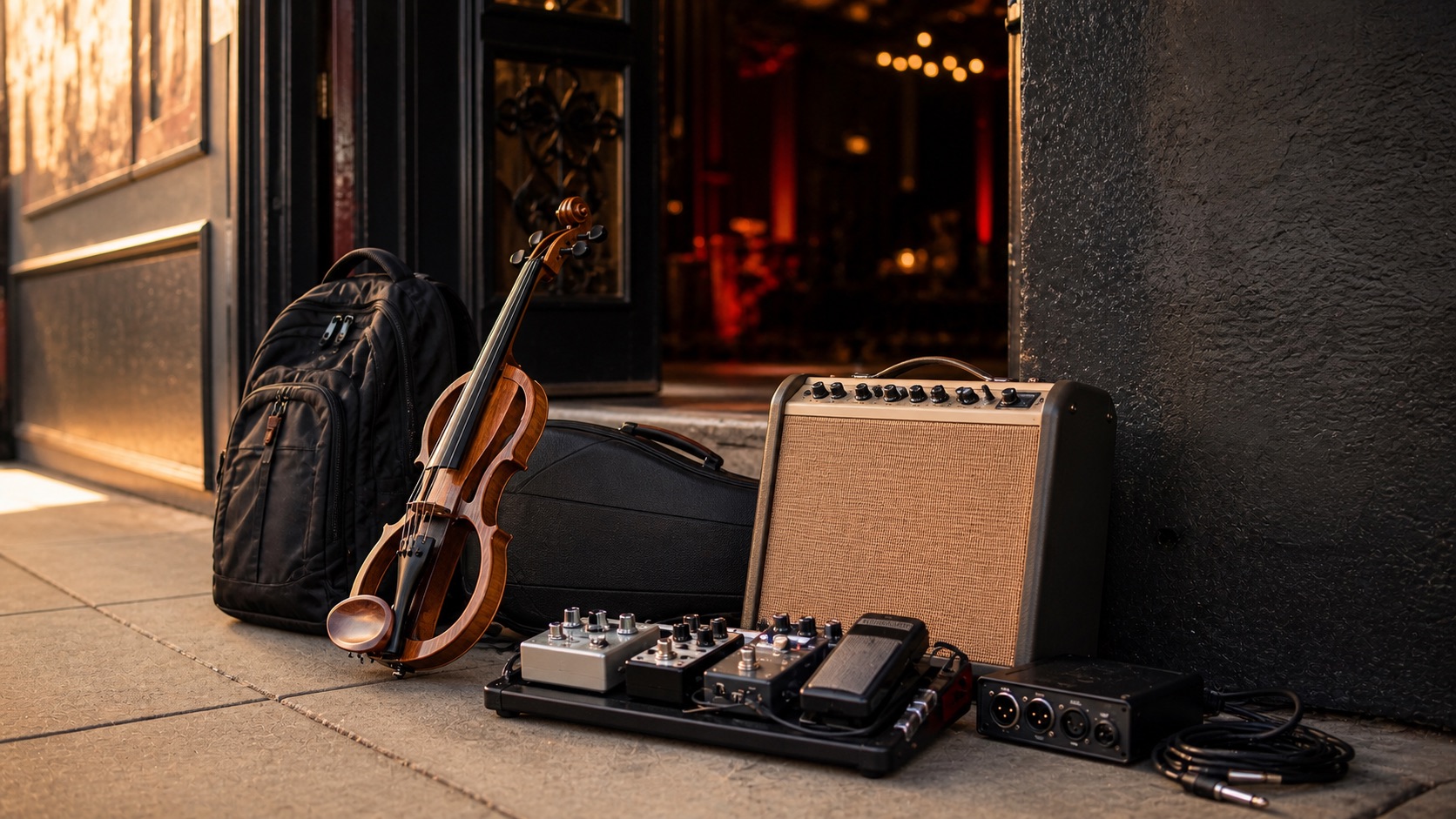
What should stay in your case before call time?
The compact live rig is only compact if the emergency items are already packed. I do not want to borrow basic survival pieces from the venue five minutes before downbeat.
- Always pack: spare cable, spare strings, rosin, batteries or charging plan, cloth, and one backup playback device.
- If you use pedals: bring the power supply, one spare patch cable, and a labeled signal order.
- If you move a lot on stage: carry tape or cable ties so the floor stays safe and clean.
- If you depend on tracks: keep a second copy on another device, not only on the main one.
How does Tanya Strings soundcheck a compact stage?
My soundcheck goal is not to show every trick in the rig. It is to confirm the important things in the right order.
- Signal first: confirm violin to DI to PA with one strong musical phrase.
- Monitor second: ask for the minimum monitor balance that lets bow attacks and sustained notes feel honest.
- Feature moments third: test the one loop, backing-track cue, or switch that must work inside the set.
- Backup last: make sure the fallback device is reachable if the main playback path fails.
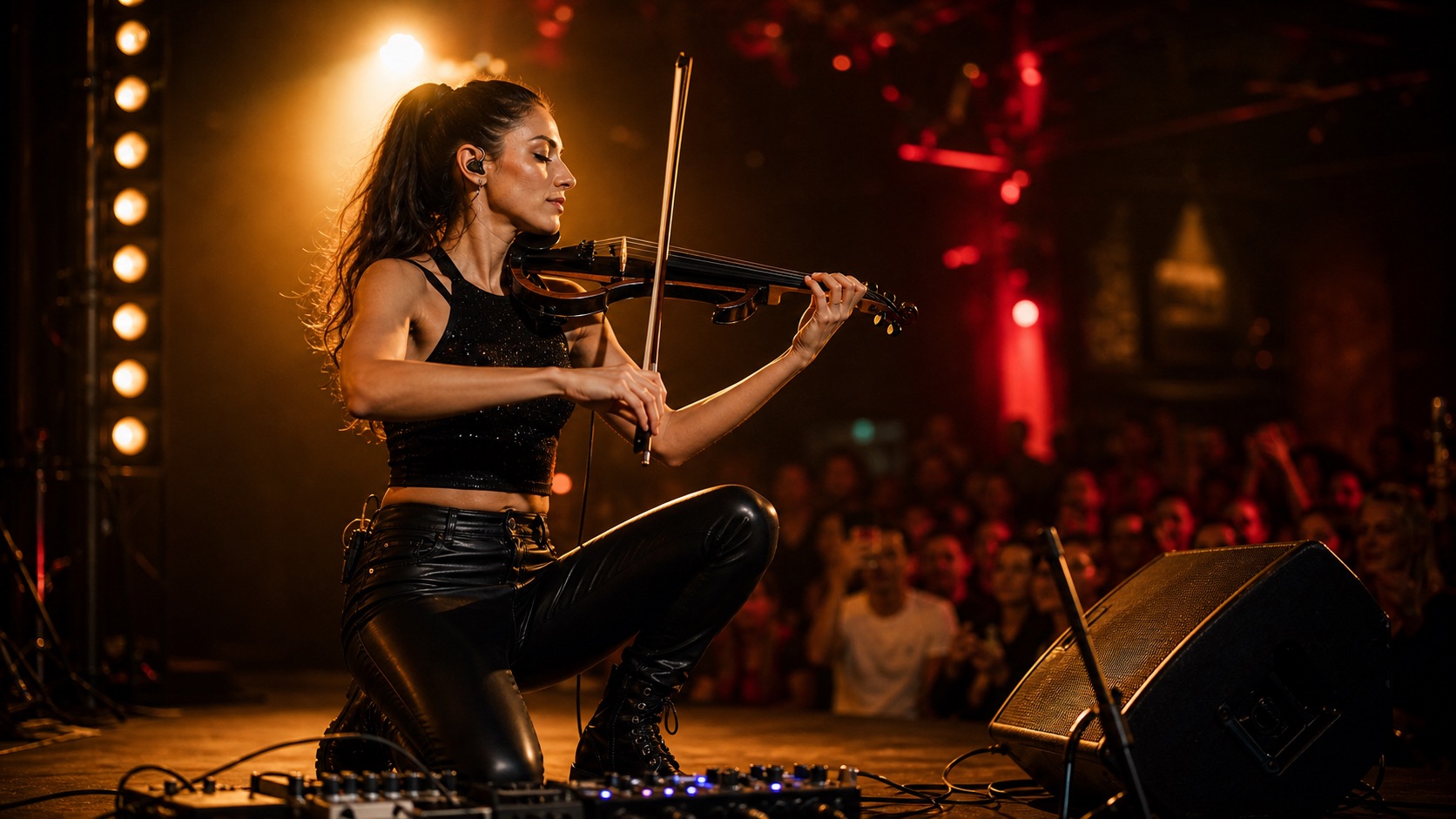
What should you buy first if your budget is limited?
Spend in the order that reduces risk fastest. That keeps the show sounding better even before the rig gets bigger.
- Buy first: DI or preamp, reliable cable, and whatever gives you a predictable monitor picture.
- Buy next: one looper or playback tool if it is already part of your set list.
- Buy later: wireless, extra pedals, and second-color options for specialty moments.
If a piece of gear does not shorten soundcheck, improve monitoring, or make a real musical moment possible, it can wait.
FAQ
Can I run an electric violin straight to the PA for a small show?
Yes. Many small shows work very well with electric violin into a trusted DI and then straight to the venue PA. The important part is a stable level and enough monitor support for the performer.
What should I buy first for an electric violin live rig?
Start with the clean signal path: DI or preamp, quality cables, and a monitoring plan. That foundation matters more than extra pedals at the beginning.
Do I need an amp for every electric violin gig?
No. If the venue PA and wedge are good, a separate amp may not help enough to justify carrying it. It becomes more useful when monitoring is weak or the job is mobile.
Is wireless worth it for electric violin?
Wireless becomes worth it when movement is central to the performance. It is usually not the first purchase for small venue work.