Delay Pedals · 2026-07-13
Best Delay Pedals for Electric Violinists Who Want Bigger Stage Space
The best delay pedal for most electric violinists is the BOSS DD-200 because it gives you enough modes, presets, tap-tempo control, and stereo flexibility to make the violin sound wider without turning every soundcheck into menu work. If your board is tiny, Line 6 HX One is the smartest compact creative buy. BOSS DD-8 is the simple stage-safe value pick, Strymon Brig is the premium analog-flavored choice, and BOSS SDE-3 is for players chasing wider vintage rack-style echoes. Buy delay for repeatable space, cleaner rhythmic hooks, and how well the pedal keeps bow attack intelligible in the PA, in-ears, and camera mix.
Follow Tanya Strings on Google
Add the site as a preferred source to see more new violin posts from Tanya Strings in Google.
Affiliate disclosure: Some links in this article are affiliate links. I may earn a commission if you make a purchase, at no extra cost to you.

What is the best delay pedal for most electric violinists?
For most players, I would buy the BOSS DD-200 first. Tanya Strings needs more than one flattering ambient sound. I need a delay pedal that can move from clean pop crossover space to wider cinematic swells, hold tempo under pressure, and still let the front note stay readable when the room is bright, the engineer is moving fast, and the set has no patience for guessing. The DD-200 stays ahead because it gives me real mode variety, fast hands-on control, useful memory recall, and enough stereo and MIDI depth to grow with the show instead of forcing a replacement six months later.
My performer rule: if the delay sounds huge alone but makes the first bow stroke feel late or blurry in the monitor, the patch is not ready for a real audience.
Why does delay matter so much on electric violin?
Because delay changes space and rhythm without instantly flooding the entire signal the way oversized reverb often does. Tanya Strings uses delay to widen held notes, make hook lines feel more expensive, smooth transitions between phrases, and create movement in solo sections where the violin has to carry the whole room. It is one of the most musical upgrades you can make after the basic front end is stable. If you already have the clean-signal discipline from the DI and preamp guide and understand how ambience behaves from the reverb pedal guide, delay becomes the control point that adds width while preserving articulation.
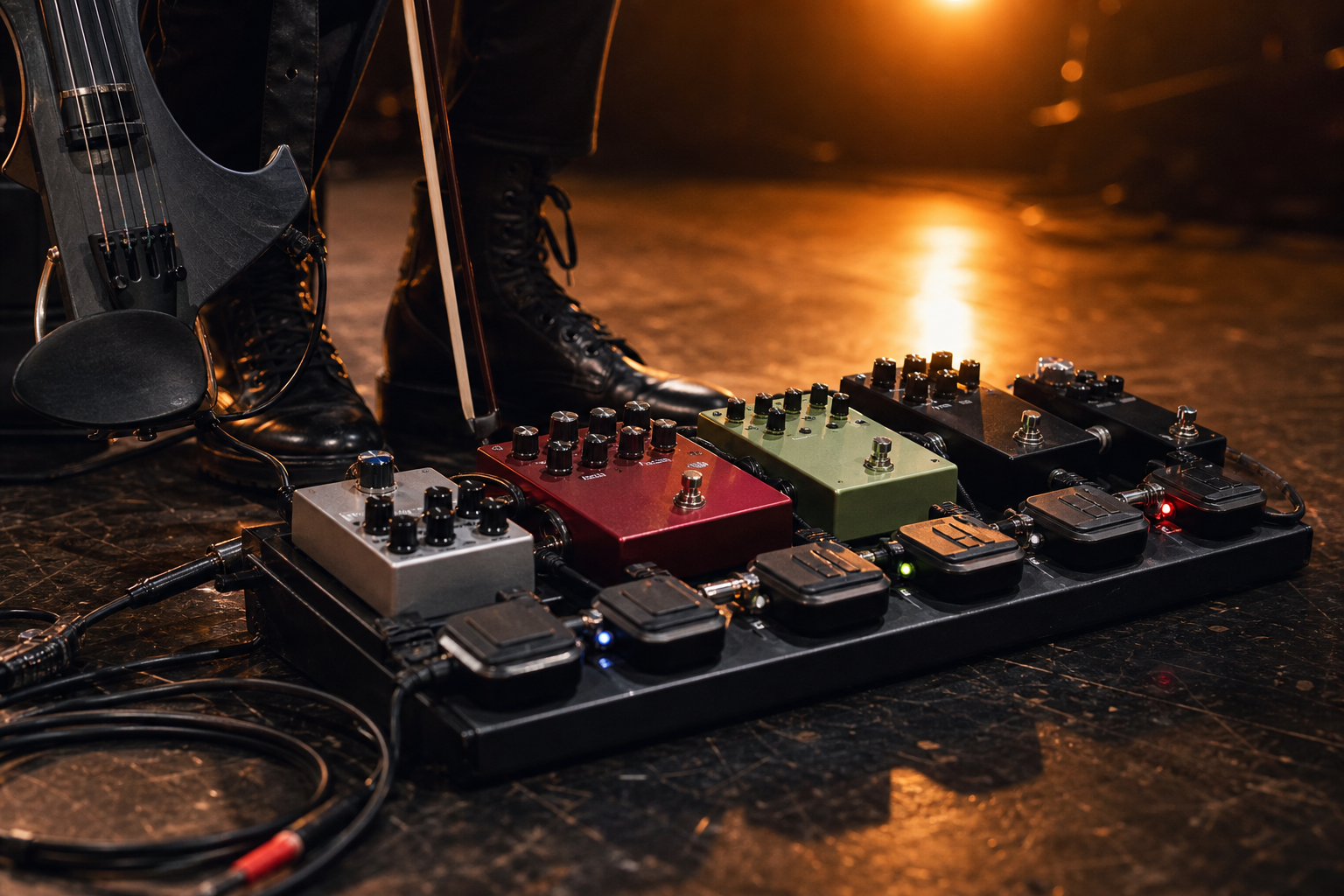
Which delay pedals are worth buying right now?
This shortlist stays focused on real electric violin use: clean repeats, stage-friendly controls, workable stereo or mono paths, and enough personality to support Tanya Strings as a performer and content creator without burying the instrument under guitar habits.
| Product | Best for | Why Tanya would use it | Watch out for | Links |
|---|---|---|---|---|
| BOSS DD-200 | Most electric violinists who need one serious all-around stage delay | I trust it when the set needs presets, multiple delay personalities, quick tap-tempo work, and enough control to stay consistent from rehearsal to venue PA. | It is compact for the power, but it still makes the most sense if you will actually use memories and mode depth. | Official · Amazon |
| Line 6 HX One | Small boards that want one compact pedal to cover many delay colors and more | I would use it when every centimeter matters and I still want serious creative range, tap control, presets, and the option to change the entire effect identity later. | It is not a delay-only box, so buy it for flexibility rather than for a dedicated delay workflow. | Official · Amazon |
| BOSS DD-8 | Players who want the safest compact dedicated delay pedal at a lower spend | I like it when I need a straightforward box with useful modes, stereo flexibility, and no drama in a standard footprint. | It gives you less preset and advanced control depth than the bigger pedals above it. | Official · Amazon |
| Strymon Brig dBucket Delay | Premium rigs that want warm analog-style repeats and wider stereo atmosphere | I would choose it when the set needs more character in the repeats and I want the delay itself to add elegance instead of only utility. | It is a taste-driven buy, not the cheapest path to competent delay. | Official · Amazon |
| BOSS SDE-3 | Performers chasing wider vintage digital echoes and more dramatic dual-delay feel | I would use it when I want delay to behave like part of the show design, with more old-school spread and less plain utility. | The personality is the point, so do not buy it expecting the broadest neutral all-purpose pedal. | Official · Amazon |
Why is DD-200 my safest all-around choice?
DD-200 sits first because it solves the problems most often encountered on stage. BOSS says it gives you twelve delay modes, 127 user memories plus manual mode, 32-bit floating-point processing at 96 kHz, MIDI support, and a phrase looper with up to 60 seconds of recording time. That matters for electric violin because I can move from a clean dotted rhythm to a warmer analog echo, then to a wider ambient layer, and still recall those sounds quickly instead of rebuilding them while people wait. Tanya Strings buys delay pedals for repeatability, and DD-200 is one of the clearest repeatability buys in the category.
Who should buy DD-200 first?
Buy it first if you want one delay pedal that can cover elegant event work, crossover leads, ambient intros, content sessions, and a more ambitious show structure without needing a second dedicated unit immediately.
- Pros: broad mode range, strong preset recall, tap-tempo control, MIDI growth path, stereo-friendly routing, and a useful looper bonus.
- Cons: more pedal than a minimalist board needs if the job is only one always-on slap or one basic repeat sound.
See BOSS DD-200 · Find DD-200 options on Amazon
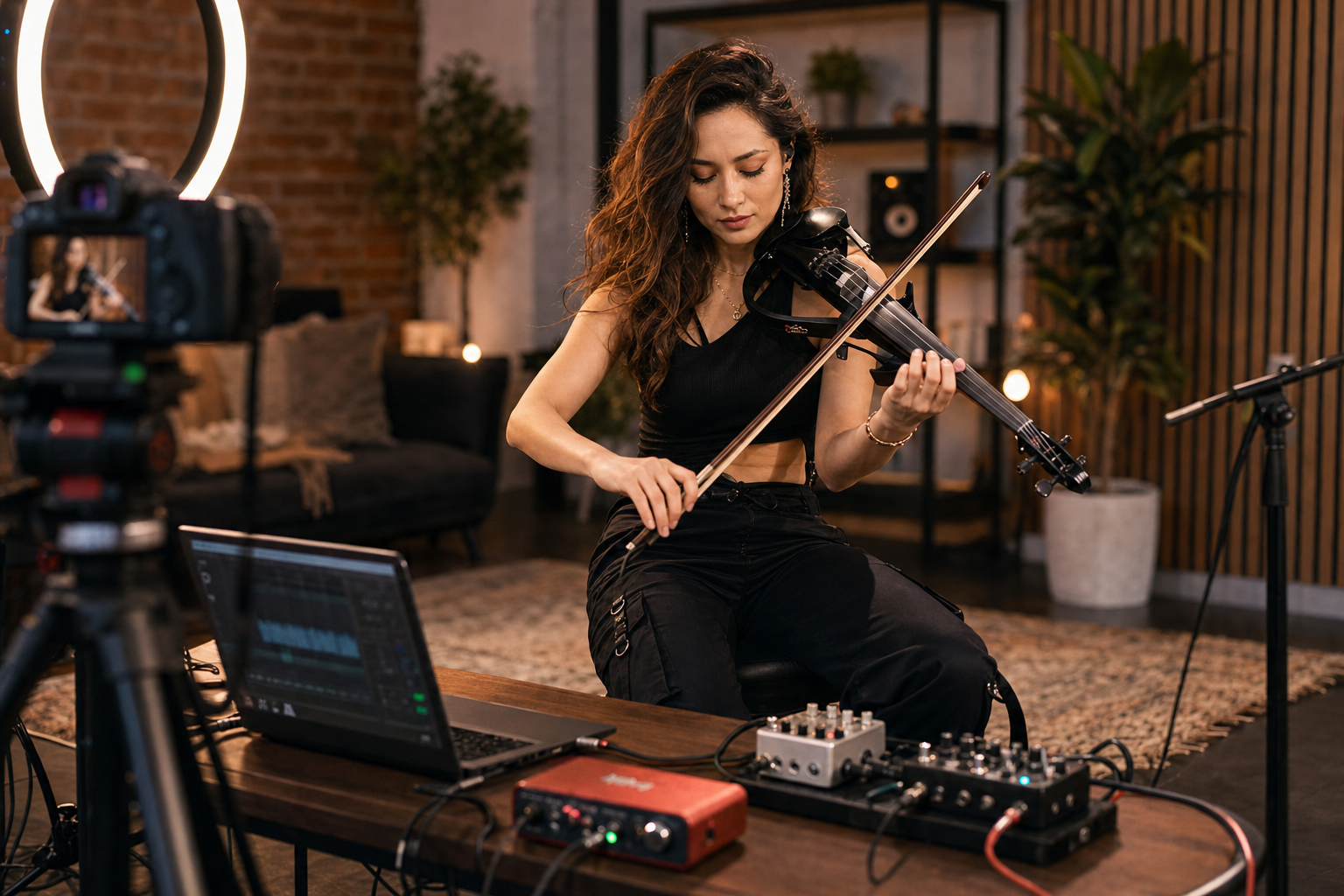
When is HX One smarter than a dedicated delay box?
HX One is smarter when the board is tiny or the creative brief changes every week. Line 6 describes it as a compact stereo pedal with 250+ HX effects, a unique Flux Controller, adjustable input impedance, MIDI, external control, and 128 onboard presets. That makes it especially attractive for electric violinists who need delay now but may want modulation, pitch, filter, or special-effect moments later without rebuilding the entire pedalboard. Tanya Strings would choose HX One when the gig schedule rewards flexibility and the floor rig has room for exactly one compact effect slot, not three separate experiments.
Should HX One replace a bigger delay pedal?
Yes, if your show values compact versatility more than a dedicated delay-only interface. No, if you already know that delay is the central effect and you want the fastest possible access to its own specific live behavior.
- Pros: huge effect library, small footprint, presets, useful tap and Flux functions, stereo operation, and strong long-term flexibility.
- Cons: less single-purpose immediacy than a dedicated delay box when all you want is delay every night.
See Line 6 HX One · Find HX One options on Amazon
Why would DD-8 still beat larger pedals?
Because not every violin rig needs a control center. BOSS calls the DD-8 its most feature-rich compact delay pedal, with eleven modes, stereo support, and a looper with unlimited overdubs. For Tanya Strings, that means it can be the right buy when I want a real dedicated delay pedal that fits easily on a small board and stays intuitive under a boot. It is the kind of purchase I like for disciplined rigs where the delay job is defined clearly: one or two musical sounds, fast tap tempo, reliable bypass, and no temptation to overproduce the floor plan.
When does DD-8 make more sense than DD-200?
It makes more sense when the set is simpler, the board is tighter, and you are honest that you do not need deep memory management or broader live control architecture.
- Pros: standard BOSS footprint, strong mode variety for its size, stereo friendliness, and lower financial risk.
- Cons: less memory and advanced control depth than the DD-200, so it tops out sooner for bigger productions.
See BOSS DD-8 · Find DD-8 options on Amazon

When is Strymon Brig worth the premium?
Brig makes sense when the repeats themselves should carry character. Strymon says Brig offers three analog-style delay voices in one stereo pedal, with 3205, 3005, and Multi modes, artifact-free tap tempo, expression support, MIDI control, and a Class A JFET stereo input preamp. I like that profile for electric violin because the pedal is not only repeating notes. It is shaping the emotional edge of the repeats, from elegant slapback to dreamier stereo bloom. Tanya Strings would move to Brig when the rig already works and the next investment is about taste, texture, and how graceful the space around the violin feels.
What kind of violinist will love Brig?
It suits performers who want warmer repeats, beautiful stereo spread, and a more premium analog-style feel without carrying a large vintage-flavored delay box.
- Pros: rich repeat character, multiple analog-style voices, premium stereo image, MIDI support, and expressive feel.
- Cons: higher price and a more taste-specific mission than the safest all-purpose delay choices.
See Strymon Brig · Find Brig options on Amazon
Who should buy BOSS SDE-3 for vintage-style width?
SDE-3 is for players who want delay to behave like part of the scene design, not only a utility effect. BOSS says it pulls from the classic Roland SDE-3000 and adds a powerful Offset control for colorful dual-delay textures. That makes sense for electric violin when the show benefits from wider echoes, more visible contrast between the dry note and the repeat field, and a little more old-school drama around lead entrances or sustained lines. Tanya Strings would choose SDE-3 when the artistic identity of the set is already defined and the delay should speak with a clearer voice of its own.
When is SDE-3 the right artistic buy?
Buy it when you already know that neutral delay is not the goal and you want a pedal that leans harder into character, width, and a more stylized repeat architecture.
- Pros: strong personality, vintage-inspired dual-delay feel, creative spread, and a more dramatic textural lane than neutral digital pedals.
- Cons: narrower all-purpose appeal if you only need one reliable general delay pedal for mixed gig types.
See BOSS SDE-3 · Find SDE-3 options on Amazon
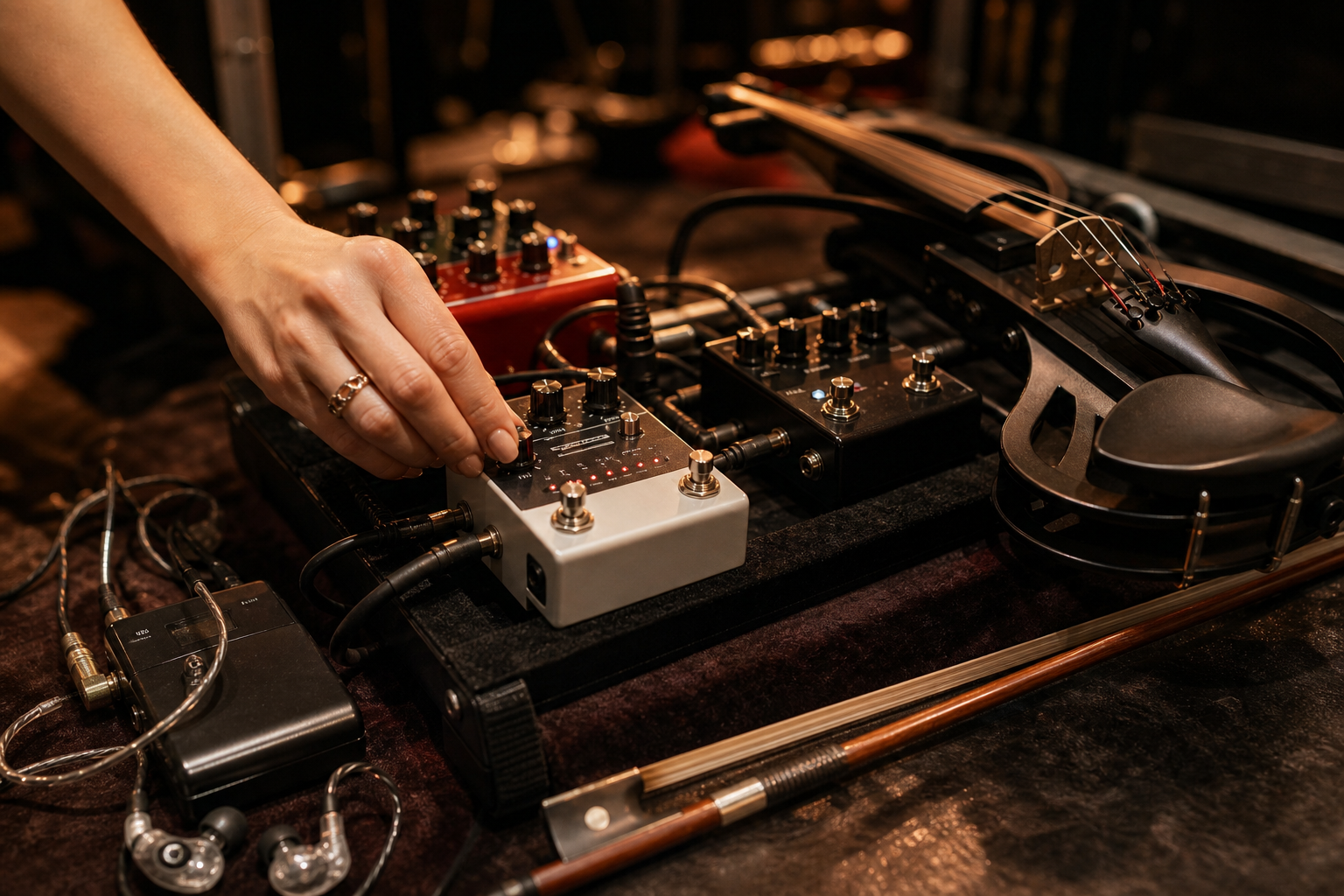
How should you buy a delay pedal without making the violin blurry?
Buy for clarity first and spectacle second. Electric violin punishes vague ambience because the pickup, PA, in-ear path, and camera audio all exaggerate whatever is already unfocused. That is why Tanya Strings buys delay according to how the dry note survives the effect, not according to the biggest preset library or the most dramatic demo.
My buying checklist:
- Start with the dry violin sound and make sure it already sits well through the DI, preamp, or amp-sim path.
- Choose the pedal that lets the repeat level stay disciplined while tap tempo remains easy under pressure.
- Prefer delay voices that keep the center of the note intact instead of flattening every phrase into haze.
- Think about the actual show: mono venue feed, stereo in-ears, backing tracks, and whether presets matter nightly.
- Match the delay purchase to the board size and power budget you already have, especially if you travel often.
What should you test in five minutes before buying?
Test one clean lead line, one sustained note, one rhythmic hook, and one fast stop-start section. If the repeats make timing feel uncertain or hide the pitch center, move on. If they widen the phrase while the attack still lands cleanly, the pedal is probably working for violin rather than against it.
Where does delay sit in the shopping order?
After the core tone path. Tanya Strings would stabilize tuning, power, DI or preamp, and monitoring first. Delay becomes a high-value next purchase because it changes the emotional size of the performance faster than many other upgrades once the foundation is already honest.
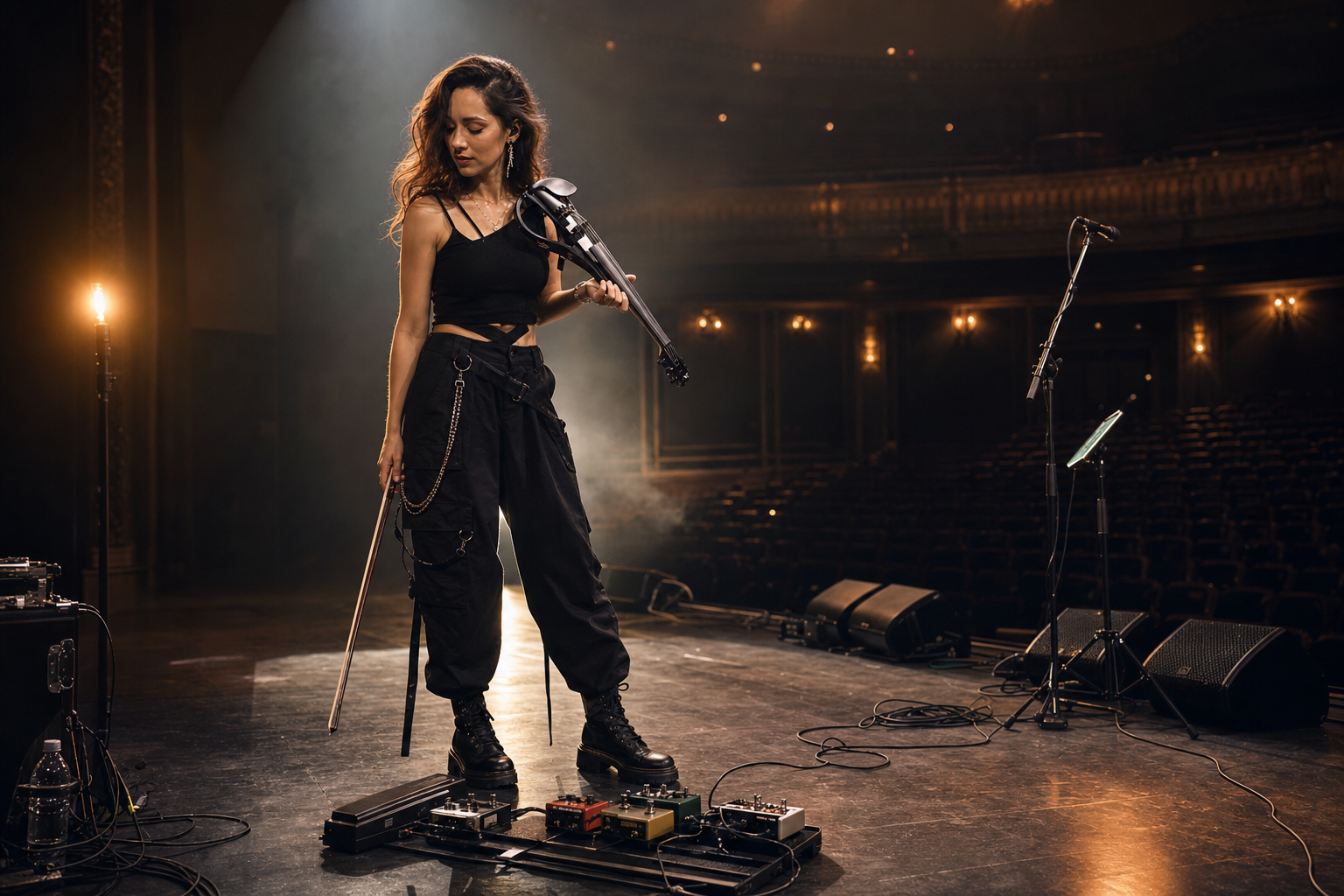
What mistakes make delay sound cheap on stage?
- Too much mix: the audience should hear space around the violin, not a second violin fighting the first one.
- No tap-tempo discipline: a beautiful delay sound at the wrong pulse feels amateur very quickly.
- Buying character before control: start with a pedal you can manage confidently in real rooms, then chase flavor.
- Ignoring power and board space: a good delay is not good for you if it destabilizes the rest of the rig.
- Letting ambience hide weak monitoring: fix the monitor path first, because delay will not rescue a confused in-ear mix.
My own bias is simple: if I cannot trust the first note, I do not care how beautiful the tenth repeat is. Delay should support authority, not replace it.
FAQ
What delay setting is the safest starting point for electric violin on stage?
Start with one or two repeats, a controlled mix, and a delay time locked to the song pulse. I want space, not fog. If the repeats begin to mask the bow attack, I back the mix down immediately.
Do electric violinists really need stereo delay?
No. Stereo is useful when the venue, the monitor rig, or the content setup can actually preserve it. A strong mono delay can still be the smarter and more portable choice.
Should I buy delay before a better reverb pedal?
If the core rig already feels stable, often yes. Delay usually adds clearer rhythmic value and stage width with less wash, especially for crossover and pop-oriented sets.
Which delay pedal would Tanya Strings buy first with personal money?
The DD-200 would be the first buy because it balances breadth, control, and repeatable stage behavior better than the rest of the field for most electric violinists.