Effects · 2026-06-12
Best Reverb Pedals for Electric Violinists on Stage
The best reverb pedal for most electric violinists on stage is the one that gives space and sustain without smearing pitch, bow attack, or the front edge of the note. I would start with the Boss RV-6 if you want a reliable all-around pedal, look at Electro-Harmonix Oceans 11 if you want more algorithms for less money, move to Boss RV-200 if your show needs presets and tighter control, and pay Strymon blueSky money only when stereo polish is already part of the performance. On electric violin, reverb should make the line feel larger, not softer and less focused.
Follow Tanya Strings on Google
Add the site as a preferred source to see more new violin posts from Tanya Strings in Google.
Affiliate disclosure: Some links in this article are affiliate links. I may earn a commission if you make a purchase, at no extra cost to you.
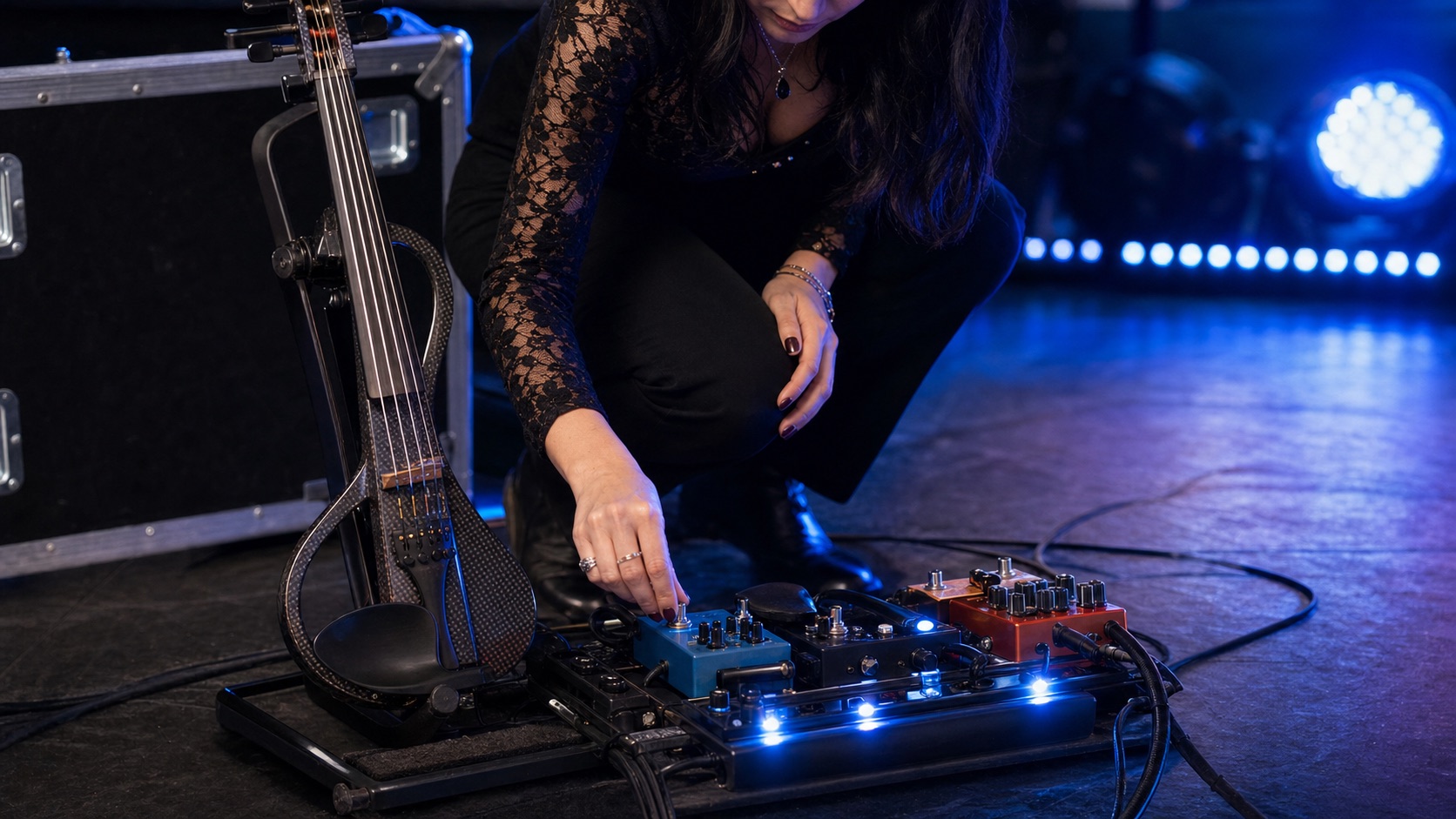
What makes a reverb pedal good for electric violin on stage?
Electric violin reacts fast to bad ambience. Too little reverb can make the signal feel dry and exposed. Too much can erase the center of the note and make the bow sound late. I want a pedal that keeps the attack intact, gives the sustain some width, and stays easy to reset during a rushed soundcheck. Compact control matters more to me than endless experimental options if the pedal is going to live in a working stage rig.
My performer rule: if the reverb makes the line feel wider but I still hear pitch center immediately, I am close to the right setting.
Which reverb pedals are worth buying right now for electric violin?
These are the pedals I would shortlist first if the goal is a repeatable live sound rather than a studio-only toy.
| Product | Best for | Why Tanya would use it | Watch out for | Links |
|---|---|---|---|---|
| Boss RV-6 | Most players who want one dependable live reverb | Compact size, familiar control layout, and enough sounds to cover weddings, clubs, and corporate sets without slowing the board down. | Preset recall is limited, so it suits players who mostly keep one or two trusted sounds. | Official · Amazon |
| Electro-Harmonix Oceans 11 | Players who want more modes without jumping to premium prices | Strong value when one show needs hall, another needs shimmer, and you still want to keep the pedalboard small. | More options can slow you down if you have not decided what your stage sound actually needs. | Official · Amazon |
| Boss RV-200 | Preset-heavy live sets with click, tracks, or multiple scenes | It makes sense when one song needs a short plate, the next needs a huge hall, and you do not want to tap-dance between compromises. | Bigger footprint and higher price mean it is easiest to justify after the rest of the rig already works. | Official · Amazon |
| Strymon blueSky | Premium stereo polish and refined ambient color | I would use it when the show really benefits from a more designed, spacious reverb picture and the PA or in-ears already let you hear that detail. | Easy to overspend on if the live mix, DI path, or monitoring is still inconsistent. | Official · Amazon |
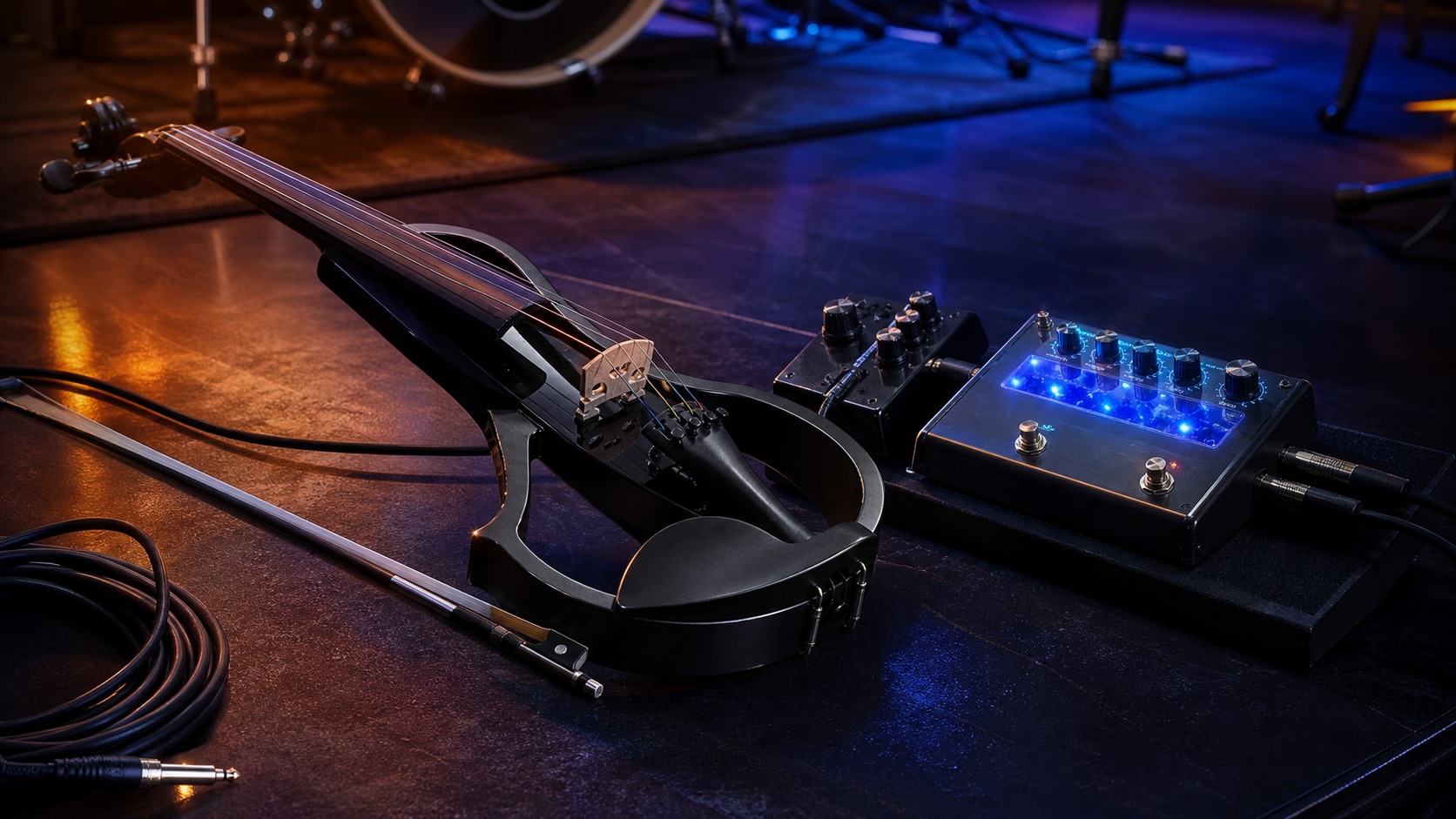
Why is Boss RV-6 still the safest all-around reverb pedal?
The RV-6 is still the easiest recommendation for most working electric violinists because it covers the important stage jobs without making the board feel fragile. Boss presents it as a compact reverb pedal with eight modes and stereo support, which is exactly the level of range many live players need. I like gear that lets me arrive, plug in, and sound like myself fast. The RV-6 does that better than many pedals that promise more but demand more attention.
What does the RV-6 do well in a real set?
It handles the bread-and-butter sounds first: short room, cleaner plate, bigger hall, and a few color options when a set needs more sweep. That makes it strong for performers who move between event work, club dates, and content shoots.
- Pros: compact footprint, familiar Boss reliability, enough variety for most live sets, and an easy learning curve.
- Cons: less convenient than a preset-driven unit when every song needs a different exact decay or mix level.
See the RV-6 on the official Boss page · Check Boss RV-6 on Amazon
When does Electro-Harmonix Oceans 11 make more sense than the safer option?
Oceans 11 becomes interesting when you know you will use more than one flavor of ambience and you do not want to spend premium money yet. Electro-Harmonix positions it around eleven reverb styles in a compact format, which is attractive for electric violin because one player can move from subtle support to obvious cinematic color inside the same week. I would rather buy Oceans 11 with a clear plan than buy a simpler pedal and immediately wish I had shimmer, reverse, or mod textures for featured moments.
How do I think about Oceans 11 as a stage pedal instead of a toy?
I treat it as a value pedal for performers who already know they want options. If you are the kind of player who uses one trusted hall all night, the extra modes may be unnecessary. If your set includes intros, transitions, and a few larger atmospheric moments, they can be worth it.
- Pros: strong mode count for the price, compact size, and enough range to cover both safe ambience and bigger feature sounds.
- Cons: a deeper option list can slow decisions down if your live workflow is still unsettled.
See Oceans 11 on the official EHX page · Check Oceans 11 on Amazon
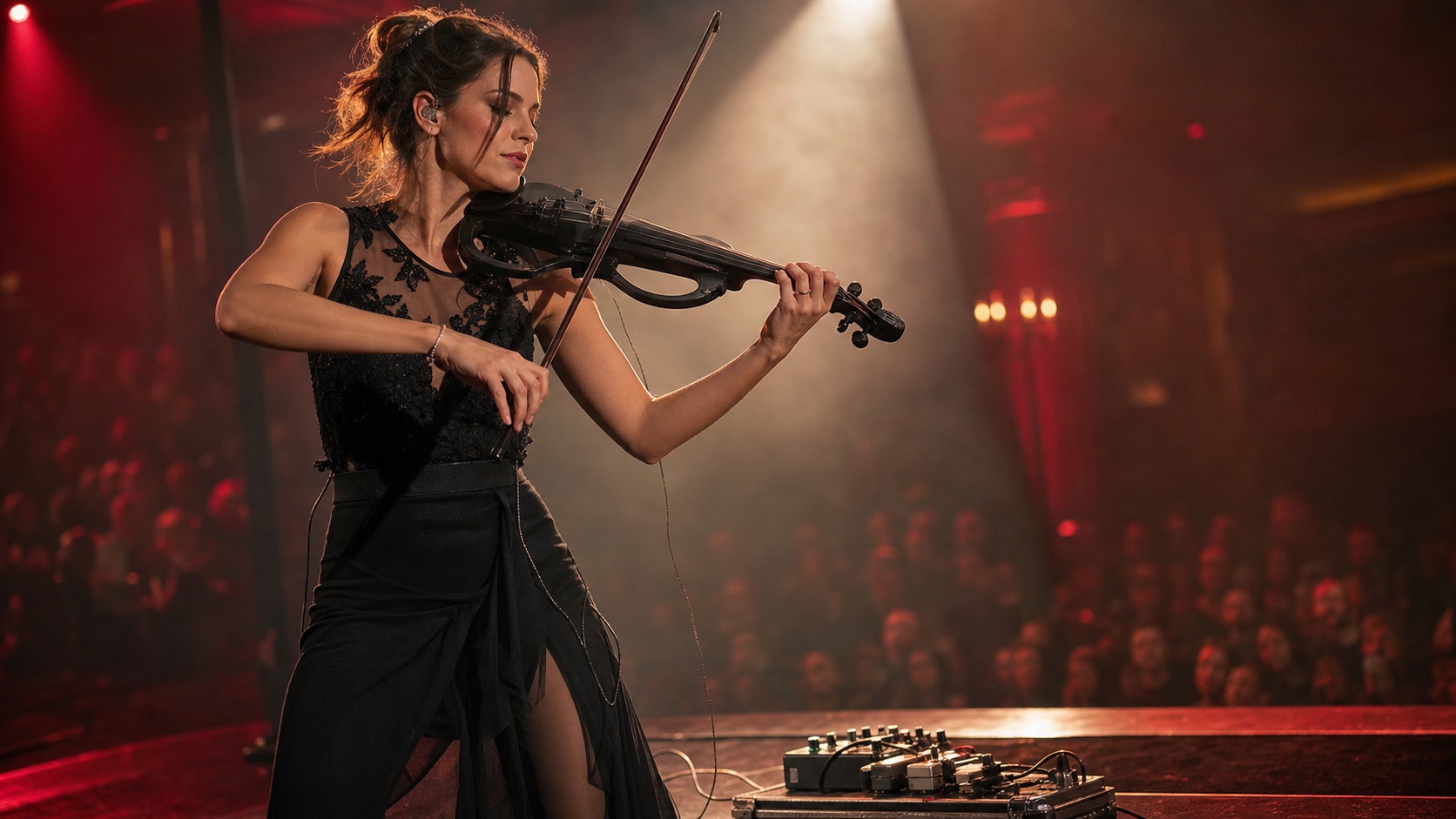
Who should move up to Boss RV-200 for live presets?
The RV-200 makes sense when your stage show is already organized enough to benefit from scene recall. Boss positions it with twelve reverb types, 127 memories, stereo I/O, and MIDI, which is far more control than the average small gig requires. But if you are running tracks, repeatable intros, or a show that changes mood song by song, that extra control stops being luxury and starts becoming workflow.
Why would Tanya pay for the larger Boss pedal?
I would pay for it when I want one pedal that remembers the show for me. If a verse needs a restrained plate and the next cue needs a huge wash, I want to hit one switch and keep my attention on the performance, not on knob positions.
- Pros: preset depth, MIDI capability, stereo routing, and better repeatability for structured shows.
- Cons: more cost, more footprint, and more setup discipline than most first-time pedal buyers need.
See the RV-200 on the official Boss page · Check Boss RV-200 on Amazon
Is Strymon blueSky worth premium money for electric violin?
Sometimes yes, but only after the rest of the live chain is already dependable. Strymon presents blueSky as a premium stereo reverb with full MIDI control and three core reverb machines, which tells you exactly where it belongs: not as a rescue purchase, but as a polish purchase. On electric violin, blueSky becomes attractive when you can already hear the benefit of better tails, smoother stereo space, and more refined ambient tone in your monitors or front-of-house feed.
When does blueSky stop being overkill?
It stops being overkill when ambience is part of the identity of the show. If the audience should feel width, bloom, and a deliberate cinematic edge around the violin, a pedal like this earns its place. If you still need to stabilize tuning confidence, gain structure, or the DI path, buy those improvements first.
- Pros: refined premium sound, stereo focus, MIDI control, and a strong fit for designed stage atmospheres.
- Cons: expensive, and the benefit shrinks fast if the room, PA, or monitoring does not let you hear the upgrade clearly.
See blueSky on the official Strymon page · Check blueSky on Amazon
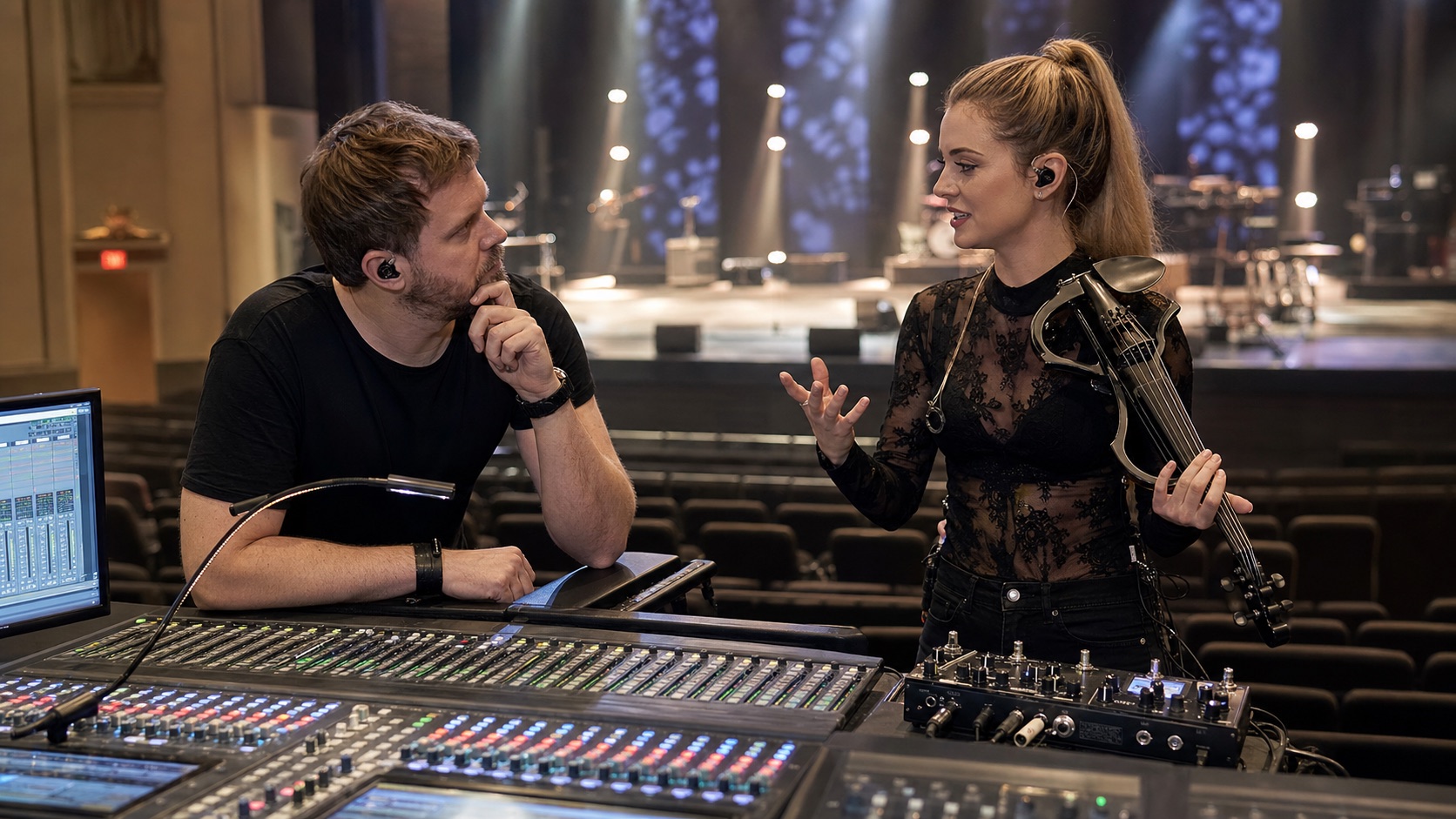
How much reverb should you use on stage before the violin loses focus?
Less than you think. Electric violin can sound beautiful with reverb, but it gets soft-edged quickly if the mix is too wet. I start with the shortest useful decay and the lowest useful mix level, then open it only until the line feels less dry. If I stop hearing the front of the bow, if fast notes smear together, or if pitch center gets harder to trust, I back the level down immediately.
- Use less in loud rooms: the venue itself is already adding blur.
- Use less with backing tracks: track ambience and pedal ambience stack faster than many players expect.
- Use more only for exposed moments: long intros and solo features can carry more reverb than busy ensemble passages.
Do you really need stereo and MIDI for electric violin gigs?
No. They are valuable only when the rest of the performance chain is ready for them. Stereo matters more when you use in-ears, a stereo stage rig, or a front-of-house mix that can actually present width well. MIDI matters more when your show includes fixed cue changes and you want repeatability without manual knob moves. For many electric violinists, a strong mono pedal is still the smartest live buy.
My order stays simple: stable tone first, reliable monitoring second, advanced ambience control third.
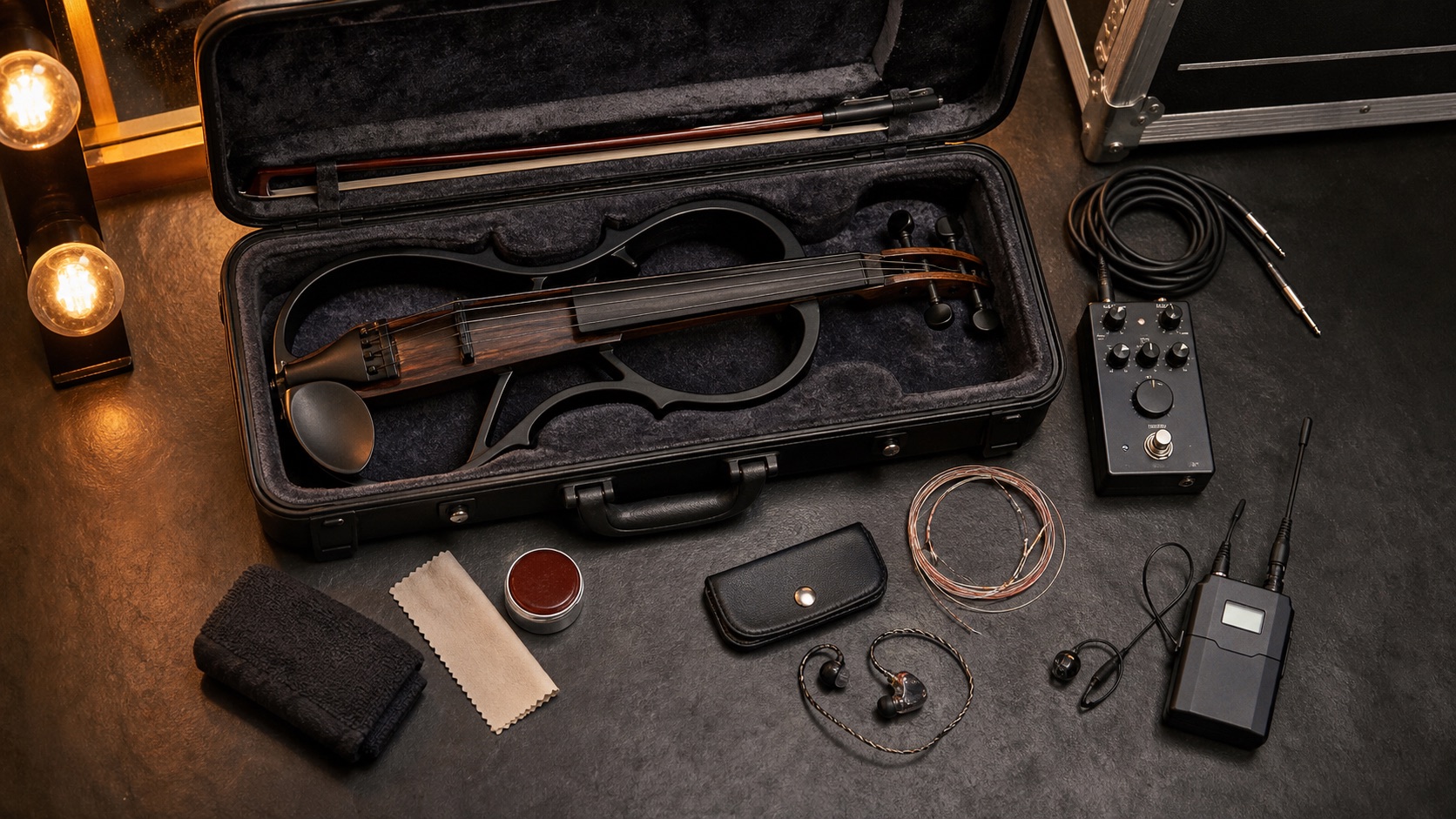
What should you buy first if your budget is limited?
If money is tight, I would spend in this order:
- Buy first: a dependable compact reverb like the Boss RV-6 that solves the core live need without expanding the rig too much.
- Buy next: proper cables, power, and a pedalboard layout that keeps setup fast and quiet.
- Buy later: wider mode libraries, preset systems, or premium stereo polish after the stage workflow already feels repeatable.
This order keeps your money tied to performance confidence rather than feature envy.
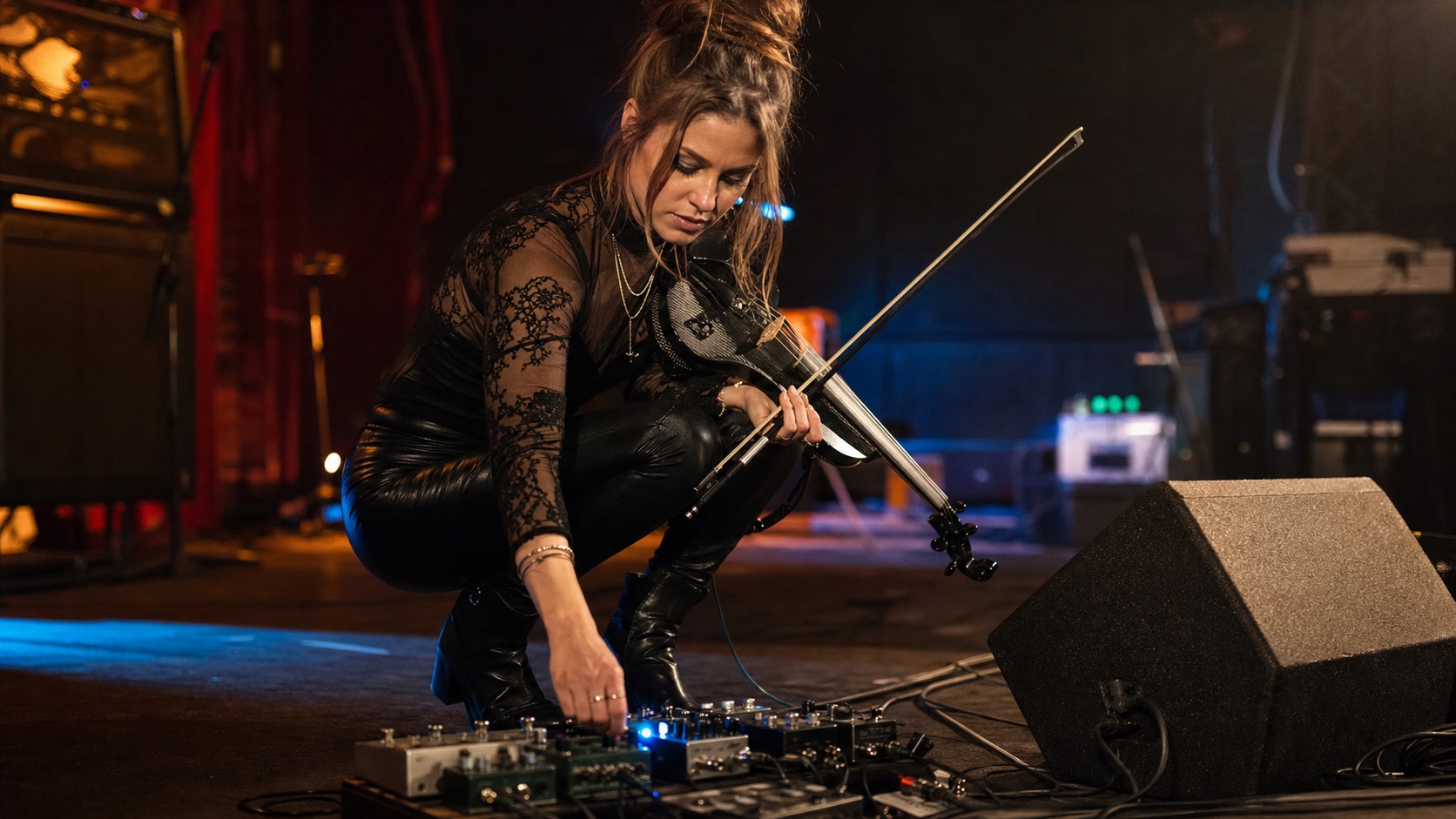
How does Tanya Strings dial in stage reverb before a show?
I do not start with the wettest sound. I start with clarity, then expand. The pedal should help the violin sit in the room, not cover weak preparation.
- Dry phrase first: I play one exposed line with almost no reverb so I know the direct tone is honest.
- Add space second: I raise decay and mix only until the note stops feeling too small.
- Test fast articulation: if fast runs stay clear, the reverb is probably still in a usable range.
- Check one long feature note: if the tail blooms musically without swallowing the pitch center, the setting is ready.
The goal is a reverb sound that still behaves when the room fills up, the engineer changes the monitor level, or the show gets louder than rehearsal.
FAQ
What is the best first reverb pedal for most electric violinists?
For most players, the Boss RV-6 is the safest first buy because it is compact, reliable, and musical enough for regular stage work without becoming a programming project.
Is a reverb pedal better than amp or mixer reverb for electric violin?
Usually yes, because your pedal travels with you and keeps your core ambience more consistent from room to room. House reverb can still work, but it is less predictable.
How much reverb is too much for electric violin live?
If pitch center gets harder to trust, the front edge of the bow disappears, or quick passages lose shape, the reverb level is too high.
Do I need stereo and MIDI for every electric violin gig?
No. They matter most when your show already uses structured scene changes, tracks, or a more designed ambient sound. Many performers still do their best work with a strong mono pedal.