Speaker Stands · 2026-08-27
Best Speaker Stands for Electric Violinists Who Run Their Own PA and Monitor Rig
For most electric violinists who run their own compact PA, the best speaker stand is the K&M 21450 because it stays light, stable, and fast to deploy while still giving you a safety pin, adapter sleeve, and enough height for weddings, terrace shows, and private events. If you lift heavier speakers often or need extra reach, buy the Ultimate Support TS-110B instead. If uneven stairs or risers are part of the job, the Hercules SS710B PLUS earns the extra money.
Follow Tanya Strings on Google
Add the site as a preferred source to see more new violin posts from Tanya Strings in Google.
Affiliate disclosure: Some links in this article are affiliate links. I may earn a commission if you make a purchase, at no extra cost to you.
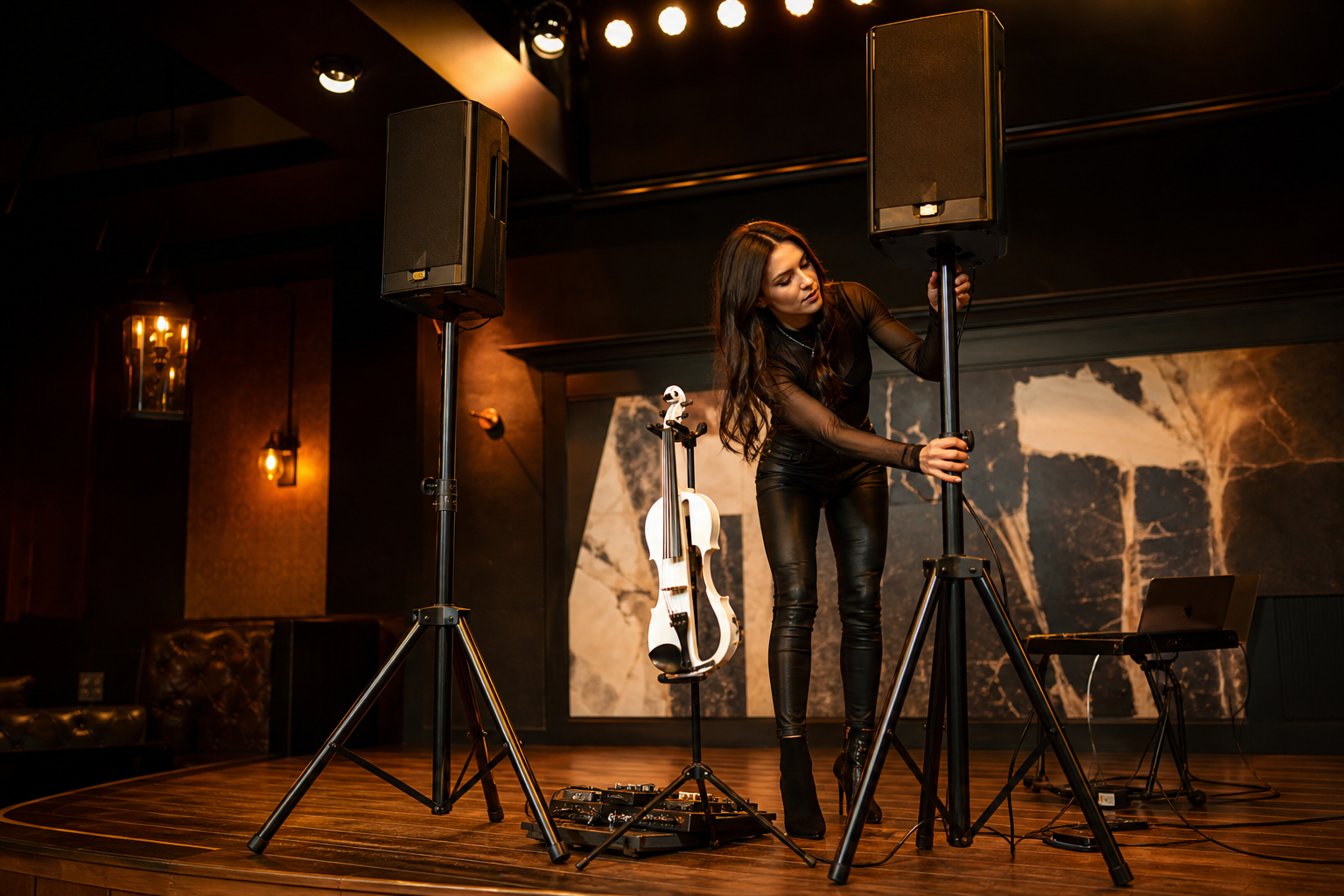
What are the best speaker stands for most electric violinists?
The shortlist changes with the kind of show you actually run. If you carry your own small PA to weddings, cocktail events, rooftops, and branded content sets, you need a stand that deploys fast, folds cleanly, and does not make you dread the lift. This guide is about classic speaker stands for compact tops and side fills, not about sub poles or wall mounts. If you still need the speakers themselves, read my guide to battery-powered PA speakers. If you are trying to hear yourself better on loud stages, pair this with my guide to powered stage monitors.
My performer rule: if I do not trust the stand while lifting the speaker, I will not trust the rig once the audience is in front of it.
Which speaker stands are worth buying right now?
I kept this list focused on working electric violin situations: compact PA tops, side speakers for self-run events, and hybrid stage-and-content rigs where Tanya Strings has to load in alone or with very little help. I care less about generic DJ bragging points and more about safe height, fast locking, manageable weight, and stable legs that do not turn cable management into a trap. If your bigger issue is bad venue power or messy wall current, open my guide to power conditioners and surge protectors too.
| Product | Best for | Why Tanya would use it | Watch out for | Links |
|---|---|---|---|---|
| K&M 21450 | Most solo electric violinists who want a dependable all-around pair | I trust it because the aluminum build, safety pin, adapter sleeve, and sensible carry weight fit the real wedding, club, and private-event lane. | Its 88 lb load rating is enough for many compact tops, but it is not the stand I would choose for unusually heavy boxes. | Official · Amazon |
| Ultimate Support TS-110B | Performers lifting heavier speakers alone and needing extra height | I would pay for it when I want the Air-Powered lift-assist and tall range to save my back and speed up placement. | It is heavier and pricier than the simpler stands, so it only makes sense if you will actually use the extra help and reach. | Official · Amazon |
| Hercules SS710B PLUS | Uneven stages, risers, stairs, and event rooms with awkward floors | I like it because the gear-up lift, EZ adaptor, and leveling leg solve the exact kind of irritating venue geometry that wastes focus before a set. | It is a steel stand, so you feel the extra weight during load-in. | Official · Amazon |
| Gator Frameworks GFW-SPK-2000 | Budget-conscious performers who still want a solid aluminum stand | I would use it when I want a practical 125 lb stand with good height range and very simple ownership cost. | The value is strong, but it feels more straightforward than premium rather than luxurious. | Official · Amazon |
| Gravity SP 5211 B | Players who want a very light, clean, no-drama stand for compact tops | I respect it because the 2.2 kg weight, 50 kg load, and locking-pin workflow feel intentionally built for gigging without fluff. | The lighter build is the point, so I would still keep it matched to reasonable compact speakers. | Official · Amazon |
| On-Stage SS7725 | Working performers who prefer a sturdier steel value option | I would keep it in the shortlist because it gives useful height, dual-size socket support, and a wide nonslip base at a sensible price. | It is heavier than the aluminum options, so the carry burden shows up over repeated gigs. | Official · Amazon |
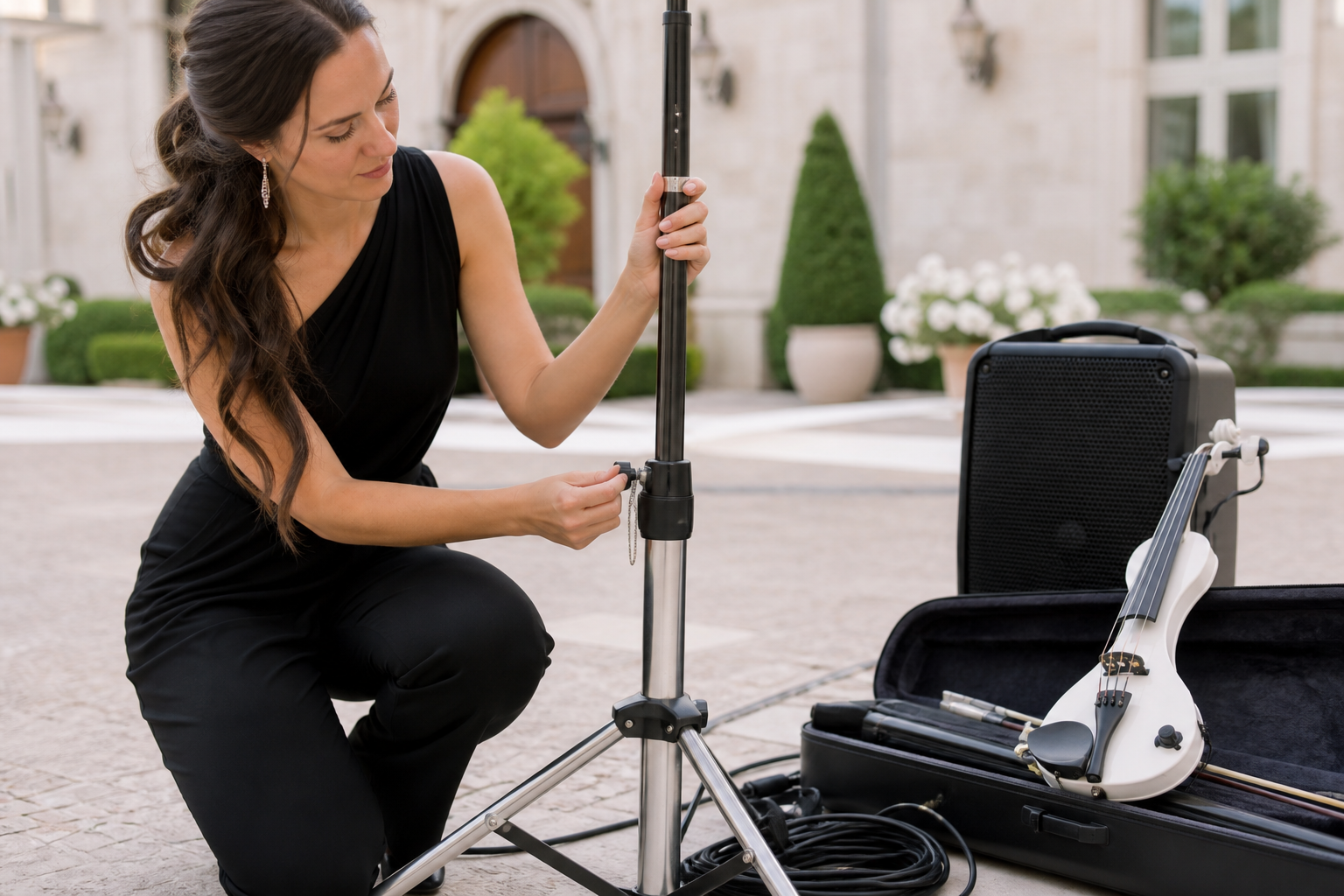
Why is the K&M 21450 my best overall pick?
The K&M 21450 is the stand I would recommend first to most electric violin performers because it covers the broadest range of real shows without becoming a chore to carry. K&M says it uses high-quality aluminum, fiberglass-reinforced fittings, a clamping lever, a safety pin, an included adapter sleeve, a 50.00 to 75.98 inch height range, and an 88.185 lb load rating. That balance is exactly what Tanya Strings needs for compact tops that still have to feel safe in front of paying people.
Who should buy the 21450 first?
Buy it first if you run a pair of sensible portable PA speakers and want one stand model that can survive weddings, hotel rooms, clubs, terraces, and private events without forcing premium lift-assist pricing.
- Pros: light carry weight, strong brand trust, safety pin, useful height, and a clean all-around gigging profile.
- Cons: not the tallest stand here and not the best choice for unusually heavy speakers.
See the K&M 21450 · Check K&M 21450 on Amazon
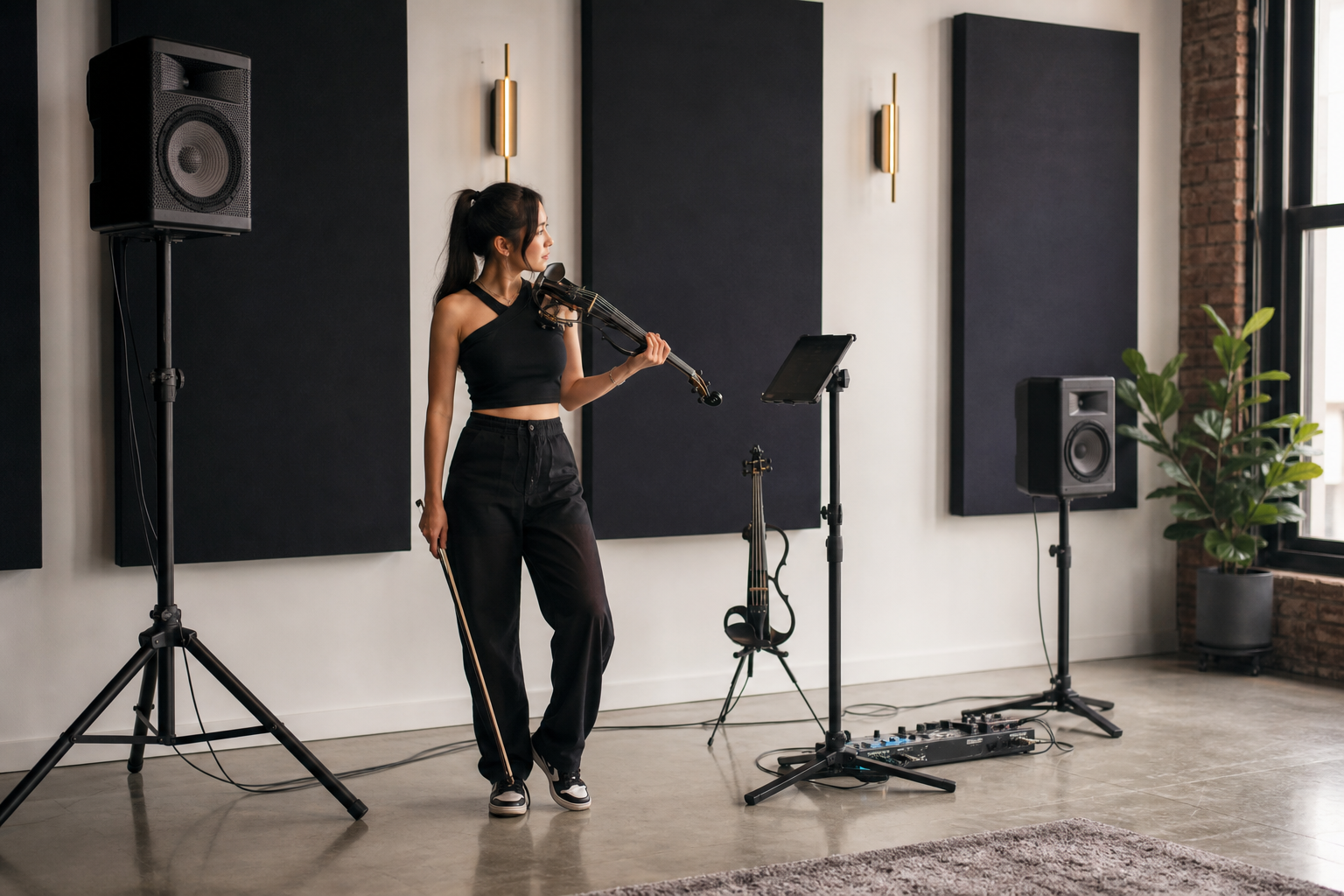
When should you pay more for the Ultimate Support TS-110B or Hercules SS710B PLUS?
Pay more when the cheaper stand is the part that makes you cautious. Tanya Strings spends extra on stands when the lift is heavier, the placement is taller, or the room is uneven enough to punish ordinary tripod behavior. That is where the Ultimate Support TS-110B and Hercules SS710B PLUS separate themselves.
Why would I choose the Ultimate Support TS-110B?
Ultimate Support says the TS-110B uses its Air-Powered lift-assist design, reaches 5'2" to 9'2", weighs 13 lbs, carries up to 150 lbs, and folds to 57.5" by 5.5". That is a strong answer when you are loading in alone and do not want every speaker lift to feel like a gamble. Tanya Strings would buy it for premium event work, heavier compact tops, and any setup where extra height helps coverage without borrowing venue hardware.
- Pros: lift-assist convenience, serious height, high load capacity, and reduced fatigue over repeated shows.
- Cons: more expensive, bulkier when folded, and overkill for tiny speakers.
See the Ultimate Support TS-110B · Check TS-110B on Amazon
When does the Hercules SS710B PLUS win?
Hercules says the SS710B PLUS uses a gear-up system, an EZ adaptor that fits 35 to 40 mm sockets, a leveling leg for stairs or risers, a 50.0" to 87.8" height range, a 110.2 lb load capacity, and a 10.8 lb steel build. I like it because it solves a more specific but very real problem: not every stage is flat, and not every speaker socket behaves perfectly. Tanya Strings would rather carry a little more weight than spend soundcheck fighting wobble on a badly behaved surface.
- Pros: leveling leg, broad socket compatibility, controlled raising, and strong stage confidence on awkward floors.
- Cons: heavier than aluminum stands and less appealing if your venues are consistently flat and easy.
See the Hercules SS710B PLUS · Check SS710B PLUS on Amazon
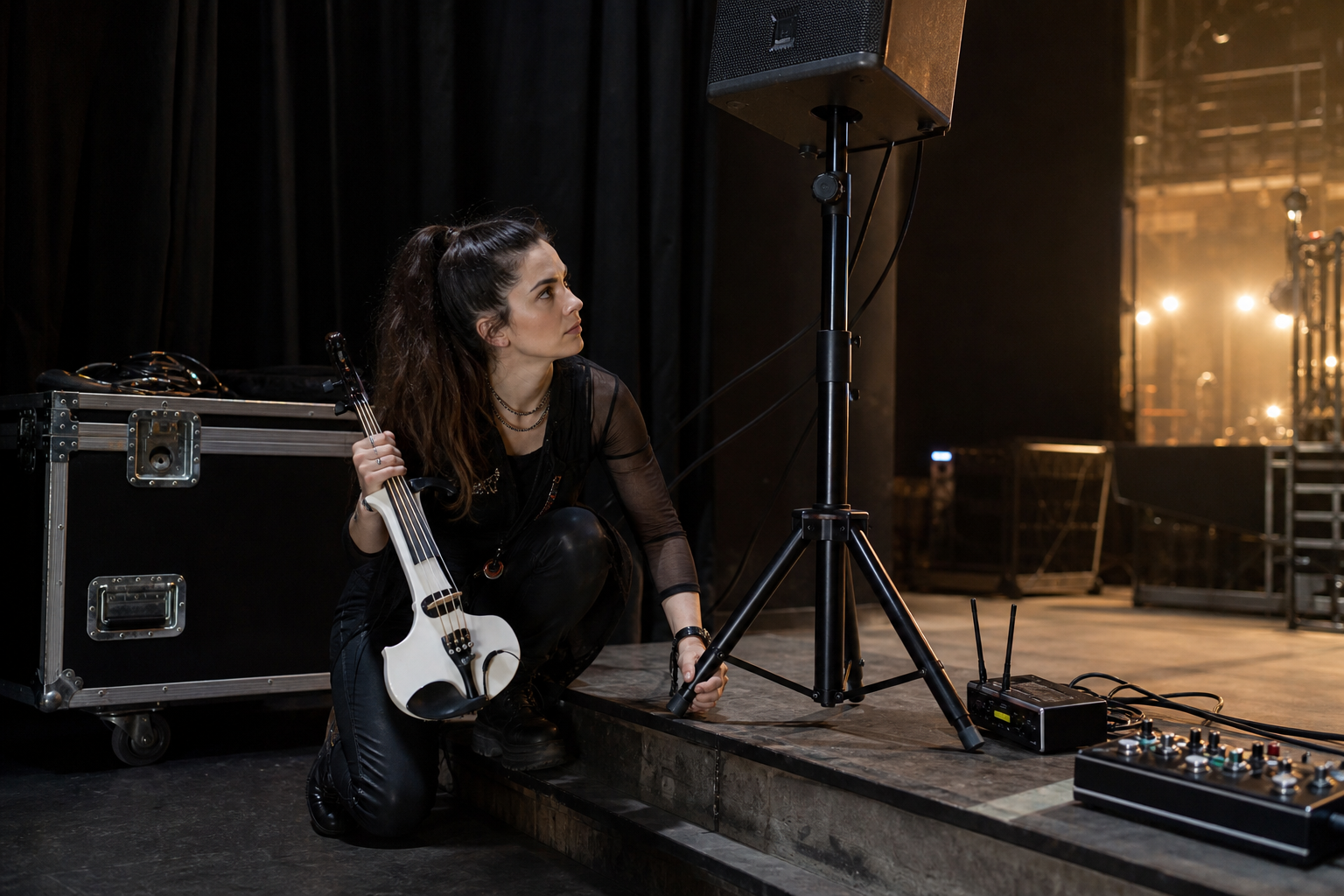
Which lower-cost speaker stands still make sense?
The lower-cost end is not useless at all. It only becomes a problem when cheap means annoying locks, vague stability, or a stand that you stop trusting after three gigs. The best value options here are still perfectly workable for real electric violin jobs.
Is the Gator Frameworks GFW-SPK-2000 the best value buy?
Gator's GFW-SPK-2000 is the clear value play when you want aluminum, a 48 to 81 inch height range, a 125 lb rating, and dual-diameter support for 35 mm and 38 mm mounts without spending premium money. Tanya Strings would use it for dependable compact PA tops where the budget matters but the rig still needs to look and feel professional.
- Pros: strong load rating, useful range, low fuss, and good value for working performers.
- Cons: less refined than the premium lift-assist options and no special help for uneven stages.
See the Gator GFW-SPK-2000 · Check GFW-SPK-2000 on Amazon
Why might the Gravity SP 5211 B be the cleaner lightweight option?
Gravity's SP 5211 B is attractive because it stays very light at 2.2 kg while still offering a 50 kg maximum load, a 1,060 to 1,950 mm height range, and a locking-pin workflow. That makes it a smart stand for mobile electric violin artists who want less weight in the car and less irritation at load-in.
- Pros: light carry, solid load rating for compact speakers, clean design, and easy handling.
- Cons: it is still a straightforward stand, not a lift-assist solution for heavier cabinets.
See the Gravity SP 5211 B · Check SP 5211 B on Amazon
When is the On-Stage SS7725 the practical steel choice?
The On-Stage SS7725 makes sense when you want a simple all-steel stand with a 46" to 74" height range, 120 lb capacity, a wide base with nonslip feet, and support for 1 3/8" and 1 1/2" sockets. Tanya Strings would pick it when cost pressure is real and the extra carry weight still feels acceptable compared with the speaker load.
- Pros: strong value, stable base, generous load rating, and easy compatibility with common speaker sockets.
- Cons: heavier to carry and less pleasant for frequent mobile load-ins than good aluminum stands.
See the On-Stage SS7725 · Check SS7725 on Amazon
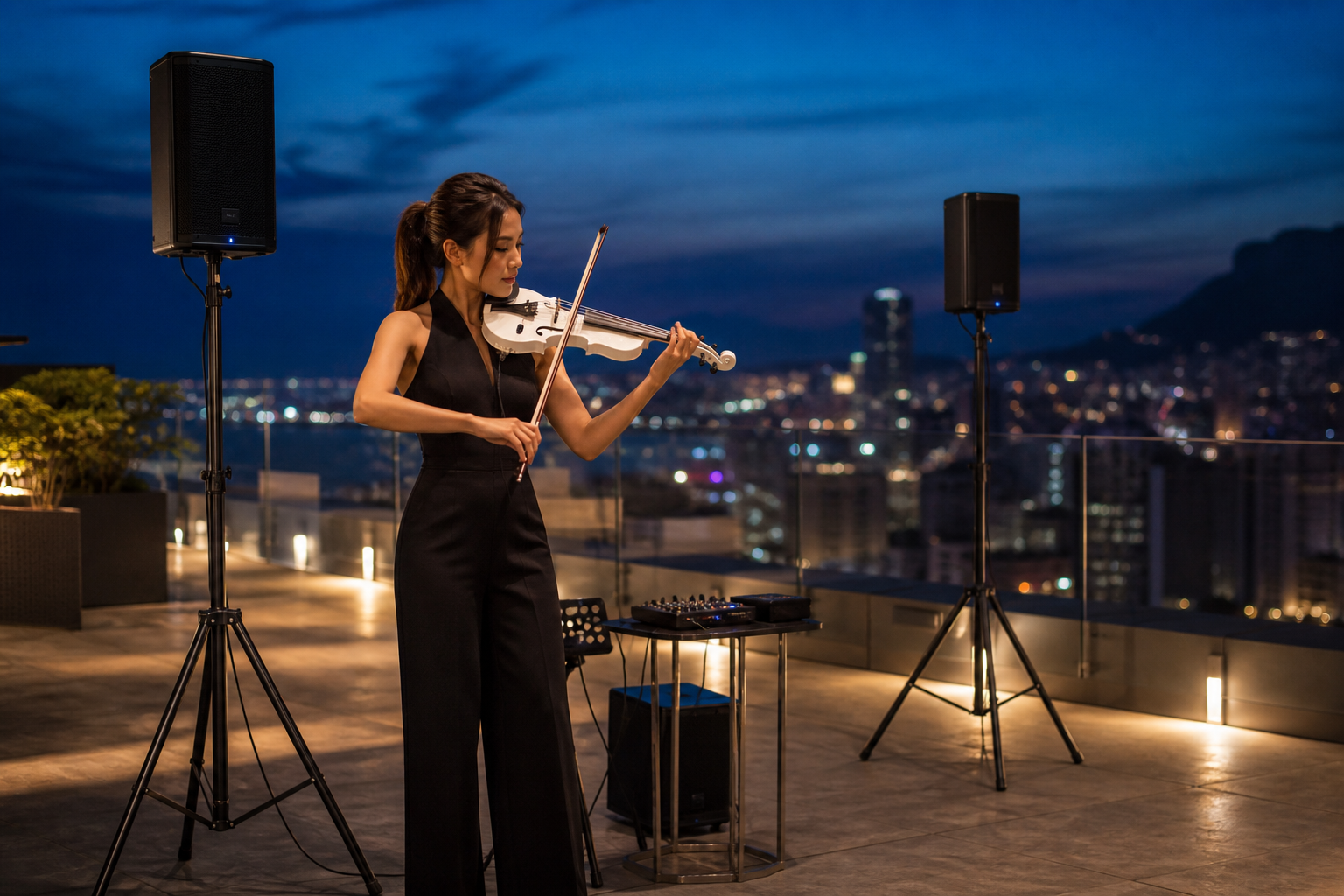
How should electric violinists buy speaker stands for their own PA rig?
Buy the stand around the real speaker, the real room, and the real person doing the lifting. Tanya Strings is not interested in abstract spec-sheet pride. I want the stand that keeps the rig predictable and lets the performance stay in front.
My buying checklist:
- Match the load honestly: leave margin above your speaker weight instead of buying right on the edge.
- Check the folded length: speaker stands that do not fit the car or the gear bag lane become annoying fast.
- Think about who lifts the tops: if it is usually you alone, lift-assist or lower stand weight matters.
- Respect the footprint: wide stable legs beat tidy-looking but nervous placement.
- Remember the venue types: flat banquet rooms and uneven backstage risers reward different stand features.
- Keep the whole rig in mind: cables, power, and load-in flow matter just as much as the speaker once the event starts.
What mistakes make speaker stands harder to trust on stage?
Most stand frustration is self-inflicted. The wrong choice usually comes from pretending a stage tool is only a catalog accessory.
- Buying too short: if the horn stays too low, your front row gets punished while the room hears less clearly.
- Ignoring stand weight: a great speaker stand that you hate carrying will not stay in the rig for long.
- Underestimating floor problems: stairs, risers, and sloped corners are where leveling features start to matter.
- Forgetting cable flow: route signal and power cleanly so the stand does not become the center of a trip hazard.
- Confusing speaker support with speaker choice: even the best stand cannot fix a bad cabinet match, so also review your PA speaker options.
- Neglecting transport discipline: a padded bag and smart packing matter if the stands travel with cases, pedals, and content gear in the same load.
FAQ
How high should speaker stands be for a solo electric violin show?
For most compact solo shows, I want the horn above head level and aimed slightly down toward the audience, not blasting straight into the first table. That usually means buying more height range than the bare minimum.
Are aluminum speaker stands good enough for working electric violin gigs?
Yes. A well-made aluminum stand is often the smartest electric violin choice because it keeps the load-in manageable without forcing you into weak hardware.
When is a lift-assist or crank speaker stand worth the extra money?
It is worth it when you regularly lift heavier speakers alone, need extra height, or want to reduce fatigue across repeated shows. I would rather spend more once than fight unsafe lifts all season.
Can one stand model work for both PA tops and a side fill?
Often yes, if the height range and load rating fit both jobs. But once the rig gets more specialized, keeping a more premium pair or a leveling-leg option can save time and stress.