Portable PA · 2026-06-16
Best Battery-Powered PA Speakers for Electric Violinists
The best battery-powered PA speaker for most electric violinists is the Electro-Voice EVERSE 8 because it hits the practical sweet spot between output, weather confidence, battery life, and a mixer that still feels simple under pressure. If I want the best value with app control and a fast four-channel workflow, I would look hard at the JBL EON ONE Compact. Yamaha STAGEPAS 200BTR is the smarter pick when I need more onboard mixing and polished small-event control, while Roland BA-330 still makes sense for ceremony work that benefits from wide stereo spread and truly grab-and-go setup.
Follow Tanya Strings on Google
Add the site as a preferred source to see more new violin posts from Tanya Strings in Google.
Affiliate disclosure: Some links in this article are affiliate links. I may earn a commission if you make a purchase, at no extra cost to you.
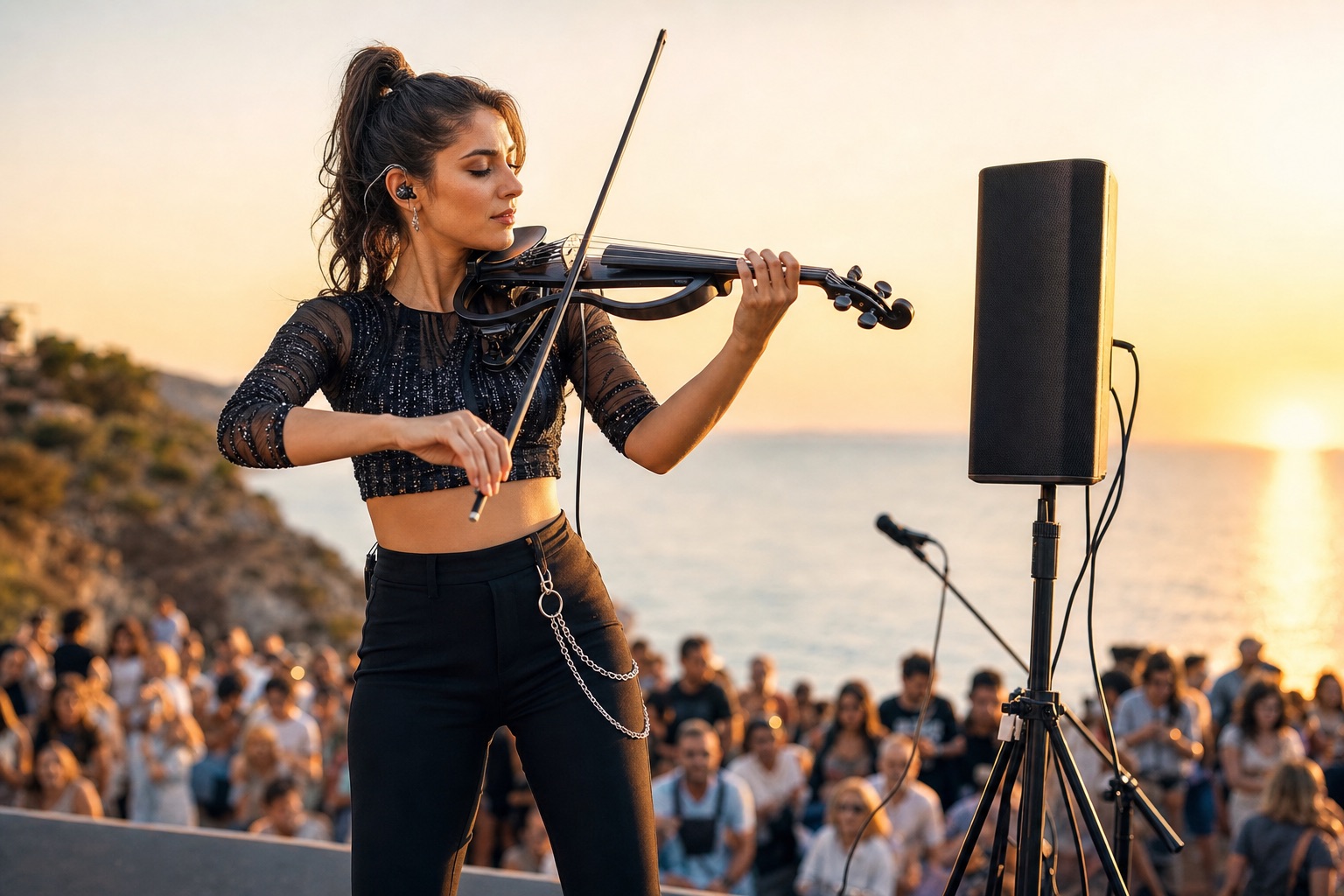
What is the best battery-powered PA speaker for most electric violinists?
For most performers, it is the Electro-Voice EVERSE 8. The reason is simple: it behaves like a real working-gig tool, not just a convenient speaker. EV says it reaches 121 dB, covers a wide 100 by 100 degrees, runs up to 12 hours on battery, and can meet an IP43 weatherized rating with the included input cover while on battery power and Bluetooth. That combination matters when Tanya Strings is moving between outdoor ceremonies, terrace sets, busking, and fast content shoots where one speaker has to stay calm and clear.
My performer rule: if the speaker makes my electric violin louder but not clearer, it is the wrong PA for the set.
Which battery-powered PA speakers are worth buying for electric violin right now?
These are the compact models I would shortlist first if the goal is cleaner electric violin projection, faster setup, and less panic when the venue gives you limited power or no sound support at all.
| Product | Best for | Why Tanya would use it | Watch out for | Amazon link |
|---|---|---|---|---|
| Electro-Voice EVERSE 8 | Most electric violinists who need one dependable speaker for indoor and outdoor gigs | I would trust it when I need serious output, weather confidence, and a speaker that still carries like a compact solo rig. | Costs more than entry-level options, so it makes the most sense if you really work outside or self-run events. | Check on Amazon |
| JBL EON ONE Compact | Players who want strong value, app control, and a practical four-channel mixer | I like it when I want a lighter speaker, quick presets, and enough onboard control for violin, tracks, and one more source. | It is still a compact box, so it is best for disciplined small-show expectations, not brute-force coverage. | Check on Amazon |
| Yamaha STAGEPAS 200BTR | Artists who want more onboard mixing and polished small-event control | I would pick it when the show needs a better mixer feel, cleaner channel management, and a setup that can cover violin, mic, and backing tracks with less compromise. | Bulk and price make more sense once you know you will use the extra mixer power regularly. | Check on Amazon |
| Roland BA-330 | Ceremonies, duo-style sets, and wide stereo coverage in smaller rooms | I still like it when I want fast setup, battery flexibility, and a speaker that spreads sound comfortably across intimate spaces. | It is an older design, so I would buy it for a specific workflow, not for spec-sheet bragging rights. | Check on Amazon |
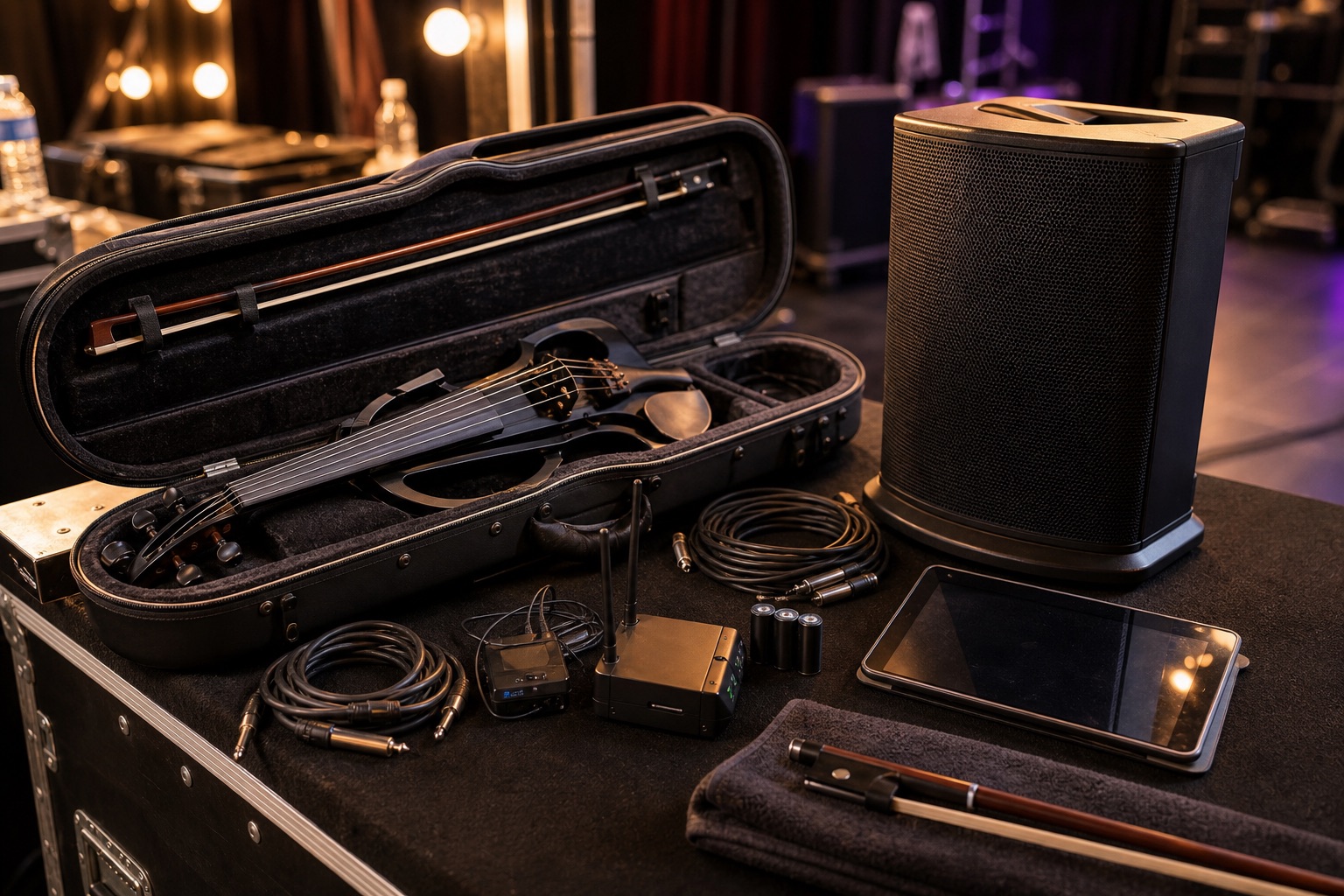
Why is Electro-Voice EVERSE 8 the safest all-around choice?
Because it solves more real gig problems at once than the others. EV positions the EVERSE 8 as a compact battery-powered speaker with up to 12 hours of run time, 121 dB max SPL, wide 100 by 100 degree coverage, and an IP43-rated weatherized design when used with the included input cover on battery power. For electric violin, that means cleaner odds of surviving outdoor jobs, windy terraces, quick speeches, and backing-track moments without carrying a much larger box.
What makes the EVERSE 8 especially useful for electric violin?
It gives you headroom without forcing you into a full-size PA mindset. That matters because electric violin can turn sharp or thin very quickly when the speaker starts sounding stressed.
- Pros: strong output, weather confidence, compact 7.6 kg carry weight, and a serious real-gig profile.
- Cons: higher price, and some players will not need its outdoor-ready margin every week.
See the official EVERSE 8 page · Find EVERSE 8 options on Amazon
When is JBL EON ONE Compact the smarter value buy?
The JBL makes the most sense when I want a lighter speaker with a useful internal mixer and app help, but I do not want to jump straight to the cost of the EV. JBL says the EON ONE Compact delivers 112 dB output, weighs 17.6 pounds or 8 kg, includes a built-in four-channel mixer, pro effects, output EQ, and a tool-free swappable 12-hour battery. That is a very practical combination for violin plus tracks, or violin plus vocal mic, in smaller event formats.
Who should pick the JBL route first?
I would point it toward performers who want one speaker for pop-up gigs, wedding cocktail hours, busking, rehearsals, and content sessions where app control helps them move faster.
- Pros: good value, swappable battery, app presets, four-channel mixer, and easy portability.
- Cons: it is still a compact speaker, so unrealistic volume expectations can make any violin tone feel smaller than it should.
See the official JBL EON ONE Compact page · Find EON ONE Compact options on Amazon
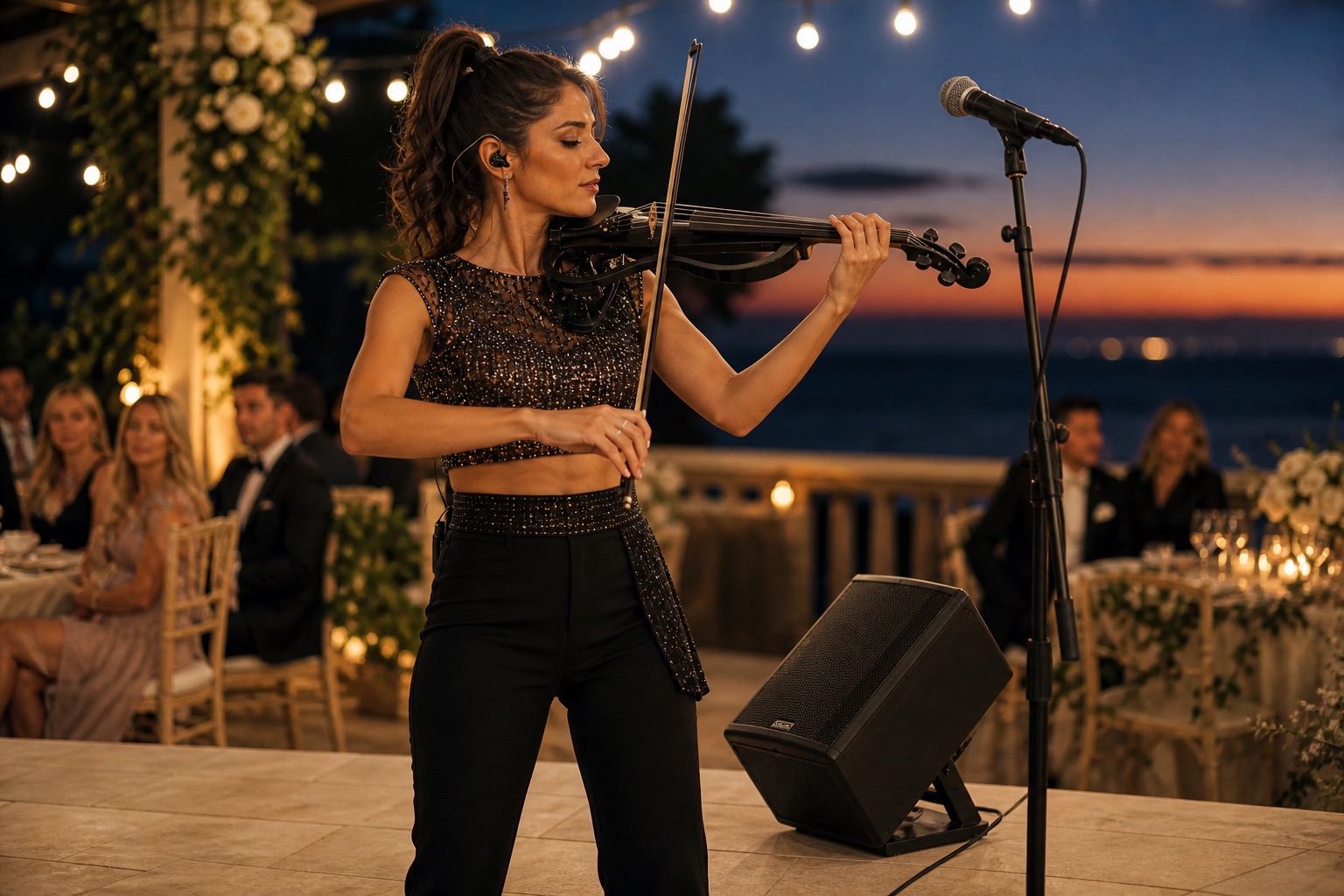
Who should choose Yamaha STAGEPAS 200BTR over simpler speakers?
The Yamaha is for the player who already knows that simpler speakers are starting to feel cramped. Yamaha positions the STAGEPAS 200BTR as a portable PA with a 180 W Class-D amp, a five-channel digital mixer, hi-Z input, Bluetooth audio streaming, remote app control, and up to 10 hours of operation with the included battery. It can also tilt at 30 or 60 degrees, which is more useful than it sounds when you are managing both audience coverage and your own monitoring position.
Why would Tanya move up to the Yamaha?
I would move up when the set is not just violin into a speaker anymore. Once the rig includes speech, backing tracks, a second source, or more detailed mix control, the Yamaha starts to justify itself fast.
- Pros: stronger onboard mixer, battery included, app control, useful tilt options, and better multi-source flexibility.
- Cons: more expensive and less casual to carry than the simplest grab-and-go boxes.
See the official Yamaha STAGEPAS 200 page · Find STAGEPAS 200BTR options on Amazon
Why does Roland BA-330 still make sense for ceremonies and duo-style sets?
Because some gigs care less about new specs and more about easy stereo spread, polite coverage, and fast battery setup. Roland still describes the BA-330 as an all-in-one portable digital PA system with sound for audiences of up to 80 people, power from AC or eight AA batteries, four custom 6.5-inch speakers, two tweeters, built-in EQ, reverb, delay, and a four-channel layout. That profile still fits elegant ceremony work, duo performances, and smaller rooms where I want wider placement rather than aggressive forward punch.
When is the BA-330 better than a more modern compact box?
It is better when the room is intimate, the set is refined, and I care more about how the sound spreads across the space than about squeezing the most modern feature list into one speaker.
- Pros: wide stereo projection, flexible battery path, no-fuss setup, and strong ceremony-friendly character.
- Cons: older platform, larger footprint, and less reason to buy it if your work is mainly raw outdoor busking.
See the official Roland BA-330 page · Find BA-330 options on Amazon

What should you buy first if your budget is limited?
If money is tight, I would buy in this order:
- Buy the speaker first if you regularly self-run ceremonies, street sets, pop-up events, or terrace gigs with no dependable house audio.
- Buy a DI first instead if most of your venues already have a house PA and you mainly need a cleaner violin signal path.
- Buy next: a spare battery path, short XLR kit, and a stand or carry solution that makes setup faster.
- Buy later: the second speaker, only after the one-speaker workflow already feels calm and repeatable.
I would rather hear one clean portable speaker used intelligently than two boxes that slow the setup down and make the violinist rush the first song.
How does Tanya choose a battery-powered PA speaker for a real show?
I treat the speaker like part of the performance chain, not like a last-minute accessory. Electric violin reacts fast to bad speaker choices because bow detail, pitch center, and backing tracks all get judged through the same box.
- Check the real job first: ceremony, busking, content shoot, terrace set, or small corporate room all push the speaker differently.
- Protect the mids: I want the violin to stay clear in the upper mids without getting glassy or painfully sharp.
- Keep the setup short: if the speaker needs too many rescue moves, it is already costing me performance focus.
- Plan the battery honestly: I assume long intros, line checks, and waiting time, not just the exact song count on paper.
That is why I care about repeatability more than hype. The right battery-powered PA helps Tanya Strings walk on stage feeling prepared, mobile, and still in control of the electric violin tone.
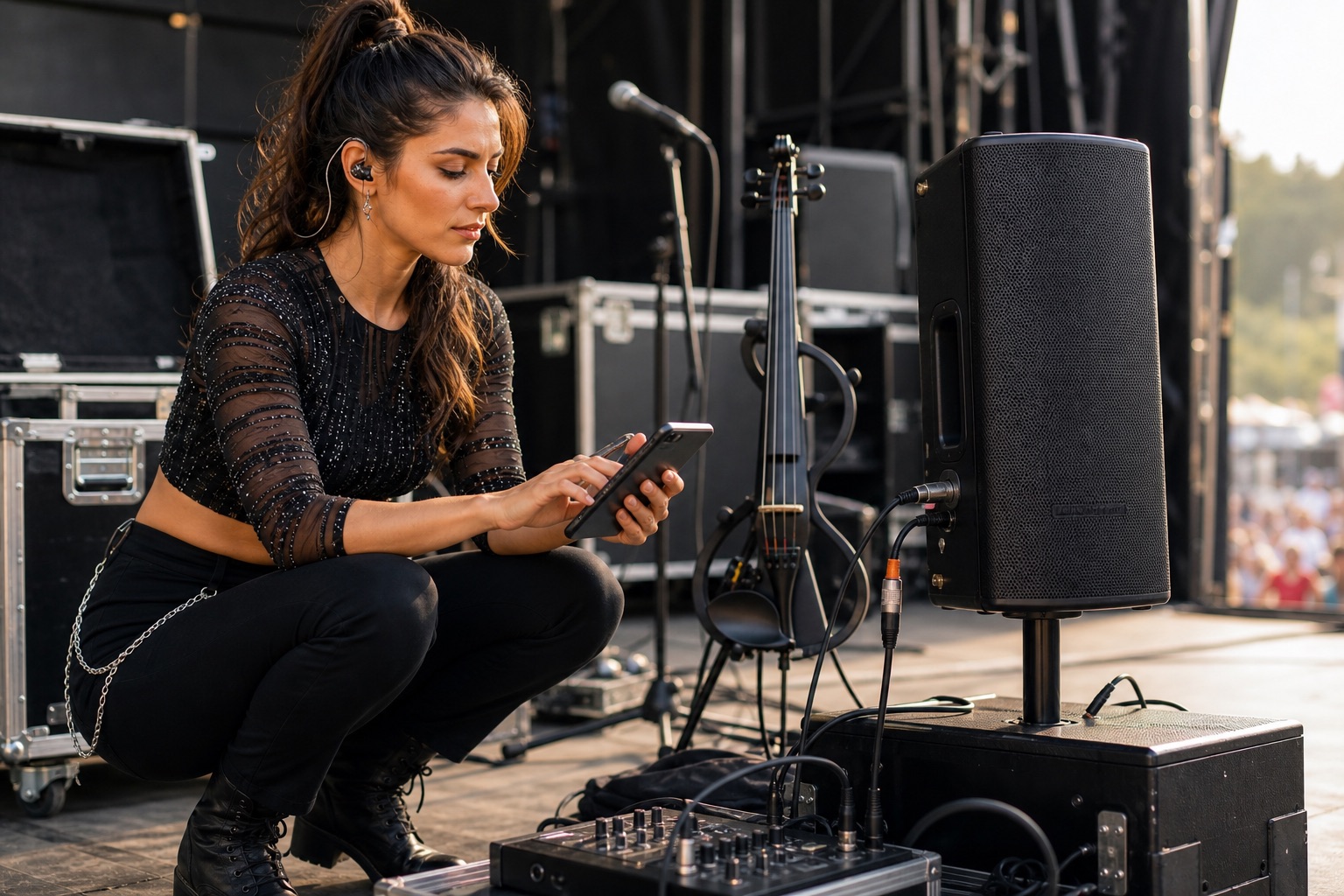
FAQ
What is the best battery-powered PA speaker for most electric violinists?
For most players, the Electro-Voice EVERSE 8 is the safest all-around buy because it combines serious output, useful battery life, and outdoor-friendly confidence in one compact speaker.
Do I need a battery-powered PA speaker if venues already have a house system?
No. If the venue audio is already dependable, a good DI may matter more. A battery-powered PA earns its keep when you also run self-contained shows, ceremonies, pop-ups, or busking.
Is a built-in mixer important for electric violin?
Yes, especially if you use backing tracks, a vocal mic, or a second source. A built-in mixer can keep the whole rig smaller and faster to manage.
Should I buy one speaker or two for electric violin gigs?
Start with one good speaker. Add the second only after you clearly need wider coverage or stereo playback and your first setup already feels reliable.