Stage Control · 2026-08-24
Best Laptop Stands for Electric Violinists Running Backing Tracks, Virtual Rigs, and Livestream Control
For most electric violinists, the best laptop stand is a full-height tripod model with a real tray, stable legs, and fast tilt control, and my safest overall pick is the K&M 12151. It gives Tanya Strings the most convincing mix of stage height, 22-pound capacity, and tray size for laptops that run backing tracks, virtual rigs, cues, or livestream control. If your setup lives on a side table, the Gator Frameworks GFWLAPTOP2500 is smarter. If you want a lower-cost floor option, buy the Gator GFWLAPTOP1500 or On-Stage LPT7000.
Follow Tanya Strings on Google
Add the site as a preferred source to see more new violin posts from Tanya Strings in Google.
Affiliate disclosure: Some links in this article are affiliate links. I may earn a commission if you make a purchase, at no extra cost to you.
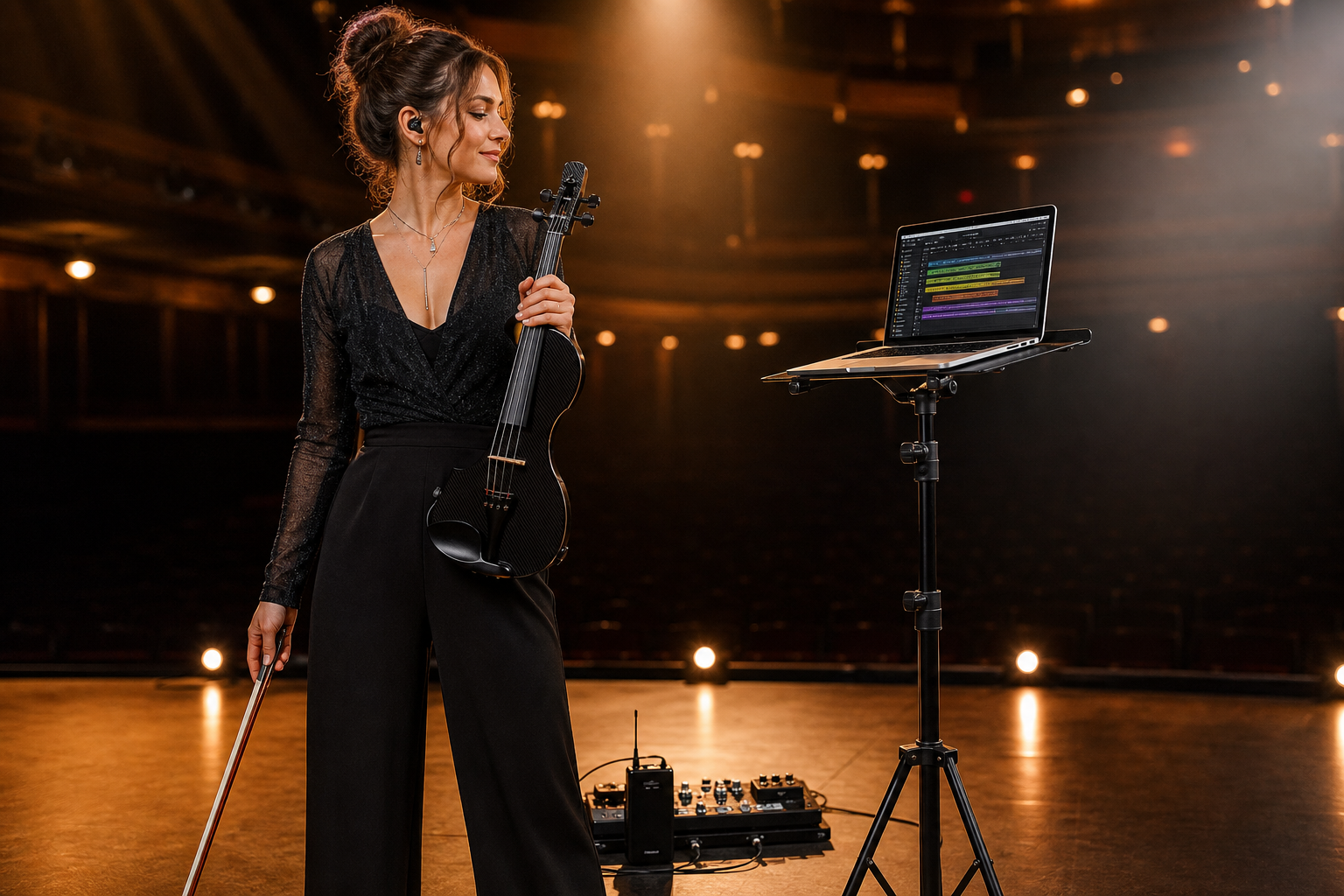
What is the best laptop stand for most electric violinists?
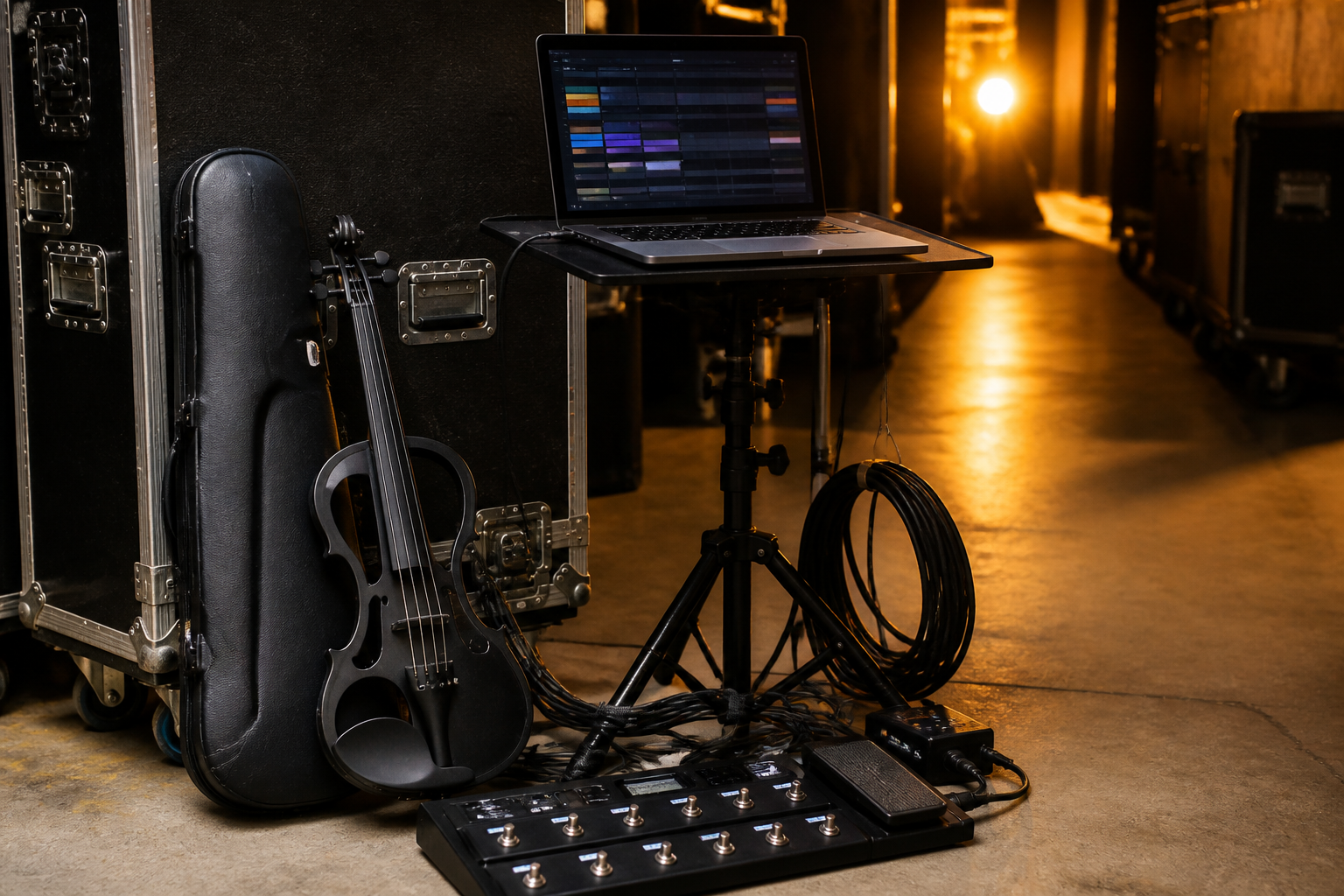
The safest first answer is the K&M 12151. K&M says it gives you a height-adjustable tripod, a 15.75 by 11.42 inch rest, and up to 22.046 pounds of load capacity. That is the right mix for electric violin because the laptop often carries something important: tracks, patch control, click, software processing, or stream oversight. Tanya Strings does not want a stand that only works in a bedroom test. Tanya wants one that still feels stable after load-in, after cables start hanging off the side, and after a club stage gets crowded with pedals, stands, and camera gear.
My performer rule: if reaching the laptop makes me change bowing posture or step out of my natural performance lane, the stand placement or stand choice is wrong.
Which laptop stands are worth buying right now?
This list stays focused on stands that make sense for real electric violin workflows, not generic office accessories. If your show still needs a reading surface first, start with my guide to tablet mounts for electric violinists on stage. If the bigger problem is playback control underfoot, pair this with my guide to MIDI foot controllers. If the laptop feeds multiple outputs, also read my guide to compact mixers for backing tracks.
| Product | Best for | Why Tanya would use it | Watch out for | Links |
|---|---|---|---|---|
| K&M 12151 | Most electric violinists who want one strong full-height stage answer | I trust it because the 22-pound capacity, tripod footprint, and generous tray size feel like real stage hardware, not a compromised add-on. | It is heavier than compact tabletop options, so it makes the most sense when the laptop is part of the live rig every week. | Official · Amazon |
| Gator Frameworks GFWLAPTOP1500 | Performers who want a lower-cost tripod stand for playback or virtual rig control | I like it because the adjustable tray, elastic retention straps, and 20-pound capacity cover the real functional needs without pushing into premium pricing. | The tray is useful, but the overall feel is more utilitarian than the K&M, so heavy touring users may want the sturdier premium option. | Official · Amazon |
| On-Stage LPT7000 | Budget-minded players who still need a real floor stand | I would choose it when the job is simple and the stand mostly needs to hold the laptop at readable height with dependable tripod behavior. | Its 12-pound capacity is lower than the stronger premium stands, so I would not overload it with extra accessories. | Official · Amazon |
| Hercules DG400BB | Ultra-portable tabletop rigs and side-stage surfaces | I respect it because the one-piece folding design, carry bag, and 22-pound support make it a fast travel answer when the laptop does not need full-height placement. | It is not a floor stand, so it depends on an existing table, shelf, or production surface. | Official · Amazon |
| K&M 12190 | Premium foldable tabletop use with neat cable discipline | I like it because the fold-flat design, adjustable stop pins, and 17.637-pound capacity suit elegant compact setups with a small stage footprint. | It works best when you already have a stable table or keyboard station, not when you need the screen standing beside you at performance height. | Official · Amazon |
| Gator Frameworks GFWLAPTOP2500 | Tight rehearsal desks, keyboard stands, and side tables where clamping helps | I would buy it when space is messy because the clamp, 15-degree angle adjustment, and 20-pound capacity let the laptop stay visible without stealing a whole tabletop. | You need a surface up to 2.63 inches thick to clamp onto, and the workflow has to suit a fixed attachment point. | Official · Amazon |
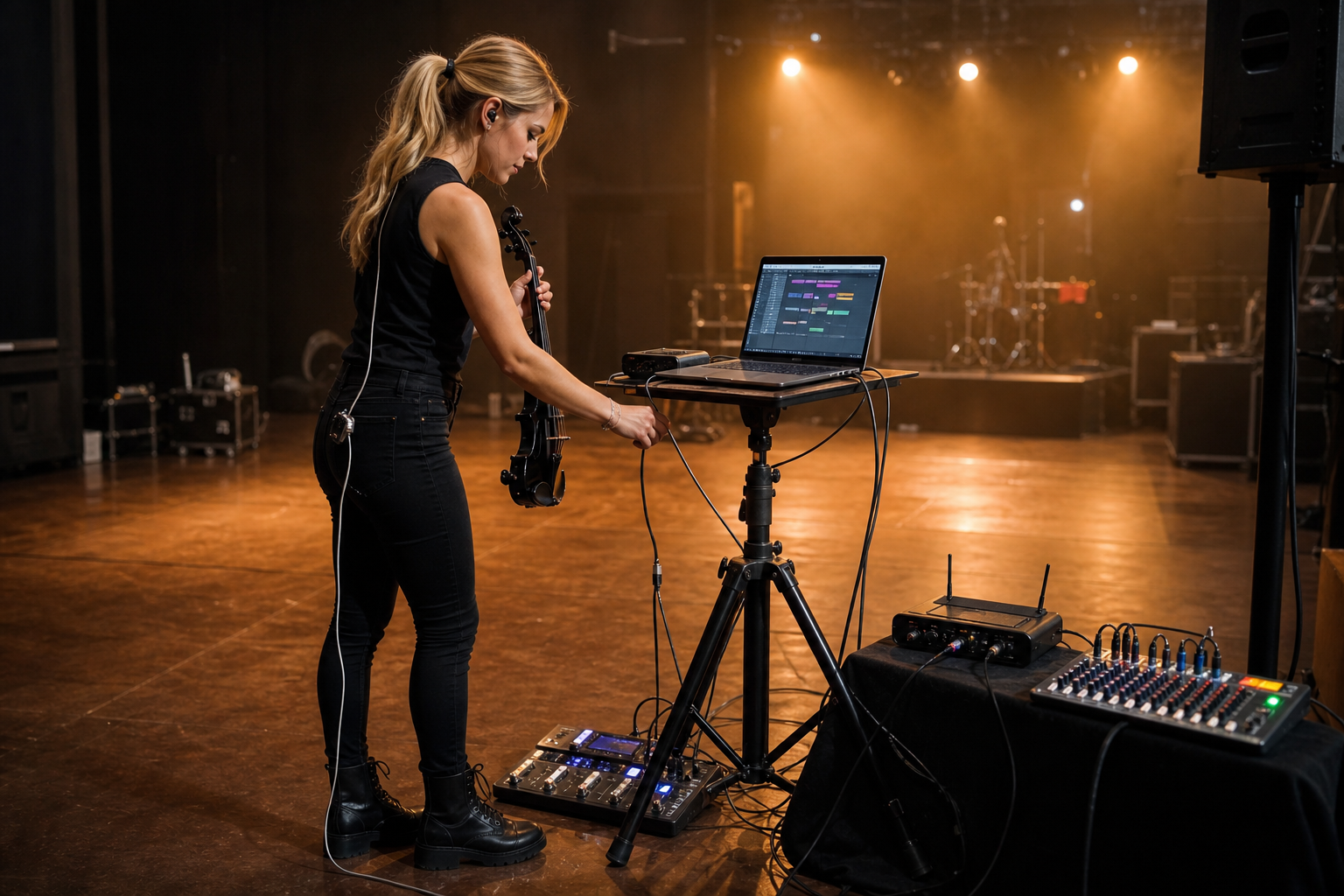
Why is K&M 12151 my best overall stage pick?
The K&M 12151 gets my top slot because it behaves like permanent show hardware. K&M positions it as a height-adjustable tripod stand with cross braces, a removable tray, and up to 10 kg of load capacity. That is exactly the kind of headroom I want when the laptop also shares space with a small interface, playback dongle, or adapter clutter. Tanya Strings needs the stand to hold its line when the room gets busy, not to feel clever only when the tray is empty.
Who should buy the K&M 12151 first?
Buy it first if the laptop is part of your actual live set and you want one dependable stand that can survive club dates, weddings, theater pits, and creator sessions without acting fragile.
- Pros: strong capacity, real stage height, generous tray, clean tripod stance, and solid touring logic.
- Cons: heavier than small stands, pricier than value buys, and more stand than you need for casual tabletop use.
When is Gator Frameworks GFWLAPTOP1500 the smarter value buy?
The Gator Frameworks GFWLAPTOP1500 is the easier recommendation when you need a real floor stand but do not want to pay premium K&M money first. Gator says it offers a 14 by 11 inch tray, tilt adjustment, elastic retention straps, and height from 28.25 to 44.5 inches. That gives Tanya Strings enough range for many club and event stages, especially when the laptop runs tracks or patch control and does not need to carry extra heavy hardware. It is a smart first working stand, not a toy.
Why does the Gator feel like a practical first buy?
Because it covers the real stage job well enough to earn trust before you decide whether the laptop stand belongs in your long-term touring kit.
- Pros: good value, useful tray size, strap security, tripod portability, and strong enough capacity for normal playback rigs.
- Cons: less premium finish, less elegance than the K&M, and still a little bulky if your workflow is mostly tabletop.
Which stands make sense when portability matters more than maximum size?
This is where the On-Stage LPT7000, Hercules DG400BB, and K&M 12190 split into three useful lanes: budget floor use, ultra-portable tabletop use, and premium foldable tabletop use.
When is On-Stage LPT7000 enough?
On-Stage says the LPT7000 offers a wide tripod base, a platform angle range from 0 to 90 degrees, height from 31 to 51 inches, and 12 pounds of capacity. I would use it when the job is straightforward and the laptop simply needs to sit where I can read it fast between songs. Tanya Strings would not overload it, but as a budget floor stand it solves the basic problem cleanly.
- Pros: affordable, easy to understand, proper full-height use, and good for simple playback needs.
- Cons: lower capacity and less premium feel than the stronger category leaders.
Why would I choose Hercules DG400BB?
Hercules says the DG400BB uses a one-piece folding design, multiple angle and height settings, rear support legs, and support up to 10 kg. That makes it attractive when I already have a side table, keyboard stand, or FOH-style surface and I mainly need the laptop raised, angled, and packed away fast. Tanya Strings would reach for it when flights, small rehearsal rooms, or creator days make compact carry more valuable than full-height stage placement.
- Pros: very portable, good load support, fast setup, and easy to travel with.
- Cons: tabletop only and less useful if you need the laptop physically beside you while standing.
When does K&M 12190 make more sense?
K&M describes the 12190 as a foldable tabletop stand with adjustable stop pins, non-slip rubber pads, 8-degree incline steps, and 17.637 pounds of capacity. I like it when the setup needs to look disciplined and premium on a table, piano shell, or production cart. It is the tidier answer for organized side stations, not the answer for every standing performance zone.
- Pros: polished design, compact fold, strong tabletop stability, and good cable discipline.
- Cons: costs more than simpler tabletop stands and still depends on another stable surface.
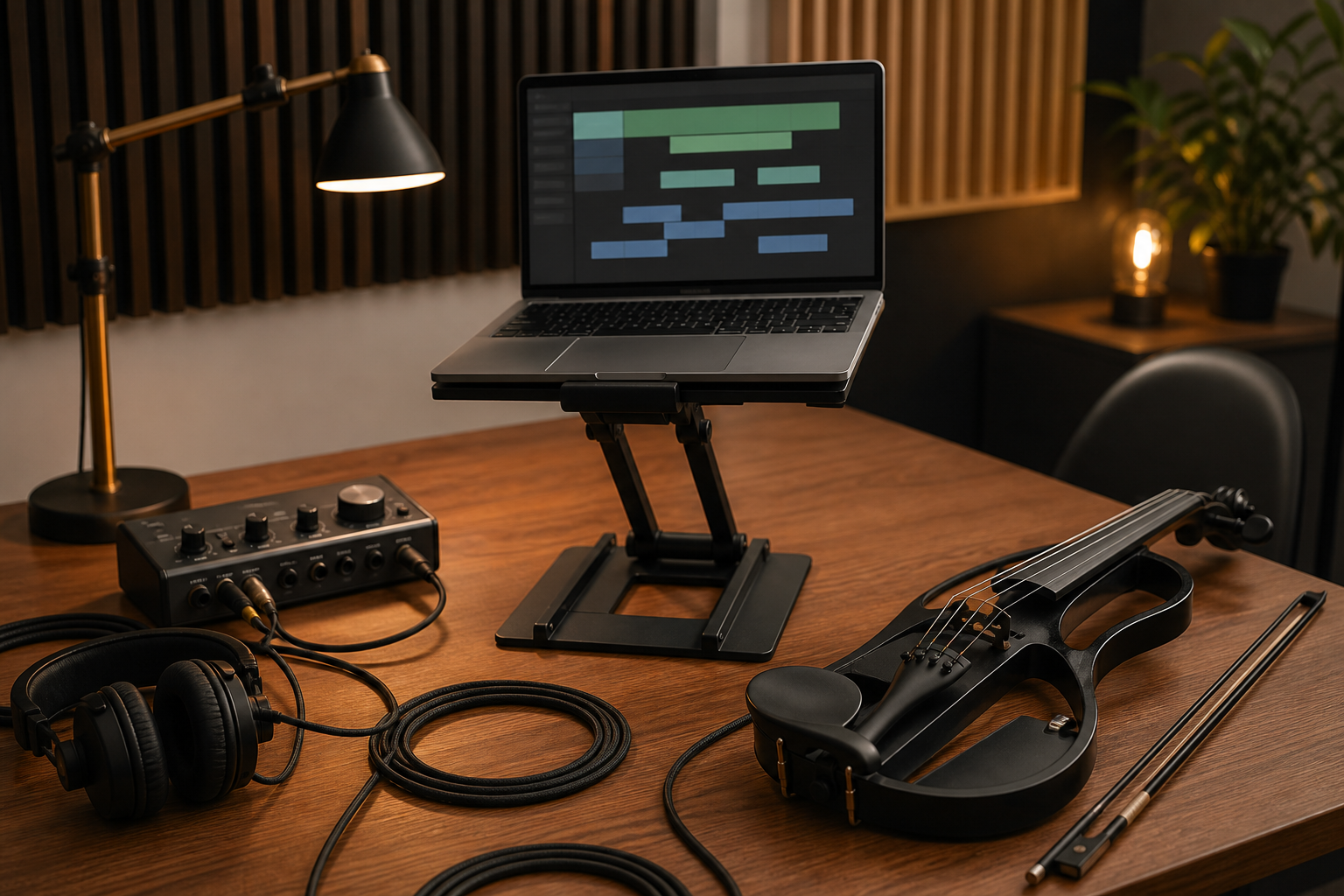
What if the laptop has to live on a side table or keyboard stand?
The Gator Frameworks GFWLAPTOP2500 is the specialist answer for crowded rehearsal furniture, keyboards, side tables, and content stations where a regular stand base only creates more mess. Gator says it clamps to surfaces up to 2.63 inches thick, gives you a 12 by 9 inch EVA-lined top deck, height from 10 to 14 inches, and a 15-degree angle adjustment. Tanya Strings would choose it when the laptop needs to stay secure, visible, and physically attached to the same surface every time.
Who should buy the clamp stand instead of a tripod stand?
Buy it if your workflow happens from one fixed surface and the bigger risk is somebody bumping a freestanding stand leg in a cramped room or content corner.
- Pros: space-efficient, stable on the right surface, clean sightline, and strong for hybrid rehearsal and creator setups.
- Cons: depends on clamp-compatible furniture and is less flexible when your stage layout changes night to night.
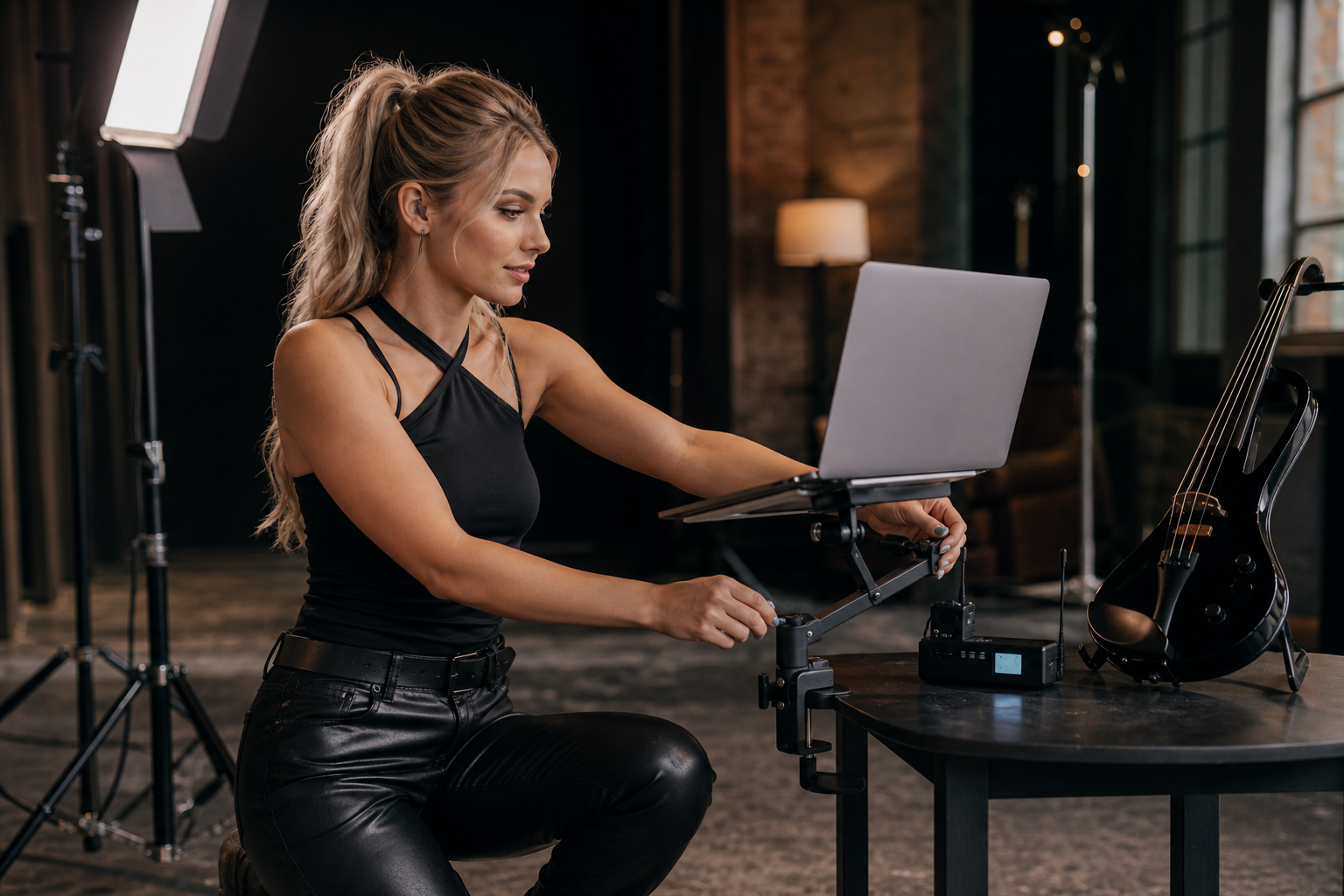
How should electric violinists buy a laptop stand?
Buy around the actual show path, not around a fantasy studio layout that never leaves home.
My buying checklist:
- Start with the job: backing tracks, patch changes, virtual amp control, and stream monitoring do not all need the same stand shape.
- Respect the screen line: the laptop should be readable with a quick glance, not a full-body lean.
- Check tray discipline: a real tray with edges, pads, or straps matters once power cables and adapters join the laptop.
- Mind the floor footprint: tripod legs that fight pedalboards, violin stands, or camera legs create a worse problem than they solve.
- Buy for cable reality: laptop power, interface leads, and playback adapters pull differently from an empty laptop on a clean table.
- Keep teardown in mind: if packing the stand feels annoying every time, it will stop coming to gigs.
What mistakes make laptop stands fail on stage?
Most failures are not dramatic collapses. They are small workflow mistakes that keep stealing attention from the set.
- Placing the laptop too low: bending toward the screen during a live phrase looks awkward and breaks performance posture.
- Letting cables hang without relief: one tug from a charger or interface can shift the tray or pull the laptop off center.
- Using a tabletop stand on a bad surface: a wobbly riser on a cheap folding table is still a wobbly rig.
- Ignoring stage traffic: tripod legs need to stay out of footswitch lanes, violin exits, and camera walk paths.
- Overloading the tray: laptop stands are not tiny production tables for every extra device you own.
What do electric violinists still ask before buying one?
What kind of laptop stand is best for most electric violinists?
For most players, a full-height tripod stand is the right first answer because it keeps the laptop in the performer zone instead of on a random chair or unsafe table. That is why I would start with the K&M 12151.
Should the laptop go on a floor stand or on a side table?
Choose a floor stand when you need direct performer access during the set. Choose a side table or clamp setup when the laptop stays more fixed and the room already gives you a good surface.
Is a tabletop laptop stand strong enough for gigs?
Yes, if the underlying surface is solid and the stand is only solving angle and height on that surface. That is the right use case for the Hercules DG400BB or K&M 12190.
How high should a laptop sit on stage?
High enough for a quick glance with a calm neck and shoulder position. If you have to fold forward to read the next cue, the stand is too low or too far away.