MIDI Control · 2026-08-18
Best MIDI Foot Controllers for Electric Violinists Who Run Backing Tracks, Patch Changes, and Stage Cues
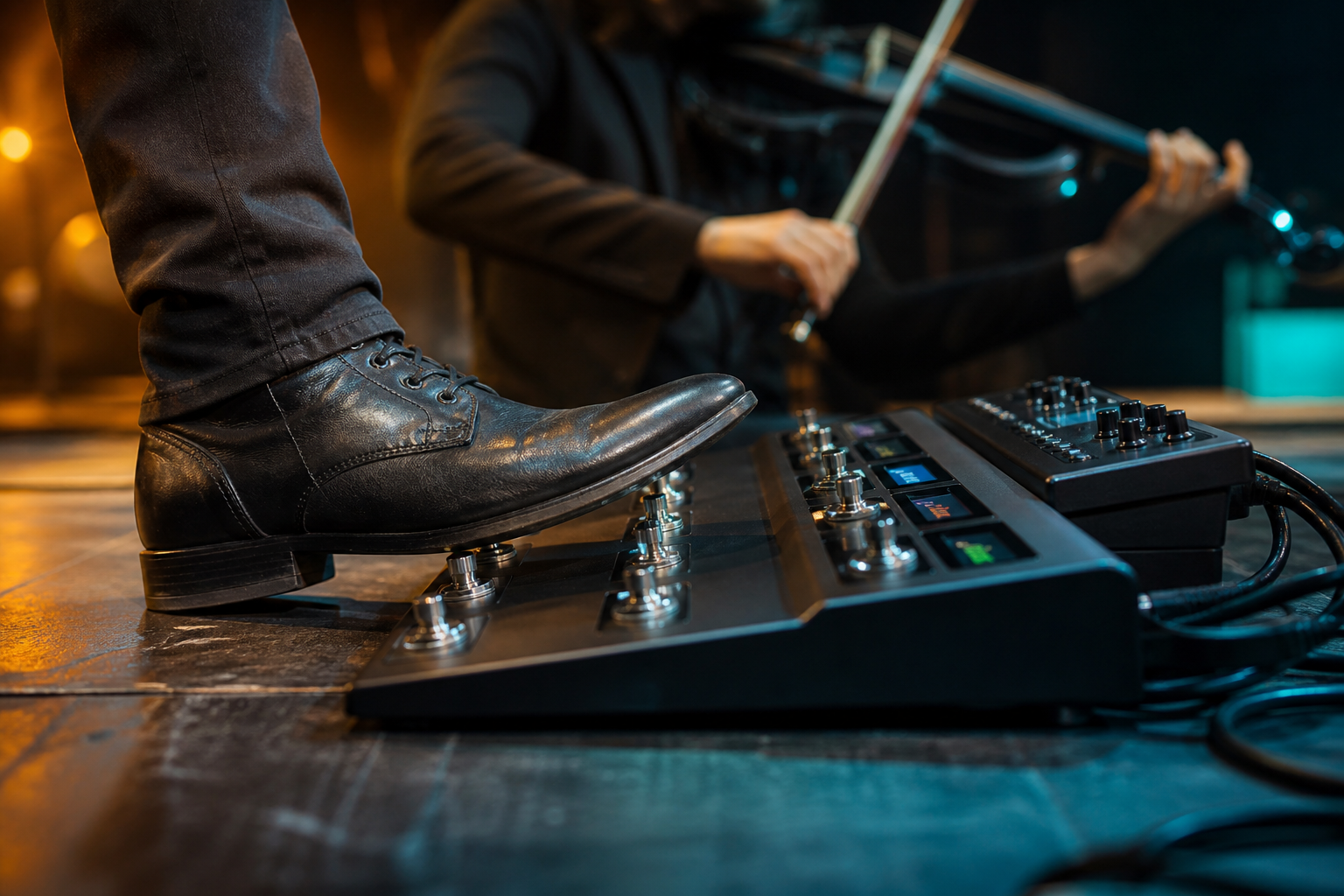
For most electric violinists who run backing tracks, MIDI patch changes, and synced stage cues, the Morningstar MC6 Pro is the smartest overall foot controller because it combines six switches, clear color displays, deep preset capacity, USB host and device ports, standard 5-pin MIDI, TRS MIDI, relay switching, and enough expansion to grow with a serious live rig. If you need something smaller, buy the Morningstar MC3. If you want wireless control for tablet-first shows, choose XSONIC AIRSTEP. Blackstar Live Logic is the simpler DAW-value play, and Nektar PACER makes more sense for bigger command-center setups.
Follow Tanya Strings on Google
Add the site as a preferred source to see more new violin posts from Tanya Strings in Google.
Affiliate disclosure: Some links in this article are affiliate links. I may earn a commission if you make a purchase, at no extra cost to you.
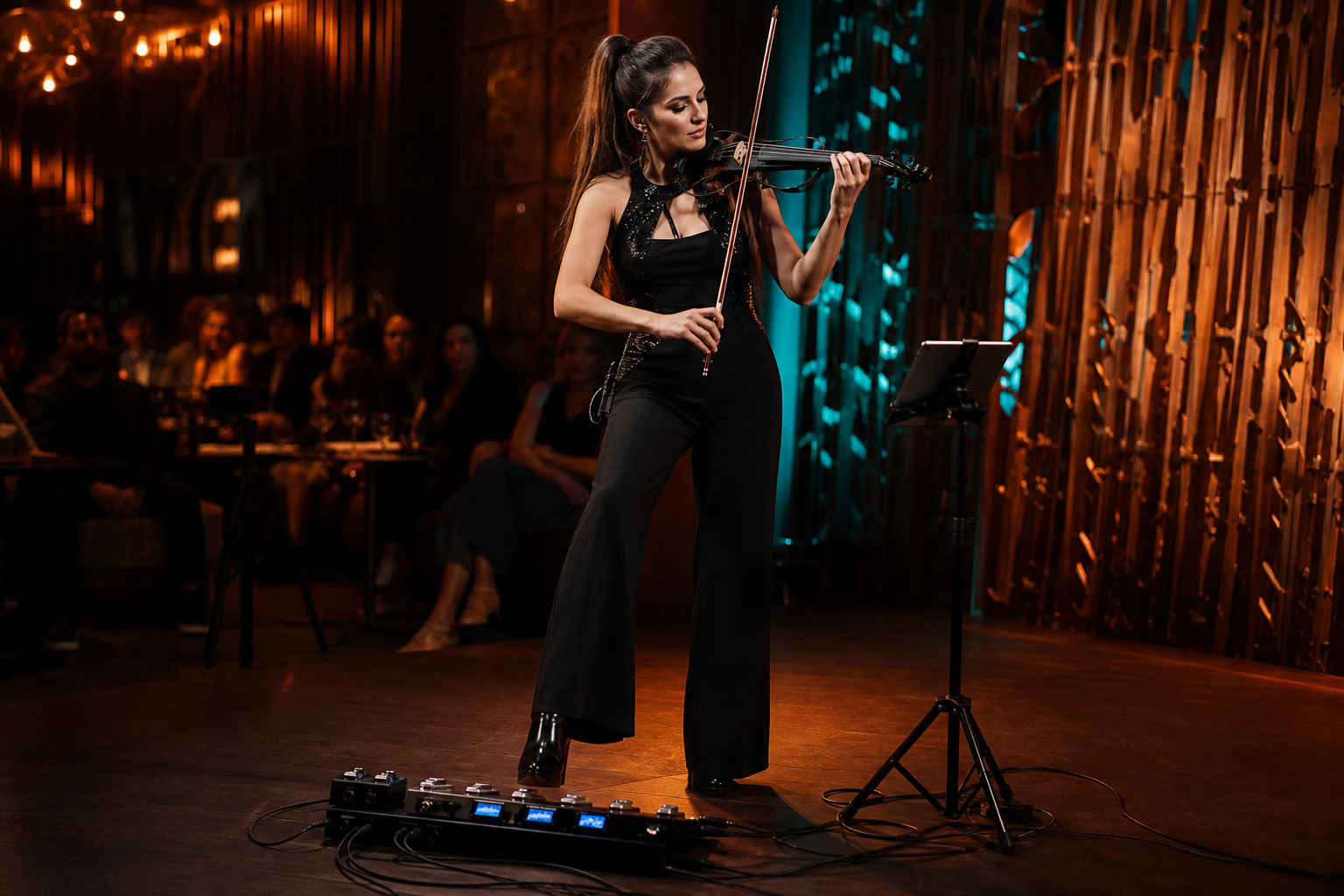
What is the best MIDI foot controller for most electric violinists?
My safest overall answer is the Morningstar MC6 Pro. Morningstar says it offers 128 banks, four pages per bank, six presets per page, up to 32 messages per preset, DIN MIDI, TRS MIDI, USB-C device and host ports, four Omniports, and relay switching. That matters because an electric violin rig often has to control more than one thing at once: a laptop transport, an amp sim or multi-effects patch, one or two cue actions, and maybe a relay-style tap or favorite input. Tanya Strings wants one controller that can stay readable under stage light and still scale from club dates to content shoots.
My performer rule: buy the controller that makes your next song easier to launch, not the one that only looks impressive in a gear photo.
Which MIDI foot controllers are worth buying right now?
This shortlist stays focused on real performer use: compact footprint, visible feedback, enough MIDI flexibility for patch and cue changes, and a clear reason to spend more only when the show actually asks for more. If your stage workflow already leans on a tablet mount, a page-turner pedal, or a dedicated expression pedal, the right MIDI controller should complement that system instead of replacing everything around it.
| Product | Best for | Why Tanya would use it | Watch out for | Links |
|---|---|---|---|---|
| Morningstar MC6 Pro | Most electric violinists who want one serious all-around stage and content controller | I trust it because it combines strong visual feedback, deep preset space, USB host logic, classic MIDI I/O, and expansion ports without becoming an oversized floor problem. | It is powerful enough to tempt over-programming, so it only pays off if your show really uses multiple cues and patch layers. | Official · Amazon |
| Morningstar MC3 | Compact boards, fly-date rigs, and performers who need fewer switches | I would use it when I want real MIDI depth in a very small space, with USB plus 5-pin and TRS outputs that still let the rig grow intelligently. | Three switches can feel tight if every song needs its own scene, transport, and emergency cue logic. | Official · Amazon |
| Blackstar Live Logic | USB-first DAW control and simpler value-minded hybrid sets | I like it when I want six footswitches, MIDI over USB, assignable functions, and two expression inputs without building a more complex programming universe. | It is better for straightforward control than for huge multi-page command systems. | Official · Amazon |
| XSONIC AIRSTEP | Wireless tablet-first shows, laptop playback control, and cable-light stage movement | I would choose it when the set depends on Bluetooth MIDI or HID control, fast wireless setup, and a controller that can move between live use and creator workflow easily. | Wireless convenience is smart only when the room and rehearsal discipline are already strong enough to trust it. | Official · Amazon |
| Nektar PACER | Bigger DAW-centered show rigs that need transport, relay switching, and lots of commands | I would move here when one controller has to manage tracks, patch changes, amp switching, and more complex preset choreography under pressure. | It is physically larger and more command-center focused than most compact electric violin pedalboards need. | Official · Amazon |
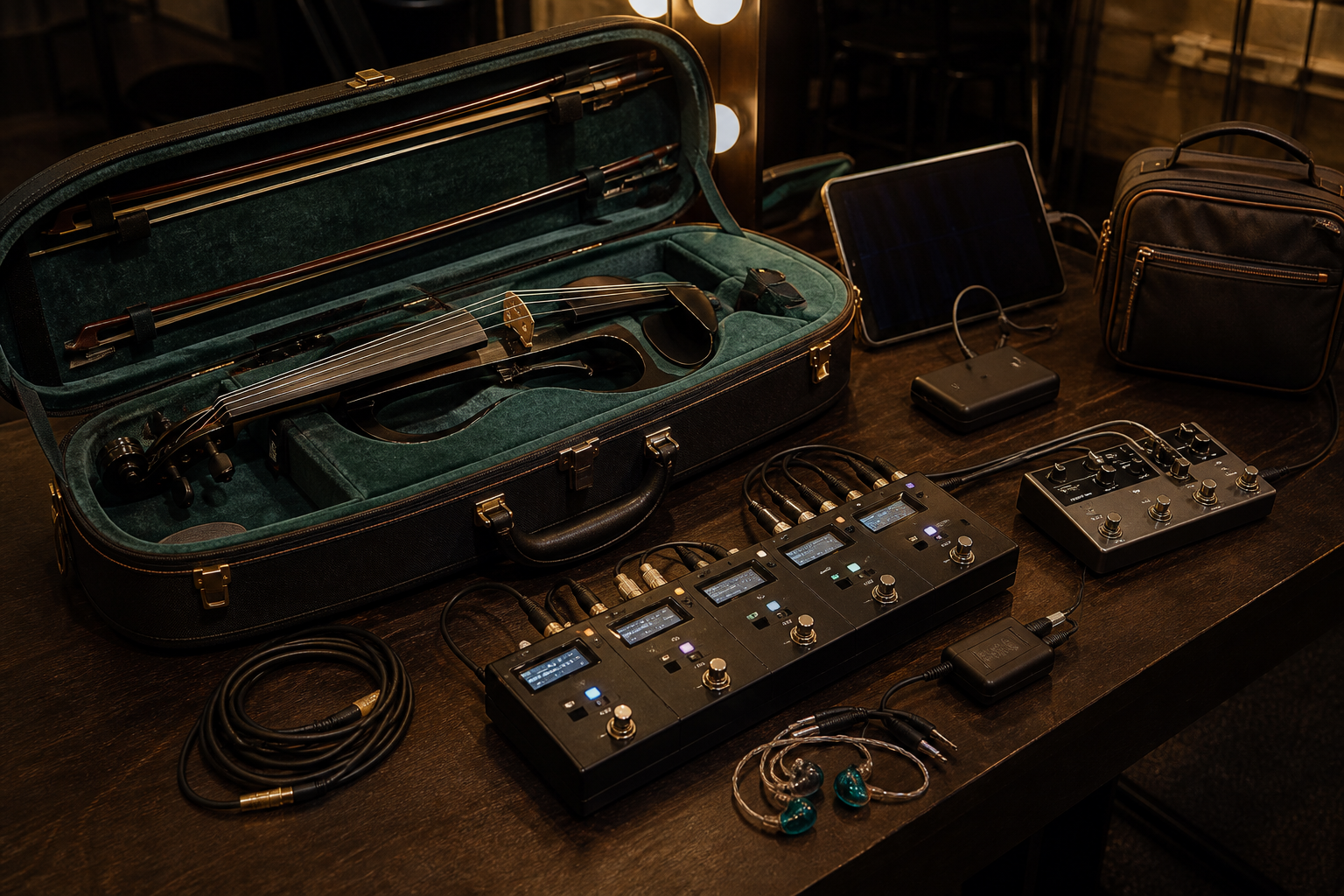
Why is Morningstar MC6 Pro my best overall pick?
The MC6 Pro lands first because it solves the highest number of real electric violin problems at once. Morningstar gives it color displays, customizable strips, USB host and device ports, DIN and TRS MIDI, four Omniports, two relay ports, and more than 3,000 preset slots across its bank structure. That means Tanya Strings can use one unit to launch backing tracks from a computer, change multi-effects scenes, fire cue commands, and keep the floor visually readable even when stage light is bad. It is the controller I would trust when the set has to look polished, not improvised.
Who should buy the MC6 Pro first?
Buy it first if your live rig already changes multiple sound scenes, your content workflow needs repeatable cue launches, or you want one controller that can grow with a more serious show without forcing a rebuild six months later.
- Pros: deep preset space, strong visual feedback, USB host and device support, classic MIDI ports, relay control, and real expansion headroom.
- Cons: higher complexity than smaller controllers, and unnecessary if you only call up two or three commands all night.
See the Morningstar MC6 Pro · Find MC6 Pro options on Amazon
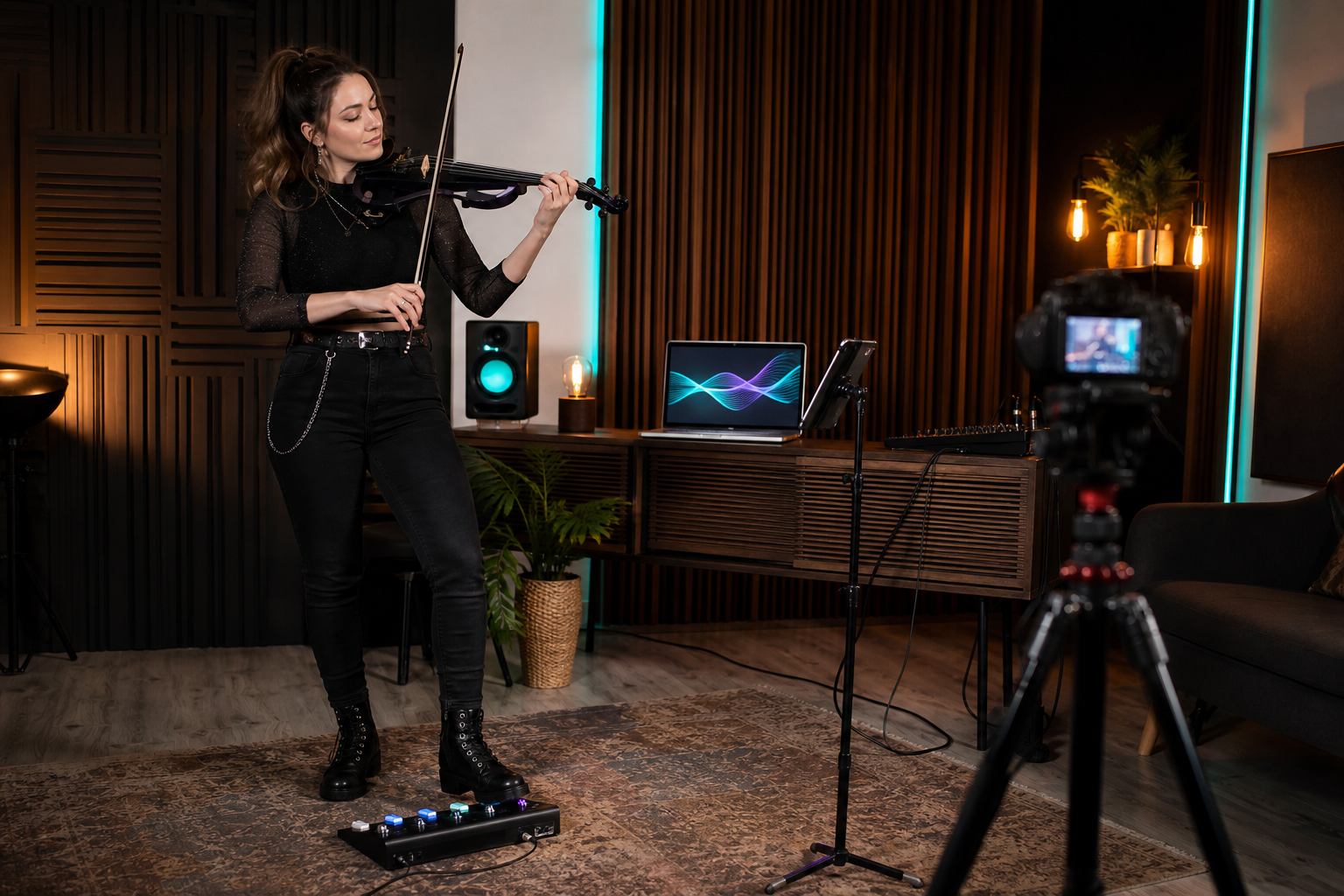
When should you buy Morningstar MC3 or Blackstar Live Logic instead?
Buy one of these when the main question is not maximum complexity, but how much control you can add without bloating the rig.
Is Morningstar MC3 the best small-board buy?
Yes, if you want serious MIDI depth in a tiny footprint. Morningstar says the MC3 can send up to 16 MIDI messages per switch, offers 30 dual-page banks, and fits a 5-pin MIDI output plus four independent TRS MIDI outputs into a compact chassis. That is exactly the kind of controller Tanya Strings likes for fly dates, tighter corporate stages, and smaller hybrid boards where every centimeter matters. It still gives real control, but it respects the reality that the violinist may also need room for a quiet cable path, a tuner, and one or two core effects.
- Pros: very compact size, real MIDI depth, USB plus traditional outputs, and strong fit for disciplined smaller rigs.
- Cons: only three footswitches, so dense shows can demand more banking than some performers want.
See the Morningstar MC3 · Find MC3 options on Amazon
When is Blackstar Live Logic the smarter USB-first value choice?
The Blackstar Live Logic makes more sense when your workflow leans hard on a computer, playback software, or plugin control and you want a less intimidating path into MIDI foot control. Blackstar describes it as a compact six-button controller with MIDI over USB, assignable functions, two expression pedal inputs, and power options through USB, 9V battery, or standard supply. I like that because it covers transport, patch selection, and a few practical control moves without requiring the rig to become a fully programmed mission-control floorboard.
- Pros: straightforward USB-focused control, six switches, two expression inputs, and simpler value logic.
- Cons: less expansive routing and preset architecture than the deeper Morningstar or PACER options.
See the Blackstar Live Logic · Find Live Logic options on Amazon
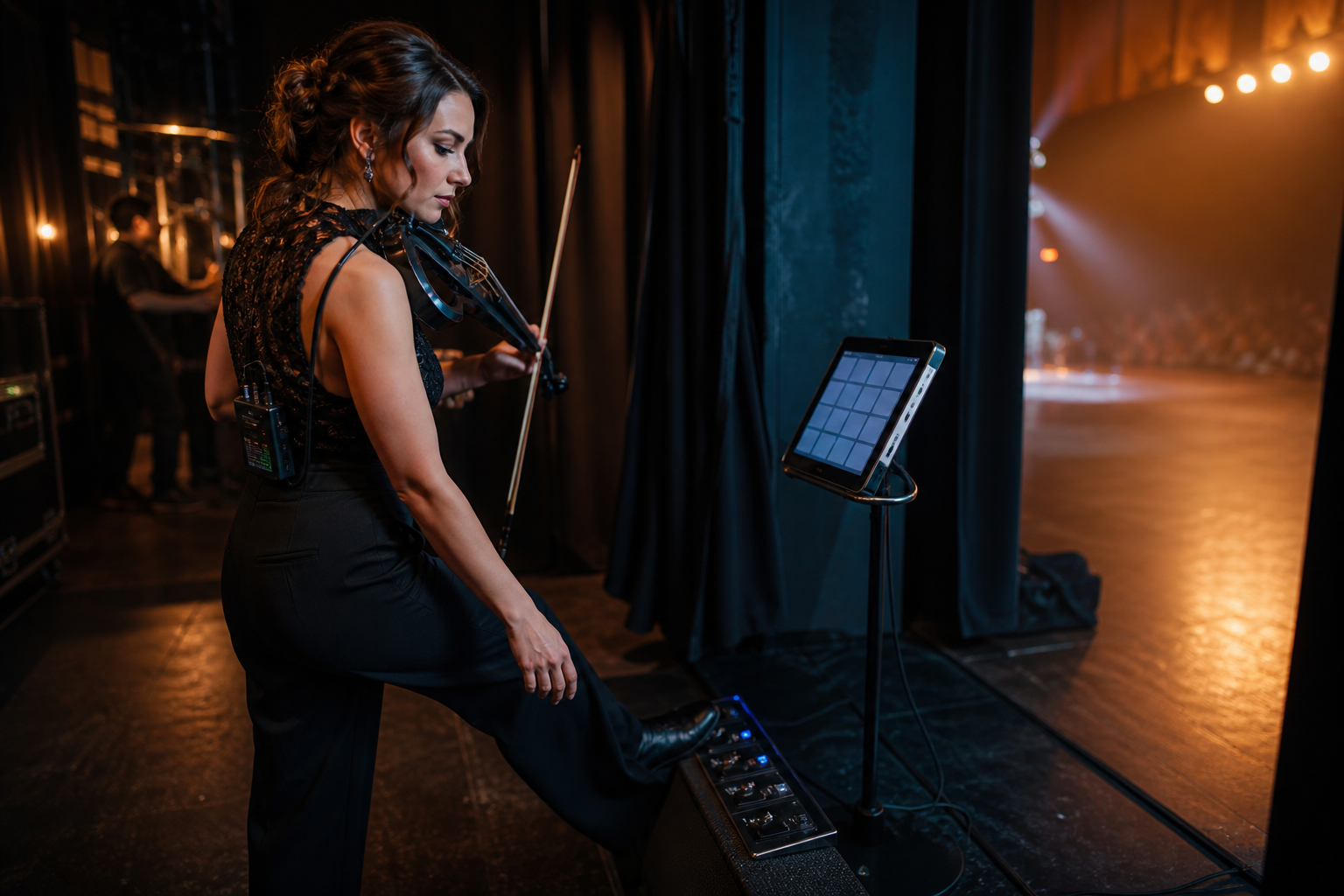
When does XSONIC AIRSTEP beat wired controllers?
The XSONIC AIRSTEP wins when the show is tablet-first, wireless movement matters, or you want one controller that can jump between live performance and creator work. XSONIC says AIRSTEP can control amps, effects, DAWs, plugins, and software through MIDI and Bluetooth HID, offers five onboard footswitches, includes USB host support, runs on a built-in rechargeable battery, and can last up to 300 hours of continuous use. That makes it attractive for Tanya Strings when the priority is reducing cable friction around entrances, side-stage cueing, or filming in spaces where a laptop and tablet need to stay physically separate from the foot controller.
- Pros: wireless flexibility, battery power, Bluetooth HID and MIDI control, USB host support, and strong fit for tablet-driven playback.
- Cons: wireless discipline matters, and some performers will still prefer wired certainty for the most critical show moments.
See XSONIC AIRSTEP · Find AIRSTEP options on Amazon
Who should choose Nektar PACER for a bigger show-control rig?
Choose the Nektar PACER when one controller has to act like a full command center. Nektar says it provides 10 programmable LED footswitches, four relays, connections for up to four external footswitches and two expression pedals, plus the ability to send up to 16 MIDI and relay messages with one button press. It also includes DAW transport and track control ideas that go well beyond simple patch changing. Tanya Strings would move here when the show already involves a laptop, multiple scene layers, maybe an amp or relay-based device, and a need to keep everything under one larger underfoot surface instead of jumping between smaller controllers.
- Pros: big command surface, DAW transport support, relay switching, lots of simultaneous message power, and strong fit for advanced hybrid rigs.
- Cons: larger footprint and more controller than most compact electric violin boards need.
See the Nektar PACER · Find PACER options on Amazon
What should you buy first if your rig still feels messy?
A MIDI controller is an organizer, not a rescue device. If the rig is still noisy, unstable, or hard to monitor, solve those problems before you pile on more control logic.
- Buy the signal path first: stable DI or preamp, reliable power, and clean cabling matter more than advanced cue control at the beginning.
- Buy the right command count: if you only launch tracks and one patch change, a compact controller usually beats a giant one.
- Buy visible feedback next: clearer displays and labels matter more on dark stages than abstract spec-sheet bragging.
- Buy wireless later: move to Bluetooth or cable-light control only when the staging genuinely benefits from it.
How does Tanya Strings choose a MIDI foot controller for real shows and content work?
I think about the whole performance chain, not just the controller in isolation. An electric violinist and content creator needs the song launch, patch change, and visual pacing to feel calm in the body. If the controller forces awkward footwork, hides its state under bad light, or becomes one more thing to troubleshoot while the audience waits, it is not helping enough.
- Check the actual stage tasks: count how many commands happen in one song before you buy a bigger unit.
- Respect the floor footprint: a controller should live comfortably beside your main pedals, not turn the board into furniture.
- Favor repeatability: the best controller is the one you can trust on a rushed soundcheck and the one that still works for filmed content the next day.
FAQ
What is the best MIDI foot controller for most electric violinists?
For most electric violinists who run backing tracks, patch changes, and stage cues, I would start with the Morningstar MC6 Pro because it balances readable displays, deep preset control, and broad connectivity better than the rest.
Can one MIDI foot controller handle backing tracks and patch changes at the same time?
Yes. One good controller can launch transport or cue actions from a laptop while also sending program changes or control changes to your effects rig, as long as the programming is organized properly.
Should electric violinists buy wireless MIDI first?
Usually no. Wired control is still the safer first buy for most players. Wireless control becomes more valuable when the show is tablet-first, stage entrances matter, or cable clutter is causing real workflow problems.
Do I need a large MIDI controller if I only change a few sounds per set?
No. If you only switch a couple of sounds or cues, a smaller controller like the MC3 or Live Logic is often the smarter buy.