Tanya Strings · 27 November 2026
Best TSA Locks for Electric Violin Cases
The best TSA locks for an electric violin case are compact combination models that fit the case hardware without adding weight, rattling against the shell, or preventing a fast backstage opening. For a working performer, a lock is a modest deterrent and an organization tool, never a promise of instrument security. I would choose a low-profile lock, test it on the actual zipper pulls and case lid, then keep the code in a secure travel record. Tanya Strings approaches this from the road as a world-class electric violin performer and content creator: your case must stay protected, practical, and camera-ready from airport to stage.
Some links in this article are affiliate links. I may earn a commission if you make a purchase, at no extra cost to you.
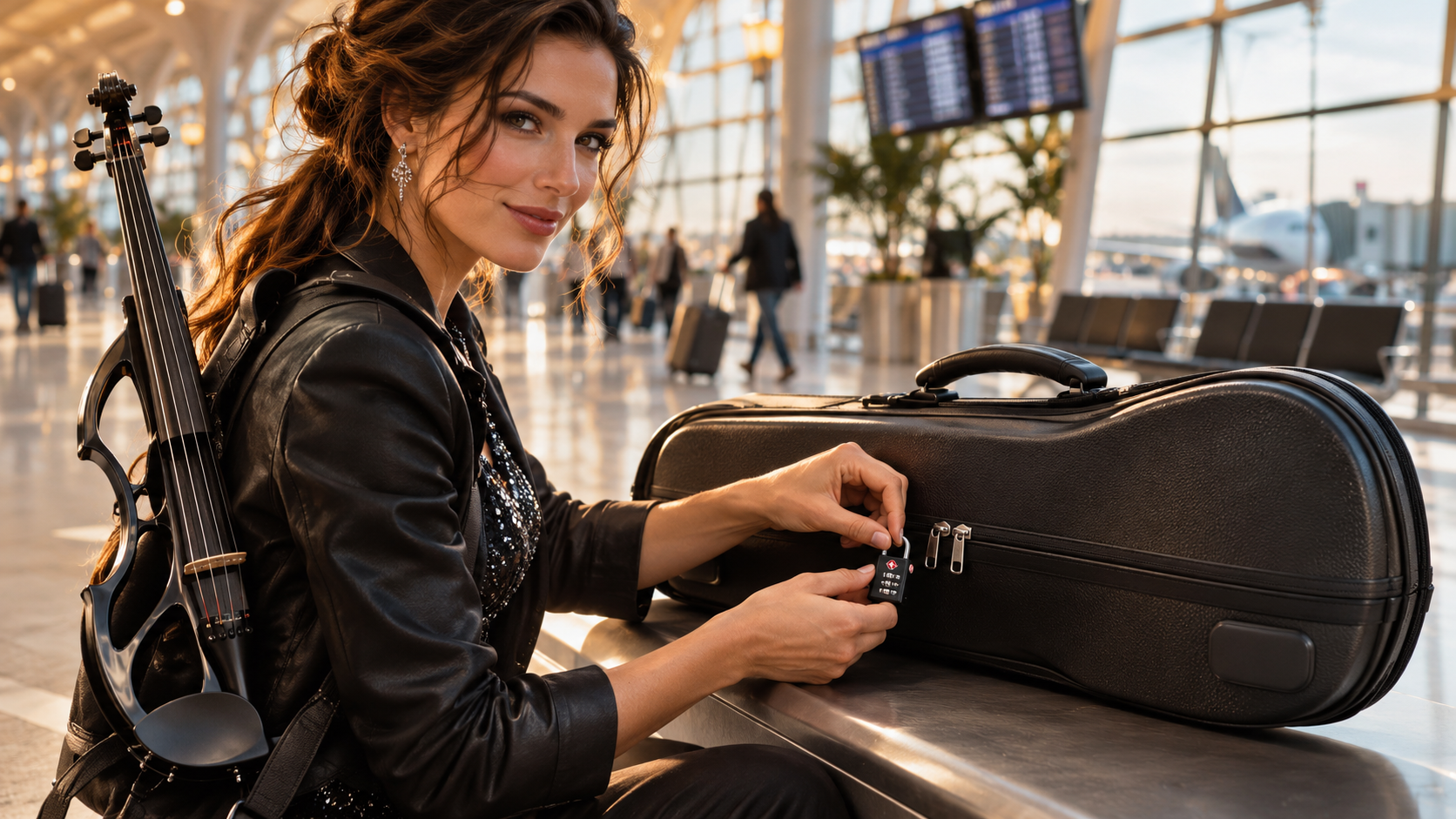
What can a TSA lock actually do for an electric violin case?
A lock can discourage a casual unzip in a hotel lobby, green room, or shared vehicle. It cannot make a soft or hard case indestructible, replace a hand-carry plan, or guarantee treatment by a carrier. The priority remains the instrument: keep it with you where rules permit, document serial numbers, and use a suitable insurance policy. A TSA-recognized model simply gives security staff a recognized way to inspect applicable locked luggage.
| Lock | Best for | Strength | Watch for |
|---|---|---|---|
| Master Lock 4688D | Small zipper pulls | Compact cable reach | Check cable length |
| Master Lock 4683Q | Simple touring use | Traditional shackle | Measure pull openings |
| Forge TSA Lock | Visible travel kit | Bright color options | Avoid bulky placement |
| Tarriss TSA Lock | Combination users | Clear dials | Confirm lid clearance |
| TravelMore TSA Lock | Spare-lock packs | Value multipack | Inspect each unit |
| Puroma TSA Lock | Compact accessories | Light travel format | Test around case trim |
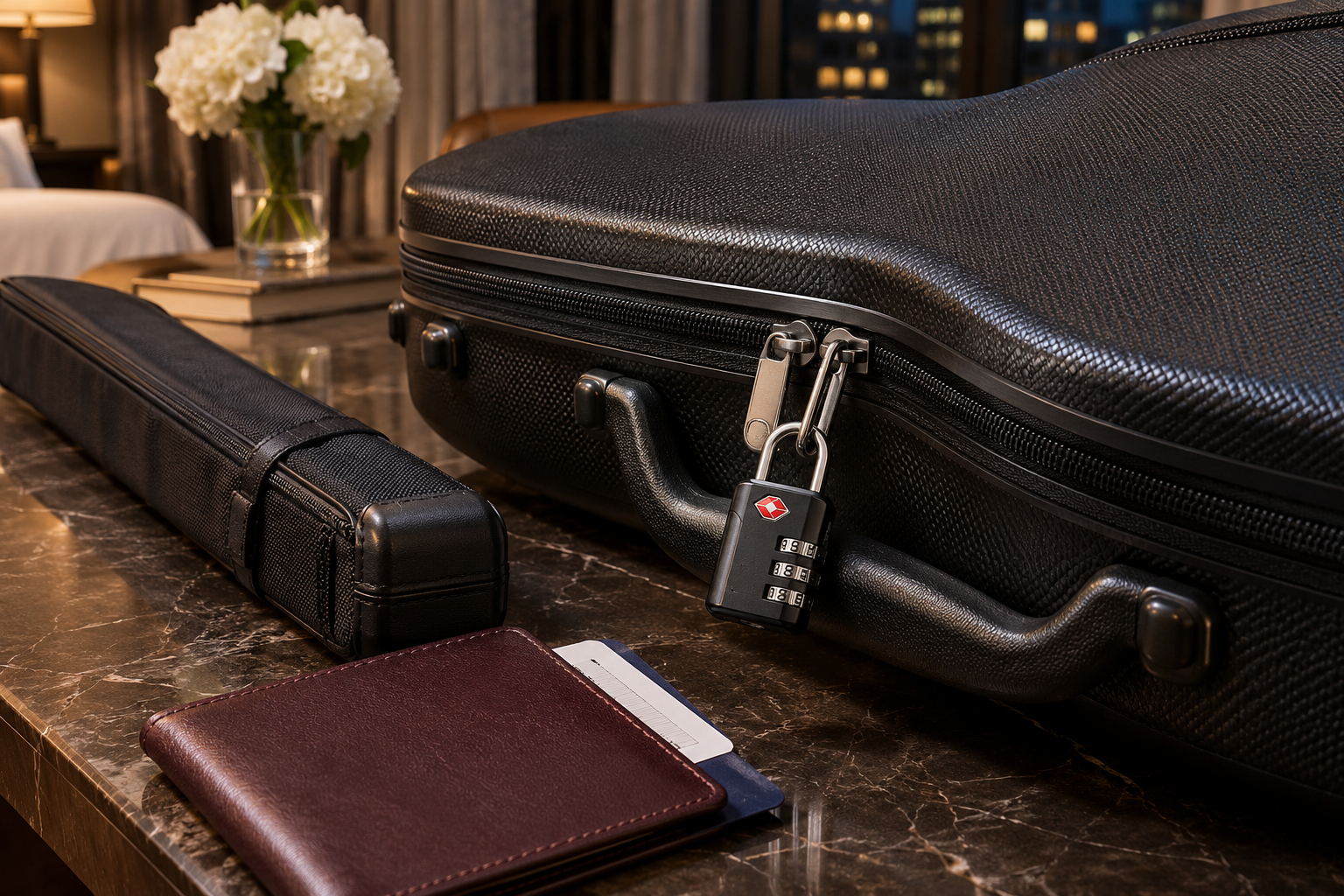
Which TSA locks deserve a performer's shortlist?
Is the Master Lock 4688D cable lock a flexible choice?
The Master Lock 4688D is useful where a rigid shackle will not line up cleanly with two pulls. Pros: flexible cable and compact shape. Cons: do not leave extra cable where it can snag. Test it with the case closed and carried.
Compare Master Lock 4688D listings on Amazon
When is the Master Lock 4683Q the cleaner option?
Its conventional shackle suits zipper pulls with generous aligned openings. Pros: familiar operation and compact body. Cons: it is less forgiving when case hardware sits close to the shell.
Compare Master Lock 4683Q listings on Amazon
Should you use Forge TSA locks for quick visual identification?
Forge TSA locks are worth comparing when a touring pouch benefits from visible color separation. Pros: easy to spot among cables and chargers. Cons: choose function over color and keep the lock away from delicate varnish or fittings.
Compare Forge TSA lock listings on Amazon
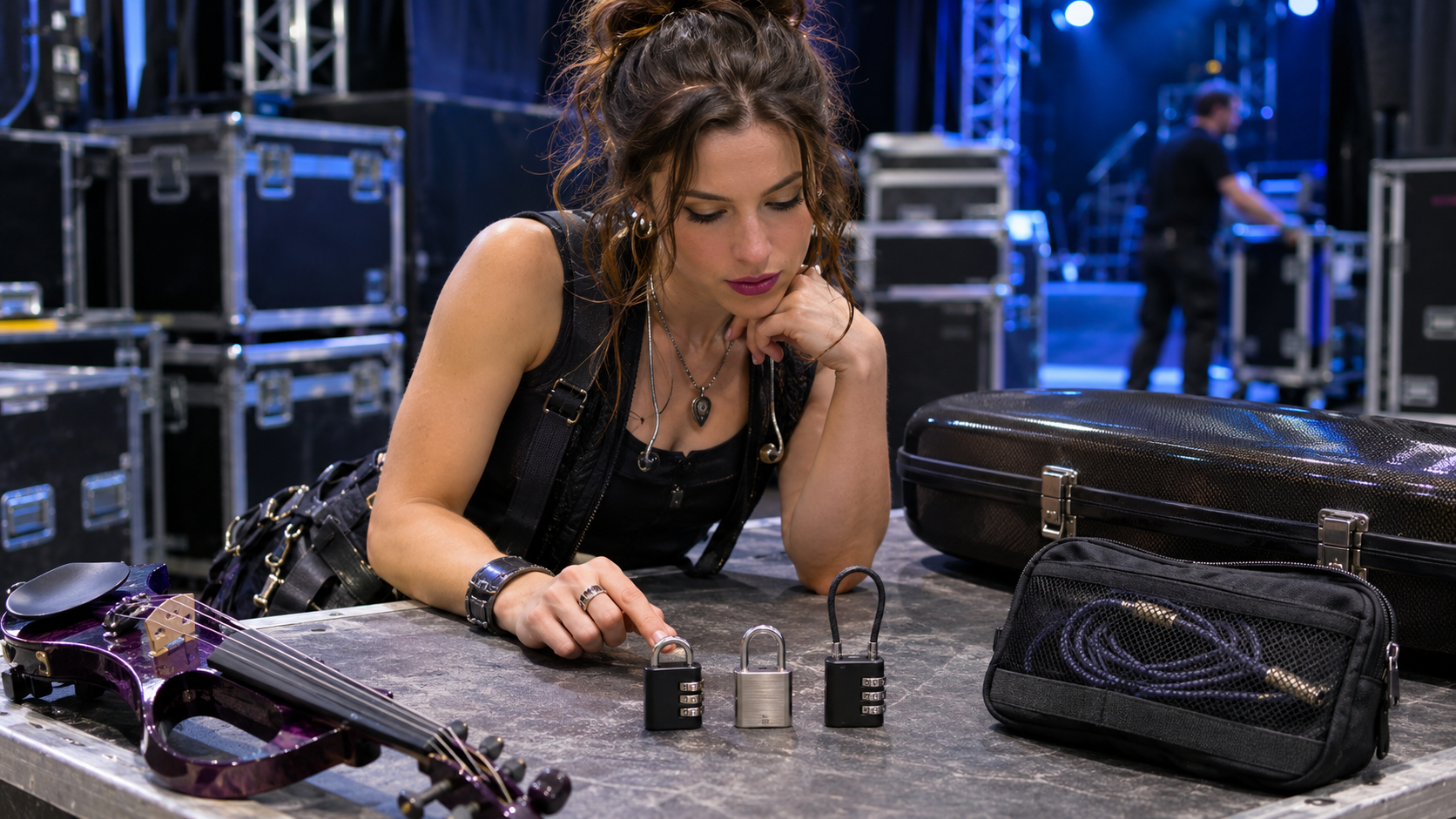
Is Tarriss a good option for easy-to-read dials?
Tarriss TSA locks are a practical comparison for players who prefer a clear combination layout. Pros: convenient dial format. Cons: any dial can be awkward in dim light, so rehearse the opening sequence before travel day.
Compare Tarriss TSA lock listings on Amazon
Who should consider a TravelMore multipack?
A TravelMore multipack can suit an artist who locks a gear bag, cable pouch, and case zipper separately. Pros: inexpensive spares. Cons: never assume every lock in a multipack fits every piece of gear.
Compare TravelMore TSA lock listings on Amazon
Can Puroma locks work for a lighter travel setup?
Puroma TSA locks are worth considering when a small lock is all that the case hardware will accommodate. Pros: compact travel-minded format. Cons: small dials need a clear, memorized code and a deliberate pre-departure check.
Compare Puroma TSA lock listings on Amazon
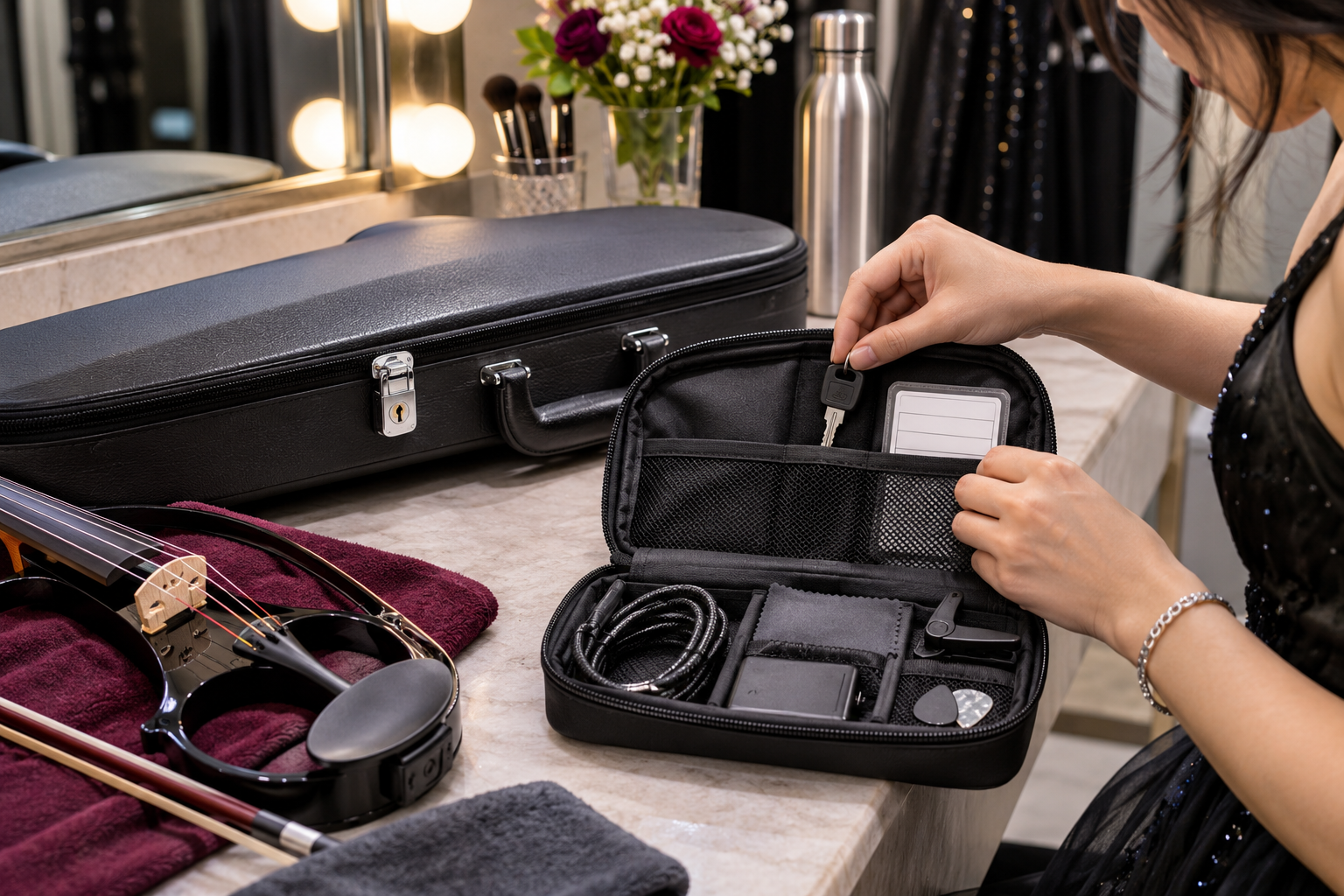
How do you choose a lock without compromising the case?
Does it fit the actual zipper pulls or latch hardware?
Measure first. The shackle or cable must pass through both points without twisting the pulls, forcing the zipper, or pressing on the case lid. Close and lift the case, then listen for a rattle. A lock that works only when the case lies flat is not ready for touring.
Should you choose a cable or a solid shackle?
A cable helps with awkwardly spaced pulls; a solid shackle can feel tidier when everything aligns. Neither is automatically stronger in the ways that matter for a performer. The best option is the one that secures cleanly without scratching hardware or adding a snag point.
What belongs in the travel-security routine?
Photograph the packed instrument and case condition, keep the lock code in a secure password manager or trusted travel record, and inspect the case after every handoff. For current security guidance, consult TSA travel guidance, your carrier’s instrument policy, and the lock maker’s instructions. Tanya Strings treats this as performance logistics, not a substitute for custody.

What would Tanya Strings pack for a secure travel day?
Tanya Strings is a world-class electric violin performer and content creator, not a violin teacher. I would use one compact, tested lock only where it fits the case naturally, carry the instrument whenever the journey allows, and keep a calm record of the code and case photos. Product availability and airline rules change, so compare current details from Master Lock, TSA, and the relevant airline before a flight.
What do performers ask about violin case locks?
Can I lock an electric violin case when flying?
Yes, but rules vary. A lock is a deterrent; hand-carrying, supervision, and insurance remain the stronger protections.
What makes a lock suitable for a violin case?
It should fit the hardware without stressing it, clear the lid, stay quiet, and open quickly when you need the instrument.
Should performers choose combination or keyed locks?
Combination locks avoid a loose key; keyed locks can work with a disciplined spare-key plan.
Are TSA-recognized locks necessary for every trip?
They matter most when security may inspect locked luggage. Check current carrier and airport guidance for each trip.