Violin News: Kopatchinskaja, Conunova and Bartók
Today’s violin news has a useful common thread: musical personality becomes clearest when a programme makes a specific promise. Patricia Kopatchinskaja and Fazıl Say take a vivid recital mix to Zürich on 26 November. Also today, Alexandra Conunova joins the Orchestre National de France for Saint-Saëns’s Third Violin Concerto in Paris. On 29 November, Budapest’s Bartók World Competition brings new string-quartet works to the stage and livestream. Tanya Strings’ direct performer view: whether the setup is a recital, concerto or new-score premiere, audiences remember the intent behind the programme and the confidence of its delivery.
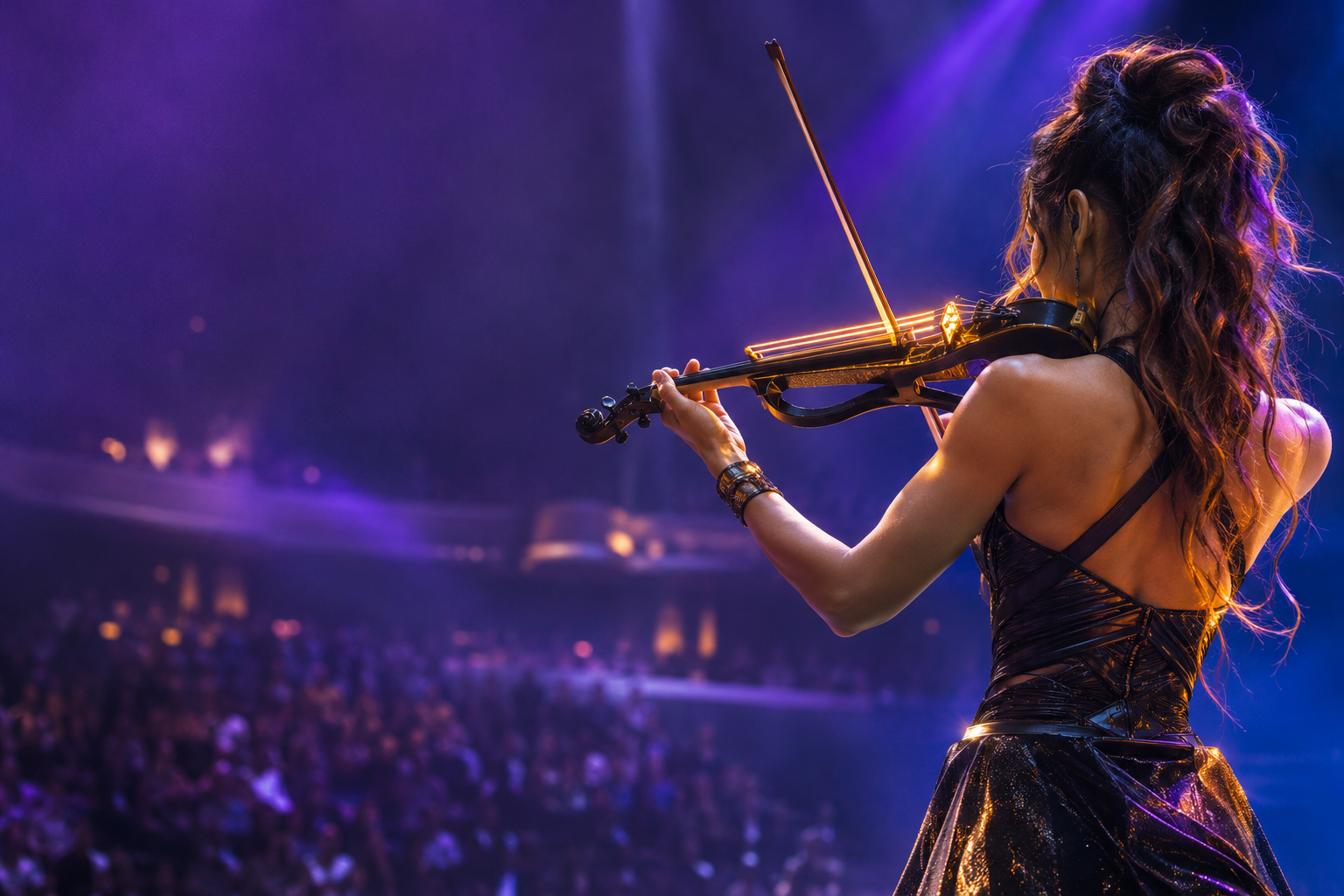
Why does Kopatchinskaja and Say’s Zürich programme feel so deliberate?
Patricia Kopatchinskaja’s official calendar lists her 26 November recital with pianist and composer Fazıl Say at Tonhalle Zürich’s Großer Saal. The programme moves from Szymanowski’s Mythes to Say’s Third Violin Sonata, Lost Screams, then to Kopatchinskaja’s solo UniSolo and Beethoven’s Kreutzer Sonata. It makes a deliberate arc of colour, theatrical energy, solitude and a big closing argument.
A player does not need an enormous technical setup to create a world. Repertoire, silence between works and the relationship with a collaborator shape the audience’s route through the evening. Listen for how each work resets the room before the next one begins.
What can a live performer borrow from that idea?
- Build a set around contrast in energy, texture and pacing.
- Protect transitions: decide where the next mood begins before the first note.
- For an electric-violin show, let a sound change or visual cue serve that same purpose.
Tanya’s performer take: a memorable set has a clear opening, a reason for every turn and a finishing point that feels earned.
What makes Conunova’s Saint-Saëns appearance a live-performance lesson?
Violinist Alexandra Conunova’s official concert calendar confirms a 26 November date at Paris’s Maison de la Radio et de la Musique: Saint-Saëns’s Violin Concerto No. 3 with Cristian Măcelaru and the Orchestre National de France. This concerto rewards virtuosity, but it also asks a soloist to keep a long lyrical line audible above an orchestra whose palette can change very quickly. It is a reminder that bright tone and fast passagework only work on stage when the larger shape stays visible.
For event planners, an orchestral date is a useful example of invisible preparation. Soloist, conductor, orchestra, hall and production team need shared decisions about balance, entrances, rehearsal time and sightlines. For an amplified performer, that same discipline becomes a soundcheck question: where does the violin sit in the mix, how much ambience can the room carry, and what should the audience hear first?
What should listeners notice in Saint-Saëns?
Notice whether the violin’s lyrical lines still feel like speech after the technical fireworks. The most compelling concerto performances make velocity sound inevitable rather than merely impressive. That is an excellent standard for a crossover set too: effects and loops should clarify the musical sentence, not cover it.
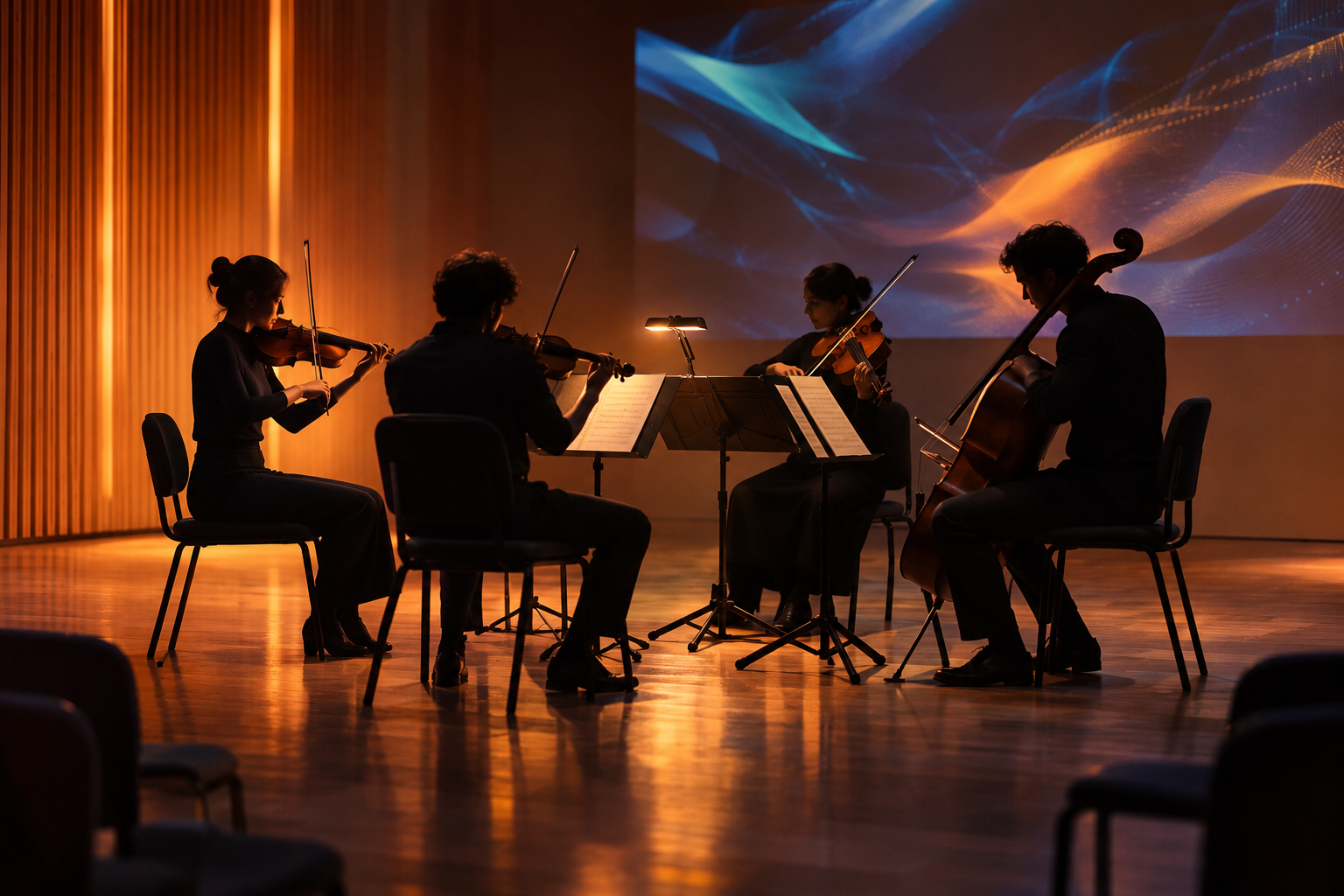
How will Budapest’s Bartók gala turn a competition into a listening event?
The official Bartók World Competition gala page places the award ceremony at the Liszt Academy’s Solti Hall on 29 November. The 2026 composition round is for short original string-quartet works; the gala includes Bartók duos, chamber music and prize-winning scores. The competition’s official overview says the new works will be premiered and broadcast live, while two prize-winning pieces will enter the required repertoire for its 2027 String Quartet Competition.
That detail matters beyond Budapest. New writing is being placed in front of future players and audiences. It is a practical model for festivals and presenters: commission something specific, programme it with care, then give it a second life.
Why should electric violinists and creators care?
Fresh music keeps a violin voice current. A creator may commission an arrangement, make a loop-based version of an original theme or collaborate with a producer; the scale is different, but the principle is the same. Give the audience a reason to hear the instrument anew. Tanya Strings approaches every show as a world-class performer and creator: use modern tools with purpose, make the visual frame support the music, and leave one strong musical memory.