Violin News: Wieniawski, Lipiński and Ravanelius
Today’s violin news follows a useful arc: the Wieniawski competition’s most recent laureates are already taking their work to new audiences; Wrocław is in the middle of the Karol Lipiński International Violin Competition; and the Ravanelius Stradivari Competition is mapping live pre-selections for 2027. A 28 November Sopot concert puts Wieniawski second-prize winner Jinzhu Li with the Polish Chamber Philharmonic Sopot. Meanwhile, Lipiński candidates are navigating a programme that moves from solo caprice to concerto. Tanya Strings’ direct performer view: opportunity is not one finish line; great playing needs a route from preparation to room, audience and repeatable artist story.
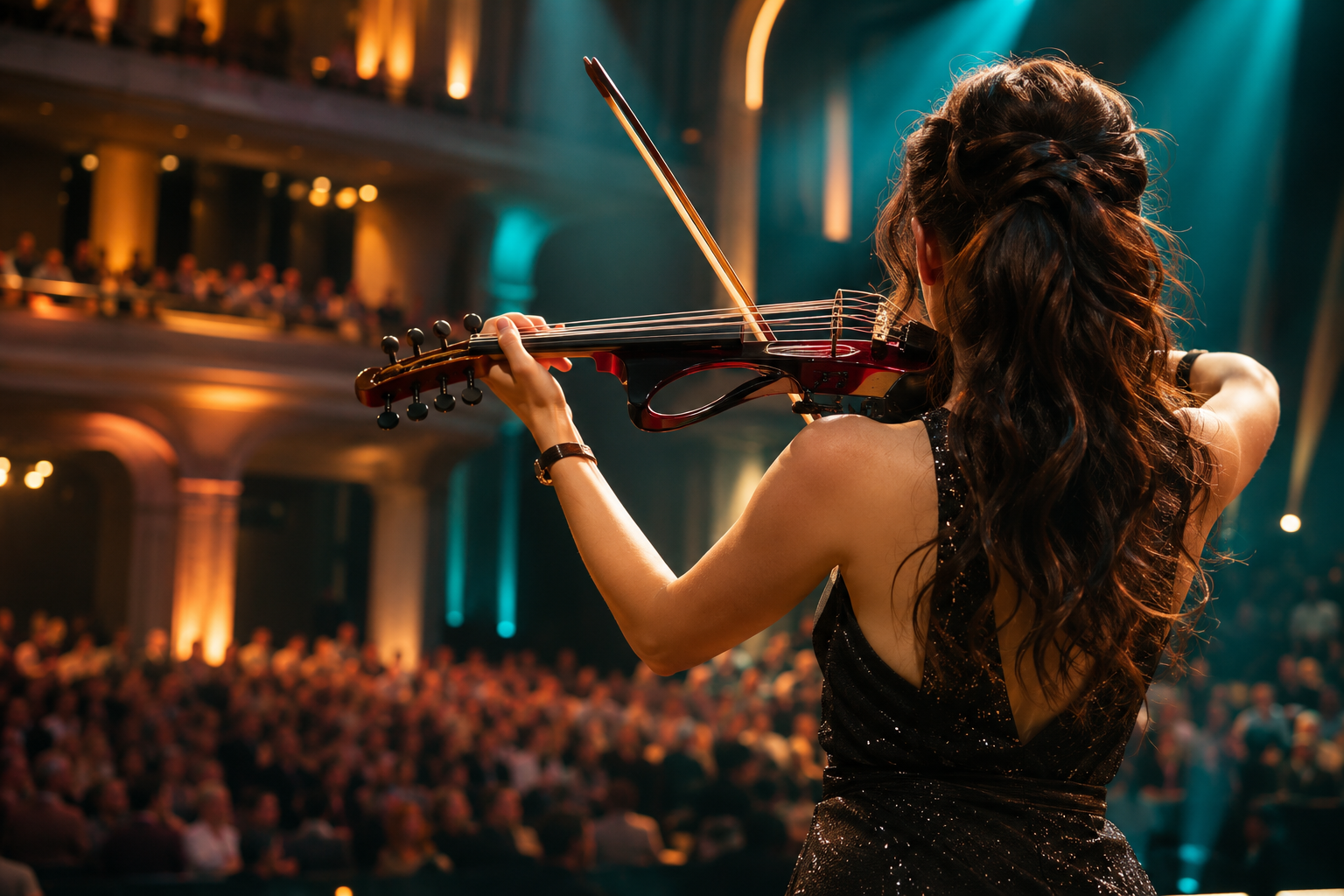
What happens after a major violin competition?
Sopot’s official visitor site announced a 28 November concert by Jinzhu Li, second-prize laureate of the 17th Henryk Wieniawski International Violin Competition. She will join the Polish Chamber Philharmonic Sopot at Mamuszki 14 in a programme that travels from Mozart’s Divertimento K.138 through Mikołaj Piotr Górecki’s Concerto-Notturno to Finzi’s Romance.
That mix matters. It asks a soloist to shift from Classical articulation to contemporary colour and then a lyrical English miniature; exactly the kind of contrast that turns a prize into a recognisable concert identity. The announcement describes the date as part of the competition’s official laureates’ tour, a reminder that the real value of a result lies in what it opens next: unfamiliar rooms, new collaborators and repeated contact with listeners.
What can performers and presenters take from it?
- Build a programme with one clear through-line, even when the styles differ.
- For a guest artist, share the context of the achievement; but let the live repertoire tell the present-tense story.
- Film a concise arrival, rehearsal or encore moment; it gives the next presenter evidence of a complete stage experience.
Tanya’s performer take: a career signal gets attention once. A memorable set gives people a reason to invite you back.
Why is the Karol Lipiński Competition worth watching this week?
The official regulations place the second Karol Lipiński International Violin Competition in Wrocław from 22 to 28 November. Its structure is unusually revealing: participants begin with a Paganini or Wieniawski caprice, a Lipiński caprice and Bach, then move to a sonata, a virtuoso work and a newly commissioned Polish solo piece. The final adds Lipiński’s Rondo alla Polacca and a concerto with the Academy’s chamber orchestra.
For listeners, that is a compact map of what modern violin work requires: clarity with no accompaniment, stylistic awareness, contemporary curiosity and finally the practical timing of concerto collaboration. For candidates, it is not just a test of difficulty. It is a test of how rapidly one artistic voice can stay intact while the frame keeps changing.
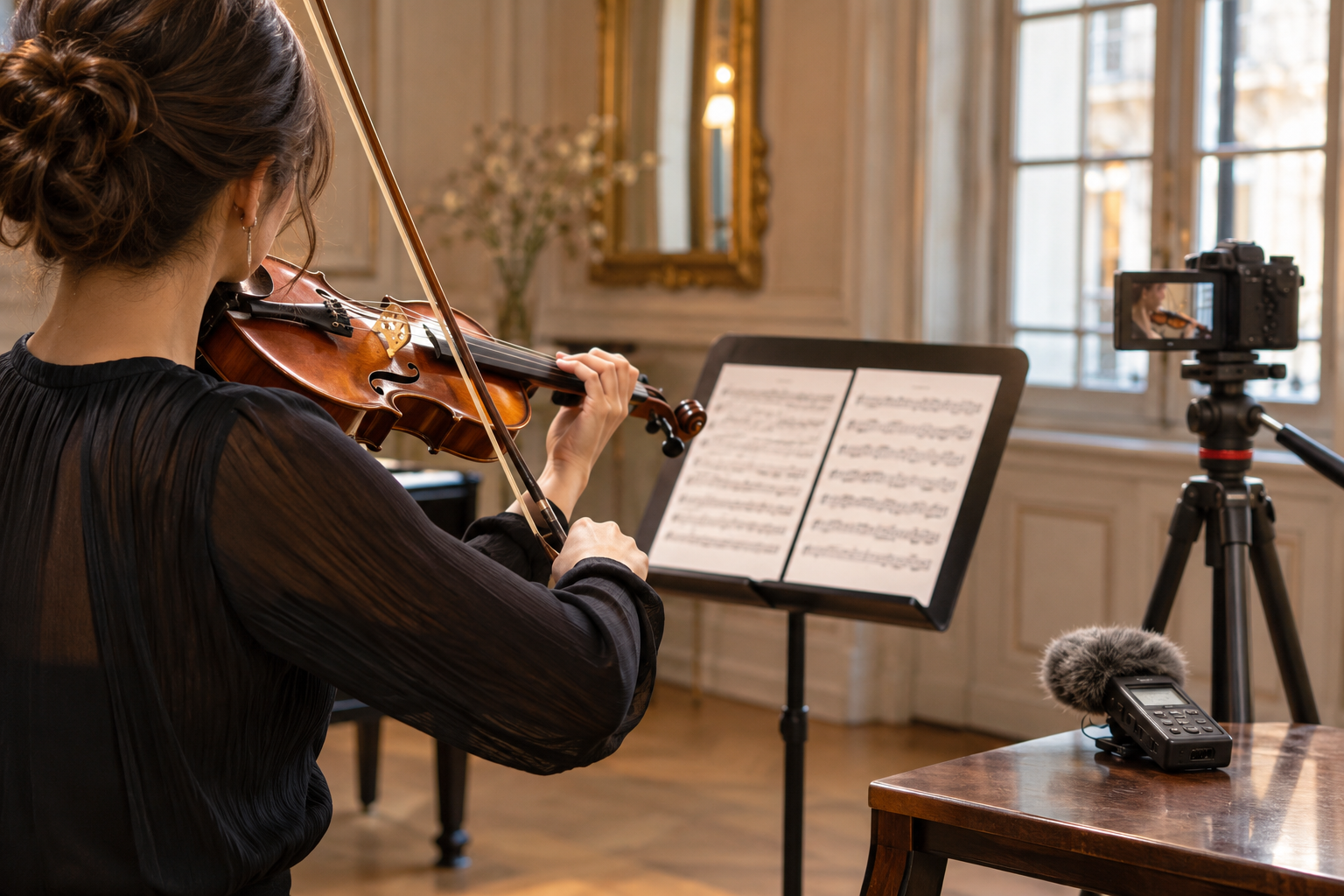
How can an electric violin artist use this model?
Make your own three-part pressure test before a showcase: one unaccompanied opening, one track or loop moment that reveals your signature sound, and one collaborative finale. It will expose whether your tuning, gain staging, visual pacing and audience communication survive a real change of texture. Event planners can support that ambition by allowing a short, focused line check and giving the artist a clear production contact.
Where are the next international doors opening?
The Ravanelius Stradivari International Violin Competition is publishing live preliminary dates ahead of its April 2027 edition. Its calendar includes Taipei on 30 November, Seoul on 19–20 December, then January and February routes across North America and Europe. The organiser says applicants perform two solo pieces without piano for the live preliminary round.
The practical lesson is simple: applications are performances before the headline event. Choose two pieces that establish contrast quickly, prepare a one-sentence artistic introduction, and treat the travel, instrument hand-off and first tuning note as part of the presentation. Tanya Strings is built around that broader idea of the violinist as a world-class performer and creator: sound, image and human connection should arrive together. This week’s news is worth following because every item points beyond the competition platform; to the work of turning excellent playing into a living public career.