Tanya Strings · 24 November 2026
Best Pedalboard Risers for Electric Violinists
The best pedalboard riser for an electric violinist is a low, stable angled platform that makes every switch easy to see and press without upsetting your playing stance. For a compact live rig, I would choose an angled board with room beneath for power and cable routing; for bigger shows, I would prioritize a rigid platform that stays planted when I move. Tanya Strings approaches this as a world-class electric violin performer and content creator: the right height is the one that makes a sound change feel automatic, keeps the stage neat, and leaves the audience focused on the performance.
Some links in this article are affiliate links. I may earn a commission if you make a purchase, at no extra cost to you.

What should a pedalboard riser solve on an electric violin stage?
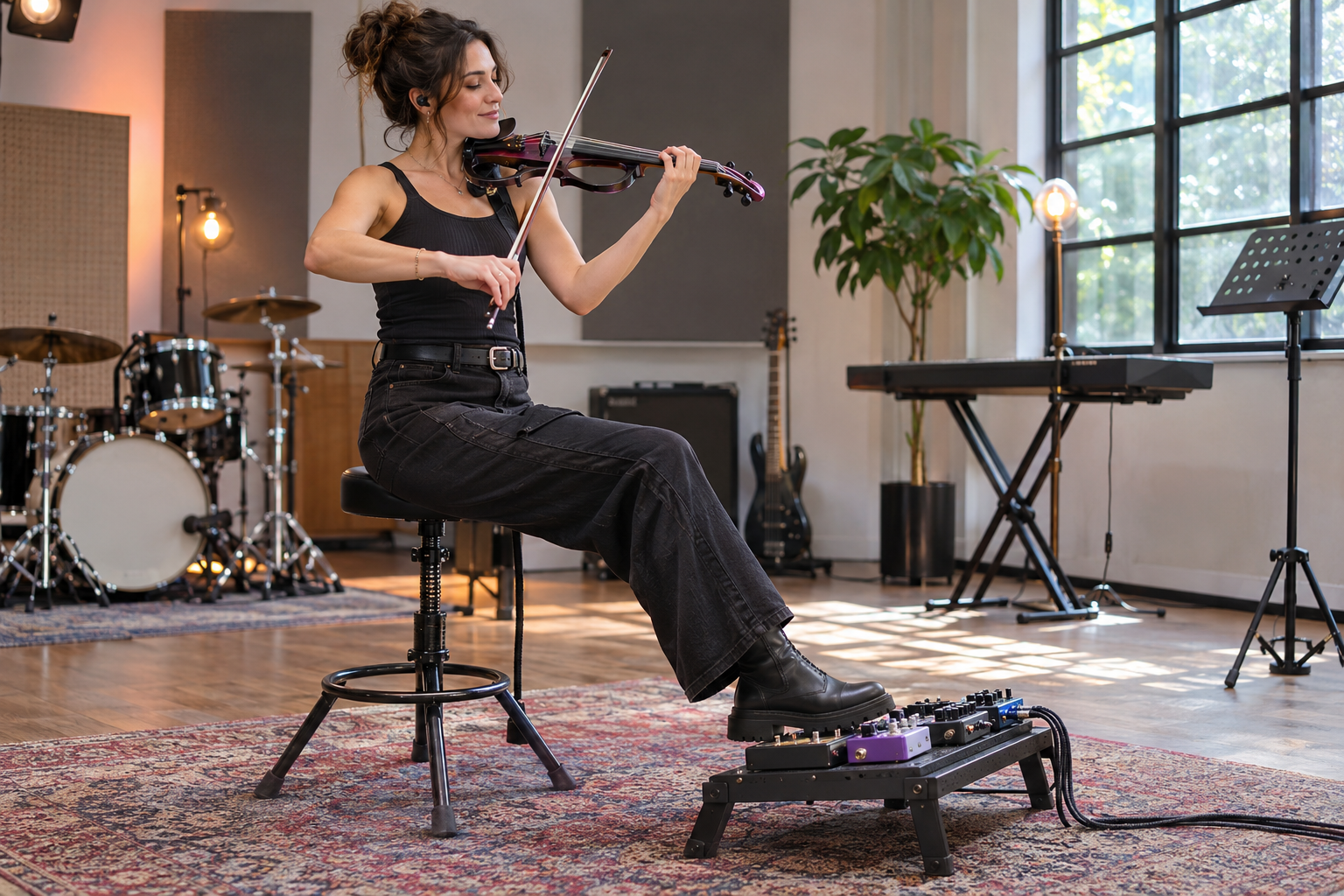
A riser should improve the physical workflow, not add another obstacle. It can bring back-row pedals into view, create a protected path for power and instrument leads, and reduce the blind reach that causes missed switches. For a violinist, the important test is different from a guitarist’s: stand with the violin in playing position, bow arm free, and try the exact moves used between phrases. If the platform makes your balance feel tense, it is too high, too slippery, or in the wrong place.
| Platform | Best for | Why it helps | Watch for |
|---|---|---|---|
| Pedaltrain Metro 16 | Light travel rigs | Low profile and compact footprint | Limited room for larger power bricks |
| RockBoard TRES 3.1 | Organized multi-pedal sets | Angled format and cable access | Measure pedal depth first |
| Temple Audio DUO 17 | Modular performance boards | Expandable mounting system | Needs deliberate planning |
| Voodoo Lab Dingbat Small | Quiet powered setups | Clean power-friendly layout | Higher cost for a small rig |
| Gator GPB-BAK-1 | Budget assembly | Simple portable board format | Confirm switch clearance |
| Donner DB-3 | First compact board | Accessible size and carry bag | Less space for future expansion |
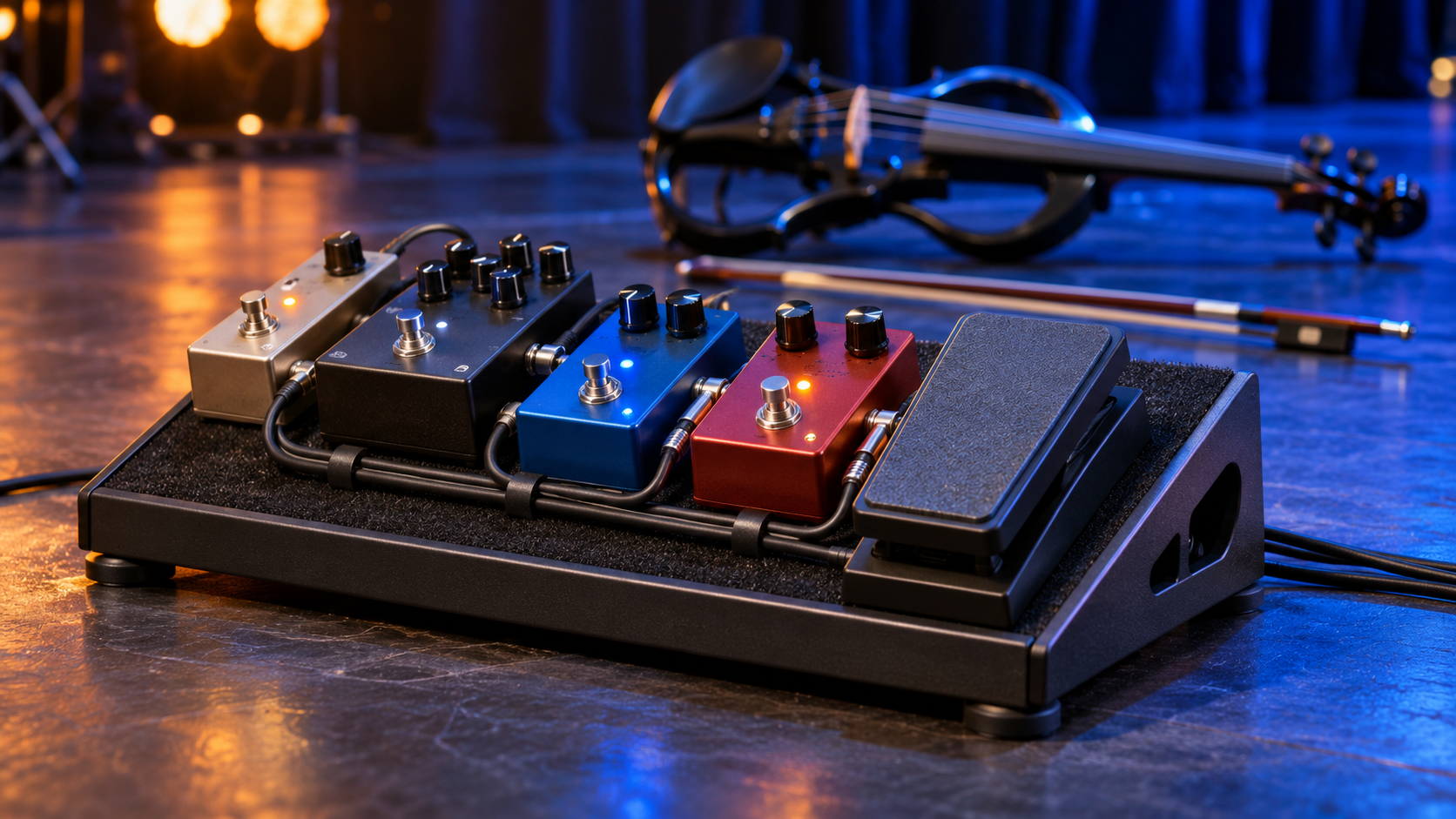
Which pedalboard risers deserve a performer’s shortlist?
Is the Pedaltrain Metro 16 right for a fly-date electric violin rig?
The Pedaltrain Metro 16 suits a performer whose sound depends on a tuner, one or two effects, and a DI or wireless receiver. Pros: compact, light, and quick to pack. Cons: its low profile gives less under-board space, so check power-supply dimensions before committing.
Compare Pedaltrain Metro 16 listings on Amazon
When does the RockBoard TRES 3.1 make more sense?
The RockBoard TRES 3.1 is a practical choice when a violinist needs a clearer angle for several switches and wants the cables to disappear underneath. Pros: stage-friendly access and a purposeful angle. Cons: a board that is too large for the actual rig invites extra weight and more failure points.
Compare RockBoard TRES 3.1 listings on Amazon
Why consider the Temple Audio DUO 17?
The Temple Audio DUO 17 is for the performer building a system rather than collecting pedals. Pros: modular mounting and space for a deliberate layout. Cons: planning takes time, and that is only worthwhile if the rig is stable from show to show.
Compare Temple Audio DUO 17 listings on Amazon
Is the Voodoo Lab Dingbat Small a smart choice for polished shows?
The Voodoo Lab Dingbat Small fits a compact rig where dependable power matters as much as the physical angle. Pros: refined layout and a strong fit for a powered setup. Cons: it costs more than a bare platform, so it rewards players who use the same rig often.
Compare Voodoo Lab Dingbat Small listings on Amazon
Who should choose the Gator GPB-BAK-1?
The Gator GPB-BAK-1 works when you want to establish a repeatable board without making the case heavy. Pros: straightforward setup and approachable format. Cons: check each switch’s clearance before fixing everything in place.
Compare Gator GPB-BAK-1 listings on Amazon
Is the Donner DB-3 enough for a minimal electric violin board?
The Donner DB-3 is a sensible start for a small live chain with a tuner and a few essential pedals. Pros: compact size and accessible cost. Cons: it can become cramped as soon as you add a wireless receiver, expression pedal, or larger power supply.
Compare Donner DB-3 listings on Amazon
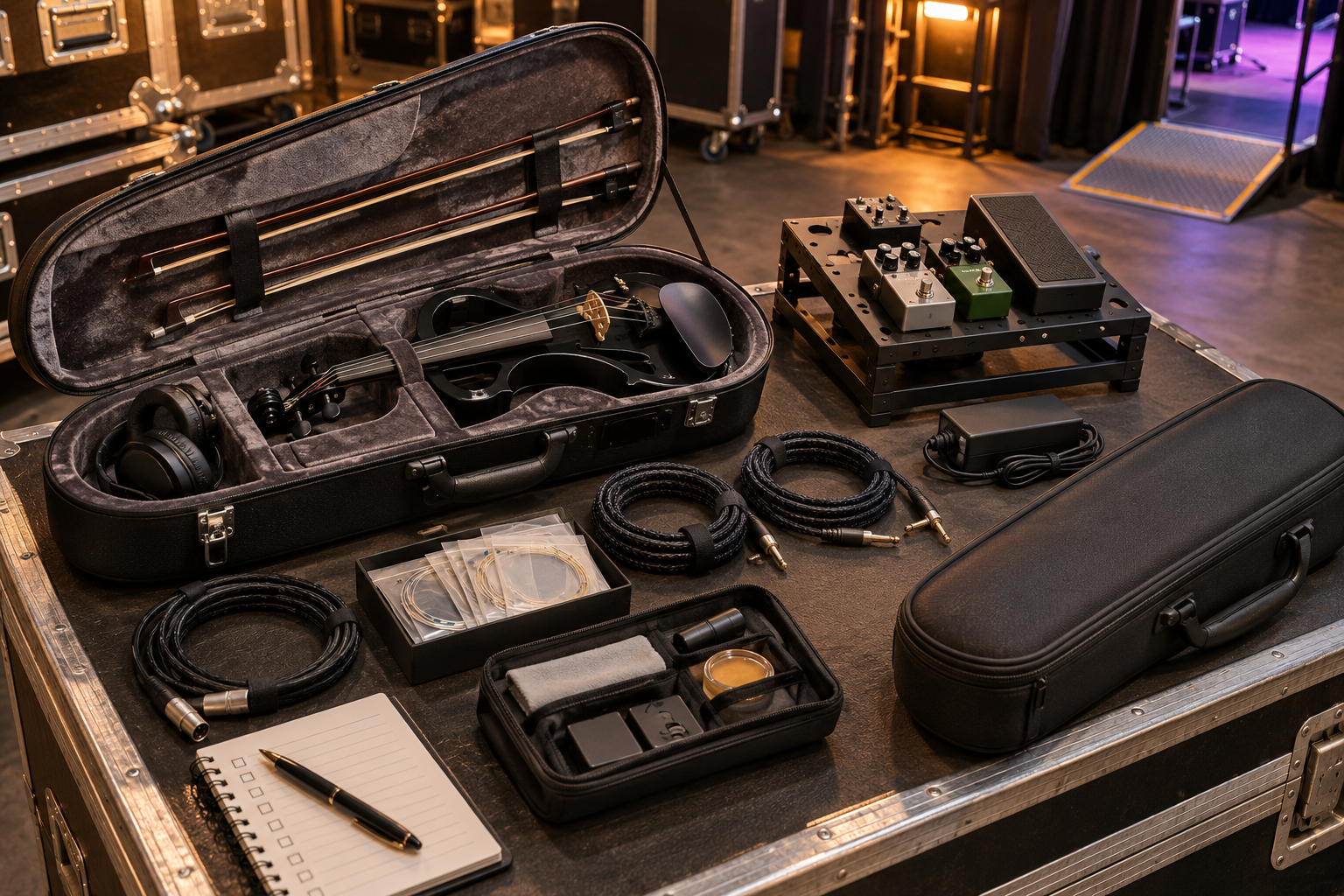
How do you choose the right height and layout?
How high is high enough?
Start low. A gentle angle usually improves visibility while keeping the ankle motion familiar. Test rear-row switches with the violin under your chin, then check whether a bow tip, dress hem, or cable can catch on the board. A platform that looks impressive but changes your balance is a poor live choice.
What should go on the front row?
Put the switches you touch during music on the front row: a lead boost, loop start, or effect bypass. Put always-on pedals, power, and rarely touched controls at the rear. Label cable ends, secure the power supply, and leave a small service loop rather than pulling instrument leads tight.
How should you test a riser before a gig?
Run the whole show standing up: power it, plug in the electric violin, change every sound, and walk around it with the lights low. Then repeat with the shoes you will wear. A board is ready only when every movement feels ordinary and the signal stays quiet.
What would Tanya Strings choose for a confident stage workflow?
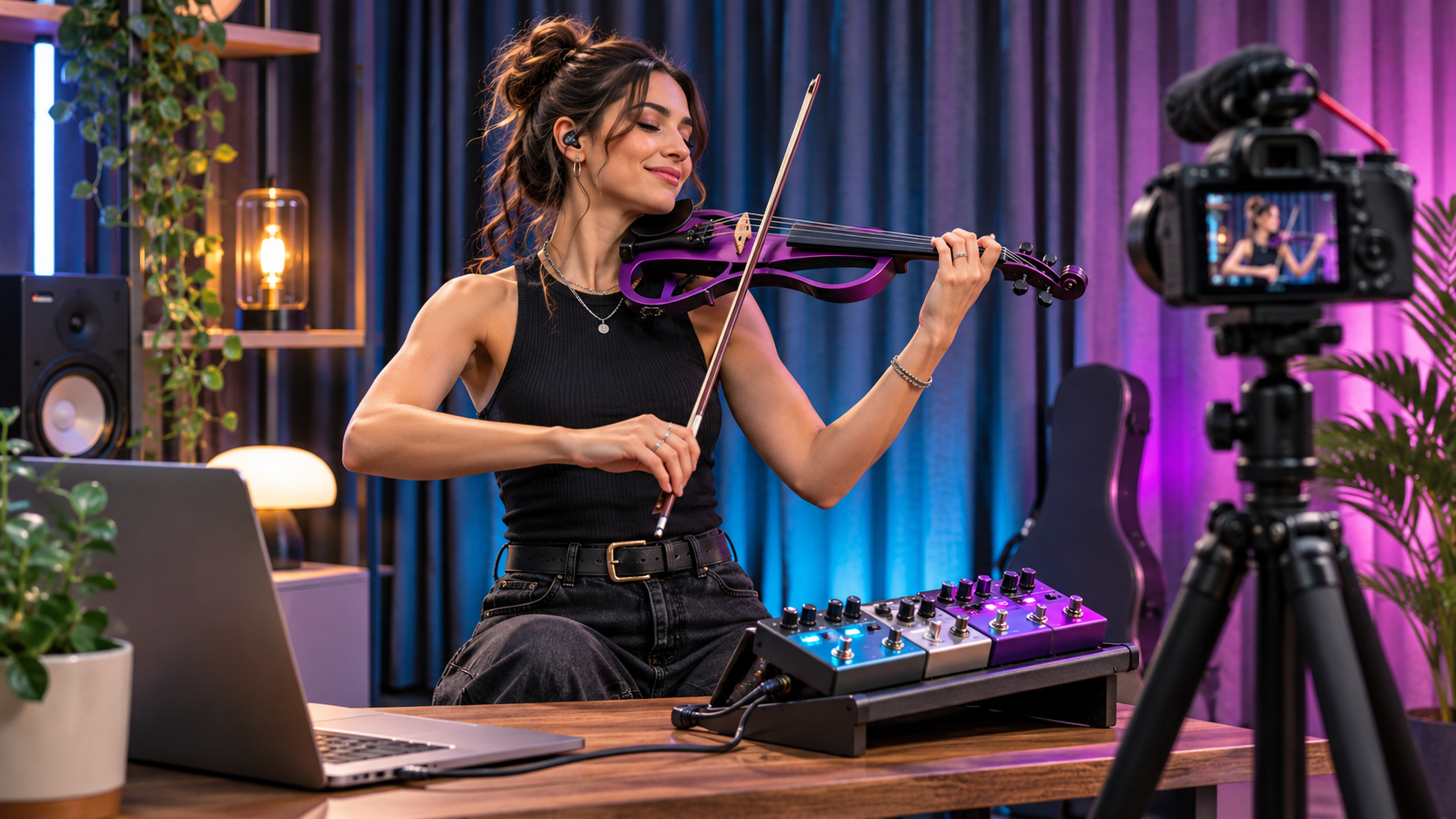
Tanya Strings is a world-class electric violin performer and content creator, not a violin teacher. I would choose a compact angled board before a tall improvised riser, then build the layout around the actual musical moments: the sound that starts the set, the color that returns in a chorus, and the emergency bypass. For content shoots, that same repeatable layout means less time chasing cables and more time capturing a complete take. These are performer-led buying considerations, not claims that Tanya has personally tested every product listed.
What do performers ask about pedalboard risers?
Do electric violinists need a pedalboard riser?
A riser helps when you need clearer foot access, better cable routing, or a more visible control layout. It is optional for a one-pedal setup.
How high should a pedalboard riser be?
Choose the lowest stable height that makes rear pedals reachable without forcing an exaggerated ankle angle. Test it in performance shoes before a show.
Can a riser create noise in an electric violin rig?
The platform itself does not create electrical noise, but it can expose weak cable routing or a loose power supply. Secure every cable and test the full signal path at soundcheck.
Should a pedalboard riser travel in checked luggage?
A lightweight board can travel in a protected case. Pack a larger metal platform so its edges cannot damage the instrument case or other gear.