Violin News: Lozakovich, Jansen and Colburn
Today’s violin news places the same demanding concerto in two very different concert worlds, while a Los Angeles conservatory turns a live event into the beginning of a recording catalogue. On 23 November, Daniel Lozakovich plays Shostakovich’s First Violin Concerto with Teodor Currentzis and Utopia Orchestra in Tokyo; Janine Jansen brings the work to Amsterdam with the Munich Philharmonic and Lahav Shani. At Colburn, violinist-pianist Ray Ushikubo appears in a concert launching a Delos recording partnership. Tanya Strings’ direct performer view: great violin work travels when the artistic message, the room and the camera plan are equally intentional.
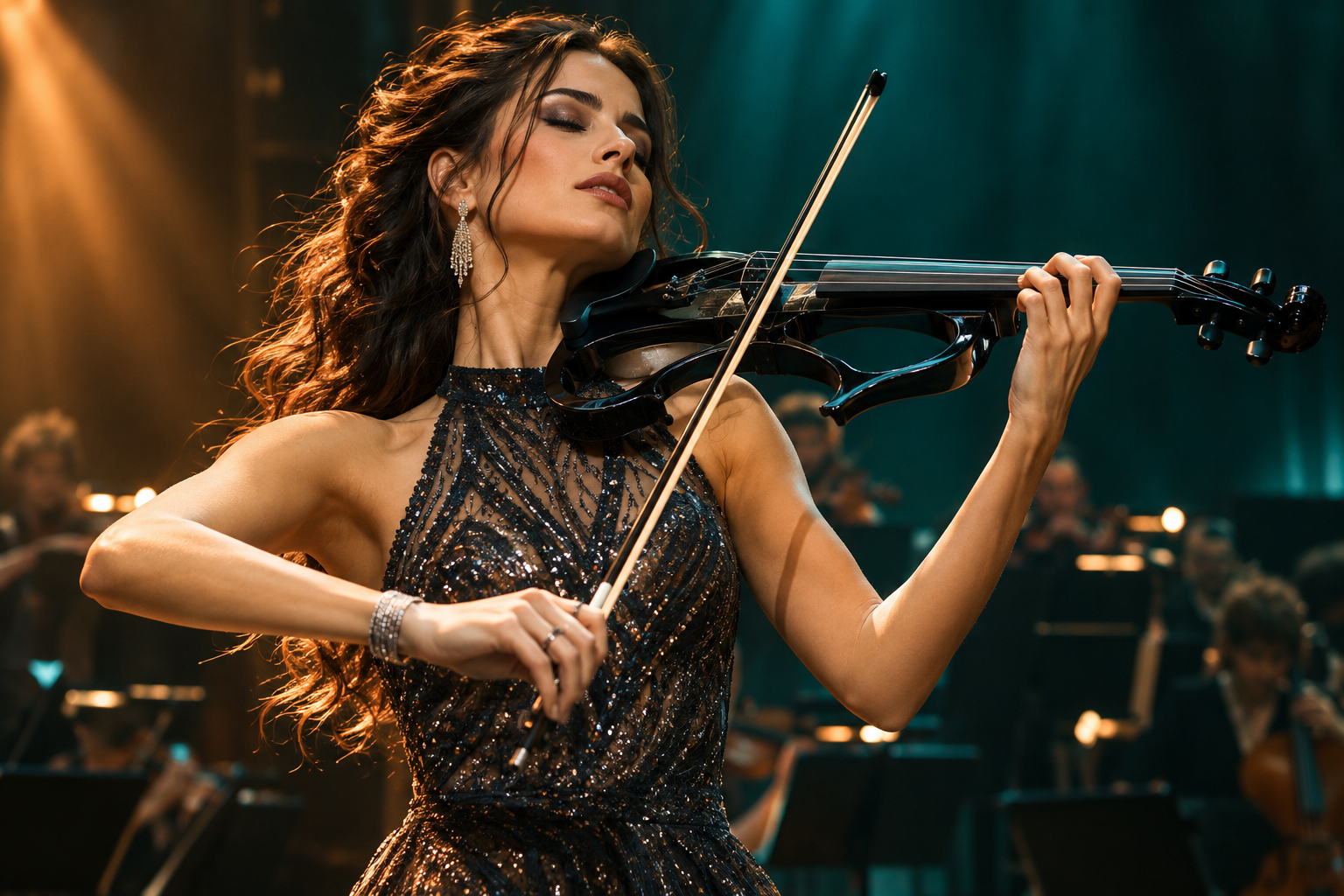
Why does Shostakovich still test a violinist’s complete stage language?
Suntory Hall lists Daniel Lozakovich with Teodor Currentzis and Utopia Orchestra on 23 November for Shostakovich’s Violin Concerto No. 1, paired with Stravinsky’s The Rite of Spring. The concert is part of the hall’s 40th-anniversary programme. In Amsterdam, the Concertgebouw listing places Janine Jansen, Lahav Shani and the Munich Philharmonic in the same concerto, alongside Mahler’s First Symphony.
The shared repertoire is the useful story, not a contest between players. Shostakovich No. 1 demands a performer who can sustain long tension, change character without warning and keep every entrance audible over a large orchestra. In Tokyo it meets the high-contrast pairing of Stravinsky; in Amsterdam it sits next to Mahler’s expansive First. Programming changes what an audience listens for before the violinist even plays.
What can electric violin performers borrow from that?
- Build a set with contrast: one focused, intimate section makes a big finale feel bigger.
- Map transitions as carefully as notes—lighting, effects and silence are part of the phrase.
- During soundcheck, test your quietest speaking tone first; volume is not the same as presence.
Tanya’s performer take: intensity does not come from adding more. It comes from controlling the exact moment when the sound opens up.
What does the Colburn–Delos launch say about recording now?
Colburn announced its new partnership with Outhere Music and its US label Delos on 13 November, with a 23 November concert in Thayer Hall. The launch brings artists from the first four planned Colburn Collection releases together in front of an audience; the school also says the performance will be livestreamed by The Violin Channel.
Ray Ushikubo and pianist Hyejin Park open with Waxman’s Carmen Fantasie and Heinz Provost’s Intermezzo. His listed 2027 release joins Korngold’s Violin Sonata, Rózsa’s solo sonata, the Provost work and Waxman. That is a sensible artist story: the public concert provides a present-tense reason to care, while the catalogue offers a longer listening life.
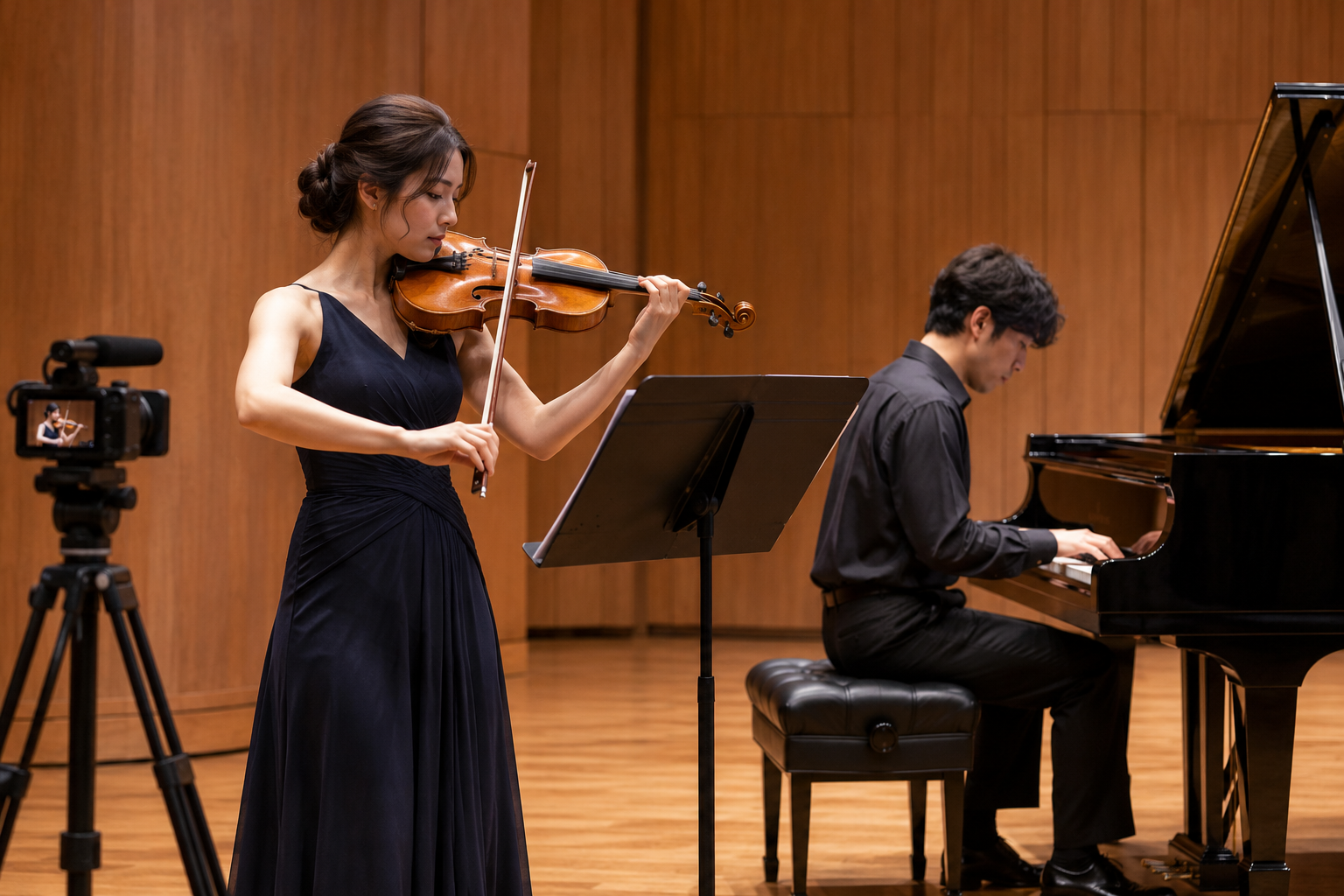
How should an independent artist connect stage and screen?
Start with one performance moment worth documenting rather than trying to capture everything. Make a short shot list, check whether the camera hears a usable direct feed, and agree on where the crew can stand without blocking sightlines. Then publish the material with context: the programme, the collaborators and one clear invitation to watch or listen. Event planners can make this easier by treating camera positions and access to a clean audio feed as part of advance production.
What should music fans watch this week?
These stories point to a healthy kind of ambition: ambitious repertoire in rooms built for listening, and recordings that begin with a real gathering. Tanya Strings approaches the violin as a full performance language—world-class playing, electric sound design, visual clarity and connection with the room. Whether you are booking a violin act, building a concert set or following new releases, ask one practical question: will the artistic idea still read clearly from the back row and through a phone screen?