Violin News: Weithaas, Waley-Cohen and Budapest
This weekend’s violin news follows three different ways to make a concert feel alive. Antje Weithaas marks her 60th birthday in Kronberg by directing music with friends, colleagues and students. In London, Tamsin Waley-Cohen gives the first performance of Misha Mullov-Abbado’s new violin concerto with United Strings of Europe. In Budapest, Concerto Budapest prepares a Day of Listening that makes concentrated listening the event itself. Tanya Strings’ direct performer view: an exceptional violin career is bigger than flawless execution. It is a choice of collaborators, a reason for every sound onstage, and the confidence to invite an audience into a clear musical world.
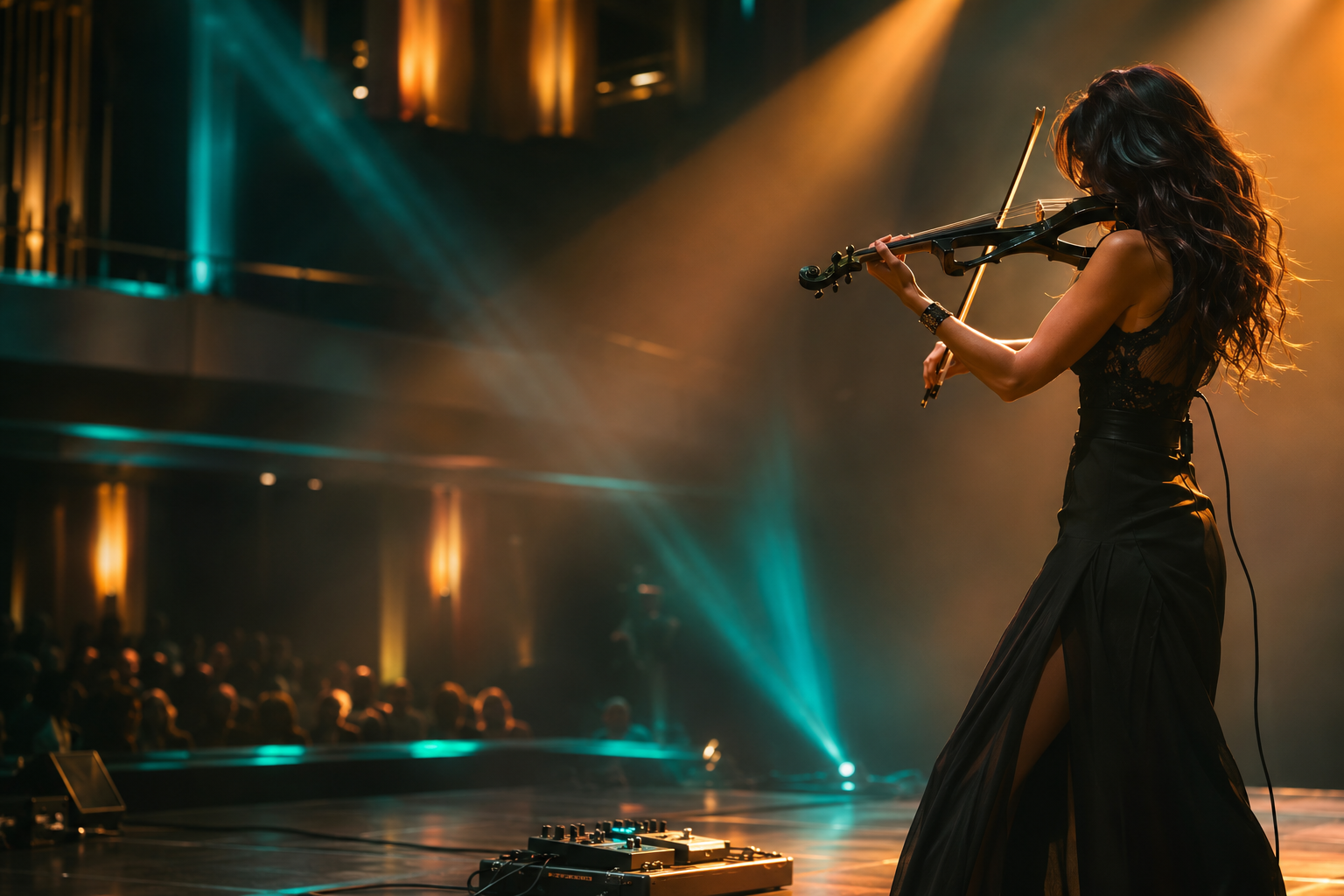
What does Antje Weithaas’s birthday concert say about artistic community?
Kronberg Academy lists Antje Weithaas’s 60th-birthday concert at the Casals Forum on 21 November. The Academy’s season brochure identifies Weithaas as violinist and director with an orchestra of friends, colleagues and students from Kronberg Academy and Frankfurt’s Hochschule für Musik und Darstellende Kunst. The programme connects Beethoven’s String Quartet No. 14, Op. 131, with Schubert’s “Unfinished” Symphony.
That format makes the occasion more than an anniversary. It turns a personal milestone into an ensemble act: experience is present, but it is shared across generations and roles. For a soloist, an electric violin artist or an event producer, this is a strong reminder that the people around a performance are part of its voice.
How can a performer build that kind of trust onstage?
- Choose collaborators whose listening changes the music, not just its poster value.
- Make one person responsible for each transition: entrance, cue, lighting move and ending.
- Leave room for the set to breathe; an audience needs contrast as much as virtuosity.
Tanya’s performer take: the most convincing stage identity is generous. A lead player can hold the room while still making every collaborator feel essential.
Why is Tamsin Waley-Cohen’s concerto premiere a useful signal?
Tonight at Wigmore Hall, United Strings of Europe says Tamsin Waley-Cohen joins the ensemble and director Julian Azkoul for the world premiere of Misha Mullov-Abbado’s Violin Concerto. Waley-Cohen’s management identifies the piece as The Travelling Violin, written for her and co-commissioned by Wigmore Hall and United Strings of Europe. The programme also places Jessie Montgomery, Osvaldo Golijov, Olli Mustonen and Boccherini around the new work.
A premiere earns attention because it asks a performer to make a new score believable on first contact with the public. Here the composer is also a jazz bassist, so the project naturally invites a different relationship to pulse, colour and instrumental dialogue. That does not mean adding effect for effect’s sake. It means deciding where a line should speak plainly and where rhythmic energy can open the space.
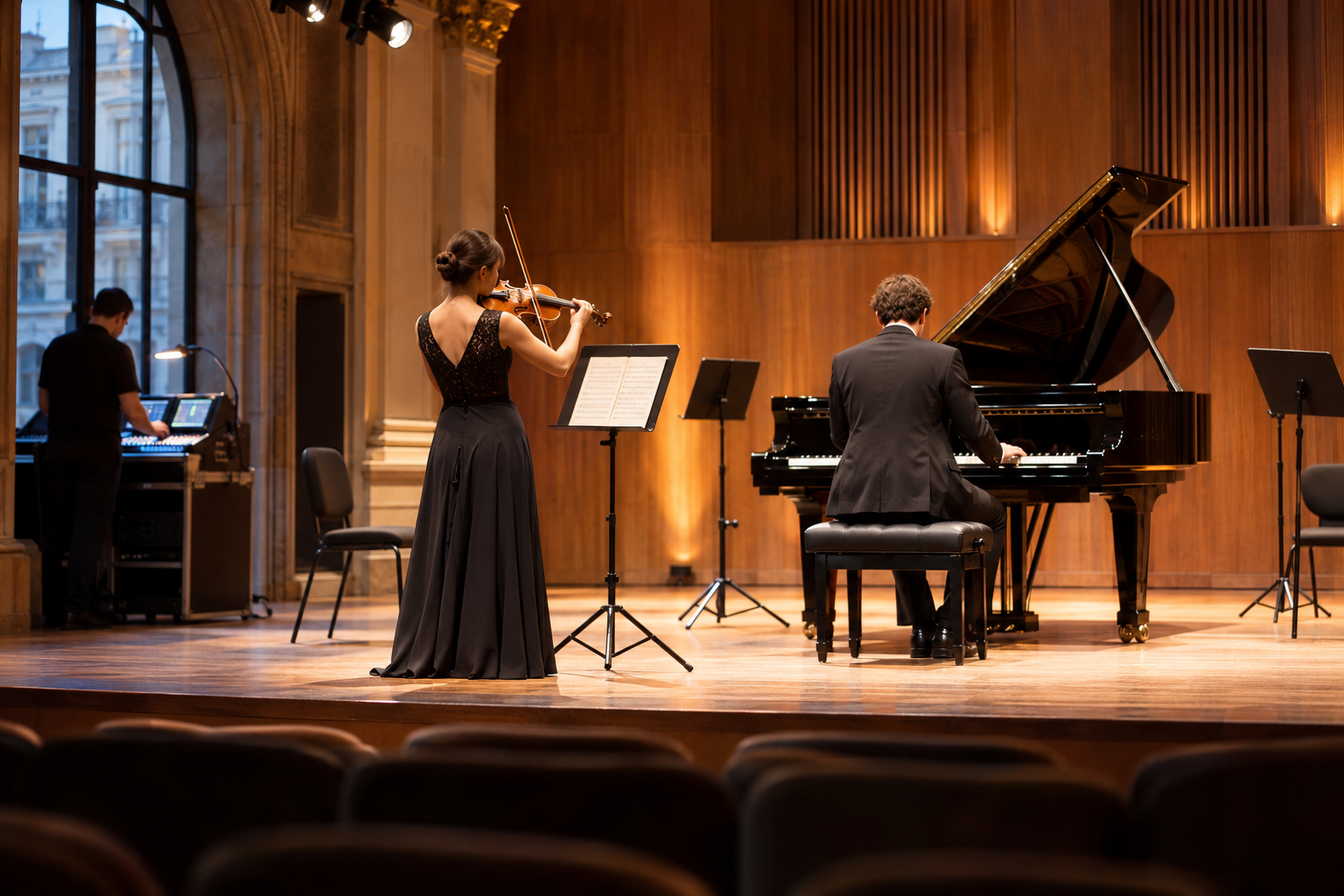
Why make listening the centre of a festival day?
On 23 November, Concerto Budapest’s Day of Listening is scheduled as a full day of Kurtág, Bach, Martinů and Hindemith, with chamber and orchestral forces across several programmes. The published listing includes András Keller and Zsófia Környei on violin in selections from Bach’s Art of Fugue, alongside Kurtág works and a later Bach-and-Strauss session.
For music fans, that is an invitation to spend more time with fewer ideas. For performers, it is a practical programming lesson. A concert sequence gets stronger when it gives the listener an entry point, a reset and a reason to stay curious. Event planners can borrow the principle without copying the scale: one well-framed listening moment, a concise spoken introduction, and enough quiet around it can make a set feel more intentional.
What should audiences and performers take forward?
These three stories share a belief in attention. Weithaas frames a lifetime in music through community. Waley-Cohen brings a new violin concerto to life through a specific creative partnership. Concerto Budapest gives time and structure to listening itself. Tanya Strings approaches the violin as a complete stage language: world-class performance, electric sound design, visual control and real connection in the room. The useful question for any show is simple: what will the audience be able to hear, see and feel because this group of people is here together?