Tanya Strings · 21 November 2026
Best Wireless Systems for Electric Violinists
The best wireless system for an electric violinist matches the instrument’s output, leaves the violin jack mechanically safe, and gives you a recovery plan if the room’s radio environment changes. For a compact performance rig, choose a plug-in set only when its transmitter clears the violin body; choose a bodypack when you need a short strain-relieved cable and more secure placement; choose a pedalboard receiver when your stage workflow already lives underfoot. Tanya Strings treats wireless as a movement tool, not a shortcut: it should make entrances, camera angles and audience connection freer while keeping a tested cable within reach.
Some links in this article are affiliate links. I may earn a commission if you make a purchase, at no extra cost to you.

Which wireless system suits an electric violin performance rig?
Start at the violin output, not the marketing headline. A straight plug can be awkward on a sculpted body, and a small bodypack may be much more secure for a moving set. Check local spectrum rules and venue coordination before buying a touring-format system.
| System | Best for | Pros | Cons |
|---|---|---|---|
| Shure GLXD16+ | Pedalboard-led shows | Dual-band receiver, tuner, bodypack | Premium cost and board space |
| Sennheiser EW-D CI1 | Production-scale stages | Bodypack workflow, receiver control | More setup than plug-in kits |
| BOSS WL-20L | Fast plug-in changeovers | Simple pairing, low latency | Check jack clearance first |
| Xvive U2 | Compact second rig | Light, USB rechargeable pair | 2.4 GHz needs a room test |
| Line 6 Relay G10SII | Desk or pedalboard receiver | Receiver format, cable-tone option | Confirm transmitter placement |
| Fender Telepath | 5.8 GHz compact setup | Small plug-in concept | Still test every venue |
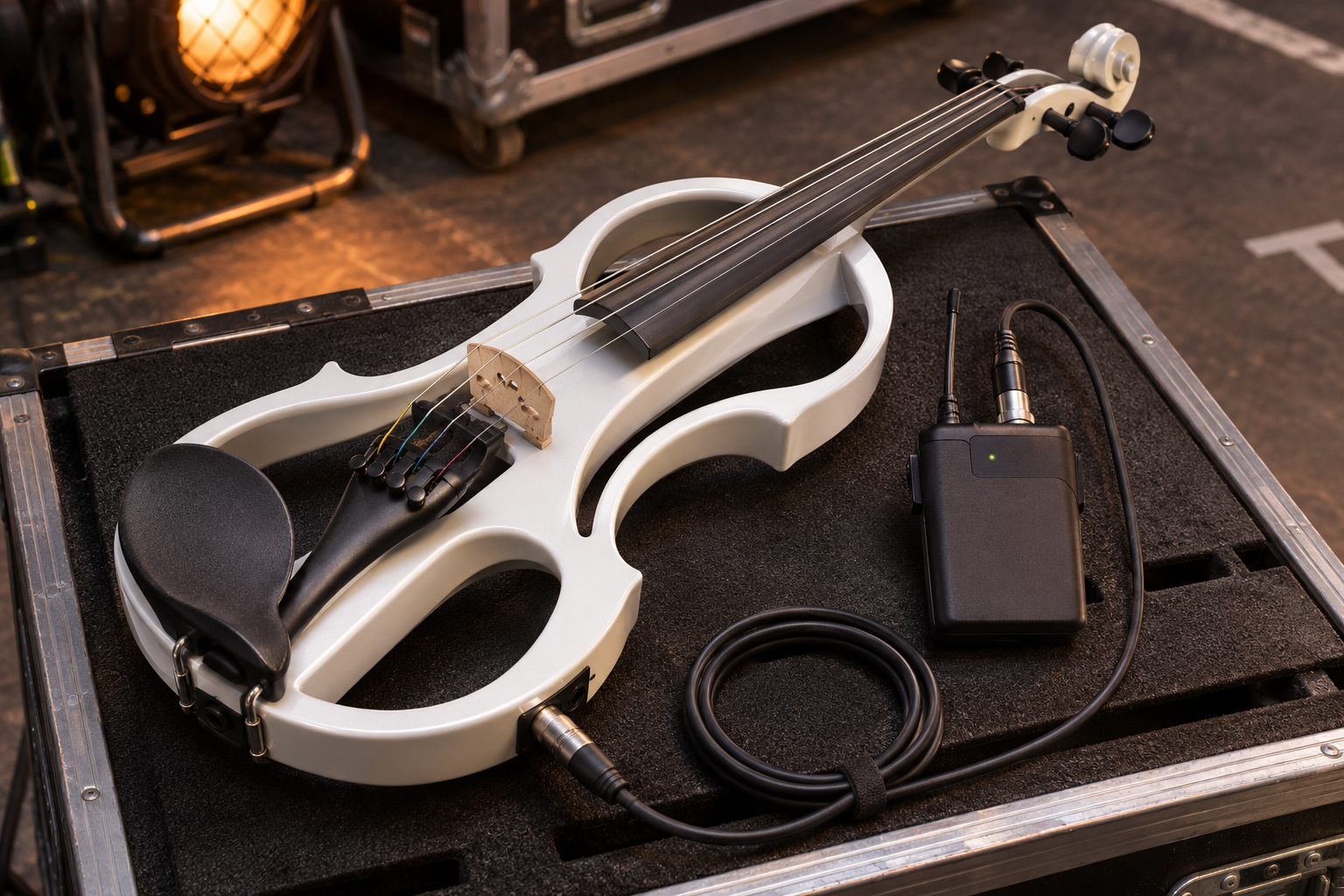
Which six wireless systems are worth comparing?
Why choose Shure GLXD16+ for a pedalboard?
The GLXD16+ is the strongest fit when Tanya Strings’ show already has a pedalboard home: its receiver is a pedal-format tuner and the system uses a bodypack with a dedicated instrument cable. Pros: dual-band operation, board integration and clear battery monitoring. Cons: it costs more and needs power plus pedalboard space. Compare the Shure GLXD16+ on Amazon. Check the manufacturer specifications.
When does Sennheiser EW-D CI1 make more sense?
For larger shows or a performer who wants a proper bodypack workflow, EW-D CI1 deserves attention. It is an instrument-set route that belongs in a deliberate RF plan rather than a last-minute add-on. Pros: professional receiver-and-bodypack format. Cons: frequency planning and setup are more involved. Compare the Sennheiser EW-D CI1 on Amazon. Read the EW-D CI1 specification.
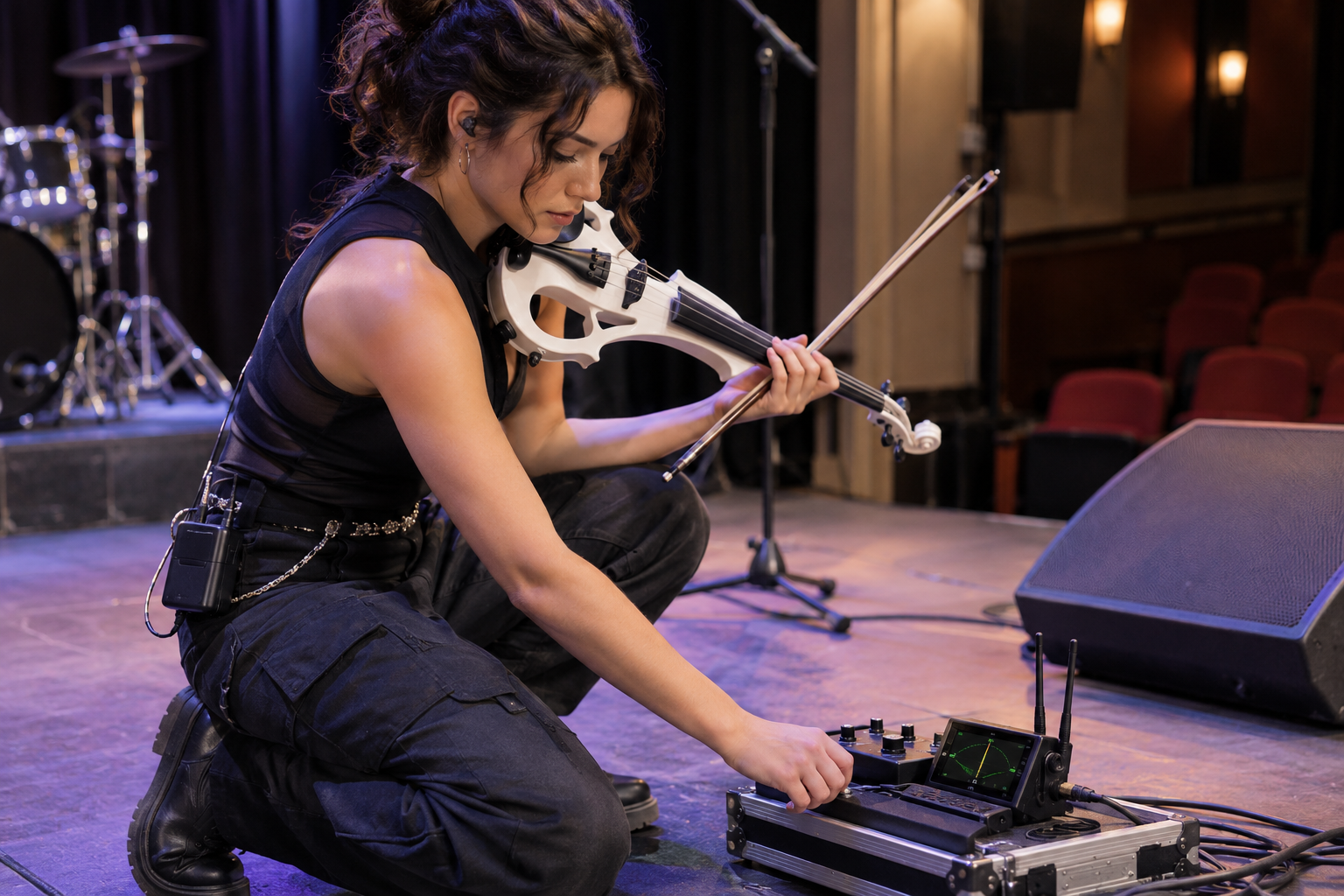
Is BOSS WL-20L a practical plug-in option?
WL-20L is worth considering when the electric violin has an accessible jack and you want cable-like simplicity. Its low-latency plug-in approach can make a short event setup lighter. Pros: quick connection and compact format. Cons: the transmitter’s physical leverage may not suit every violin. Compare the BOSS WL-20L on Amazon. BOSS lists 2.3 ms latency and a 15 m line-of-sight range, subject to conditions, on its support page.
Who should consider the Xvive U2?
The Xvive U2 is a useful compact reference for a small creator or backup rig where the violin output is safe for a plug-in transmitter. Pros: light pair, USB charging and a simple signal path. Cons: treat its 2.4 GHz link as something to test in the actual room. Compare the Xvive U2 on Amazon. Xvive publishes its range, latency and battery details on the U2 product page.
Why put Line 6 Relay G10SII on the shortlist?
Relay G10SII is worth comparing when you prefer a dedicated receiver to plug directly into a board or nearby amplifier. Pros: an anchored receiver workflow and familiar instrument-wireless form. Cons: verify the transmitter position and charging routine with your exact violin. Compare the Line 6 Relay G10SII on Amazon.
When is Fender Telepath worth a look?
Telepath is a compact 5.8 GHz option to compare if its transmitter geometry agrees with your output jack. Pros: a small, cable-free performance concept. Cons: frequency band alone never replaces a full room walk and backup cable. Compare the Fender Telepath on Amazon.
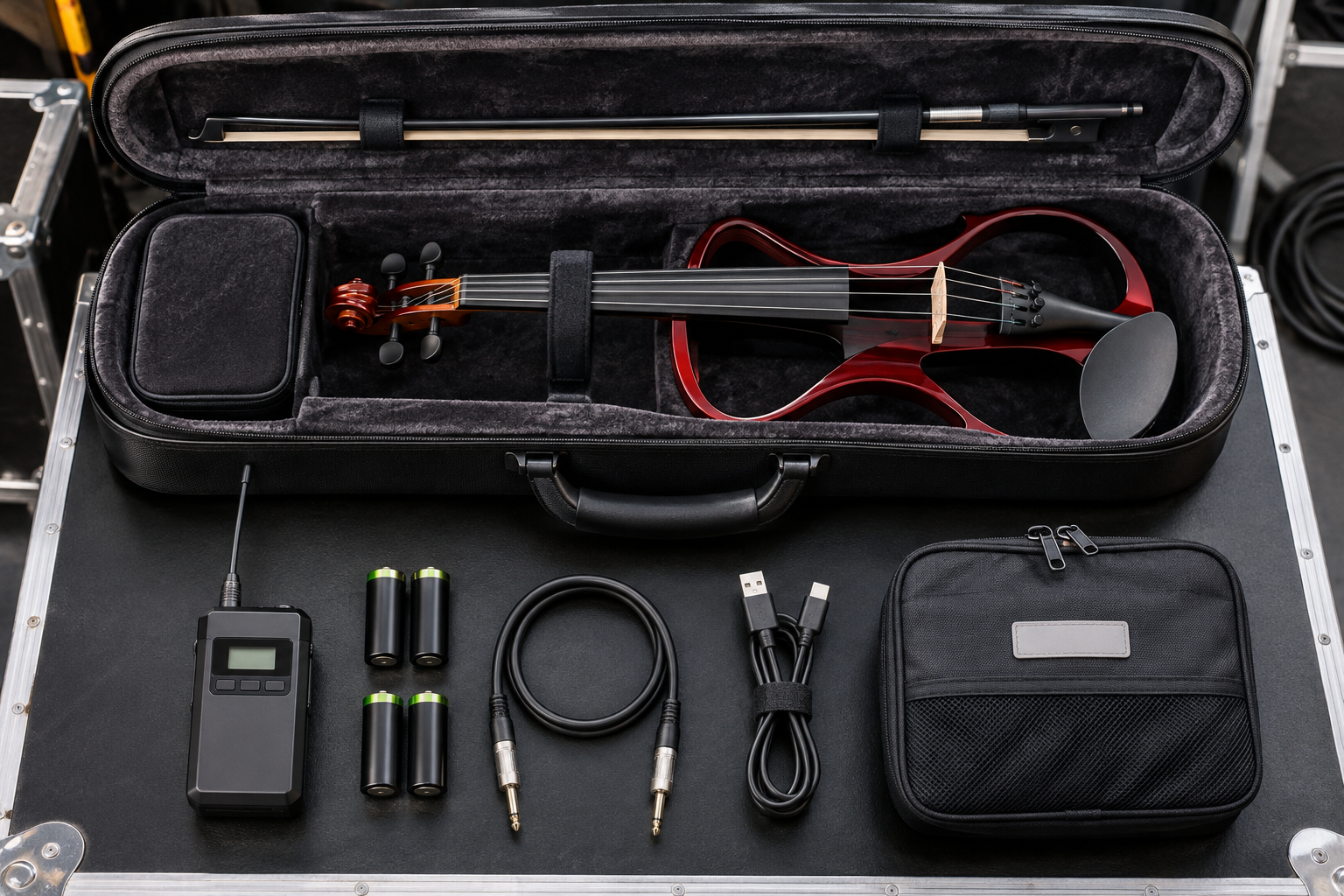
What should an electric violinist check before buying?
Does the transmitter physically fit the violin?
Plug-in transmitters work only when the plug, housing and antenna area clear the violin without pressure. If there is any doubt, use a bodypack and a short right-angle cable with strain relief.
Can the system survive your full show day?
Plan from arrival through encore: charging, spare power, receiver power, a walk test and the exact cable that takes over if wireless becomes unreliable. Never make the audience wait while a transmitter is charged.
How crowded is the radio environment?
Wi-Fi, production wireless, guest devices and venue layout all matter. Ask the production team what else is in use, keep the receiver sensibly placed and do not assume a successful home test will translate unchanged to a festival.
How would Tanya Strings use wireless on show day?
As a world-class electric violin performer and content creator, Tanya Strings uses wireless to make movement look natural: a clean walk into the audience, a camera angle without a cable pulling the frame, or a crossover set that needs the violinist to own the full stage. The discipline stays invisible. I would charge, label, pair and walk the performance path before doors, then keep a short cable at the board. If wireless asks for more concentration than the music, it has not earned its place in the rig.

What do performers ask about electric violin wireless systems?
Can an electric violin use a guitar wireless system?
Usually, yes, if it has a standard quarter-inch output and the output level and connector clearance are compatible. Test the entire chain before the show.
Is a plug-in wireless transmitter safe for an electric violin?
Only if it clears the body and does not create leverage on the jack. A bodypack plus short cable is often safer for unusual layouts.
How do I avoid wireless dropouts on stage?
Use fully charged or approved fresh batteries, complete a soundcheck walk, coordinate with production and keep a cable ready.
Do I still need a cable at the gig?
Yes. A tested backup cable is the fastest recovery plan for any wireless issue.