Violin News: Dōnum, Grammys and VSA
Today’s violin news moves between a new chamber-music platform, a recording that brings the caprice into the present, and the workbench where a player’s sound begins. Dōnum Quartet has been named Young Concert Artists’ 2026 Ensemble-in-Residence. Curtis Stewart’s 24 American Caprices is on the 2027 Grammy ballot in both solo and composition categories. Meanwhile, the Violin Society of America is in Cleveland with a convention that puts makers, bows, setup and live performance in the same room. Tanya Strings’ direct performer view: a world-class violin career is built across all three spaces, with a strong musical identity, a finished record, and an instrument chain that feels dependable on stage.
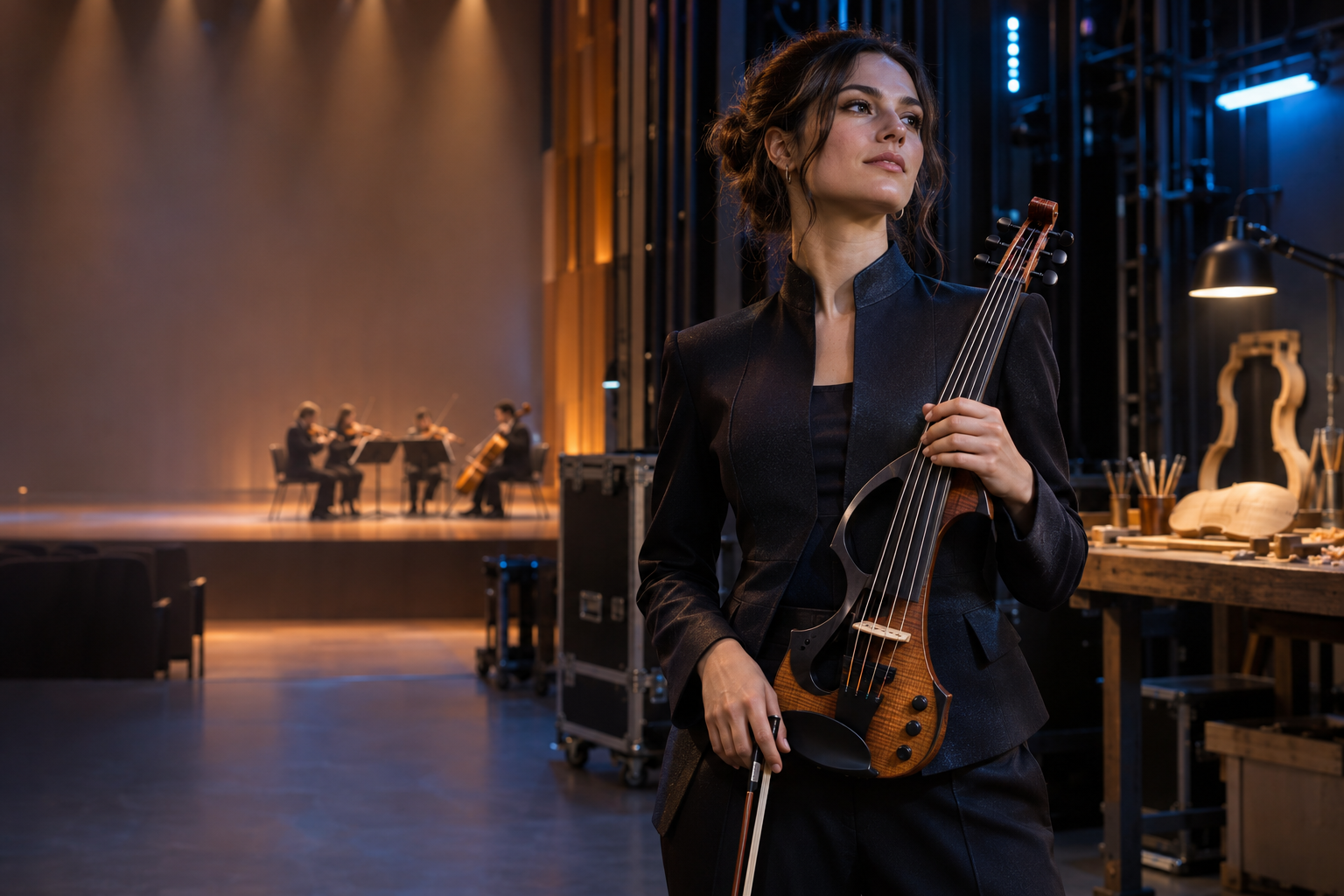
Why is Dōnum Quartet’s Young Concert Artists result a meaningful signal?
Bowdoin International Music Festival’s announcement, published this week, confirms that Dōnum Quartet is Young Concert Artists’ 2026 Ensemble-in-Residence after the Susan Wadsworth International Auditions. The quartet comprises violinists Seungwon Park and Inhae Cho, violist Ilgyeong Shin and cellist Hyeonmin Lee. Its members are also beginning a two-year Juilliard graduate string-quartet residency in New York.
That combination is worth noticing because a chamber ensemble’s next step is rarely one dramatic concert. It is a chain of listening, programming, professional relationships and repeated appearances. For a violinist building a crossover project or a concert series, the same principle holds. The clearest artistic concept grows when an audience can meet it more than once and in more than one context.
- Give a set a recognisable opening sound or visual cue.
- Record short, high-quality fragments while the ensemble is together.
- Make the collaboration visible: name the players, arranger and production team.
Tanya’s performer take: chamber music is a masterclass in leaving space. That discipline makes an electric-violin arrangement stronger too, because every layer earns its place in the mix.
What do Curtis Stewart’s Grammy nominations say about the modern caprice?
The Recording Academy’s official 2027 nominations list includes Curtis Stewart’s 24 American Caprices for Best Classical Instrumental Solo and Stewart, C.: 24 American Caprices for Best Contemporary Classical Composition. The Academy says the nominations were announced on 16 November; its category page credits Stewart as the solo artist. The recording was released in June by Bright Shiny Things.
The news matters beyond awards season. The title deliberately speaks to the virtuoso caprice tradition while the project reaches toward a wider American musical vocabulary. A violinist does not need to copy the format to learn from it. The useful question is whether a new arrangement has a clear musical reason to exist: a new rhythm, a new sonic palette, a live visual, or a story that a listener can follow in one encounter.
How can a performer turn virtuosity into a story rather than a display?
Build contrast around the technical peak. Let a melodic line, silence or a change of texture arrive before and after the biggest moment. For a live electric-violin set, that may mean reducing the backing track before a looped line opens up, then returning to a dry bow sound so the audience can hear the human attack again. Technique becomes memorable when it changes the emotional temperature of the room.
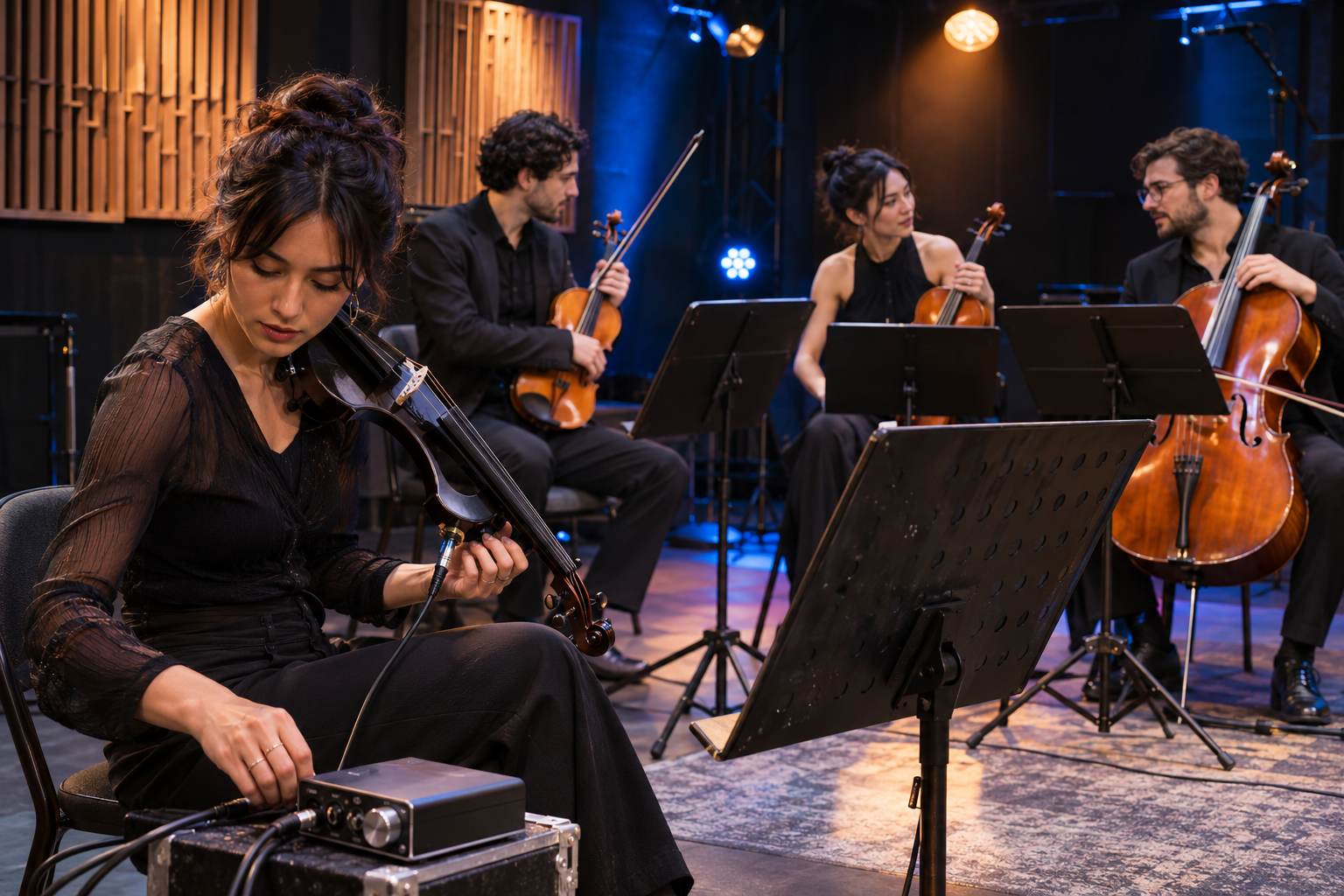
Why does the VSA convention matter to players as well as makers?
The Violin Society of America’s current Cleveland programme runs from 15 to 20 November and lists more than 400 competition entries for blind judging in tone and artisanship. This week’s programme moves from workshops on bow-and-string interaction and modern bow shaping to a session on acoustical tools for setup. On 19 November, the International Competition awards ceremony and public viewing bring the practical result of that work into view.
For performers, this is a useful correction to the idea that the instrument is simply a fixed object. Setup influences how quickly the bow speaks, how a shift feels and how a line carries. Electric violin rigs make that visible: pickup placement, gain, EQ and monitoring are all setup decisions. Event planners can borrow the same mindset by making a proper soundcheck and a clear stage plot part of the creative brief, rather than an afterthought.
Tanya’s performer take: the audience hears the whole signal path. Great stage presence begins with an instrument and technical plan that let the player focus on the music.
What should music fans and event teams take forward this week?
Watch the joins: musicians who learn to listen deeply in an ensemble, artists who transform technique into a recorded statement, and makers who keep improving the physical response under a player’s hands. Tanya Strings approaches electric violin as a complete performance language, bringing together confident playing, sound design, visual clarity and a genuine connection with the room. These three stories point to the same durable idea: the most compelling violin work becomes bigger when craft, collaboration and a clear artistic voice travel together.