Violin News: Craft, Concert Capture and Crossover
Today’s violin news connects the instrument itself, the concert hall and the way a violin voice can travel across genres. In Tucson, the Violin Makers Association of Arizona International competition has put new attention on contemporary making after Eric Rodriguez collected five awards. In Gothenburg, Augustin Hadelich joins Karina Canellakis for Bartók’s Second Violin Concerto in performances recorded for GSOplay. Chicago has just heard Andrew Bird bring the 20th anniversary of The Mysterious Production of Eggs to the CSO in orchestral form. Tanya Strings’ performer take: great violin work is never only about the notes; it joins craft, sound design and a clear story for the audience.
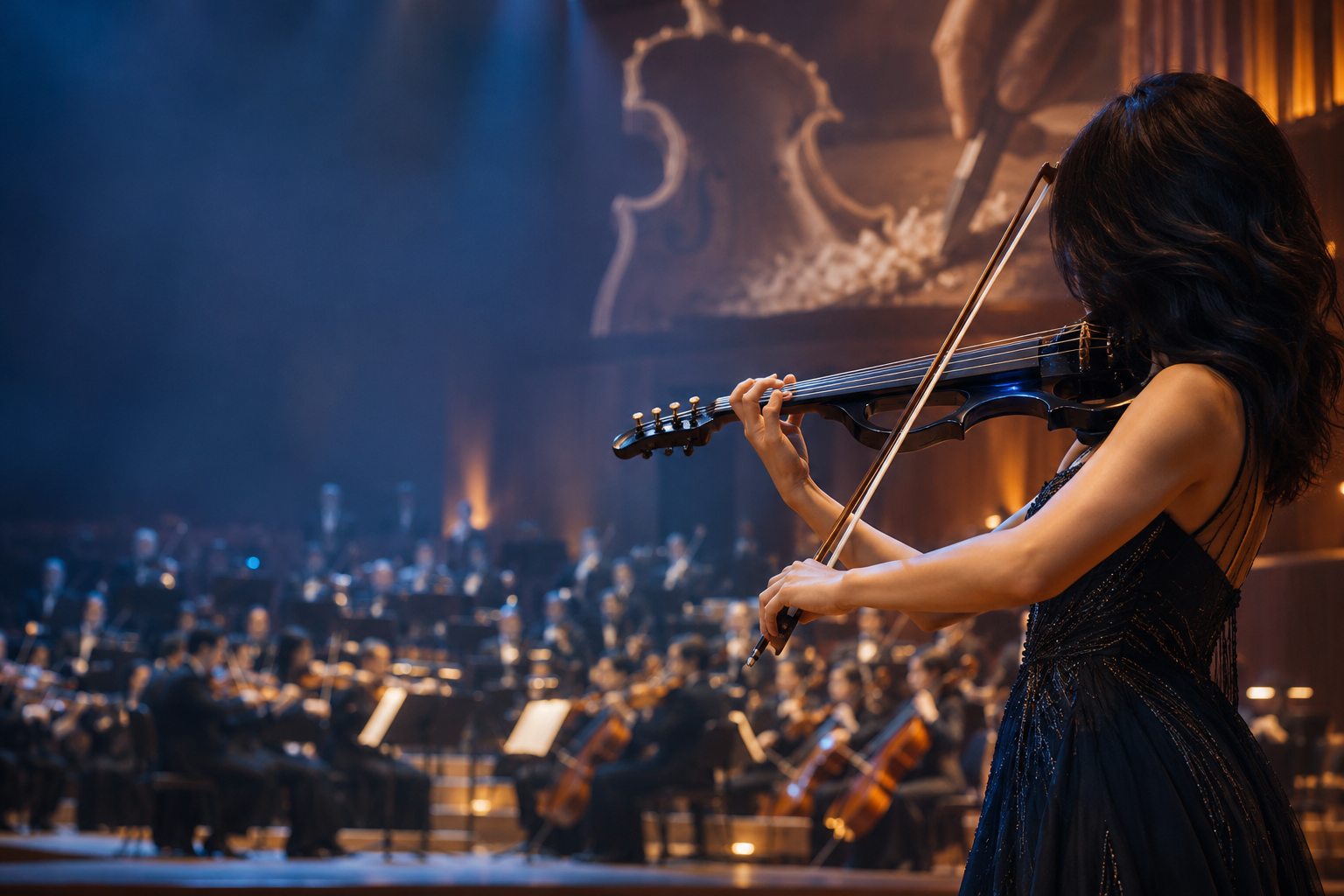
What do the Arizona making awards say about the instruments behind a performance?
The Strad’s report on the 2026 Violin Makers Association of Arizona International competition, published on 13 November, names Eric Rodriguez as the recipient of five awards, including two gold medals and the Grand Champion Best in Show prize. The report also notes a remarkable result for California maker Anthony Rizzo: at 99, he received a silver medal for violin tone and a special award for the best-sounding violin.
That is useful news for performers even when a new bespoke instrument is not on the horizon. Competitions place tone, workmanship and varnish in separate conversations, which mirrors the practical way players assess an instrument. A violin can photograph beautifully and still not give a player the response, projection or colour they need in a real room. An electric violinist faces the same principle through a different chain: pickup output, bow response, gain structure and monitoring have to work as one instrument.
- Ask what sound you need before being impressed by an instrument’s appearance.
- Test the quietest attack and the loudest sustained line, not only fast passages.
- For amplified sets, trial the violin through your own DI, effects and monitoring path.
Tanya’s performer take: instrument craft is stagecraft. The best setup makes it easier to speak in your own voice before a single effect or spotlight is added.
Why is Augustin Hadelich’s Gothenburg programme worth watching?
Gothenburg Symphony’s official concert page lists Hadelich and conductor Karina Canellakis on 18 and 19 November. The programme moves from Wagner’s Lohengrin Prelude to Bartók’s Violin Concerto No. 2 and Shostakovich’s Symphony No. 15. Both performances are marked for recording for GSOplay, so the event is also a reminder that a live concert can have a second life after the final applause.
Bartók’s concerto is a particularly strong case study for performers. It asks the soloist to maintain a distinct line through dense orchestral writing while changing character quickly, from lyricism to rhythmic edge and variation. On an electric violin stage, the repertoire may be different, but the decision is familiar: build a core tone that holds its identity, then create contrast without losing the instrument in the mix.
What should performers prepare when a concert will be captured?
Capture begins before the camera rolls. Agree the stage positions, decide which visual moments should be clear, and make the first soundcheck the moment to check bow attack, low-end buildup and reverb tails. A recording does not need a sterile performance; it needs intentional choices that still make sense to someone watching later on a phone or through headphones.
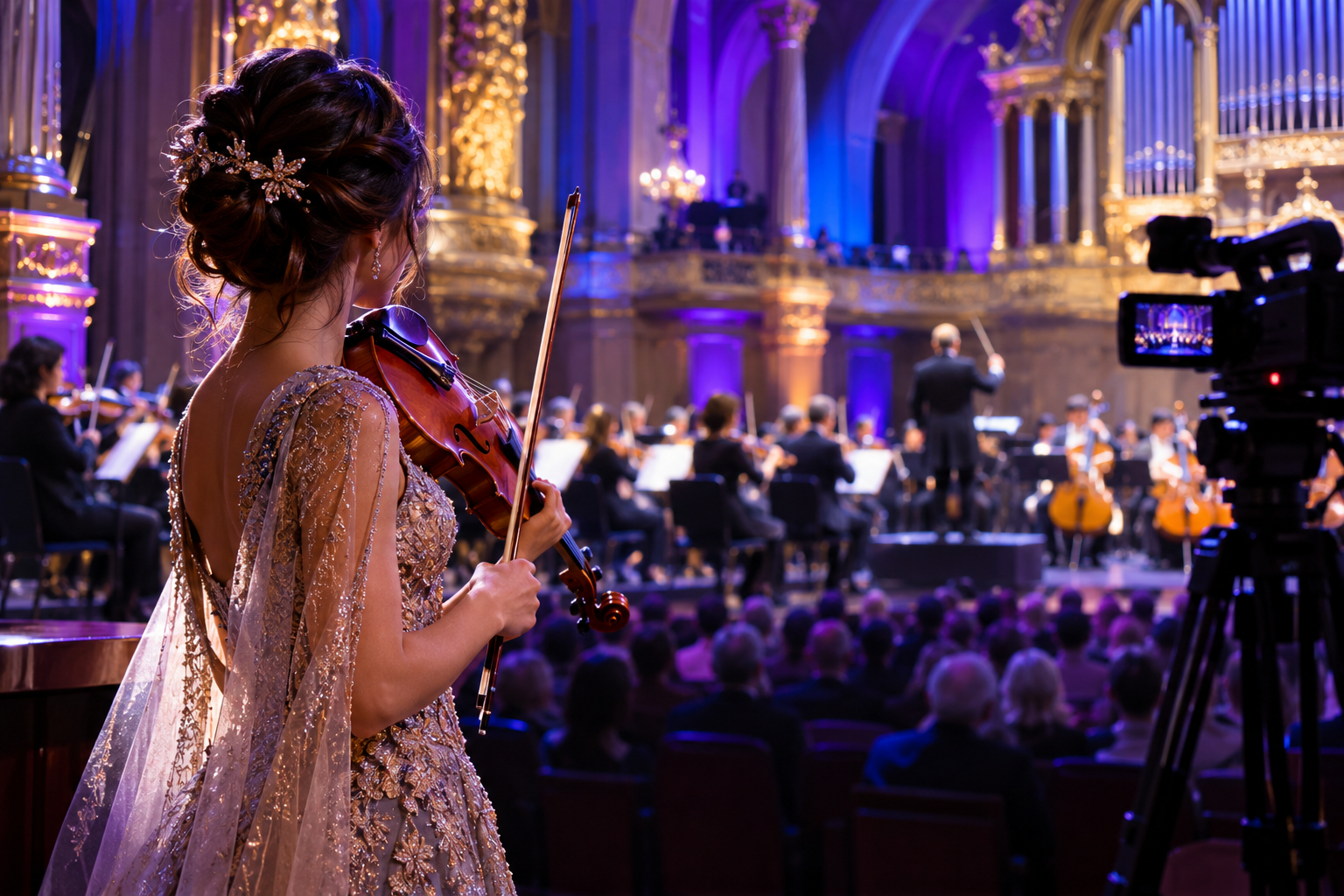
How did Andrew Bird’s CSO debut make a crossover format feel specific?
The Chicago Symphony’s event page confirms that Andrew Bird, on violin and vocals, made his CSO debut on 13 and 14 November with conductor Jacomo Bairos. The two-hour event celebrated 20 years of Bird’s The Mysterious Production of Eggs: the album was performed in full with orchestral arrangements, followed by a suite of songs from his wider catalogue.
This is more interesting than a generic “classical meets pop” label. The framing gives audiences one understandable reason to enter: an album anniversary. From there, the orchestra can amplify arrangement details and emotional scale that were not available in the original recording. For a violin content creator or event planner, it is a useful model. Start with a recognisable story, then let the sound world become larger than the format people expected.
Tanya’s performer take: crossover works when every element has a job. A violin, a vocal, a visual and an arrangement should add perspective, not compete for attention.
What should music fans and event planners take forward?
Watch for the connective decisions: a maker designing response, a soloist and conductor shaping contrast, or an artist rebuilding a familiar album for a hall. Tanya Strings treats electric violin as a complete performance language, where the instrument, the technical plan and the audience experience are all part of the music. This week’s news is a compact reminder that the strongest violin events make the connection between those pieces easy to feel.