Violin News: Bell, Sigal and Maier
Today’s violin news follows three live-music moments with very different scales but one shared lesson: compelling performance begins with a deliberate programme. Joshua Bell and pianist Peter Dugan appear at London’s Wigmore Hall tonight in a recital that moves from Beethoven to Corigliano, Bach and Saint-Saëns. In Boca Raton, Leonid Sigal was the soloist in Mendelssohn’s Violin Concerto with The Symphonia on Sunday. Boston’s Lysander Piano Trio put violinist-composer Amanda Maier in conversation with Grieg, Dvořák and Bongani Ndodana-Breen. Tanya Strings’ performer take: artists and presenters earn attention when repertoire, room and storytelling point in the same direction.
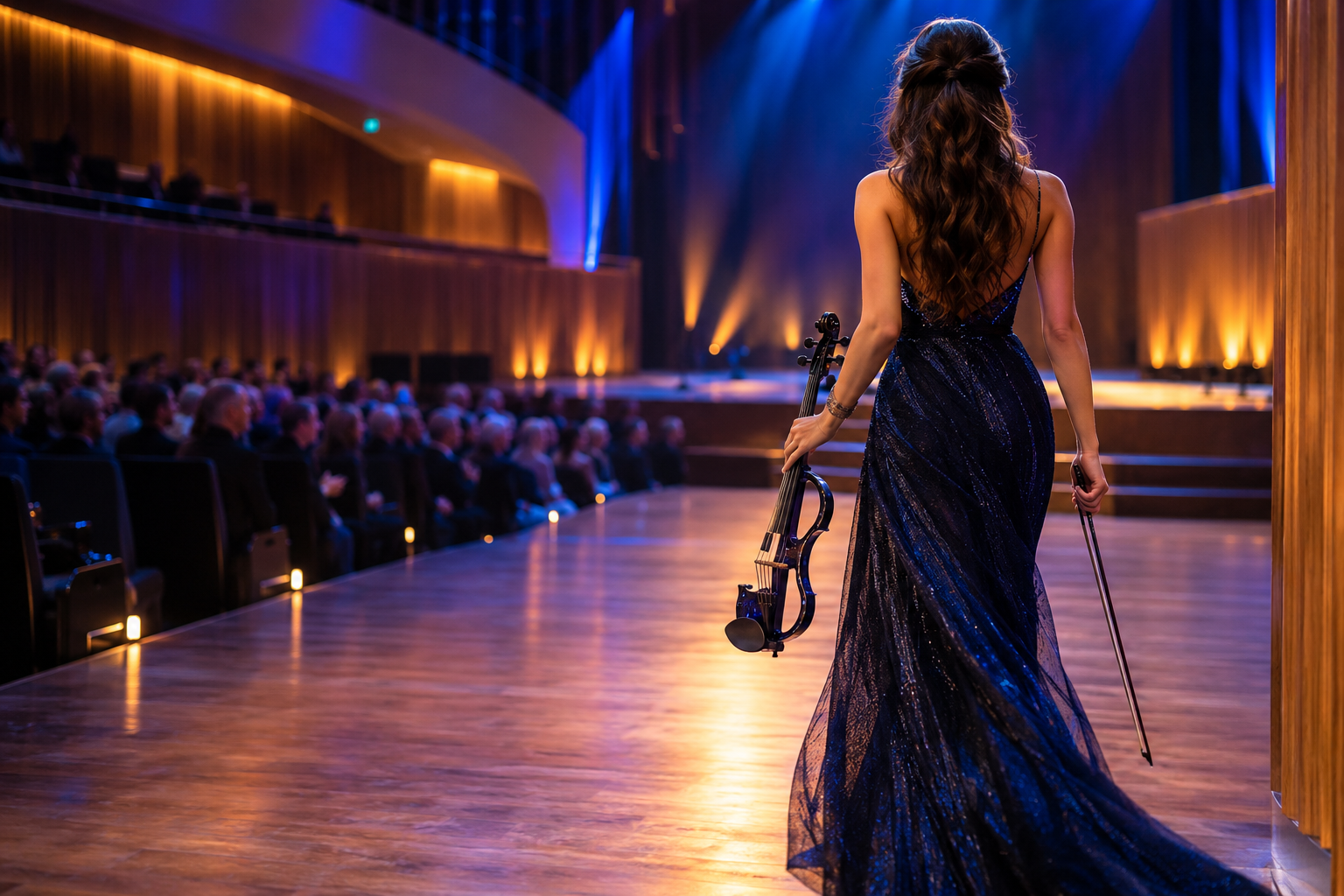
What makes Joshua Bell and Peter Dugan’s London recital a useful programme study?
Wigmore Hall’s official 2026–27 season guide lists Bell and Dugan on 17 November with Beethoven’s Violin Sonata No. 3, John Corigliano’s Violin Sonata, Bach’s Chaconne from the D-minor Partita and Saint-Saëns’s First Violin Sonata. It is a four-composer arc rather than a single-style evening: early Beethoven’s dialogue, a twentieth-century American work, a solo landmark and a late-Romantic sonata all ask the listener to reset their ear.
- Choose one idea that connects the pieces, then say it simply onstage or in the event copy.
- Allow a genuine change of sound between sections instead of flattening every track into the same production.
- Plan silence, retuning and pedal changes as part of the pacing.
Tanya’s performer take: variety lands best when it feels curated, not random. A compelling set gives an audience a new colour, then a reason to stay with it.
Why does Leonid Sigal’s Mendelssohn date still matter in a news roundup?
The Symphonia’s official season listing placed violinist Leonid Sigal at St. Gregory’s Episcopal in Boca Raton on 15 November for Mendelssohn’s Violin Concerto, with Rossini’s Barber of Seville overture and Respighi’s The Birds around it. Mendelssohn is familiar territory on paper, but that familiarity increases the performance challenge. The audience has expectations about line, timing, transparency and the violin’s first entrance before the soloist reaches the stage.
That is relevant well beyond the concerto platform. Event planners often assume a recognised work is a safe choice; performers know a safe choice still needs a point of view. The success of a beloved work depends on how the soloist communicates inside the first phrase and how the sound is allowed to breathe in the room. For an amplified violinist, the equivalent question is whether the front-of-house mix preserves bow attack, dynamic range and the identity of the instrument.
What should a presenter protect during a violin-led concert?
Protect time. Confirm the stage layout, monitor position and changeovers early; leave room for the artist to test the first sound the audience will hear. A beautiful programme cannot compensate for a hurried entrance or a monitoring problem that asks the player to perform defensively.
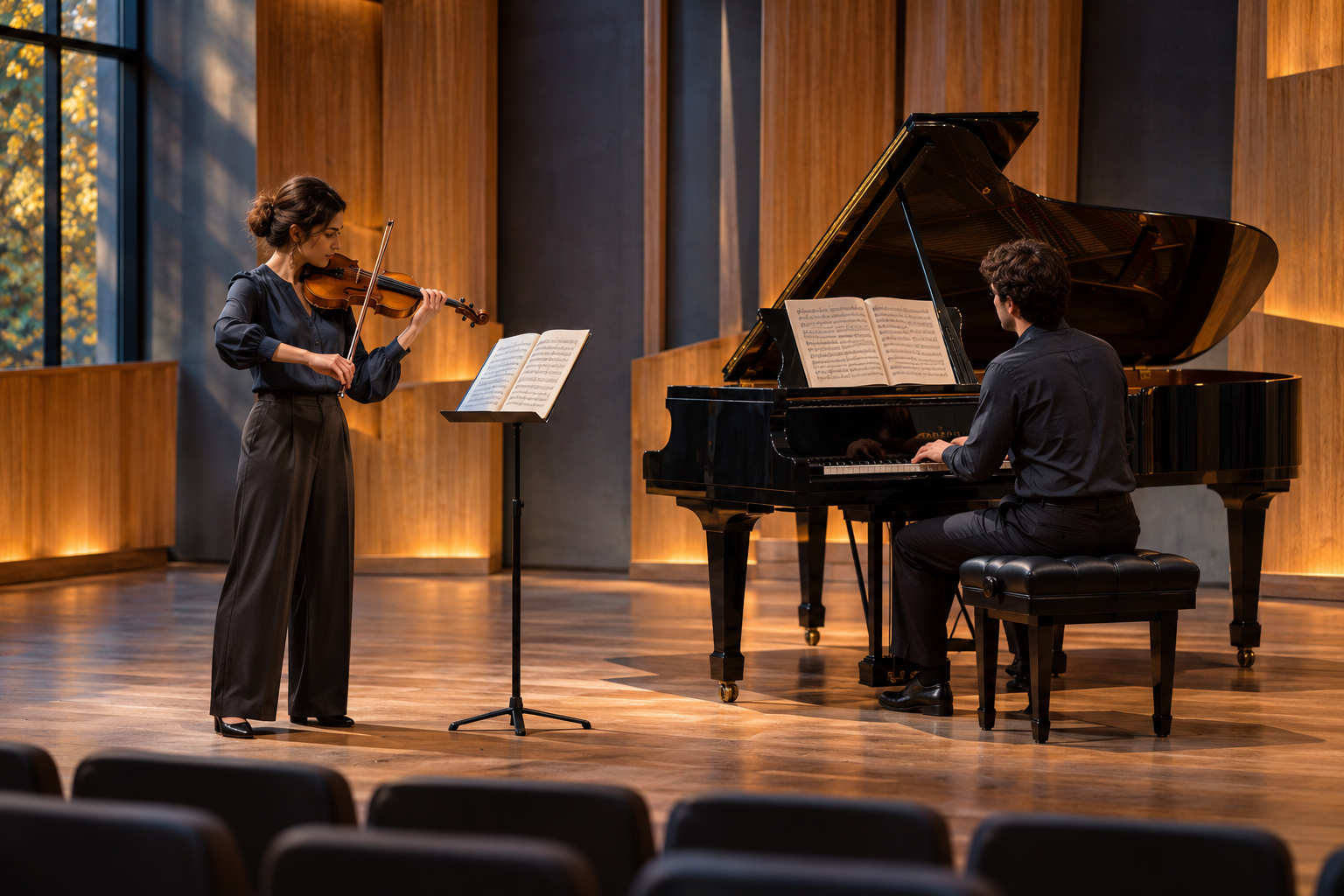
How did Boston’s Amanda Maier programme widen the violin conversation?
The Isabella Stewart Gardner Museum’s November concert announcement says the Lysander Piano Trio performed on 15 November with music by Swedish violinist-composer Amanda Maier, Grieg and Dvořák, plus Bongani Ndodana-Breen’s Two Nguni Dances. Maier’s presence is more than an historical footnote. It puts a violinist who composed into the centre of an active programme and lets listeners hear repertoire as a living network rather than a museum shelf.
For content creators, this is a strong programming model. Introduce an overlooked composer alongside names the audience already recognises, then make the connection visible in a short video, carousel or spoken introduction. The discovery feels generous rather than dutiful. Music fans gain an invitation to explore; promoters gain a story that can travel beyond a single performance date.
What should violinists and music fans watch next?
Watch the choices around the notes: which contrasts are built into the programme, how the room is prepared, and whether the artist gives an audience a way into unfamiliar music. Tanya Strings approaches electric violin as a complete performance language, not a category apart. Whether the setting is a London recital, a Florida concerto or a Boston chamber series, the aim is the same: make the sound, image and invitation feel intentional.