
The best windscreen for a violin microphone is the lightest cover that fits your exact mic securely: a fitted foam screen for mild air, then a compact furry cover when an exposed stage or seaside wedding creates stronger gusts. Do not wait for wind noise to appear in a take. Tanya Strings treats wind protection as part of a performance-ready signal path: it keeps the bow detail intelligible, makes the engineer’s job easier, and lets an electric violin artist focus on the set, the camera and the audience instead of every breeze around the stage.
Some links in this article are affiliate links. I may earn a commission if you make a purchase, at no extra cost to you.
Match the cover to wind strength and microphone shape, rather than buying the largest shield available. A thin foam cover is fast and discreet for a sheltered terrace. A short furry cover earns its place on a beach, roof or open festival stage. Keep one dry spare in the cable pouch.
| Option | Best for | Pros | Cons |
|---|---|---|---|
| Shure A81WS | Large vocal-style mics | Dense, durable foam | Too large for many clips |
| RØDE WS11 | Compact camera/audio mics | Small and tidy | Check diameter carefully |
| Rycote Mini Windjammer | Moving outdoor air | Stronger wind reduction | Bulkier than foam |
| Bubblebee Windkiller | Low-profile lavalier-style mics | Soft, compact protection | Model-specific sizing |
| Movo WS1 | Budget spare kit | Simple and affordable | Less tailored fit |
| RØDE DeadCat GO | Recorder or camera backup audio | Useful for creator kit | Not for every violin mic |
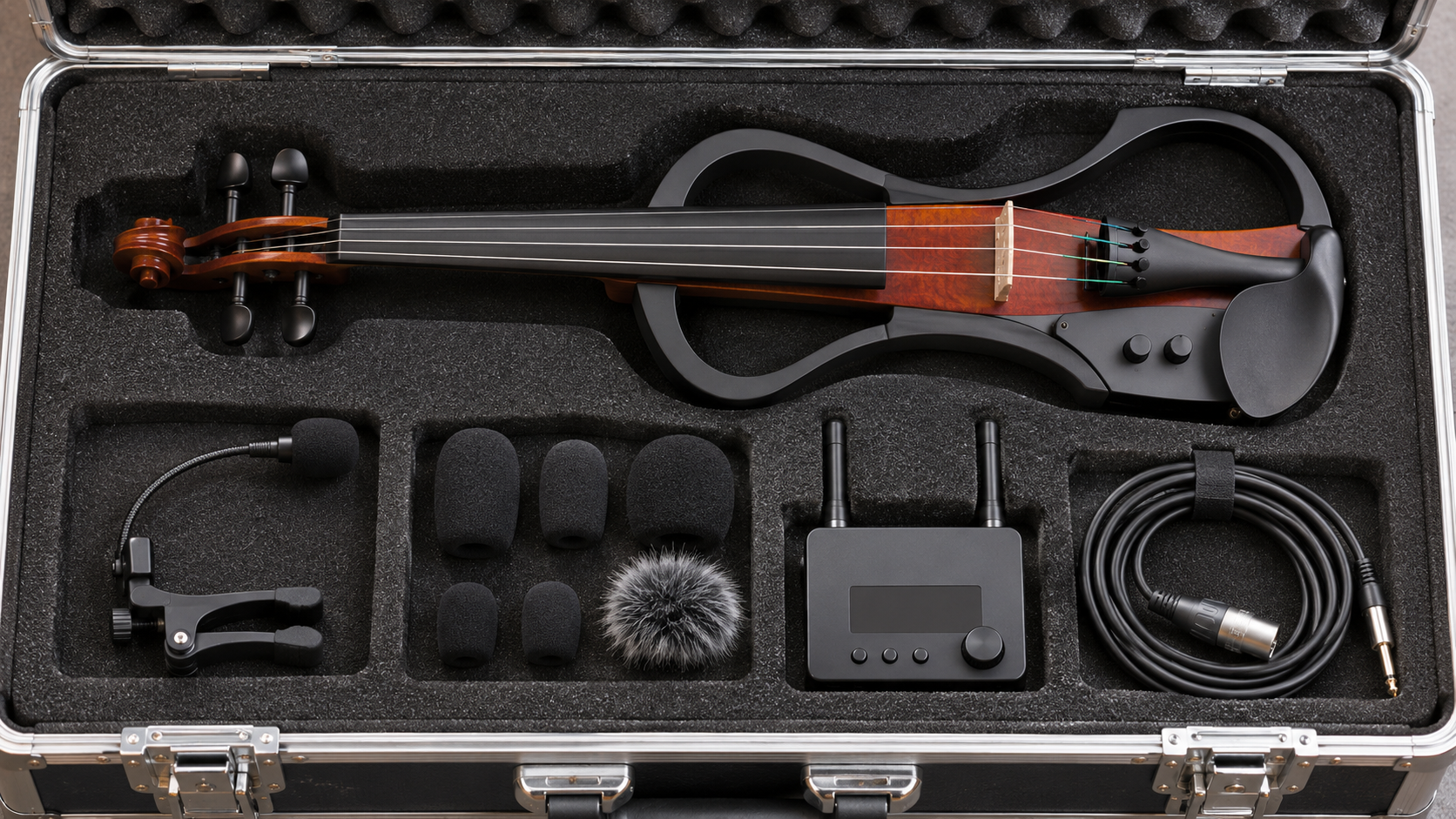
Choose the A81WS when your setup uses a compatible larger microphone and you need a dependable foam reserve. Pros: sturdy and easy to handle. Cons: it is not a universal clip-on violin-mic solution. Compare on Amazon
The WS11 is a useful compact reference for small microphones in a creator or live-audio kit. Pros: discreet profile. Cons: measure the microphone body before ordering, because fit matters more than brand. Compare on Amazon
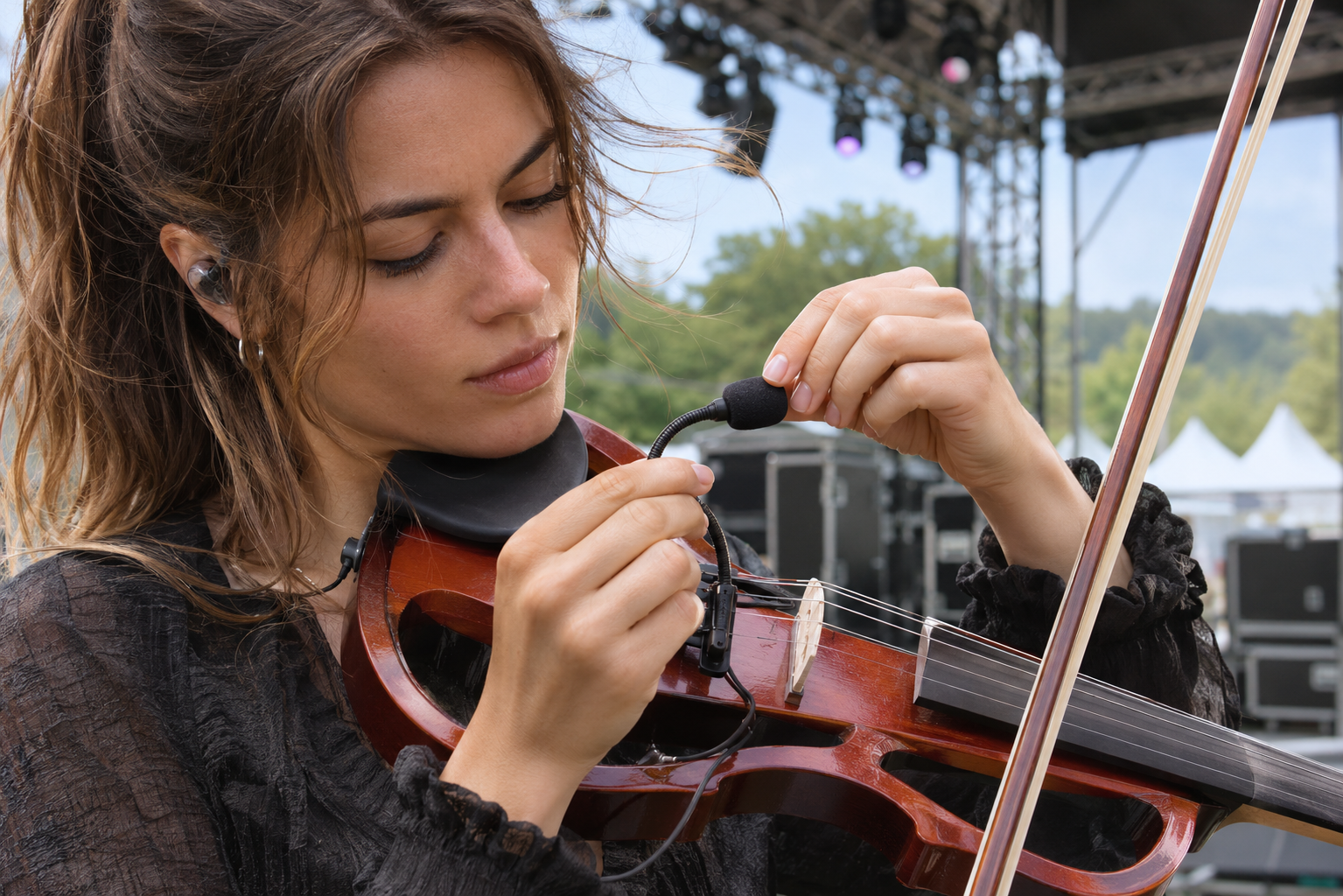
Use a Mini Windjammer-style cover when foam cannot tame an exposed location. Pros: better control of turbulent air. Cons: confirm that the added material will not touch the violin, bow path or mount. Compare on Amazon
A small Windkiller-style cover suits performers using very compact microphone capsules. Pros: low visual impact for video. Cons: choose the exact size, because an oversized cover can move and create its own noise. Compare on Amazon
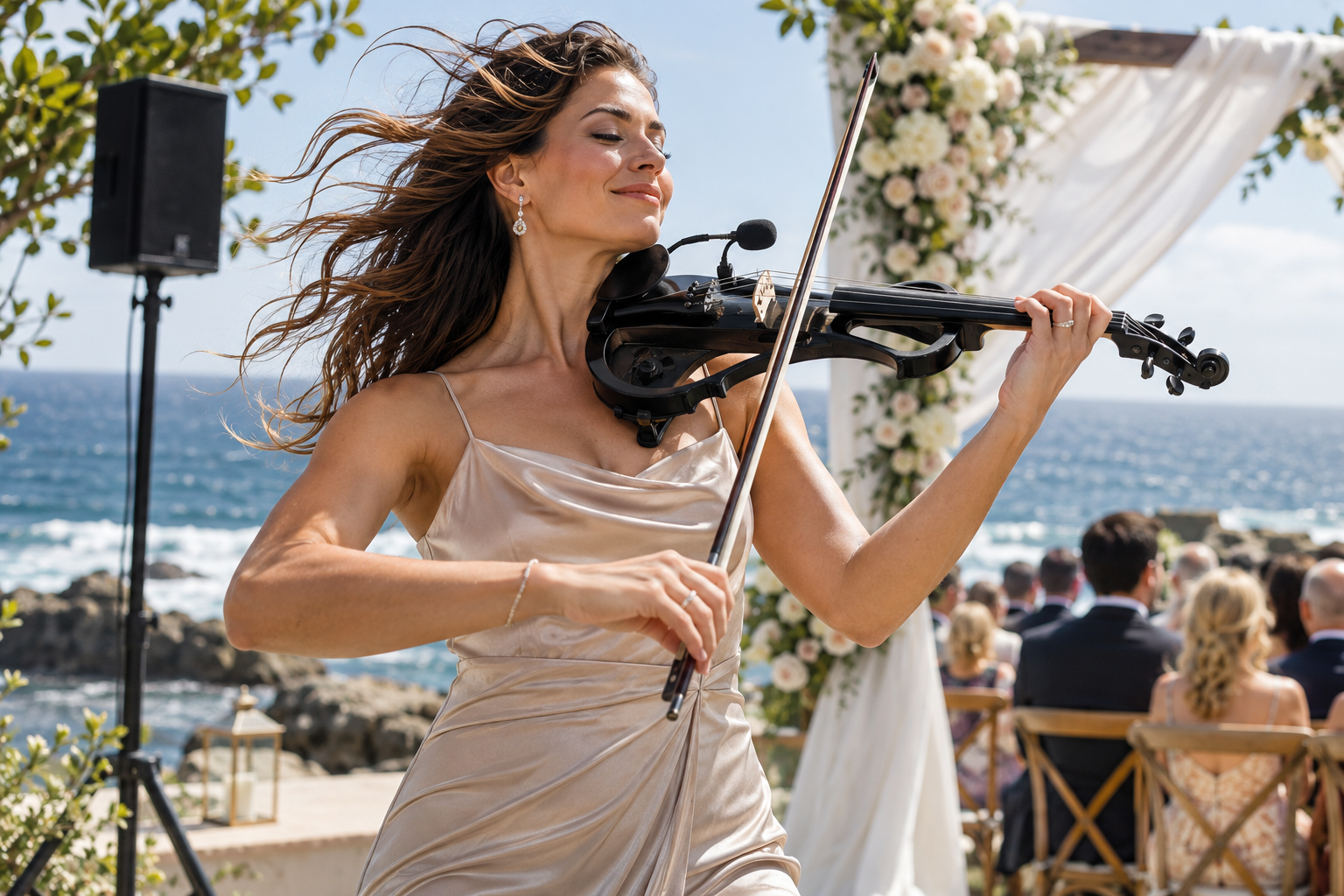
For a low-cost emergency pouch, the WS1-style foam approach is worth comparing. Pros: easy to replace and carry. Cons: it cannot substitute for a properly sized high-wind furry cover. Compare on Amazon
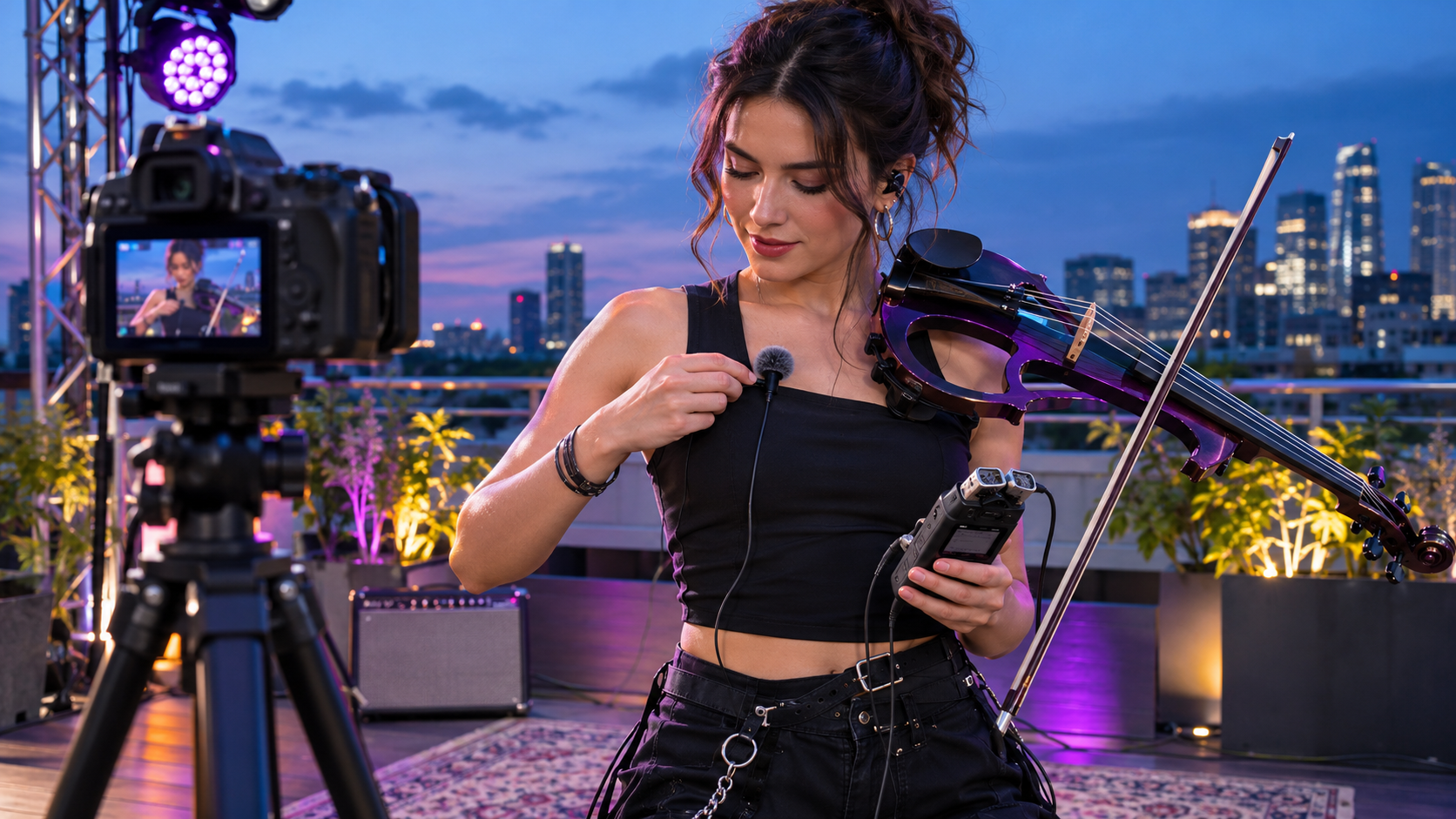
It is not a direct cover for every violin mic, but it can protect the camera or recorder track that saves a live reel when stage audio is difficult. Pros: better backup capture. Cons: buy for a compatible recorder or camera, not by name alone. Compare on Amazon
Fit is the first rule. A windscreen should stay clear of strings, bow travel, chin rest and pickup controls. Install it at home, then move through your full set of performance motions before packing it for a call.
Ask whether the stage has walls, a roof and side curtains. Light foam is usually enough for a sheltered garden. Add a furry option whenever the set is close to water, high above the street or in an open field.
Carry the screen in a clean zip pouch and keep a second compatible piece with the recorder. The goal is a quiet swap, not a clever last-minute repair with tape.
Tanya Strings is a world-class electric violin performer and content creator, so the live mix and the captured performance have equal value. I would pack a fitted foam cover on the microphone, a compact furry cover for windier calls, and a separate wind solution for the camera or recorder. At soundcheck I would play long bows, short attacks and quiet passages while the engineer listens for rumble. That tiny preparation protects the polished, cinematic sound people expect from an outdoor set.
Usually yes. Even mild wind can create rumble or sudden bursts that pull focus from the performance.
A well-fitted foam screen usually has a subtle tonal effect and a major reliability benefit. Test it in your own placement.
For stronger moving air, yes. Foam is the compact first line; furry material offers more protection when wind builds.
Only if it fits securely and does not alter the mount, bow path or instrument contact points.