
The best battery organizer for an electric violinist is a compact, closed case that keeps charged cells separate from used ones and lets you replace power without turning a changeover into a search. For most performers, a Storacell-style caddy is the fastest choice for AA cells; a hard waterproof case makes more sense for touring spares, while a small CellVault-style container suits a pocket emergency kit. Tanya Strings approaches batteries as stage reliability, not clutter: wireless packs, tuners, stand lights and creator gear only feel invisible when every cell has a known place.
Some links in this article are affiliate links. I may earn a commission if you make a purchase, at no extra cost to you.
Choose the organizer around your power format first. A wireless bodypack may need AA cells, a pedal or transmitter may need a 9V, and a creator pouch may need both. The winning case is one you can open quietly, identify at a glance and close before the next cue.
| Organizer to compare | Best for | Pros | Cons |
|---|---|---|---|
| Storacell AA Caddy | Fast AA swaps | Light, simple, easy count | Limited weather protection |
| Storacell 9V Caddy | 9V pedal backups | Dedicated terminals | Only one battery format |
| Thyrm CellVault | Pocket emergency set | Closed, rugged format | Less capacity |
| MTM Survivor Dry Box | Touring spares | Protective hard shell | Bulkier in a gig bag |
| Case Club battery case | Large multi-device kit | High capacity, visible order | More than most short shows need |
| Powerpax battery caddy | Mixed backup pouch | Compact practical format | Check exact cell compatibility |
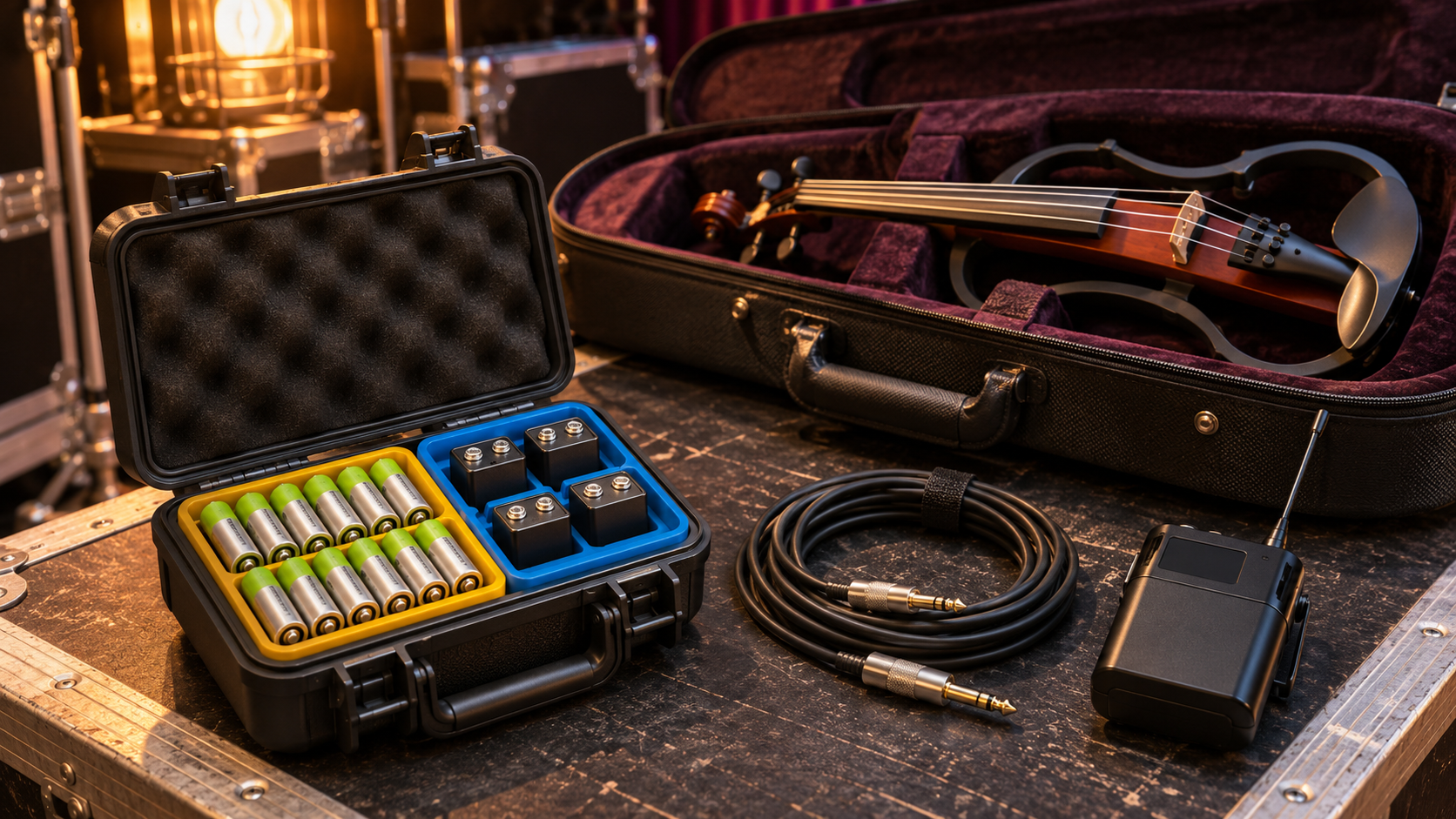
For a wireless system that uses AA batteries, this is the no-fuss performer choice: cells stay together, the count is obvious and a spare set does not roll through the case. Pros: light and quick. Cons: use a separate pouch if rain or hard impacts are likely. Compare on Amazon
Choose a dedicated 9V holder if an active pickup, pedal or small accessory still relies on that format. Pros: terminals are protected and the shape is easy to recognize in a dark bag. Cons: it will not simplify an AA-heavy wireless rig. Compare on Amazon
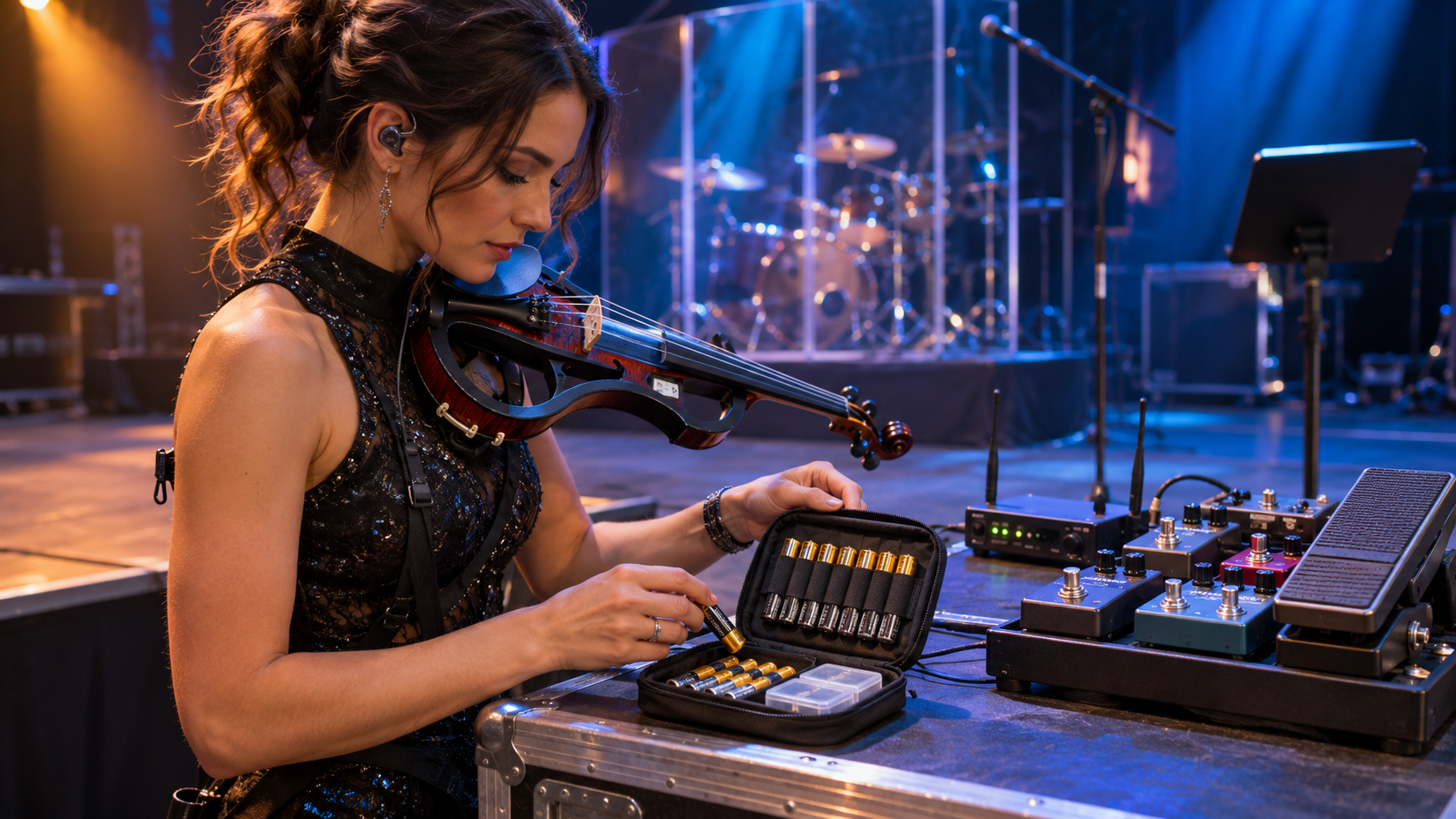
A CellVault-style case is useful for the small reserve that lives in a jacket, cable pouch or instrument case pocket. Pros: rugged closed protection. Cons: its capacity favors emergencies, not an all-day festival call. Compare on Amazon
For outdoor work and travel, a hard dry box gives spare cells more protection than an open caddy. Pros: durable and weather-conscious. Cons: measure your gig-bag pocket before buying. Compare on Amazon
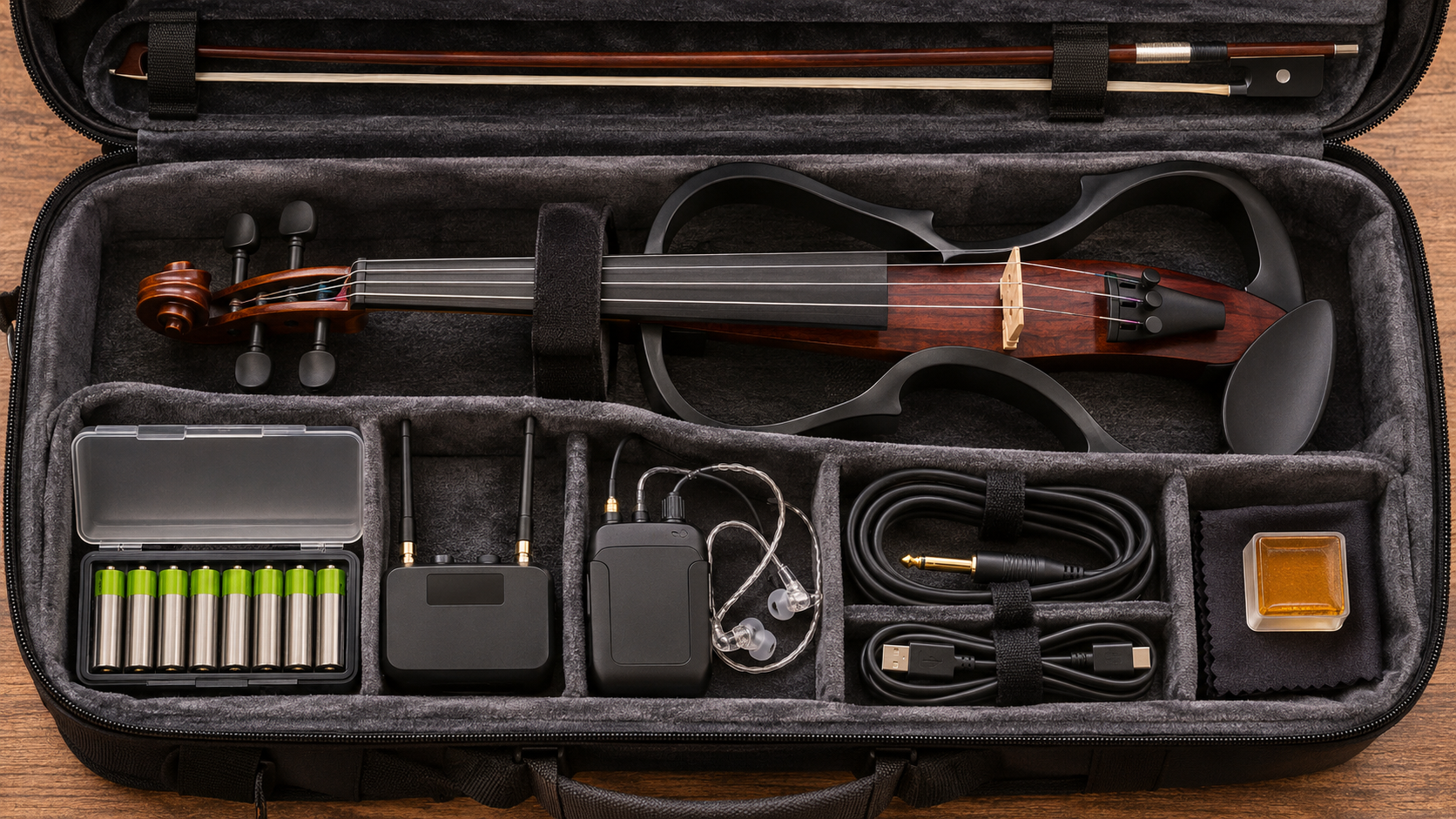
Use a larger fitted case when you carry multiple wireless channels, cameras, lights or a team kit. Pros: clear inventory at a glance. Cons: it can be excessive for one violin and one transmitter. Compare on Amazon
A Powerpax-style caddy is worth comparing for a compact mixed-accessory pouch. Pros: inexpensive organization for common cells. Cons: confirm the exact model fits your battery size before making it part of the show kit. Compare on Amazon

Use a simple rule: charged cells face one direction, used cells face the other, or keep them in separate containers. Do not rely on memory when a set change is moving quickly.
Cells should not contact keys, coins or cable ends. Test the organizer in the exact pouch you carry to soundcheck so it does not press against the violin, bow or wireless controls.
Carry one complete tested replacement set per battery-powered device. For a long wedding, festival or travel day, add a second set rather than hoping a half-used pack will finish the night.
Tanya Strings is a world-class electric violin performer and content creator, so a battery plan must support both the live note and the shot around it. I would use one small, clearly marked organizer for charged cells, a second spot for used cells, and test the wireless pack before leaving home. The organizer stays near the transmitter and not loose beside the instrument. That routine protects the calm, polished feeling an audience sees on stage.
It makes power status visible, protects spare cells and shortens a battery change during a show.
Follow the device maker’s guidance and carry a tested reserve appropriate to your system.
They should travel in a closed organizer with protected terminals, never loose among accessories.
Bring one complete replacement set per powered device plus a small emergency reserve for a long call.