Violin News: VSA, Spohr and Stagecraft
Today’s violin news is about the infrastructure behind a convincing performance. Cleveland opens the Violin Society of America’s 2026 convention and competition, putting new instruments, bows and the people who make them in one room. In Weimar, the Louis Spohr Competition has published a new class of young violin laureates after concerto finals. New York Pops has named Ellen de Pasquale its next concertmaster. Tanya Strings’ performer view is simple: an artist’s sound is shaped by an instrument, ensemble awareness and a public identity that is ready when the invitation arrives.
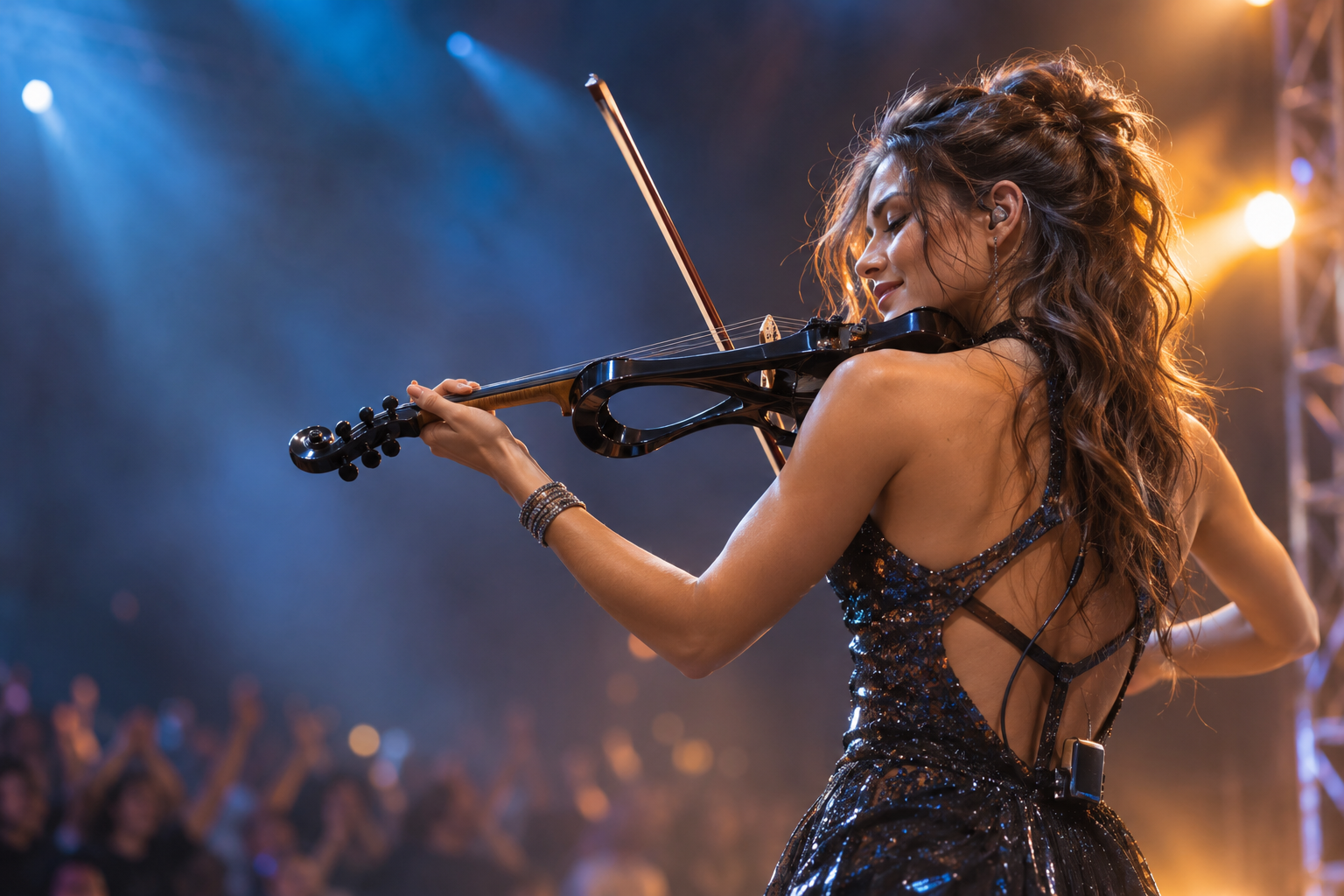
Why does the VSA convention matter to performing violinists?
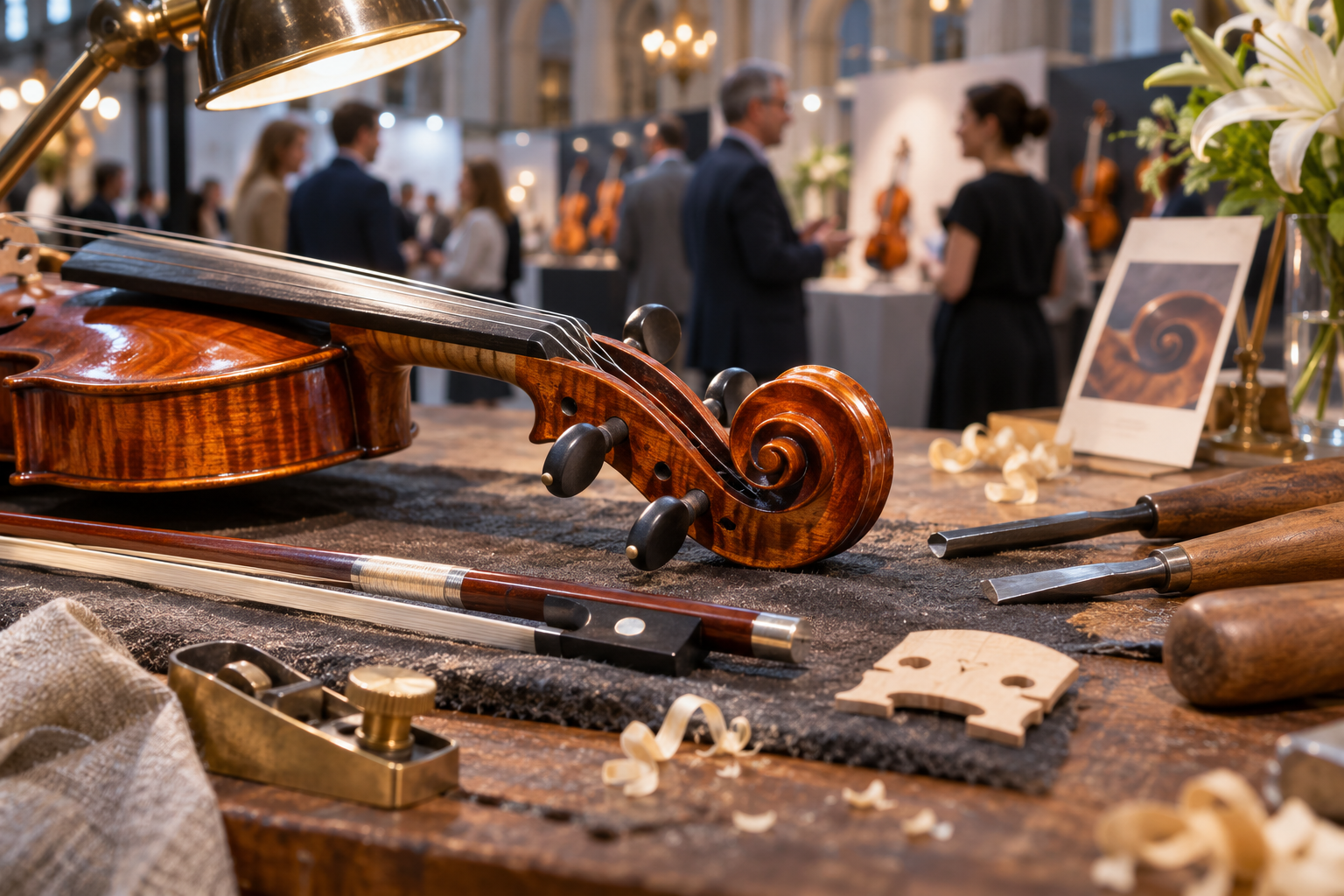
The Violin Society of America’s official programme begins its 52nd convention and 26th International Competition in Cleveland on 15 November. The week brings contemporary makers, restorers, bow makers, players and the trade together. Competition entries are checked in on Sunday; the public exhibition programme includes a New Instrument Exhibit, Rare Instrument Exhibit and vendor hall from 16–20 November. The VSA says the competition assesses tone and artisanship through blind judging, a useful reminder that how an instrument performs matters alongside its visual finish.
For a touring acoustic or electric violinist, a makers’ gathering is not merely collector news. It is a chance to understand setup language: response under the bow, projection, weight, balance, bridge work and the practical repair support available between shows.
- Bring a short excerpt you know by heart when trying an instrument or bow.
- Test soft attacks, sustained notes and your normal stage-level articulation.
- Ask how a setup will travel, not only how it sounds in a quiet room.
Tanya’s performer take: the best gear decision is a musical one. A beautiful instrument that does not speak reliably through your hands, monitoring and schedule is not yet a stage solution.
What do the Louis Spohr results say about preparation?
The University of Music FRANZ LISZT Weimar has posted the winners of its 11th International Louis Spohr Competition for Young Violinists, held from 29 October to 7 November. First prizes went to Suhyeon Baek, Jayda Lu and Jiachen Cao across its three age groups. The official schedule shows that finalists moved from solo rounds to concerto performances with the university orchestra, conducted by Ekart Wycik; Category I performed Mozart’s Third, Category II Bruch’s First and Category III Mendelssohn’s E-minor concerto.
Those details matter because a competition programme is really a sequence of format changes. A player must switch from individual command to shared timing, listen across an orchestra and make entrances feel inevitable. Weimar’s published schedule also makes the final repertoire transparent, which gives listeners a useful way to follow what the players are being asked to communicate.
Can an electric violin set borrow that discipline?
Absolutely. Rehearse the transitions as carefully as the solo: the cue to a drummer, the moment a loop starts, the first note after a lighting change. A modern amplified set also needs a musical “orchestra” of playback, front-of-house, monitors and visuals. The performer who listens and cues clearly makes the whole room feel more confident.
Why is a new concertmaster appointment worth watching?
The Violin Channel reports that Ellen de Pasquale will become New York Pops concertmaster from 20 November, beginning with the orchestra’s Carnegie Hall appearance featuring Denée Benton and Jordan Donica. It is a timely reminder of the concertmaster’s public role: leading the string section, translating a conductor’s priorities and setting an expressive standard before a soloist or guest artist arrives.
For event planners, the news is a cue to look beyond a headline soloist. Great shows depend on players who can lead from within an ensemble. For artists building a crossover project, it is a cue to prepare clear charts, an exact set order and a soundcheck vocabulary everyone can act on quickly.
What should music fans take from this week’s signals?
Cleveland shows the craft that keeps string performance evolving; Weimar shows the patience required to meet increasingly complex performance formats; New York Pops shows how leadership is renewed inside a familiar institution. Tanya Strings’ conclusion: world-class violin performance is not a lesson or a lone heroic moment. It is a live, collaborative art built from responsive instruments, prepared choices and people who make the next entrance count.