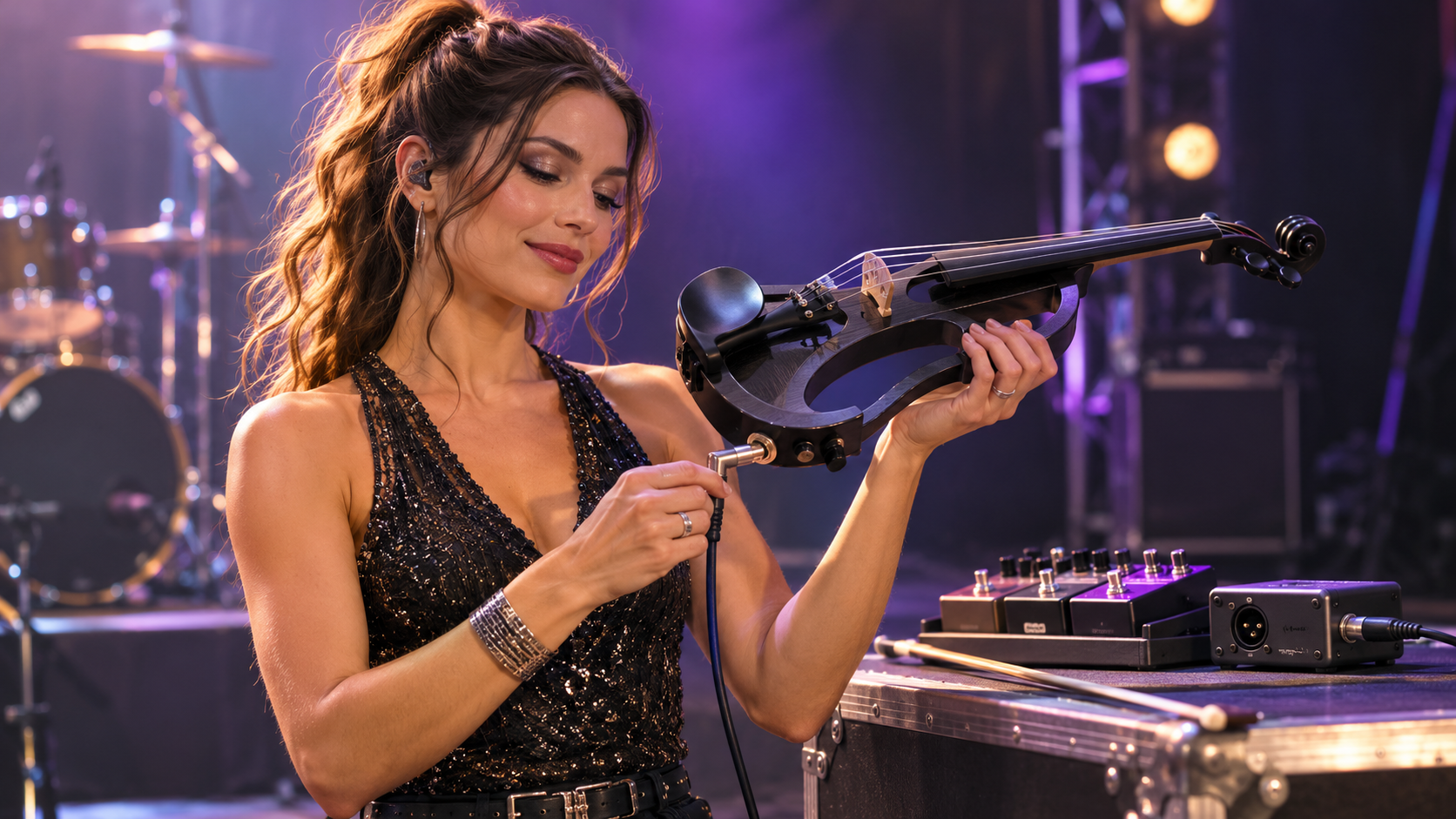
The best right-angle adapter for an electric violin is the one that sends the cable safely away from your bow arm, body and output jack without adding crackle or a bulky weak point. For most stage rigs, start with a compact Hosa GPP-151-style 90-degree adapter; choose a low-profile patch adapter when the violin feeds a tight pedalboard, and use a locking-style solution only when its fit is proven on your instrument. Tanya Strings treats this tiny connector as show insurance: a cleaner cable exit protects the performance, the camera shot and the first note.
Some links in this article are affiliate links. I may earn a commission if you make a purchase, at no extra cost to you.
Choose by physical fit before brand. Look at the output jack, shoulder-rest clearance, chin position, strap hardware and the direction your cable must travel. A right-angle adapter is not a substitute for a good instrument cable; it is a strain-relief and routing tool that can make an existing rig more comfortable.
| Adapter to compare | Best for | Pros | Cons |
|---|---|---|---|
| Hosa GPP-151 | Simple 90-degree cable exit | Compact, familiar format | Check clearance at the violin jack |
| Hosa GPP-296 | Changing cable direction | Swivel-style flexibility | More moving parts to inspect |
| Fender 6-inch patch cable | Creating a short flexible turn | Less rigid load at the jack | Adds a small cable loop |
| Ernie Ball flat patch cable | Tight pedalboard transitions | Low-profile footprint | Not a direct adapter solution |
| GLS Audio right-angle coupler | Emergency spare pouch | Simple backup form factor | Test fit and noise first |
| D'Addario right-angle adaptor | Touring replacement kit | Easy compact redundancy | Confirm plug orientation |
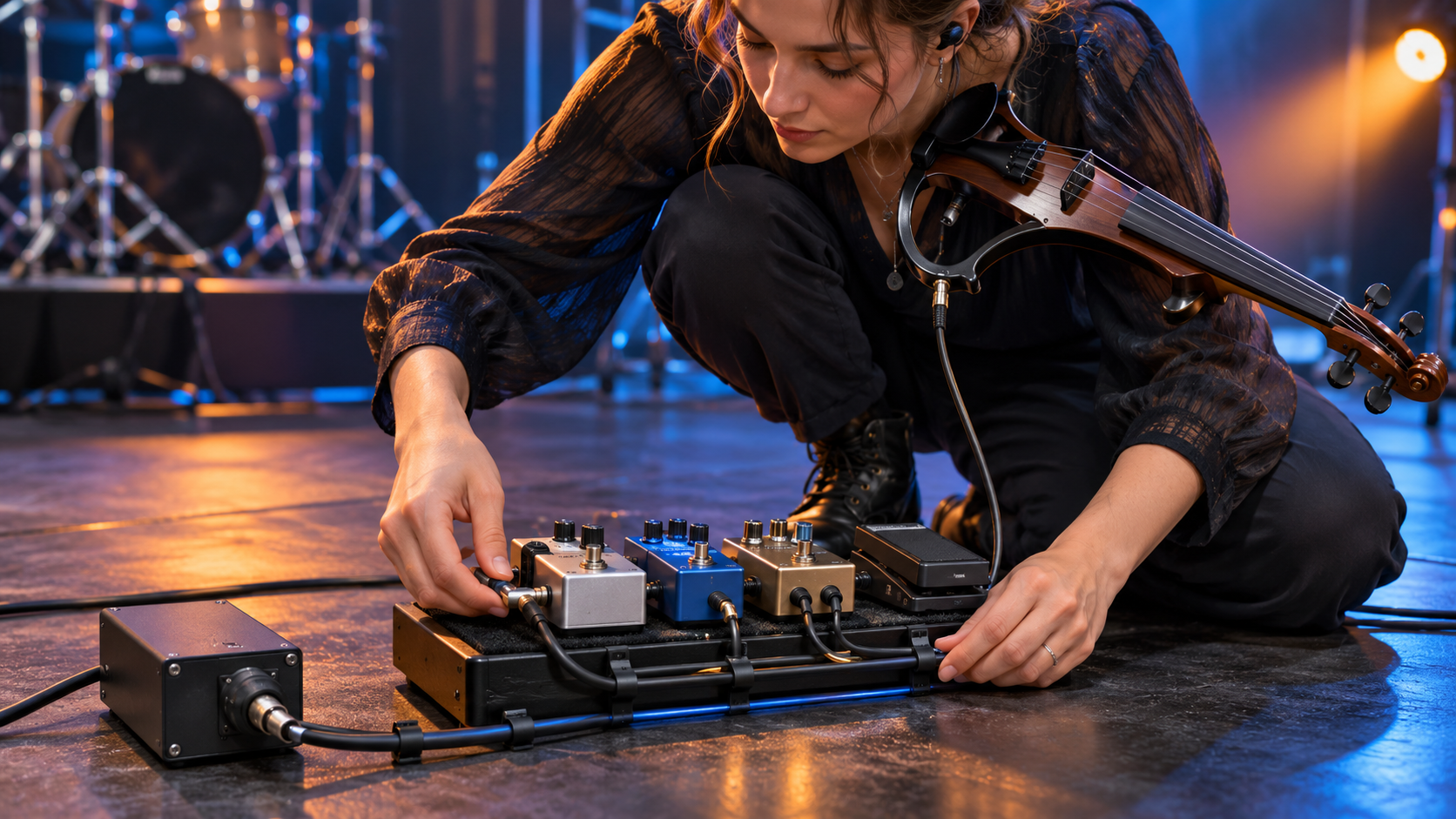
This is the straightforward first comparison when a straight plug points exactly where your body or cable route does not want it. Pros: compact and direct. Cons: a rigid adapter can be wrong if the jack sits in a very tight recess. Compare on Amazon
Compare this style when the best cable direction changes between an upright stand, a pedalboard and a seated creator setup. Pros: flexible orientation. Cons: check every moving connection during pre-show line testing. Compare on Amazon
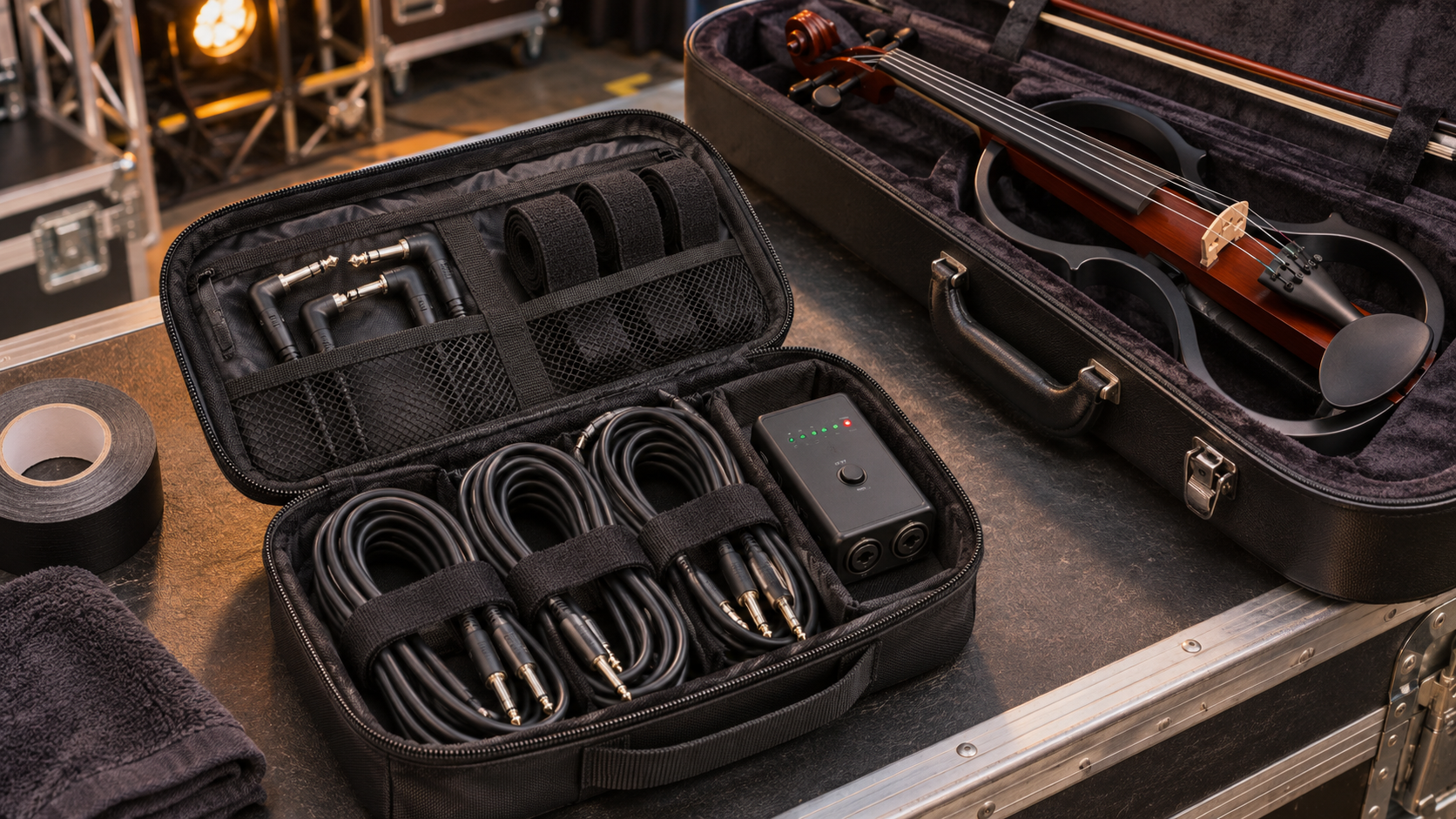
A short patch cable is the gentler choice when a hard adapter would make the instrument jack carry too much leverage. Pros: flexible relief at the violin. Cons: it uses more space than one adapter. Compare on Amazon
Use this category for the small connection between a violin DI, tuner or pedalboard rather than directly at the instrument. Pros: low-profile routing. Cons: measure the needed length before ordering. Compare on Amazon
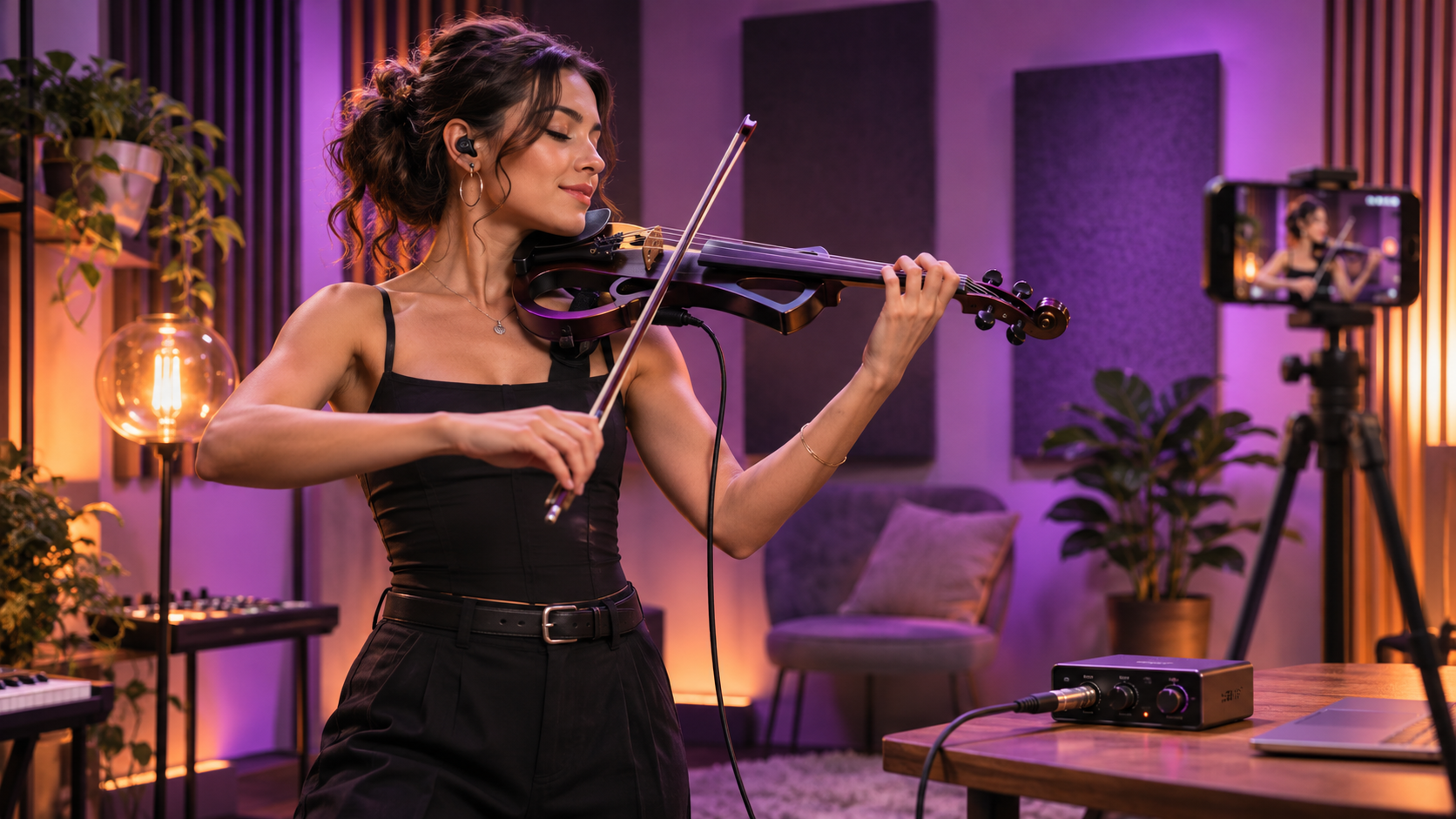
It earns a place in an emergency pouch if your shows involve fast changes or shared backline. Pros: a small contingency item. Cons: a spare still needs a quiet, physical test before it earns stage duty. Compare on Amazon
It is worth comparing when you want a compact replacement from a familiar music-accessory line. Pros: easy to keep with cables. Cons: make sure the final orientation clears your specific violin body and controls. Compare on Amazon

Plug in with the violin on your shoulder and simulate bowing, turning and walking. If the connector presses into you, reaches a control or directs the cable across your arm, it is the wrong angle.
Secure the cable farther down the route, not directly against the jack. The adapter should make the cable calmer, never turn the output socket into a handle.
Run long notes, dynamic bow changes and your loudest effects patch. A quiet connection in a bedroom can reveal crackle under stage gain.
Tanya Strings is a world-class electric violin performer and content creator, so every small connection has to look clean and work under pressure. I would choose the least bulky fit, carry one tested spare, route the cable away from the bowing side, and inspect the jack before doors. The goal is not a clever accessory collection. It is an instrument that moves freely, sounds consistent and still looks composed on camera.
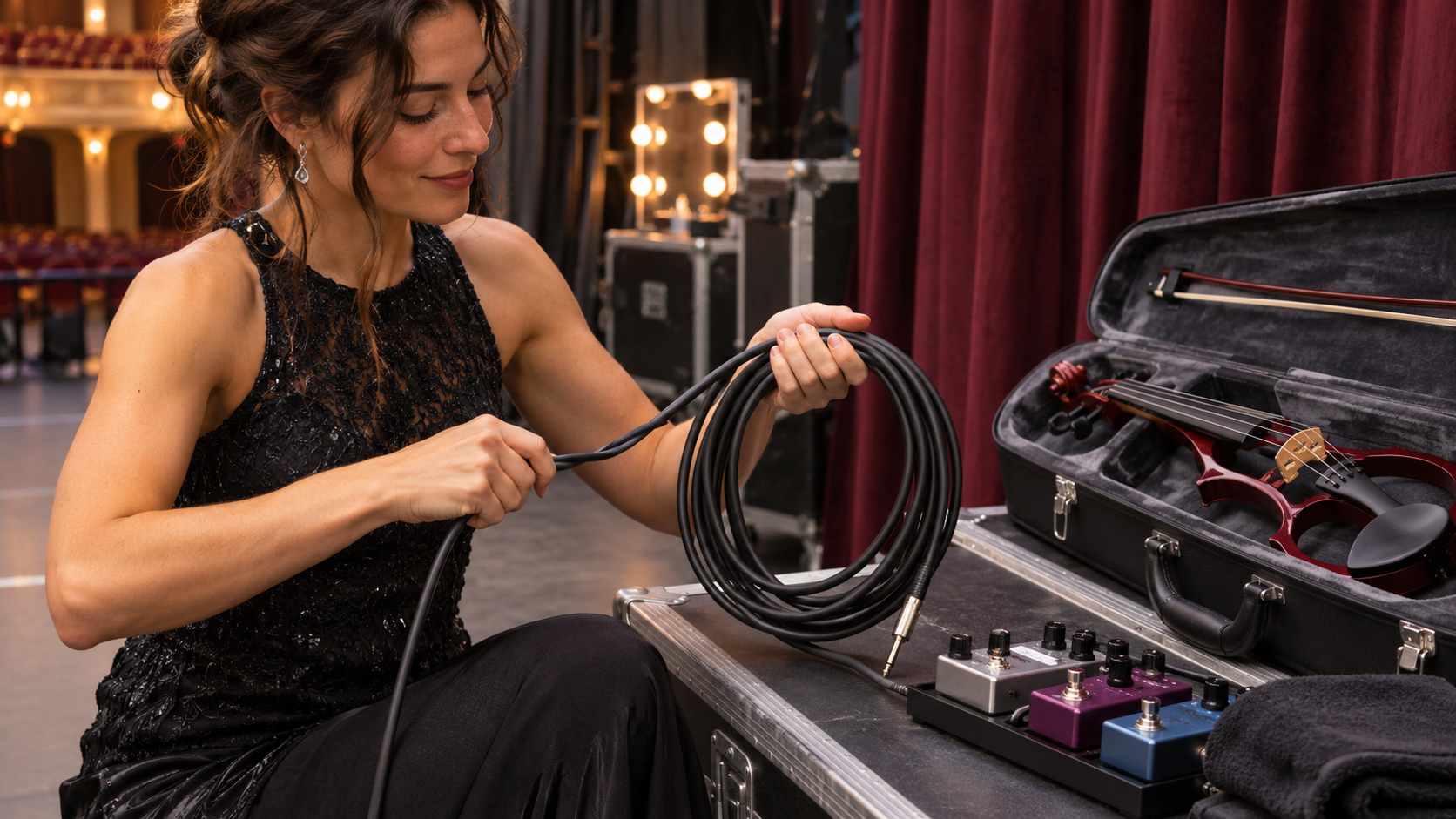
Use one when a straight plug conflicts with your body position, cable route or case clearance.
A good, quiet adapter should not be a creative tone tool; test every connection at real performance level.
Only with verified clearance. Removing it before packing is usually the safer touring habit.
Choose the direction that keeps the cable away from your bow arm, controls and output jack.