Tanya Strings · 14 November 2026
Best Cable Testers for Electric Violinists
The best cable tester for an electric violinist is the one that checks the connectors actually used in the rig, fits the pre-show routine, and makes a bad lead obvious before the audience hears it. For a simple violin-to-pedalboard setup, a compact 1/4-inch tester can be enough; a performer using a DI box, mixer, backing-track interface, or wired monitoring should consider broader XLR and TRS coverage. Tanya Strings would keep the tester in the stage kit, test suspect cables unplugged from active gear, and label any failure instead of gambling on it at soundcheck.
Some links in this article are affiliate links. I may earn a commission if you make a purchase, at no extra cost to you.
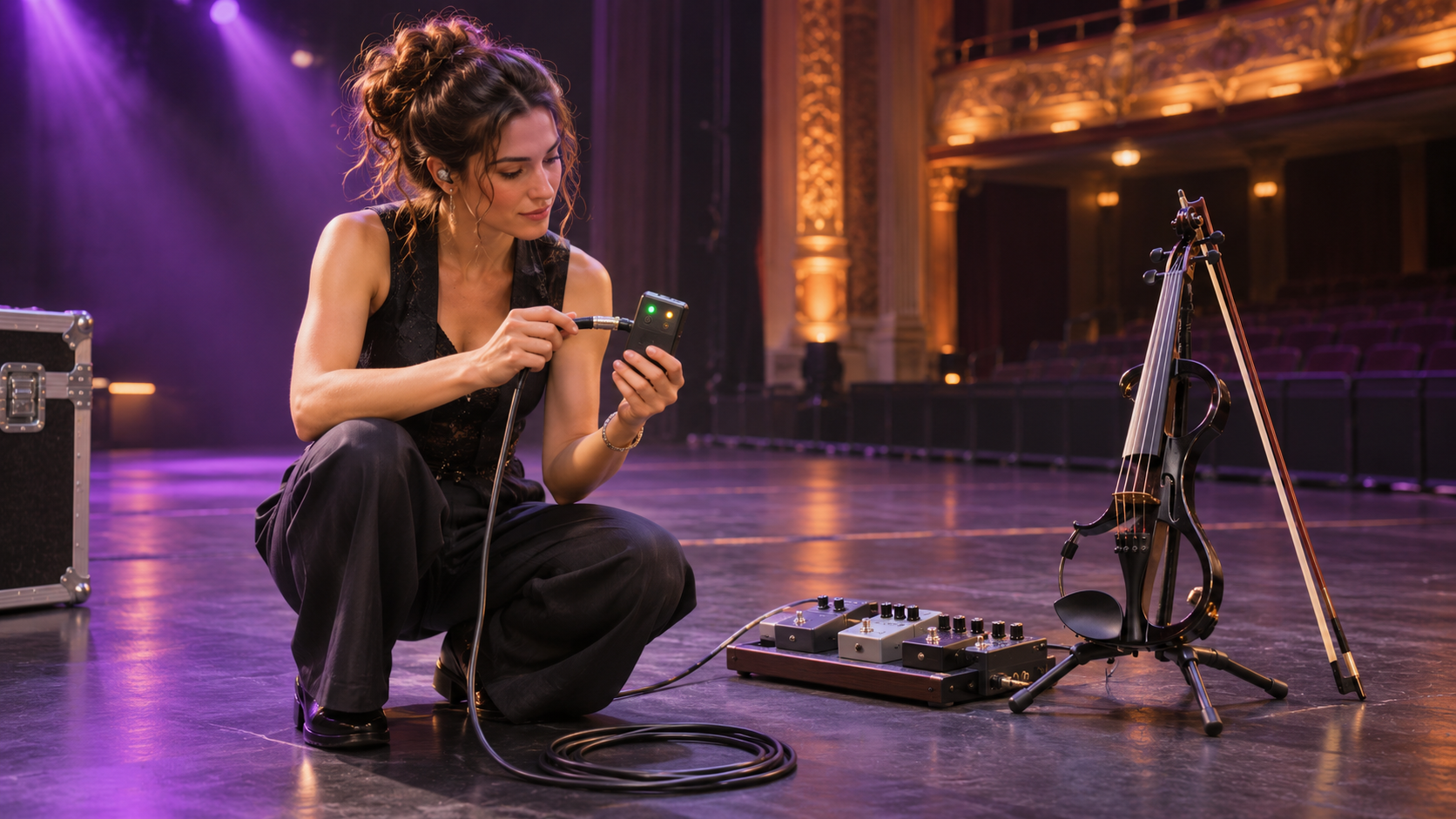
What should a cable tester solve before an electric violin performance?
A cable tester is a fast triage tool, not a substitute for listening through the whole signal chain. It can help identify an open connection, a short, or a connector wired unexpectedly before the problem is mistaken for a pickup, pedal, or amplifier fault. Match the tester to your connectors, pack a short known-good lead, and test only with cables disconnected from powered equipment unless the manufacturer says otherwise.
| Tester | Best fit | Why compare it | Check first |
|---|---|---|---|
| Behringer CT100 | Multi-connector stage kit | Broad common-audio coverage | Connector needs |
| Hosa CBT-500 | Basic cable checks | Compact tester format | Supported wiring |
| SoundTools CT | Production-oriented rigs | Rugged tester category | Exact version |
| Klein Tools VDV526-200 | Network plus venue utility | Different connector focus | Audio suitability |
| Seismic Audio SATRX | Simple audio troubleshooting | Stage-cable tester format | Listing details |
| Hosa G5S-6 | Instrument-cable backup | Known-good spare lead | Length and plugs |
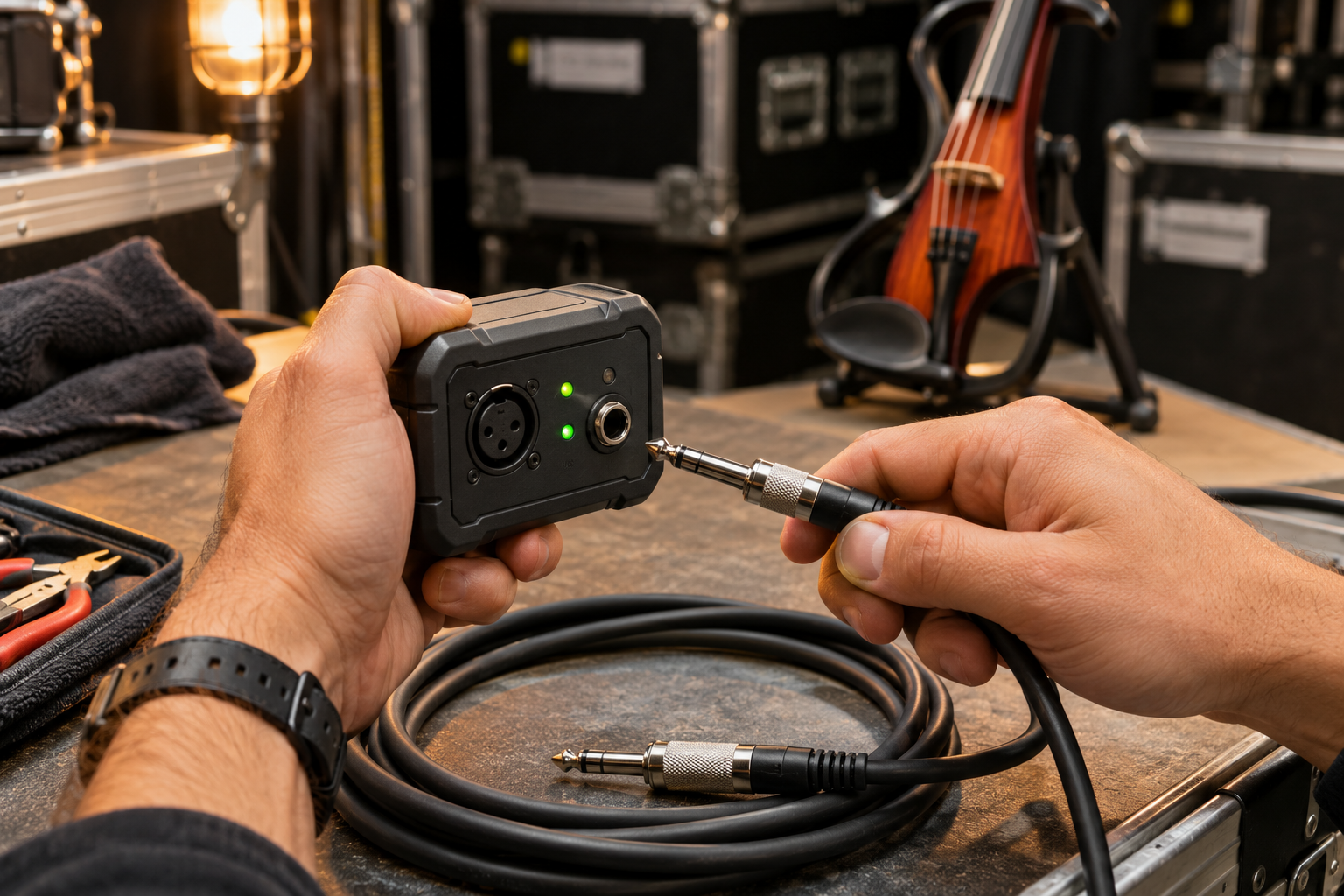
Which cable testers belong on a performer’s shortlist?
Is the Behringer CT100 useful for a mixed electric violin rig?
The CT100 is worth comparing when one kit includes instrument leads, XLR runs, adapters, and more than one type of audio connection. Pros: broad tester category and practical stage-kit appeal. Cons: confirm the connectors and test modes you will truly use.
Compare the Behringer CT100 on Amazon
When does the Hosa CBT-500 make sense?
Hosa CBT-500 is a sensible comparison for a performer seeking a focused tool for routine cable checks. Pros: compact tester format. Cons: verify its supported connections against every cable in your own rig.
Compare the Hosa CBT-500 on Amazon
Who should compare a SoundTools CT?
SoundTools CT suits performers who often work around production-grade cable runs and want a more purpose-built tester family to investigate. Pros: production-oriented positioning. Cons: check the exact model, included adapters, and the connectors it supports before buying.
Compare SoundTools CT testers on Amazon
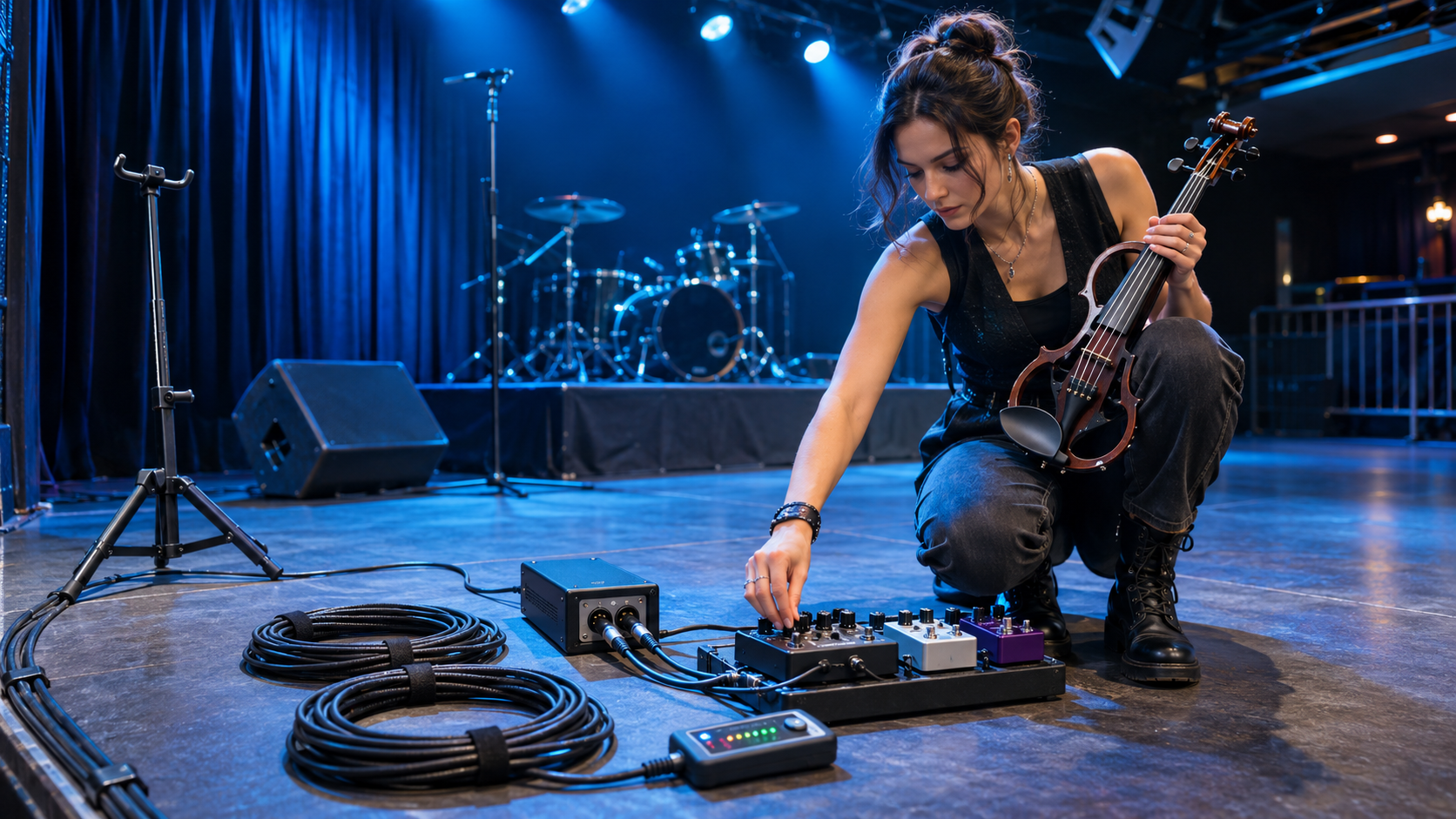
Can Klein Tools VDV526-200 help a touring creator?
Klein Tools VDV526-200 is relevant when a content creator also wants to troubleshoot network-style connections in a broader travel setup. Pros: utility beyond a purely audio kit. Cons: it is not a replacement for a tester that covers the audio connectors in your violin path.
Compare the Klein Tools VDV526-200 on Amazon
Is Seismic Audio SATRX a reasonable audio-only comparison?
Seismic Audio SATRX is worth a look for a straightforward audio-troubleshooting format. Pros: a clear stage-cable use case. Cons: inspect current listing details, connector coverage, and power requirements rather than assuming compatibility.
Compare the Seismic Audio SATRX on Amazon
Why include a Hosa G5S-6 spare lead?
A tester is more useful when it is paired with a known-good instrument cable for comparison. Hosa G5S-6 is an example search target for that backup-lead role. Pros: lets you isolate a suspect lead quickly. Cons: select the length and plug orientation that fit your pedalboard and stage movement.
Compare Hosa G5S-6 instrument cables on Amazon
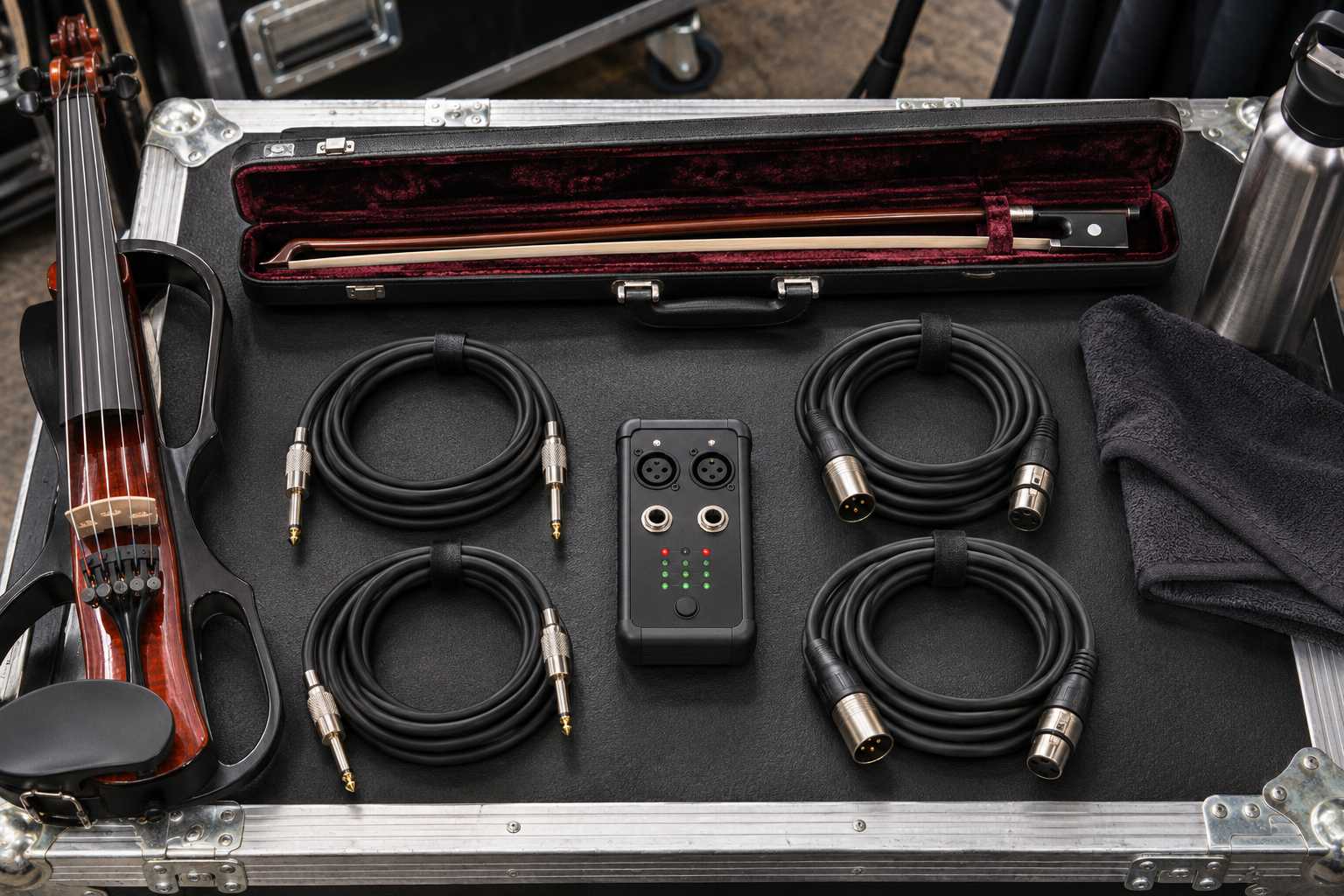
How should you choose a cable tester for an electric violin rig?
Which connectors must it test?
Write down the full route: violin output, wireless or pedalboard patches, DI box, XLR to front of house, and any wired monitor or content interface. Buy for that list, not for the biggest connector count on a product page.
Do you need remote testing?
Remote capability can help when cables run across a stage or between rooms. For a compact solo rig, speed and clear indicators may matter more than a complex remote system.
What belongs in the fault-finding kit?
Pack the tester, a known-good spare instrument cable, short XLR and TRS spares if used, a label or tape roll, and the right batteries. Mark failed leads immediately so they do not return to the active pile.
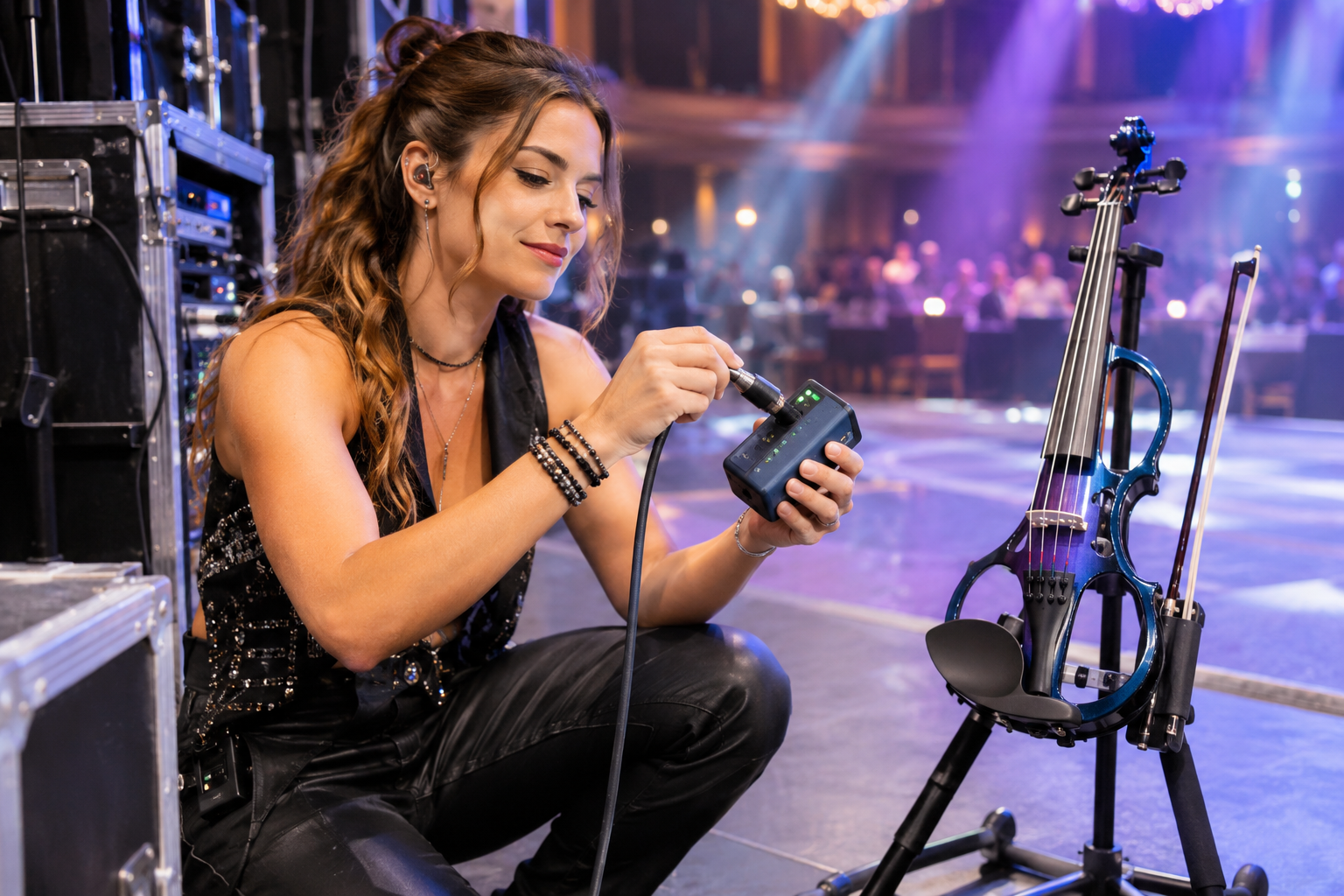
How would Tanya Strings use a cable tester on show day?
Tanya Strings is a world-class electric violin performer and content creator, so reliability is part of the musical presentation. I would test the main lead and every questionable patch before doors, then listen through the real violin, pedalboard, DI, and monitoring route. The tester is there to make decisions faster, not to replace a soundcheck. These are performer-led buying considerations, not claims that Tanya has personally tested every listed product.
What do electric violinists ask about cable testers?
Can a cable tester diagnose every electric violin signal problem?
No. It reveals many wiring and continuity faults, but gain staging, power, pickups, pedals, DI boxes, and venue equipment need their own checks.
Should I test cables before every electric violin show?
Test the primary lead and any cable that has been stepped on, packed tightly, or behaved strangely. Run the complete rig before important shows.
Do I need XLR testing for an electric violin rig?
Yes if the rig uses a DI box, mixer, wired monitor, or microphone. Select coverage for the actual signal path.
Can I use a cable tester on powered equipment?
Follow the manual and disconnect cables from powered gear before testing unless its manufacturer explicitly says otherwise.