Tanya Strings · 13 November 2026
Best RGB Uplights for Electric Violinists
The best RGB uplights for an electric violinist are compact, stable fixtures that create a clean backdrop without stealing attention from the bow, face, or camera frame. Tanya Strings would begin with two matching lights, a restrained color pair, and a tested placement behind the performance line. Battery power, realistic runtime, beam spread, control method, and venue approval matter more than a long effect list. For weddings, club stages, and filmed performances, the goal is simple: add depth and a repeatable visual signature while keeping exits, cables, and the musician’s movement safe.
Some links in this article are affiliate links. I may earn a commission if you make a purchase, at no extra cost to you.
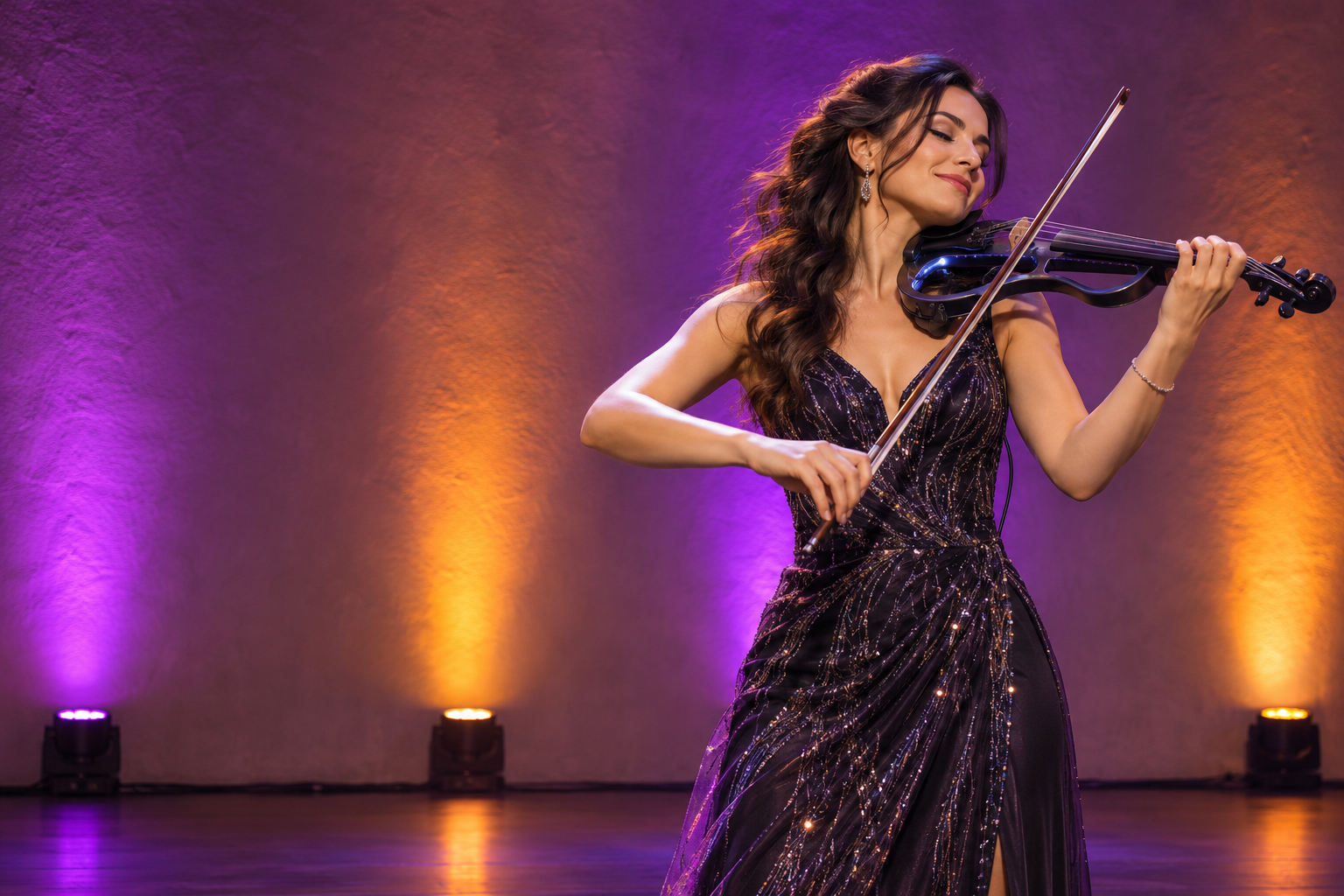
What should RGB uplights solve for an electric violin performance?
They should create separation between performer and background, not a competing light show. A floor wash can give a wedding wall, club curtain, or content backdrop more dimension while leaving the front of the artist readable. Start with warm gold plus a cool accent, or one controlled color family. Confirm fixture placement with the venue and keep all power and control paths out of walkways.
| Fixture | Best fit | Why compare it | Watch for |
|---|---|---|---|
| Chauvet DJ Freedom Par Hex-4 | Portable polished looks | Battery-focused fixture family | Runtime and venue rules |
| ADJ Mega Hex Par | Color-rich small stages | Multi-color LED format | Power and control plan |
| Rockville RockPAR 50 | Budget-conscious wash | Compact PAR approach | Exact bundle contents |
| U`King RGB Par Light | Simple starter kit | Accessible multi-light listings | Test camera flicker |
| Donner LED PAR Light | Small rehearsed setups | Portable stage-light format | Mounting and cable routes |
| Chauvet DJ SlimPAR Pro H USB | Repeatable color wash | Compact professional family | Power source and programming |
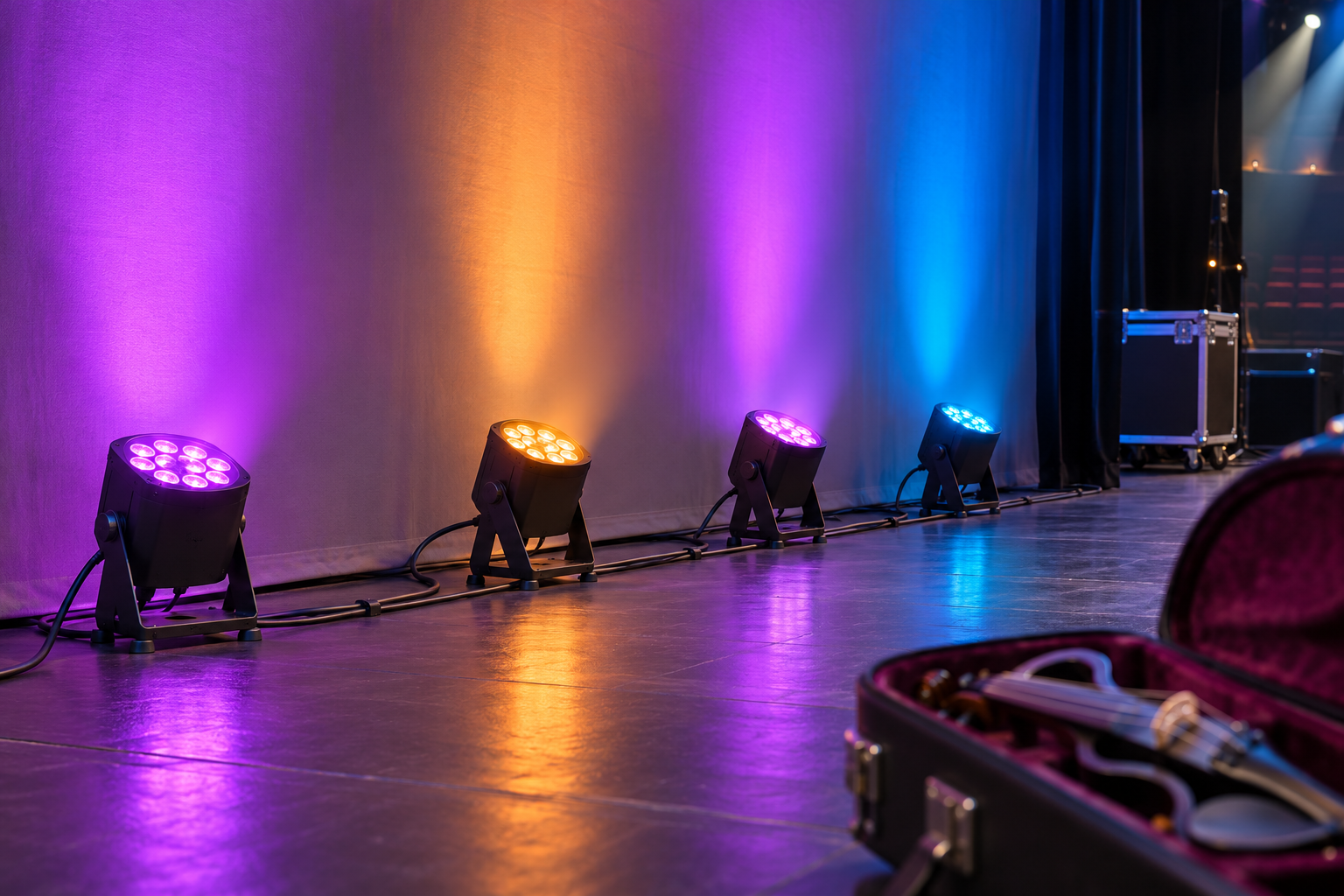
Which RGB uplights deserve a performer’s shortlist?
Is Chauvet DJ Freedom Par Hex-4 worth comparing?
Freedom Par Hex-4 is a strong comparison point for performers who value a tidy, portable lighting workflow. Pros: battery-oriented convenience and a recognizable event-lighting format. Cons: planned charging and realistic runtime checks are essential.
Compare Chauvet DJ Freedom Par Hex-4 on Amazon
When does ADJ Mega Hex Par make sense?
ADJ Mega Hex Par is worth comparing when saturated color and a broader fixture ecosystem matter for a small stage. Pros: flexible color approach. Cons: it needs a clear power, positioning, and control plan rather than a last-minute placement.
Compare ADJ Mega Hex Par on Amazon
Should you consider Rockville RockPAR 50?
RockPAR 50 is useful to compare for a compact accent-wash budget. Pros: straightforward PAR-light category. Cons: confirm the exact listing, beam behavior, controls, and whether it suits your venue before committing.
Compare Rockville RockPAR 50 on Amazon
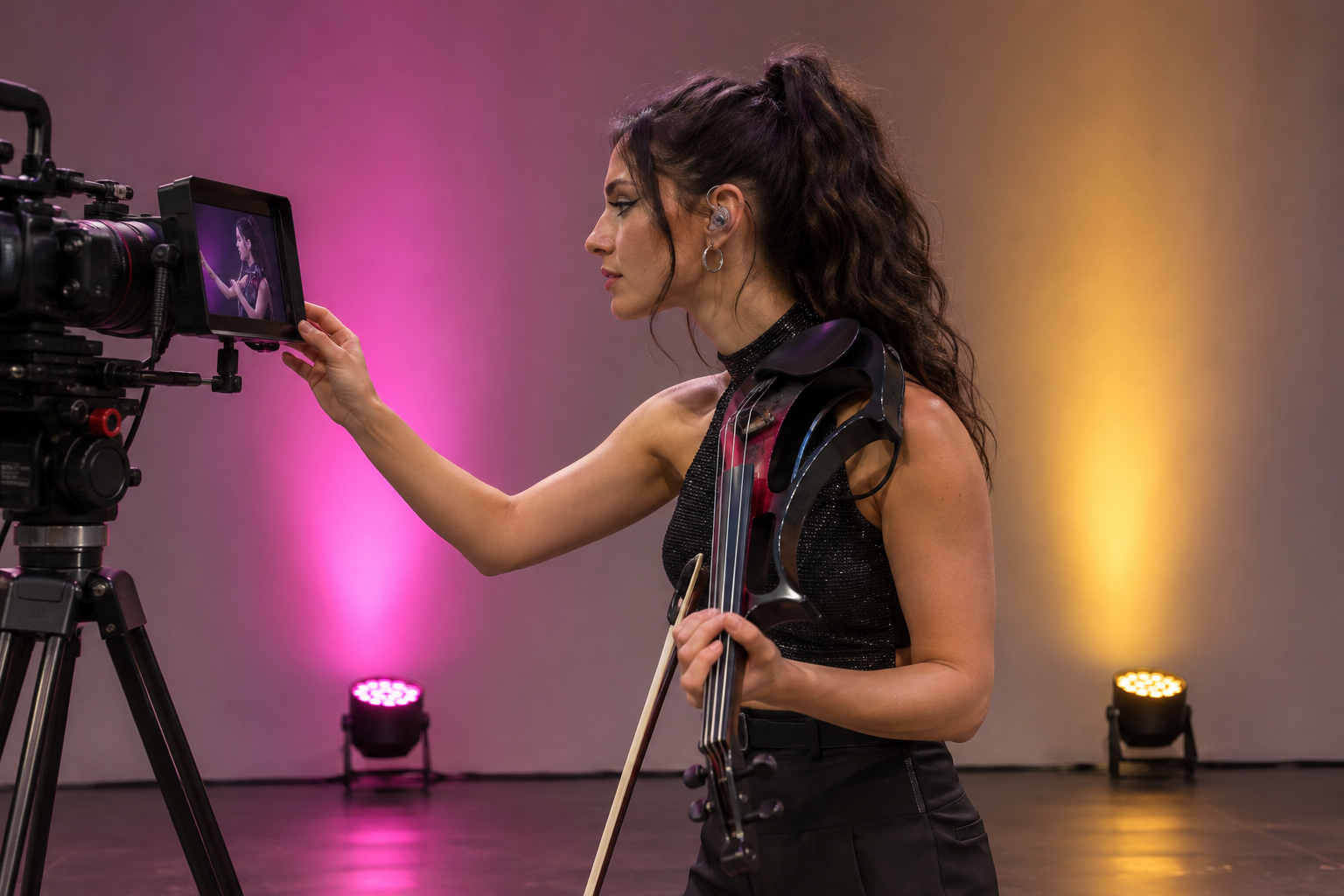
Is a U`King RGB Par Light kit a practical entry point?
U`King kits can suit a simple self-contained backdrop experiment. Pros: accessible multi-light starting point. Cons: test every unit, remote, and camera setting before a public performance.
Compare U`King RGB PAR light kits on Amazon
Who should look at Donner LED PAR Lights?
Donner LED PAR Lights make sense for an artist building a small, rehearsed setup around content and intimate events. Pros: portable category and simple visual purpose. Cons: do not assume all fixtures match; test color, brightness, controls, and power together.
Compare Donner LED PAR Lights on Amazon
When is Chauvet DJ SlimPAR Pro H USB the better fit?
SlimPAR Pro H USB is compelling when a repeatable compact wash matters more than novelty effects. Pros: established compact-fixture family. Cons: prepare its power and cue workflow early, especially if fixtures share a circuit.
Compare Chauvet DJ SlimPAR Pro H USB on Amazon
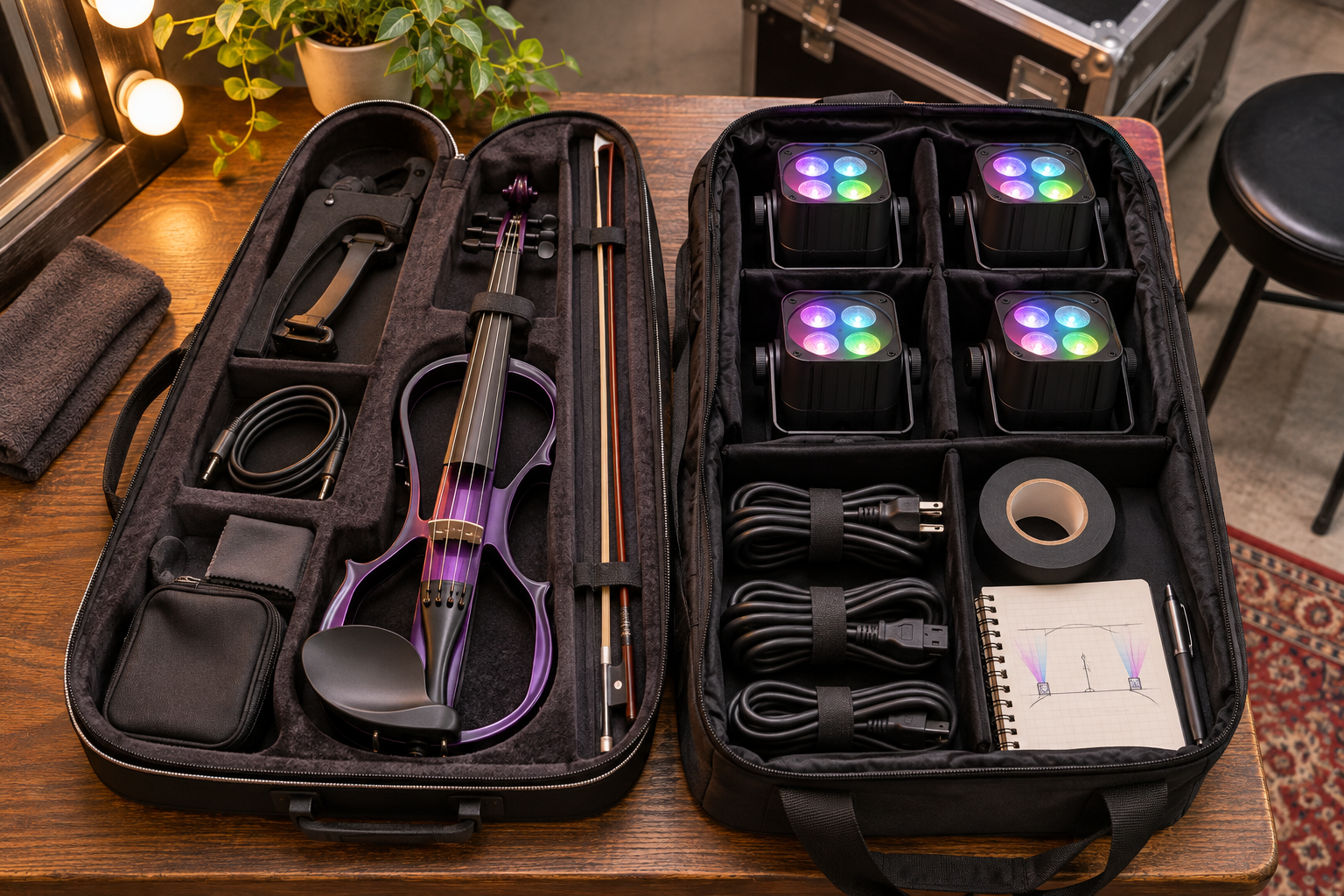
How should you buy and place RGB uplights safely?
How many fixtures do you actually need?
Begin with two lights for a small symmetrical backdrop. Add two more only when the space needs wider coverage. More fixtures create more charging, power, addressing, and transport work, so every light should have a visual job.
What matters for camera-ready color?
Film a short test using the intended camera and settings. Keep the brightest color away from the performer’s face and from reflective instrument surfaces. Avoid sending a direct beam toward an audience member, camera lens, or emergency route.
What should be checked before doors open?
Confirm venue permission, fixture stability, batteries or approved power distribution, ventilation, cable routing, and the opening look. Never block exits or rely on loose tape as structural support. A stable static look is often the best first show choice.
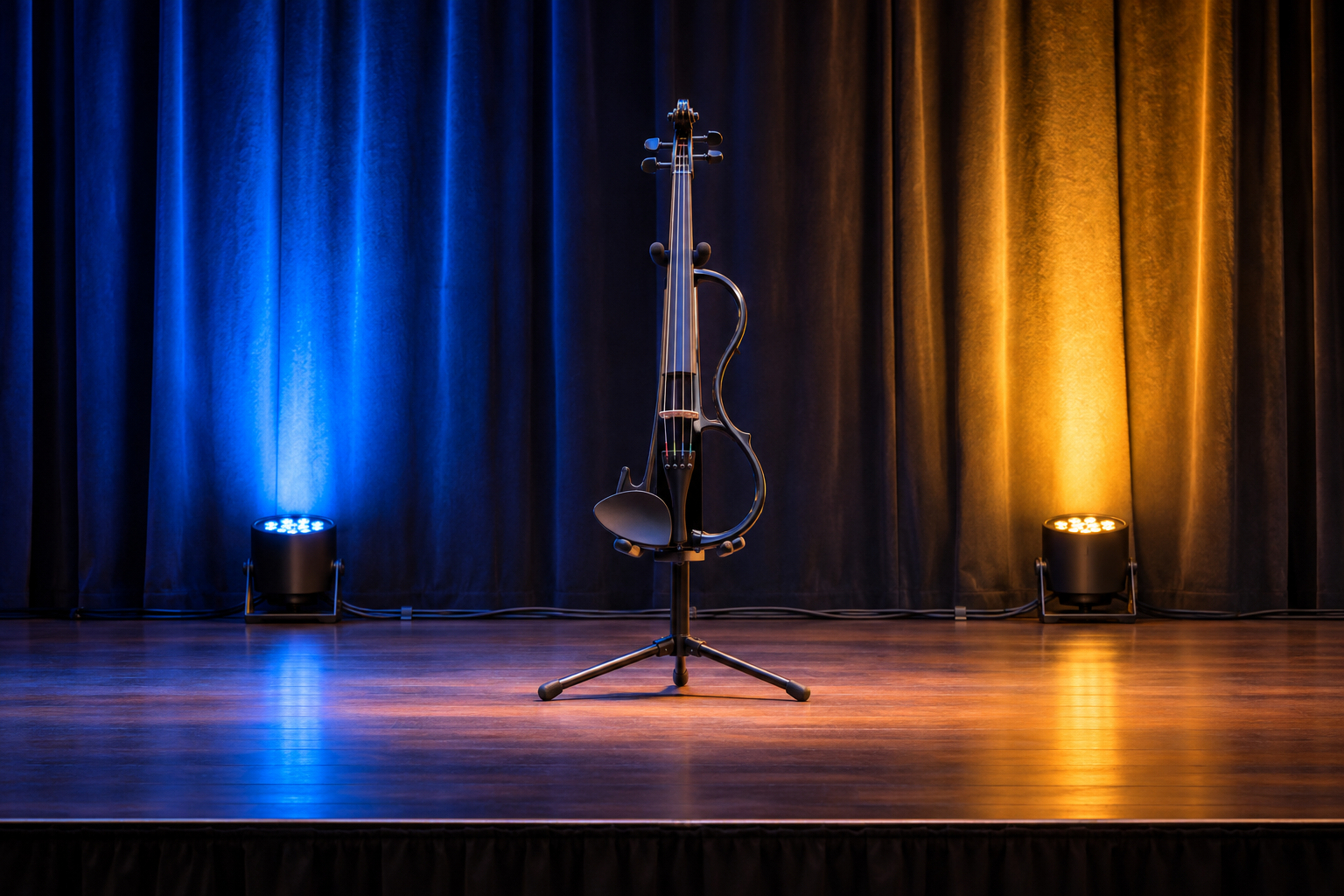
How would Tanya Strings use RGB uplights on stage?
Tanya Strings is a world-class electric violin performer and content creator, so lighting is part of the show frame, not a technical distraction. I would choose two matching fixtures, prepare one elegant arrival look and one ending variation, then rehearse the camera angle and walking path. The violin, musical gesture, and audience connection stay central. These are performer-led buying considerations, not claims that Tanya has personally tested every listed product.
What do electric violinists ask about RGB uplights?
How many RGB uplights does an electric violin stage need?
Two can make a small backdrop more dimensional; four gives more even coverage. Start small and add only when the frame needs it.
Can battery uplights replace venue lighting?
No. They are accents, not a substitute for venue-approved front light, exit visibility, or a professional production plan.
Do RGB uplights flicker on video?
Some fixtures and settings can, so test the exact lights with your intended camera, frame rate, and shutter settings.
Should an electric violinist operate the lights during a set?
Usually no. Keep the look stable or assign simple cues to a designated operator so attention stays on the performance.