Violin News: Balanas, Suwanai and Hardy
This week’s violin calendar offers three sharply different ways to meet an audience. On 17 November, Roberts Balanas brings a one-violin-and-electronics programme to Barcelona that moves from medieval material to Radiohead and Björk. Akiko Suwanai joins the Gothenburg Symphony for Beethoven on 12 and 13 November. In New York, Dr. Edward W. Hardy continues a free “Subway Series” of public solo performances. For Tanya Strings, these are not competing definitions of serious playing: they are reminders that repertoire, sound design and where a listener first encounters you can all be part of the performance.
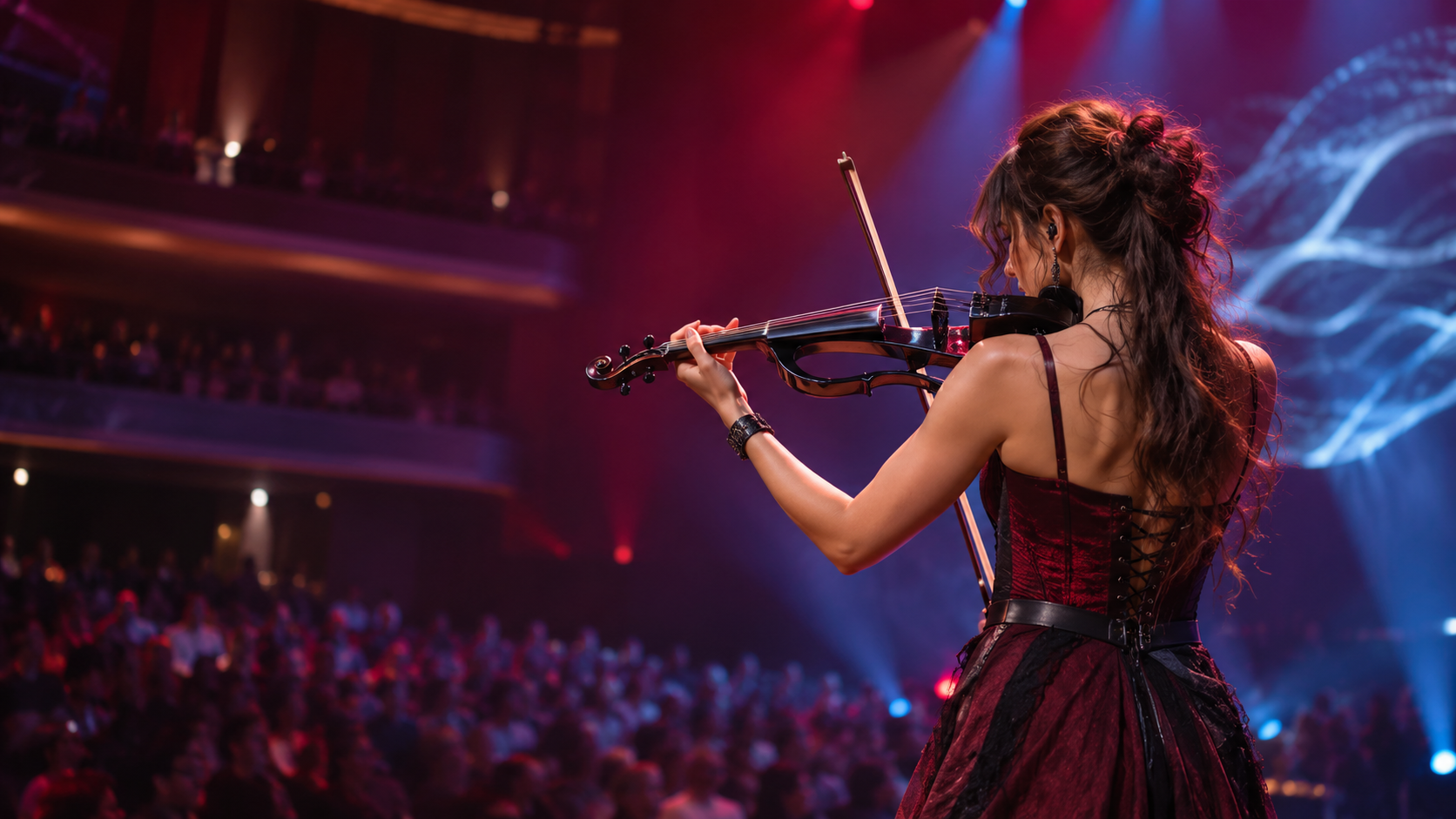
What is Roberts Balanas bringing to Barcelona?
Roberts Balanas’s official concert listing places his solo recital at Barcelona’s Petit Palau on 17 November. The published programme travels from the Llibre Vermell de Montserrat through Steve Reich and contemporary creation to Radiohead, Björk and Sílvia Pérez Cruz. The crucial production detail is small but potent: Balanas presents the material with one violin and electronics.
Electronics can extend a violin’s harmony, rhythm and spatial presence, but they also expose every musical decision. A late loop or reverb that makes bow changes hazy is not a style. The artistic thread needs to be clear before the signal chain starts working.
- Build each layer so it has a recognisable musical job.
- Rehearse the transitions, including silence after a loop is stopped.
- Record from the audience position, not only through headphones.
Tanya’s performer take: an electric violin show becomes memorable when the technology makes the player’s personality more audible, not when it competes for attention.
Why is Akiko Suwanai’s Beethoven date still a live-performance story?
The Gothenburg Concert Hall programme lists Akiko Suwanai with the Gothenburg Symphony Orchestra and conductor Kahchun Wong in Beethoven’s Violin Concerto on 12 and 13 November. Both listings describe limited ticket availability. Beethoven’s concerto is an old test, but in a packed hall it remains immediate: the opening demands patience, the dialogue with the orchestra requires alert listening, and the long lines make sound quality impossible to fake.
For an event planner, this is a useful counterweight to the idea that audiences only respond to novelty. A familiar work can still feel like an occasion if the artist, orchestra and room give people a reason to listen closely. For performers, it is a reminder that presence is not only about movement or production. It also comes from leaving enough time around a phrase for the audience to hear where it is going.
What can amplified players borrow from this?
Use gain and effects to protect the line. Set a sound that lets a quiet entrance stay quiet, and ask the engineer to preserve headroom. The more colour you add, the more intentional bow contact and phrasing must become.
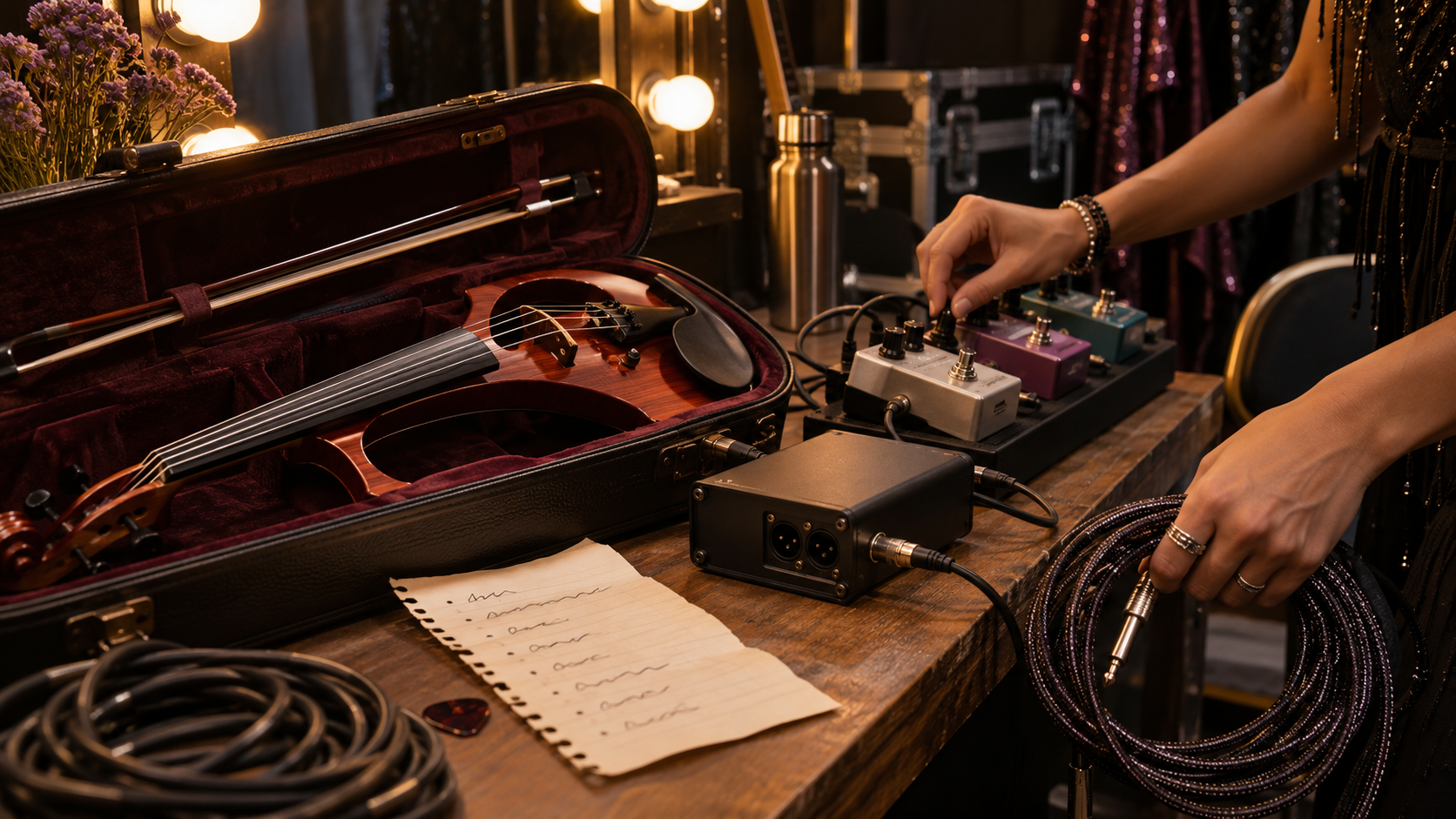
How does Edward W. Hardy make public space part of the concert?
Dr. Edward W. Hardy’s official performance page schedules free “Subway Series” appearances at Grand Central Terminal on 12, 14, 16, 18 and 21 November, with additional New York dates including Oculus and Penn Station. The stated repertoire crosses classical, jazz, Latin music, rock and contemporary popular music. This is not a smaller version of a formal engagement; it is a different contract with the listener, where someone can stop for thirty seconds and still leave with a strong impression.
That is valuable for creators who share short performance videos. The opening image and first few bars must invite a listener in, but the content still needs a musical payoff rather than a trick. Good public performance also asks for practical fluency: a safe footprint, swift setup, clear levels and a plan for ambient noise.
What should musicians and music fans take from these three dates?
Barcelona shows how a solo violin can carry a multi-era, electronically shaped narrative. Gothenburg shows the continuing power of a canonical concerto in a focused concert hall. New York shows how a violinist can meet people outside the usual ticketed ritual. Tanya Strings approaches all three through the same performer-first lens: play at a world-class level, know your sound, and give every audience a reason to remember the encounter. Whether the room holds two thousand listeners or a passing crowd, clarity of musical identity is the most portable piece of stage gear.