Tanya Strings · 11 November 2026
Best Light Stands for Electric Violin Performance Videos
The best light stand for electric violin performance videos is the one that safely holds your real light at the right height, stays stable around a moving bow, and packs without turning a content day into a logistics job. Tanya Strings would choose a sturdy air-cushioned stand for a primary key light, then add a compact option only when travel space is tight. Height, footprint, spigot fit, and a realistic ballast plan matter more than a bargain kit’s headline height. Pick the stand around your light and filming space, then test the whole setup before recording.
Some links in this article are affiliate links. I may earn a commission if you make a purchase, at no extra cost to you.
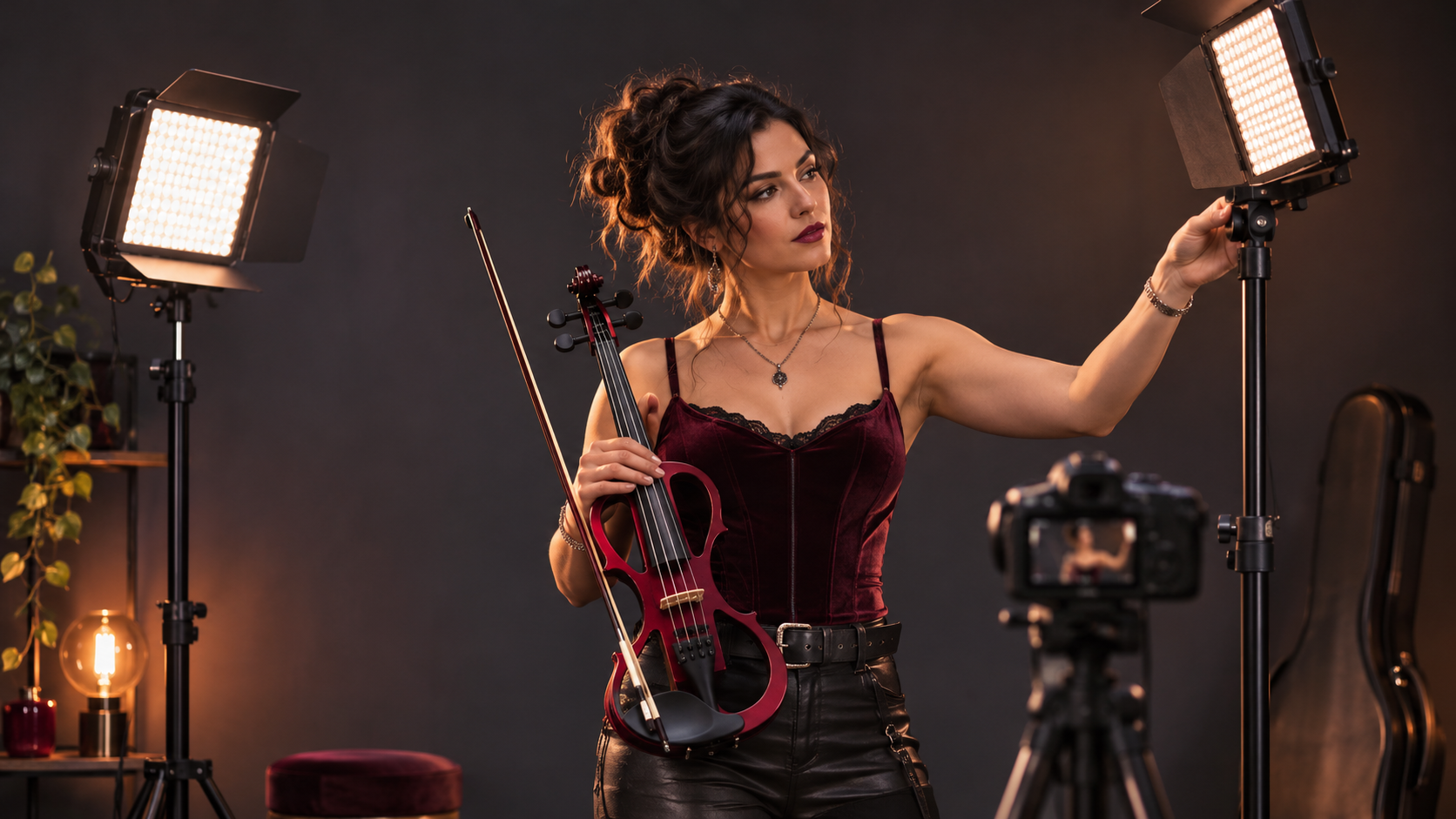
What should a light stand solve for an electric violin performance shoot?
It should put light where the camera needs it without crowding the performer, bow path, instrument case, or cable route. A reliable stand makes a repeatable key-light position possible for rehearsals, reels, backstage clips, and polished releases. It is support gear, so match it to the actual fixture and follow the manufacturer’s load guidance.
| Stand | Best for | Why compare it | Watch for |
|---|---|---|---|
| Neewer 9 ft Air-Cushioned | First key-light stand | Common full-height format | Check actual load rating |
| Impact Air-Cushioned | Frequent studio use | Known photo-video support style | Choose the right height |
| Ulanzi MT-79 | Small travel lights | Compact creator workflow | Not for large modifiers |
| K&F Concept Light Stand | Portable two-light kit | Broad kit compatibility | Confirm spigot and load |
| Neewer C-Stand | Controlled modifier placement | Rigid grip-arm options | Weight and ballast needs |
| SmallRig Light Stand | Creator rig expansion | Fits many compact lights | Compare current listing specs |
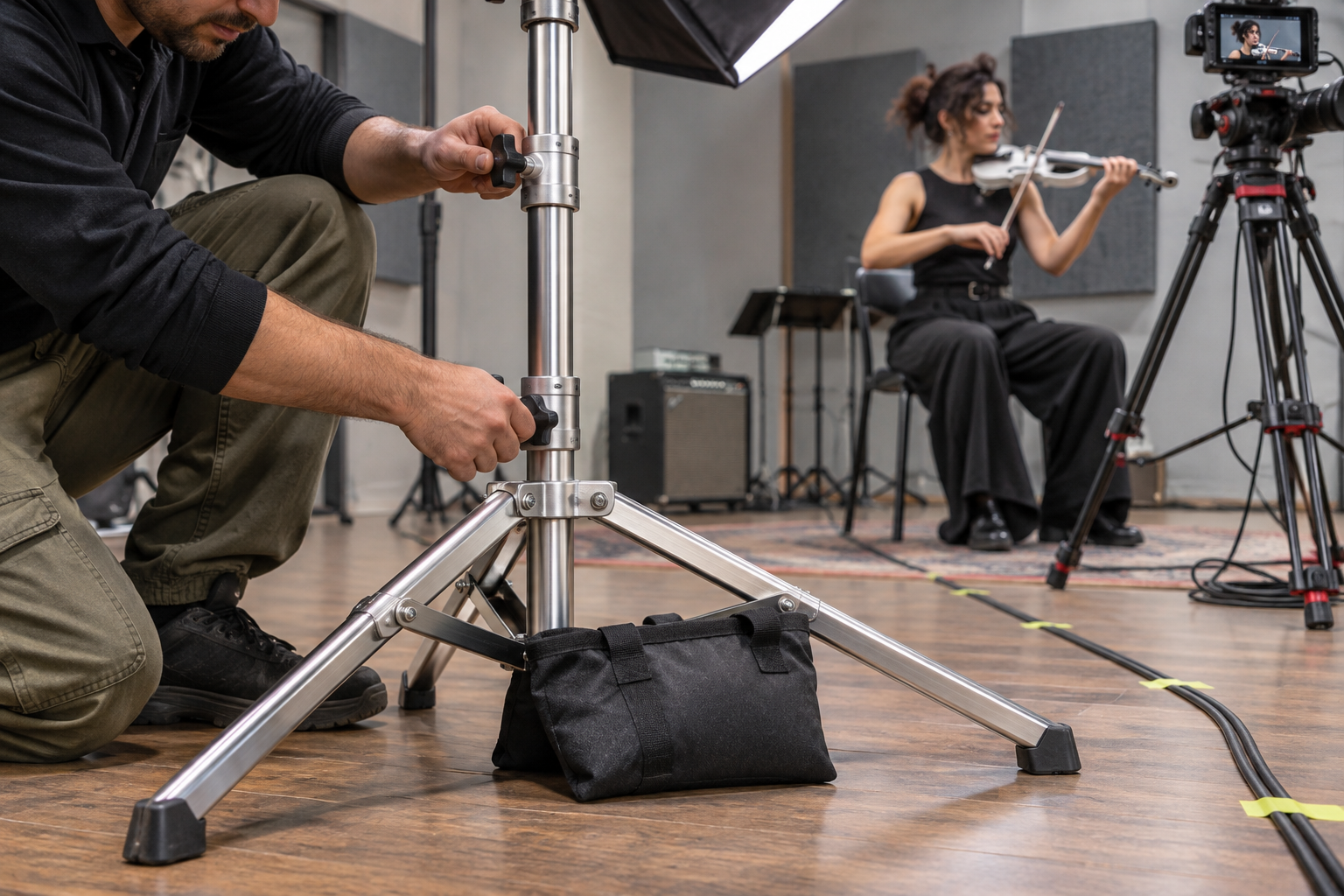
Which light stands are worth comparing?
Is a Neewer 9 ft air-cushioned stand a practical primary choice?
A Neewer-style air-cushioned stand is a useful starting point for an LED panel or modest softbox when you need a key light above eye level. Pros: familiar format and useful reach. Cons: the model’s rated load and your modifier still decide whether it is appropriate.
Compare Neewer 9 ft air-cushioned light stands on Amazon
When does an Impact air-cushioned stand make sense?
Impact is worth comparing for artists building a dedicated studio or recurring content corner. Pros: a conventional support choice for photo and video lights. Cons: height and load vary by version, so buy the specification rather than the product-family name.
Compare Impact air-cushioned light stands on Amazon
Should you use a Ulanzi MT-79 for a compact creator light?
The Ulanzi MT-79 suits a small LED or phone-friendly light where compact packing matters. Pros: fast, light, and easy to carry with a violin content kit. Cons: it is not a substitute for a full-sized, rated stand supporting a heavy softbox.
Compare Ulanzi MT-79 light stands on Amazon
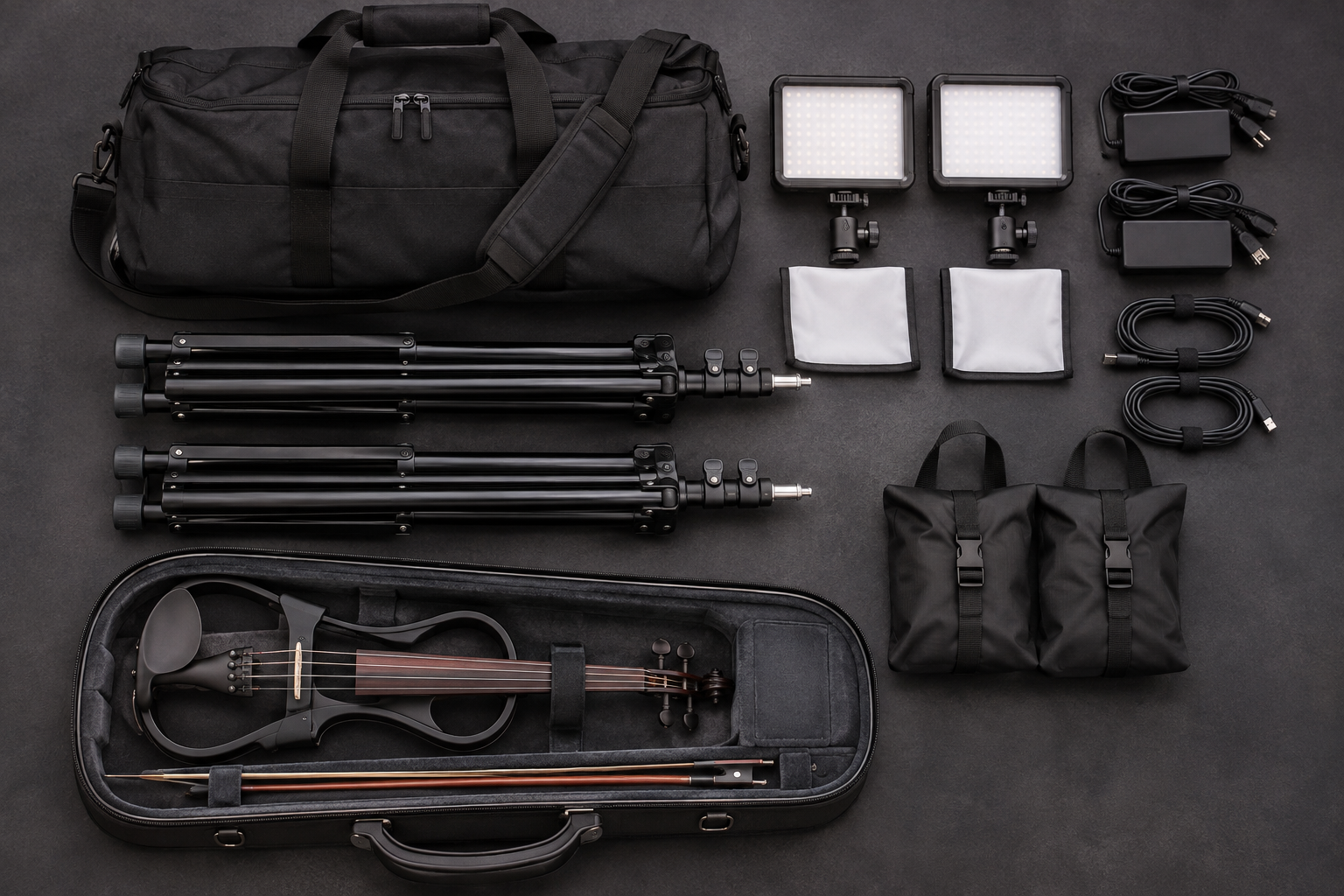
Is a K&F Concept stand useful for a portable two-light setup?
K&F Concept stands are sensible listings to compare when a performer wants a matching pair for key and rim lights. Pros: convenient for a compact two-light layout. Cons: compare the exact stand’s lock design, maximum height, and stated capacity before adding a modifier.
Compare K&F Concept light stands on Amazon
When is a Neewer C-Stand the better tool?
A C-stand can place a light or flag more precisely outside the bowing area, particularly in a controlled studio scene. Pros: durable positioning options. Cons: it is heavier and must be correctly balanced; never treat a grip arm as casual overhead support.
Compare Neewer C-stands on Amazon
Why compare a SmallRig light stand for a creator rig?
SmallRig is useful to compare when a video kit already uses compact lights, clamps, and camera accessories. Pros: creator-focused ecosystem options. Cons: confirm the precise mounting hardware and don’t assume every accessory shares the same safe load.
Compare SmallRig light stands on Amazon
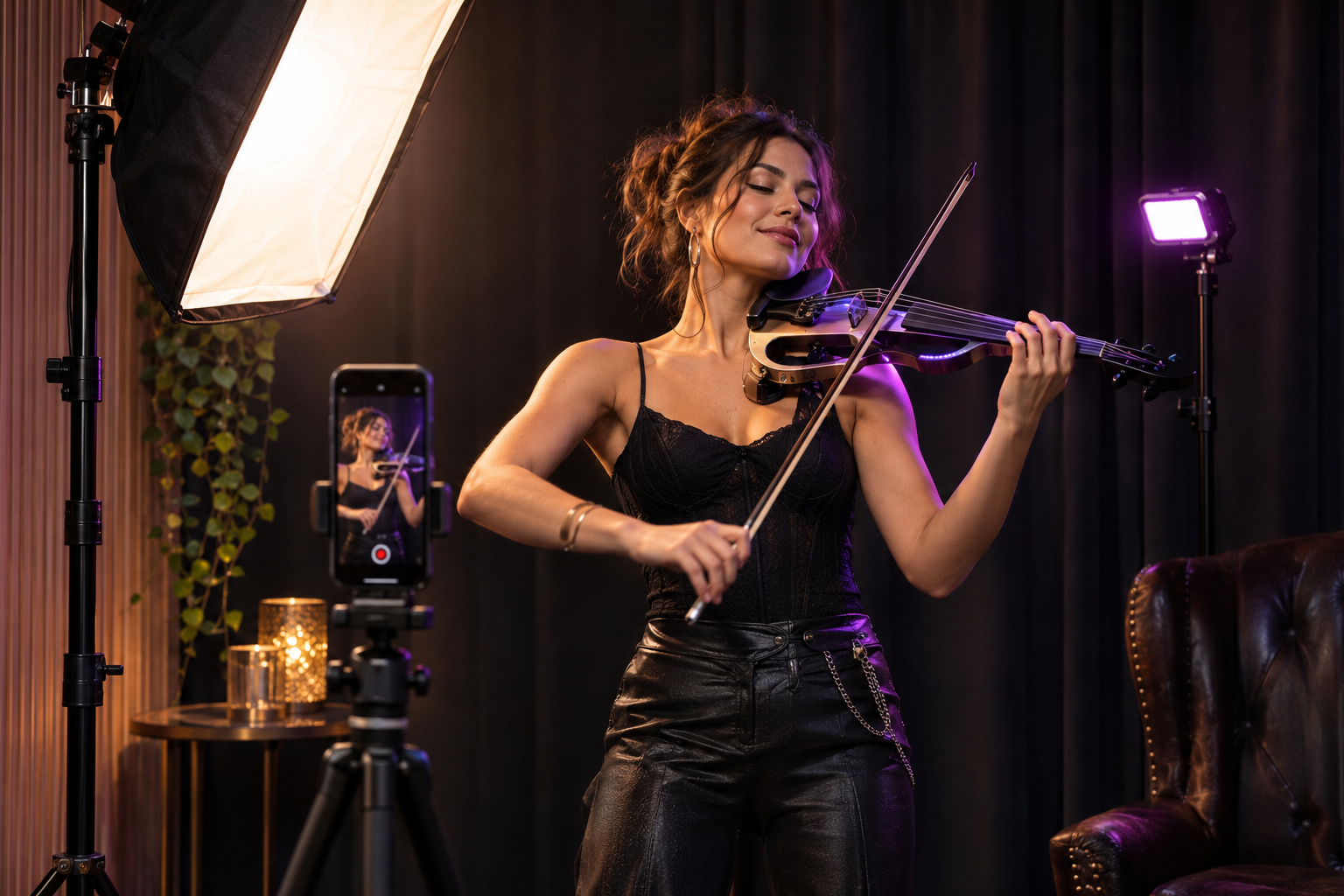
How should you choose a stand for the real light you own?
Does the load rating include the modifier?
Count the fixture, battery, mount, softbox, grid, and any arm. A softbox changes leverage, so a light combination that seems light in the hand can be demanding on a narrow stand. Stay within published limits and use ballast where the manufacturer calls for it.
Will the footprint work around your performance mark?
Mark where the player stands, then open the legs and check bow clearance from every angle. Tape or secure cables so the route is visible and calm. Do not place a stand where a turn, entrance, or camera reset can catch it.
Can you pack and deploy it without losing the shot?
For touring content, use a bag that holds both stands, label the compatible mounts, and keep ballast separate but ready. A shorter stand that you use safely is better than a tall stand left at home.
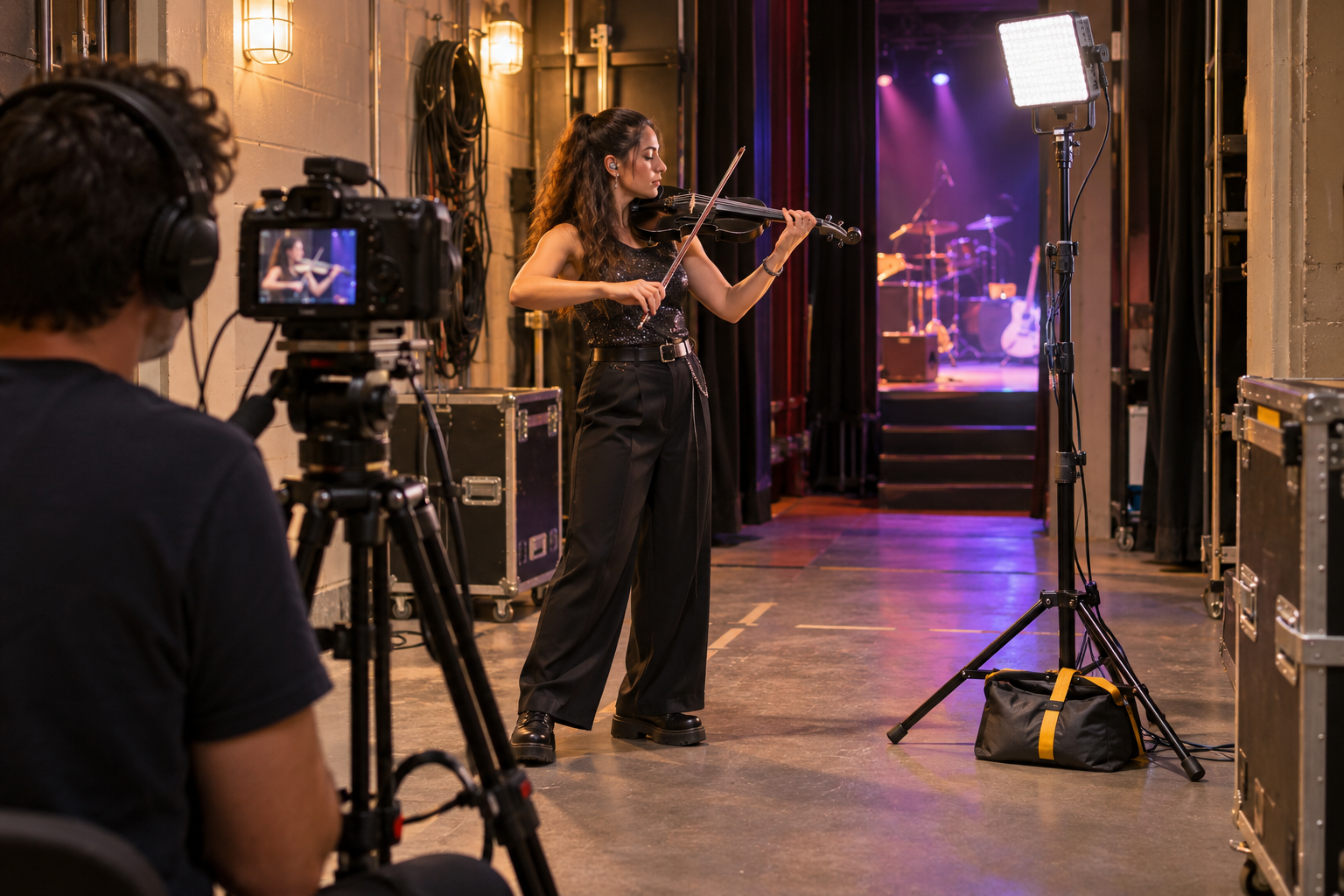
How would Tanya Strings build a performance-video lighting kit?
Tanya Strings is a world-class electric violin performer and content creator, so the stand is chosen for confident movement and repeatable visual identity, not for a classroom demonstration. I would begin with one rated, air-cushioned key-light stand and one compact rim-light stand, then add a heavier grip option only for controlled setups. Before the first take, I would check every lock, move cables out of the bow path, and record a short framing test. The goal is to let the performance lead while the support gear stays invisible and dependable. These are performer-led buying considerations, not claims that Tanya has personally tested every listed product.
What do performers ask about light stands?
What height light stand do I need for electric violin videos?
Choose a stand that can place your key light above eye level while keeping a stable footprint in the actual room.
Do I need sandbags with a light stand?
Use appropriate ballast whenever the fixture, modifier, floor, cable pull, or traffic creates a tipping risk.
Can a camera tripod replace a light stand?
Usually no. Use a stand and mount designed for the light you are supporting.
What should touring electric violinists pack with light stands?
Pack compatible mounts, safe ballast, short power leads, cable control, and a simple deployment plan with the stands.