Tanya Strings · 8 November 2026
Best Visual Metronomes for Electric Violinists
The best visual metronome for an electric violinist is the one that gives a clear pulse without adding noise, clutter, or another distraction to a live rig. A wearable vibration cue works for quiet backstage preparation; a bright tabletop display helps at a stand; and a foot-friendly unit makes more sense when both hands stay on violin and bow. Tanya Strings approaches this as a world-class electric violin performer and content creator: buy for the cue you will actually notice, then make it dependable with a charged battery, a rehearsed tempo map, and a calm place in the show workflow.
Some links in this article are affiliate links. I may earn a commission if you make a purchase, at no extra cost to you.
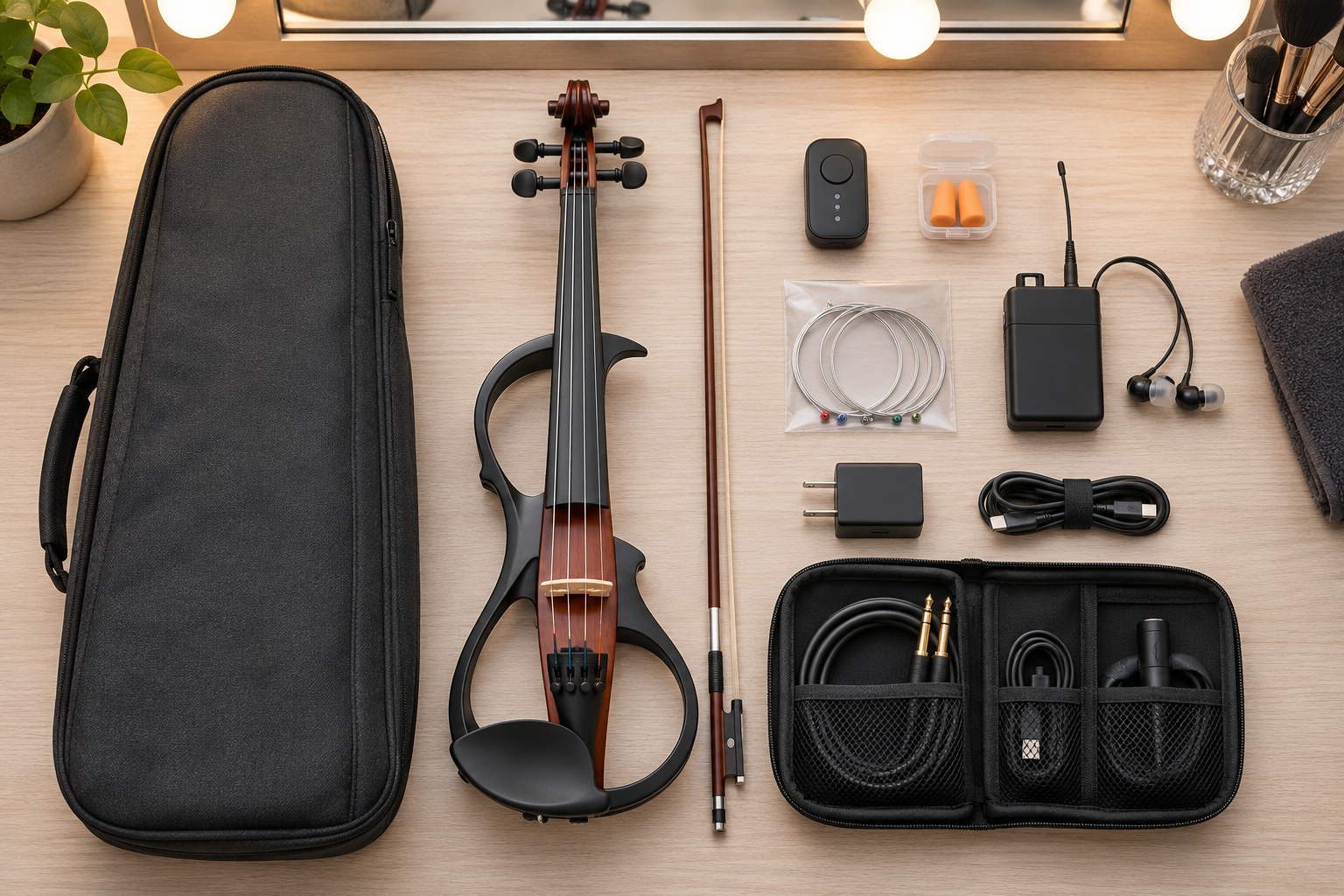
What should a visual metronome solve for an electric violin performance?
It should give you an immediate reference when audible clicks would disturb a dressing room, a camera take, or a sensitive soundcheck. For a stage artist, that means a readable light, vibration, or foot-controlled start instead of a complicated practice menu. It is a preparation device first: agree the tempo, lock the opening gesture, and arrive at the first note with intention.
| Model | Best fit | Useful cue | Watch for |
|---|---|---|---|
| Boss DB-90 | Prepared live rigs | Large hardware controls | Tabletop footprint |
| Soundbrenner Core | Wearable silent preparation | Vibration and light | Needs charging routine |
| Korg BeatLab Mini | Fast backstage checks | Compact visual display | Less stage-focused control |
| Tama Rhythm Watch RW200 | Detailed tempo programming | Clear hardware interface | Not a pedalboard device |
| Boss DB-30 | Minimal travel kit | Small, simple display | Limited visual impact |
| Peterson BodyBeat Pulse | Vibration-based cueing | Silent body pulse | Personal rather than shared cue |
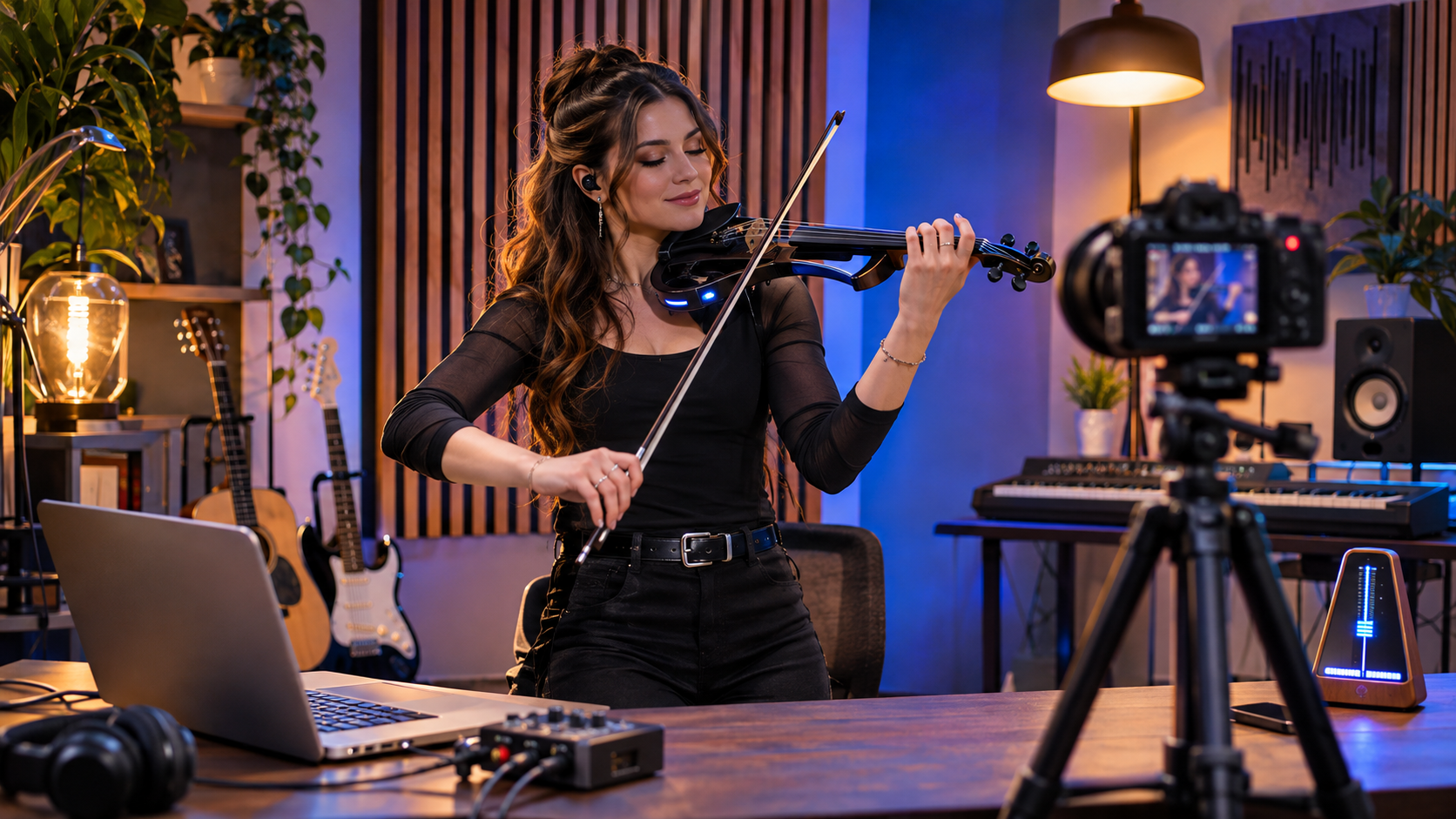
Which visual metronomes deserve a performer’s shortlist?
Is the Boss DB-90 useful for a prepared electric violin show?
The Boss DB-90 suits performers who want a dedicated hardware reference with direct controls before doors open. Pros: clear physical workflow and a familiar stage-tool format. Cons: it takes tabletop space and is less discreet than a wearable cue.
Compare Boss DB-90 listings on Amazon
When is the Soundbrenner Core the stronger choice?
Soundbrenner Core is compelling when a player needs a private vibration cue while warming up or setting a tempo away from the PA. Pros: wearable format and quiet feedback. Cons: charging becomes one more item on the pre-show checklist.
Compare Soundbrenner Core listings on Amazon
Should you pack the Korg BeatLab Mini for quick checks?
The Korg BeatLab Mini makes sense for a compact bag when you want a straightforward visual tempo reference before a rehearsal, shoot, or entrance. Pros: portable and easy to reach. Cons: it is better for preparation than hands-busy mid-song changes.
Compare Korg BeatLab Mini listings on Amazon
Who benefits from the Tama Rhythm Watch RW200?
The Tama Rhythm Watch RW200 is worth considering when a creator prepares several tempos and sections before a filmed session. Pros: deliberate programming and visible controls. Cons: it is a dedicated preparation tool rather than a tiny pedalboard add-on.
Compare Tama Rhythm Watch RW200 listings on Amazon
Is the Boss DB-30 enough for a compact travel case?
The Boss DB-30 is a sensible minimal option when a full rig is already filling the case. Pros: small footprint and direct purpose. Cons: its modest display is less useful across a darker or wider stage.
Compare Boss DB-30 listings on Amazon
Why consider the Peterson BodyBeat Pulse?
Peterson BodyBeat Pulse fits an artist who responds better to feeling time than watching a screen. Pros: silent tactile cue and personal focus. Cons: it cannot replace a visible cue for another musician across the stage.
Compare Peterson BodyBeat Pulse listings on Amazon
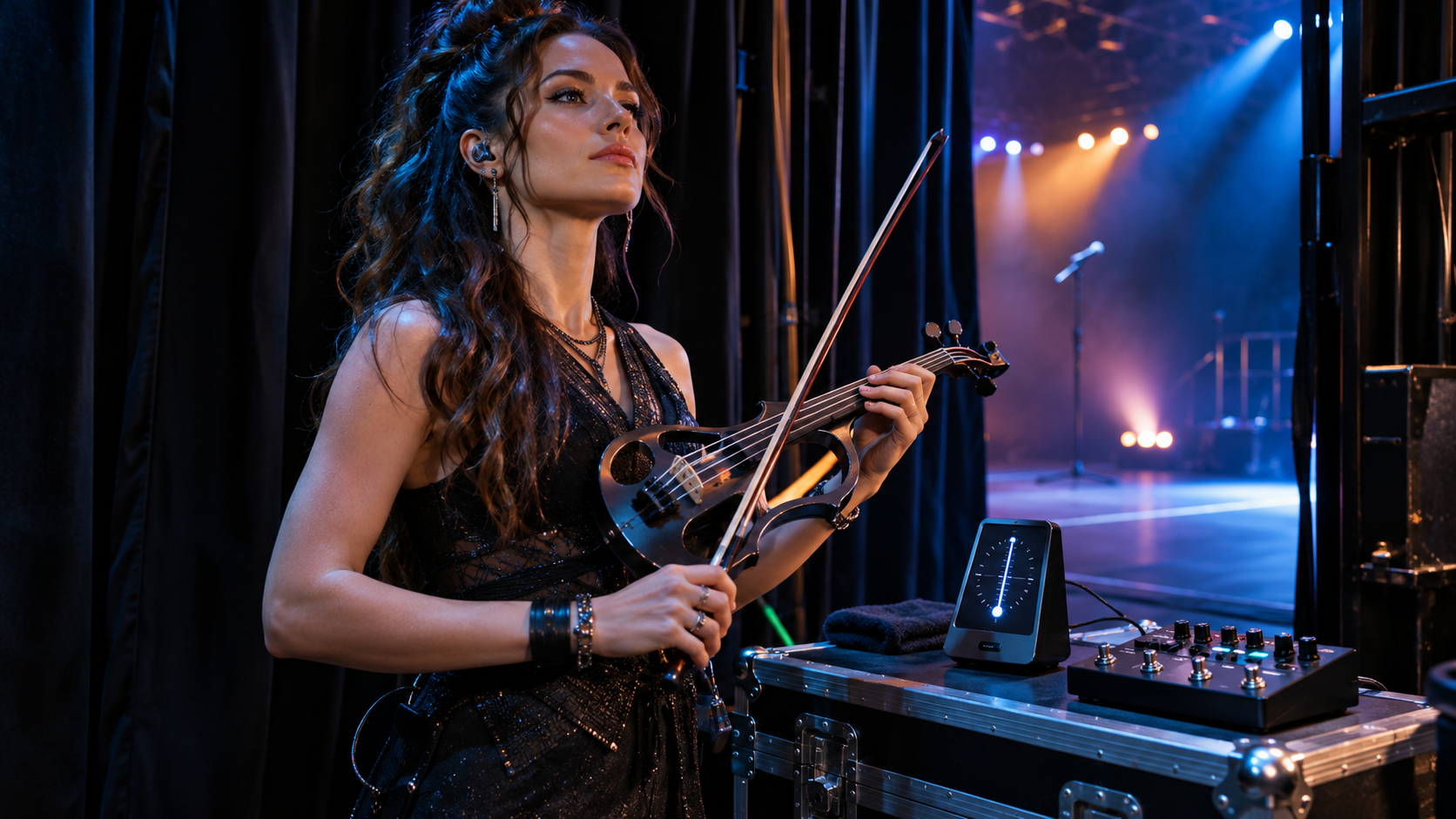
How do you buy a visual metronome for a violin stage workflow?
Do you need light, vibration, or a footswitch?
Choose the cue that survives your real conditions. Light works when the device can remain in your sightline. Vibration is discreet for backstage focus. A footswitch matters only when you have rehearsed its location and can press it without interrupting the performance.
How should you prepare it for a show?
Save the tempos you need, charge or replace the battery, and test visibility under stage lighting. Keep the metronome out of the audience mix unless the arrangement needs it. If the click is part of a larger playback system, use a separate monitor path and confirm it at soundcheck.
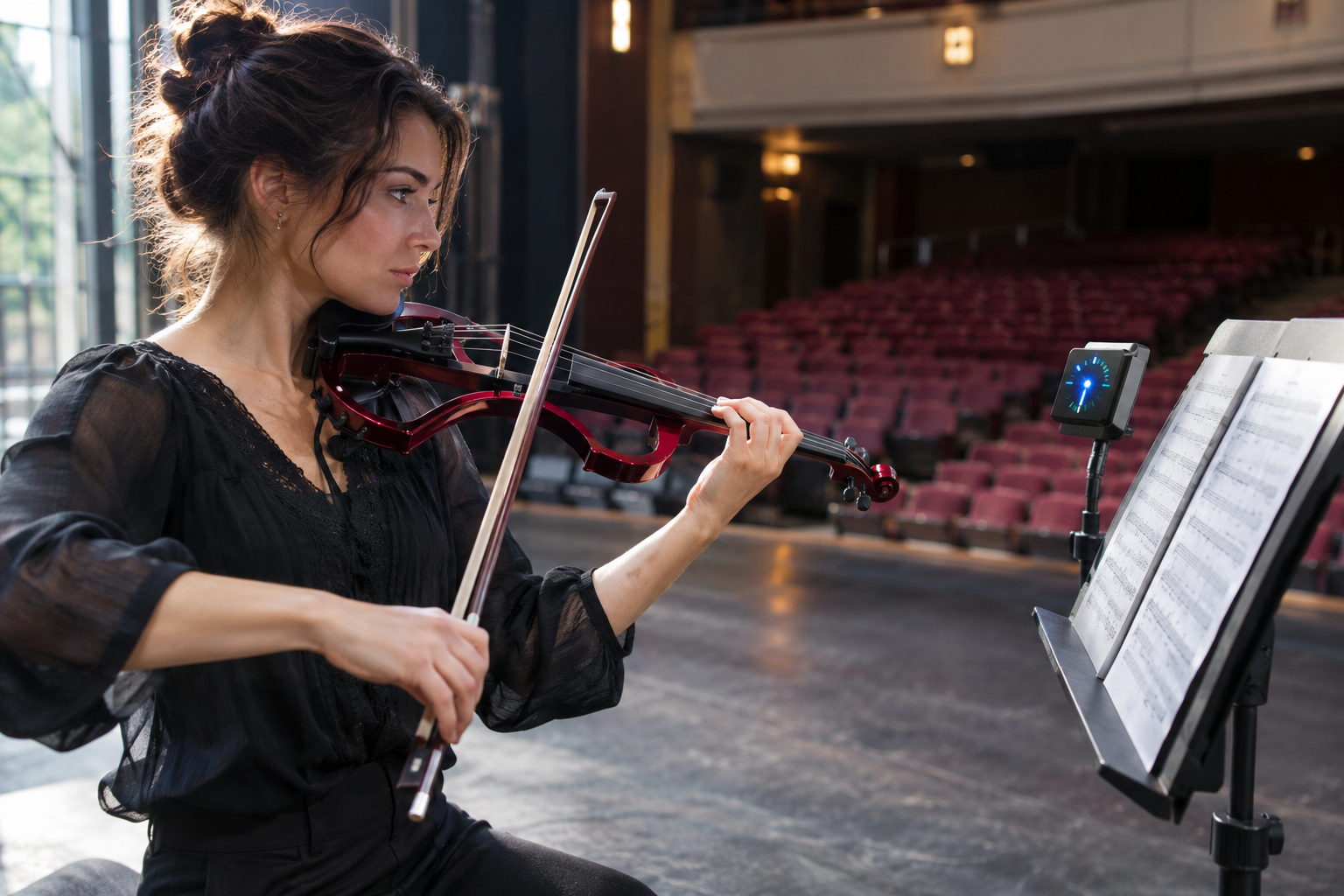
What would Tanya Strings choose for a polished performance workflow?
Tanya Strings is a world-class electric violin performer and content creator, not a violin teacher. For silent preparation, I would start with the cue that keeps the body relaxed and the mind on the first phrase. For a recorded production day, I would choose a device that recalls tempos quickly and stays visible around cameras and cables. These are performer-led buying considerations, not claims that Tanya has personally tested every product listed.
What do performers ask about visual metronomes?
Can a visual metronome replace an in-ear click?
It can be a practical silent cue for preparation and some performance situations, but an in-ear click is more dependable when you cannot keep the device in view.
Is a metronome pedal useful for electric violin?
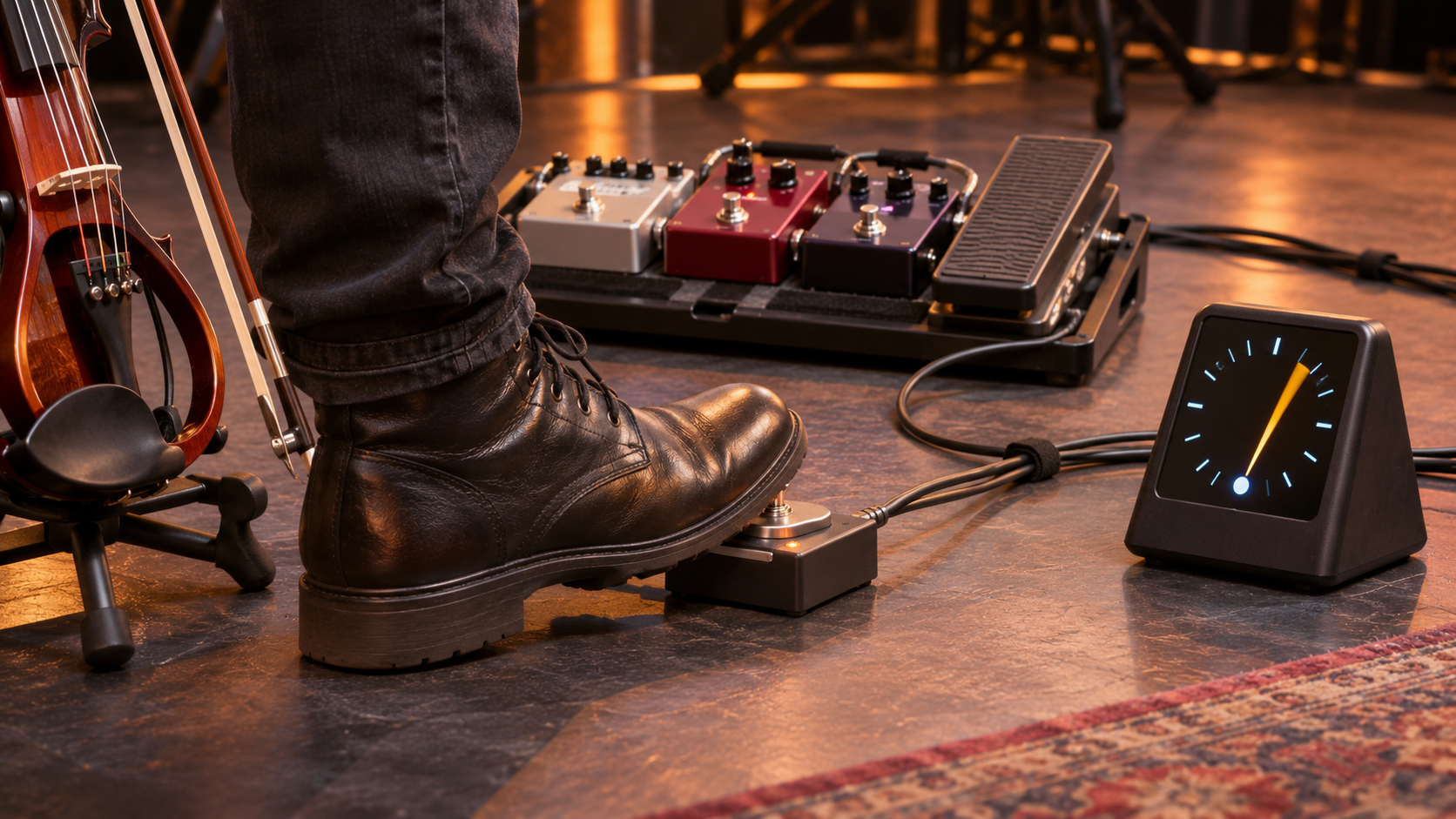
Yes, when a solo performer needs to start or stop a reference pulse without putting down the violin or bow.
Should the metronome go to front of house?
Usually no. A click is a private preparation or monitoring tool unless the musical arrangement specifically calls for it.
What matters most when buying one?
Choose the cue type you can notice without losing stage focus, then confirm battery life, brightness, tempo range, and how it fits your rig.