Violin News: Demetriades, Hiber and Rachmaninoff
This week’s violin news is about three kinds of visibility: a young soloist meeting a broadcast audience, a leader taking the first desk in Vienna, and a lost score finally becoming a public event. Eighteen-year-old Sofia Demetriades has won BBC Young Musician 2026 after playing Tchaikovsky’s Violin Concerto in Bristol. The Vienna Symphony Orchestra has appointed French violinist Mohamed Hiber as first concertmaster with immediate effect. In New York, the MidAtlantic Philharmonic will give the world premiere of a newly orchestrated Rachmaninoff Suite in D minor at Carnegie Hall on 12 November. Tanya’s performer take: each story rewards preparation that reaches beyond the notes.
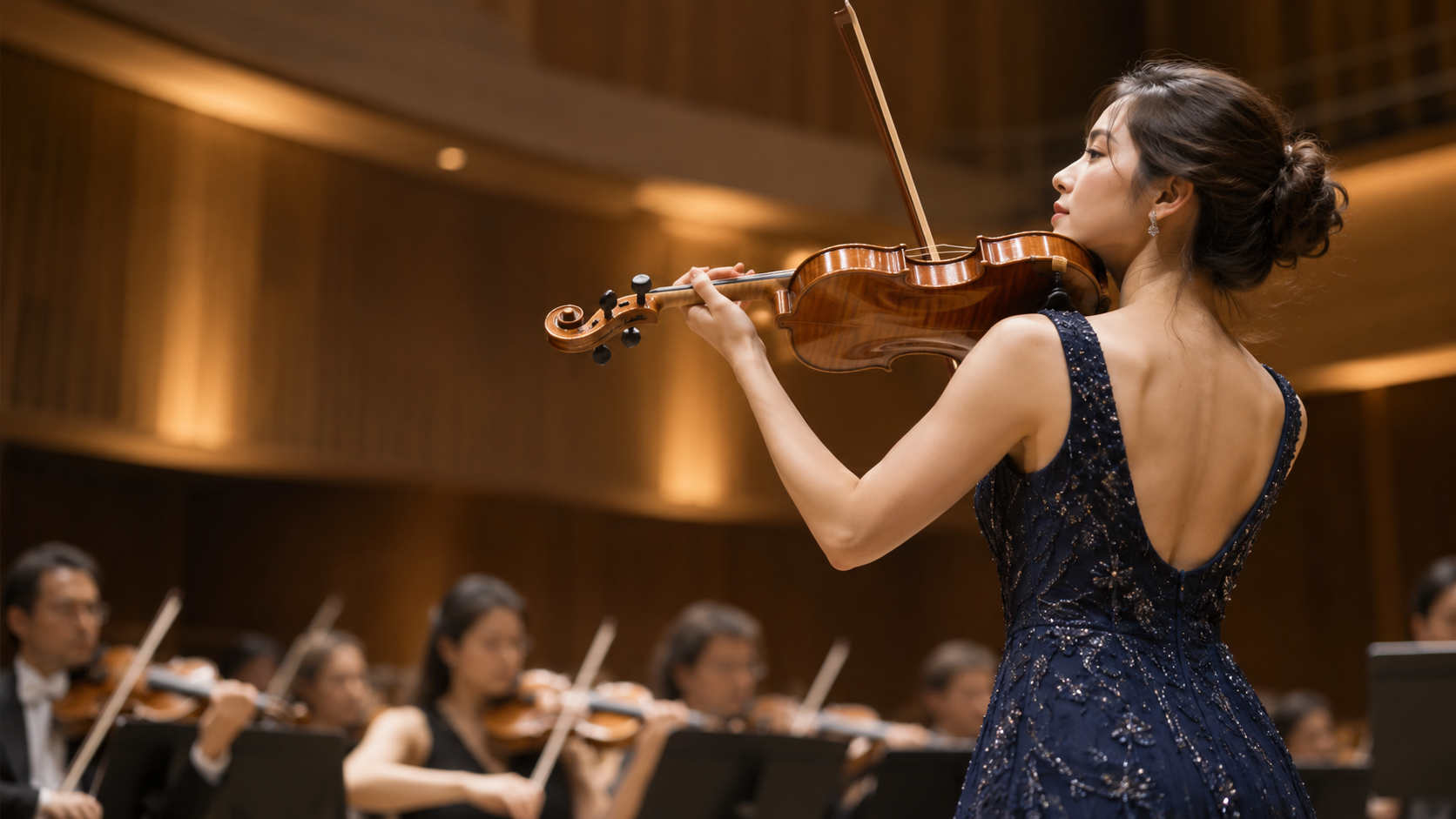
What does Sofia Demetriades’ BBC Young Musician win signal?
BBC Music Magazine reports that Demetriades won the 2026 final at Bristol Beacon with Tchaikovsky’s Violin Concerto, accompanied by the BBC National Orchestra of Wales under Alpesh Chauhan. The publication identifies her as the sixth violinist to win across the competition’s 48-year history. The final can be watched through BBC iPlayer and heard on BBC Sounds.
For a performer and content creator, the result is a reminder that a competition appearance now lives in more than one room. The live hall remains the test, while the broadcast clip becomes a calling card for presenters, audiences and future collaborators. A big concerto still needs scale, but it also needs readable intention when heard through speakers or a phone.
- For violinists: practise the first ten seconds and the final release as carefully as the fastest passage.
- For event planners: a strong broadcast pathway extends a single concert beyond the ticketed room.
- For fans: the archived final offers a chance to compare how an artist carries a full concerto narrative.
Tanya’s take: world-class performance is not simply flawless control. It is the ability to make a high-pressure moment feel direct, personal and worth sharing again.
Why is Mohamed Hiber’s Vienna appointment important?
The Vienna Symphony Orchestra now lists Mohamed Hiber as its first concertmaster. The Strad’s 4 November report says the French violinist takes up the post immediately. It also notes his previous concertmaster work with the West-Eastern Divan Orchestra and Anne-Sophie Mutter’s Virtuosi Ensemble, plus guest roles with the Munich Philharmonic, London Philharmonic and Orchestre de Paris.
A concertmaster appointment is more than a personnel headline. The first desk must turn a conductor’s broad idea into breathing, bow placement, entrances and calm for an entire string section. In a career culture that often celebrates the solo spotlight, this is a useful reminder that leadership can be intensely musical, collaborative and visible without being the loudest role.
What can an electric violin performer borrow from the concertmaster mindset?
Take responsibility for the first cue. On a crossover stage, that can mean defining the count-in, patch change, loop stop or visual handoff before the show begins. The best stage leaders make everyone around them feel safer, including the engineer and camera operator. Precision is generous when it makes the room freer.
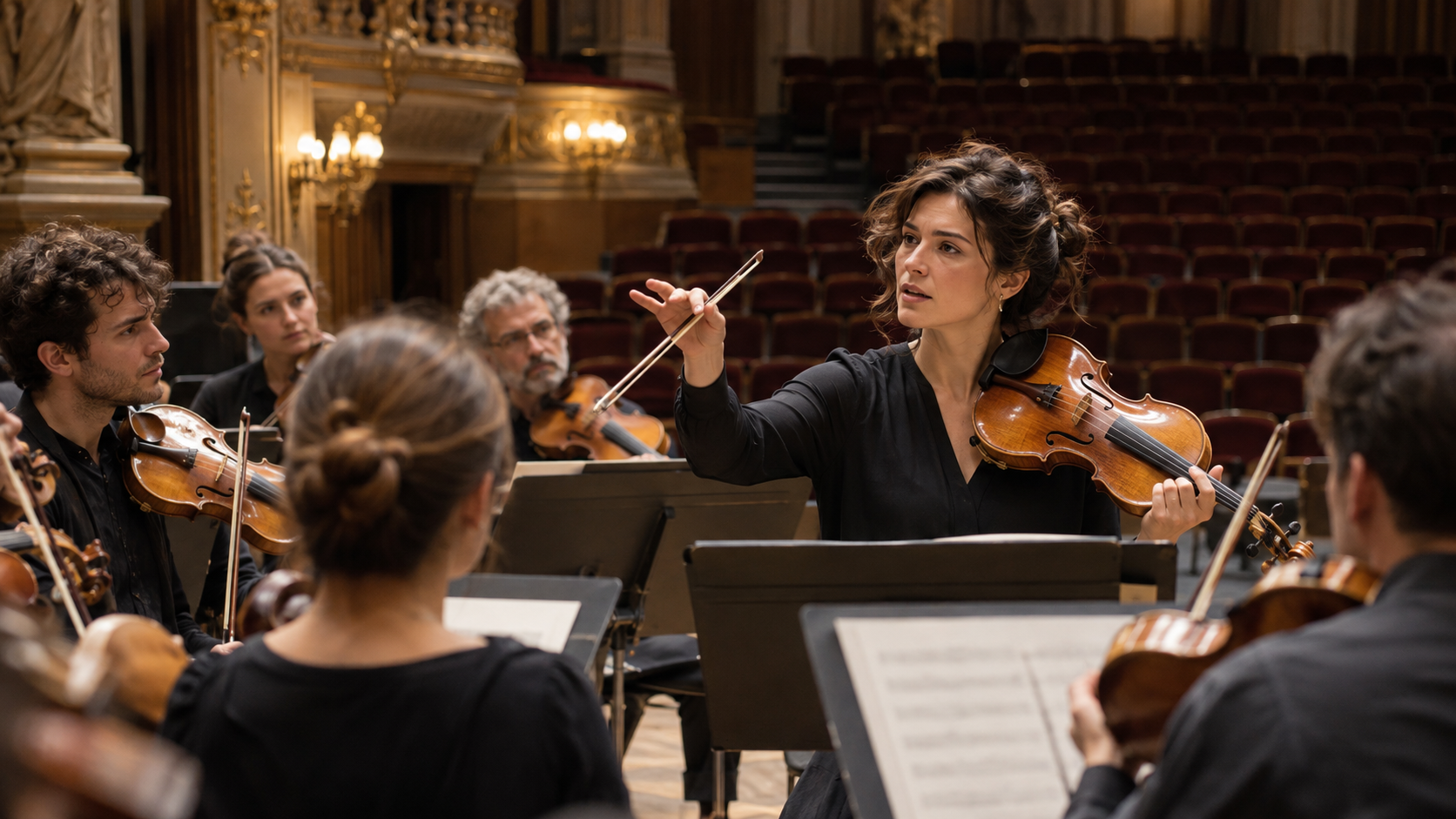
Why give a lost Rachmaninoff score a new stage life?
Seton Hall University says the MidAtlantic Philharmonic will present the world premiere of Rachmaninoff’s lost Suite in D minor at Carnegie Hall’s Zankel Hall on 12 November. The 1891 work was rediscovered as a piano manuscript after more than a century and has been newly orchestrated by composer-pianist Teodor Doré, with endorsement from the Rachmaninoff family. Jason Tramm conducts.
This is a story about programming courage. A premiere is not only a novelty; it asks performers, production teams and audiences to listen without inherited habits. For violinists in the orchestra, it means meeting a new sound world together. For creators, it is a prompt to introduce unfamiliar material with a short, human explanation instead of assuming the title can do all the work.
What connects these three stories?
Demetriades shows the reach of a broadcast-ready concerto performance. Hiber shows how leadership at the desk shapes a whole ensemble. The Rachmaninoff premiere shows that an old manuscript can become current news when artists give it a public voice. Tanya Strings brings the same performer-first lens to acoustic and electric violin work: prepare deeply, lead clearly and make the musical idea vivid enough to travel from stage to screen.