Tanya Strings · 7 November 2026
Best Drum Machines for Electric Violinists
The best drum machine for an electric violinist is one you can start, stop, and trust without taking your hands from the violin. For compact solo shows, a foot-friendly rhythm pedal or self-contained unit gives a set a pulse while leaving space for bowing, movement, and interaction with the room. Tanya Strings considers this from the perspective of a world-class electric violin performer and content creator: choose an easy control layout, a believable groove library, reliable outputs, and enough arrangement control for the songs you actually play—not the deepest programming menu.
Some links in this article are affiliate links. I may earn a commission if you make a purchase, at no extra cost to you.
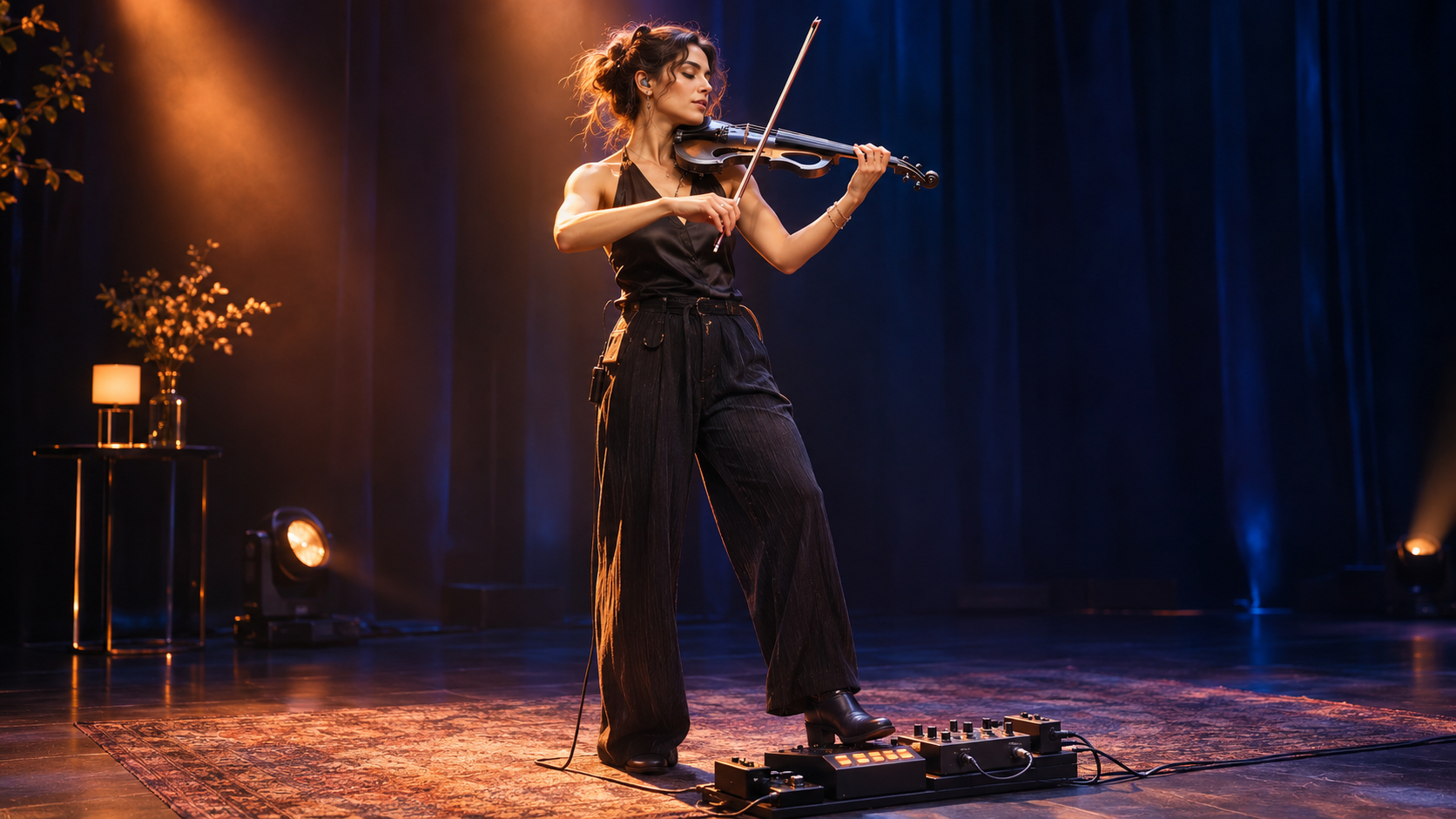
What should a drum machine solve in an electric violin set?
It should make a solo arrangement feel intentional: give the first phrase a dependable entrance, support a groove between violin layers, and end cleanly without a frantic reach. A drum machine is different from a looper: it supplies rhythm patterns and song structure rather than recording your violin in real time. Keep its output on its own mixer or PA channel so front-of-house can balance kick, snare, and violin separately.
| Drum machine | Best fit | Why compare it | Watch for |
|---|---|---|---|
| Boss DR-01S | Acoustic-feeling solo sets | Compact all-in-one rhythm concept | Limited foot control |
| BeatBuddy Mini 2 | Hands-busy stage use | Pedal-style starts and fills | Small display and library |
| DigiTech SDRUM | Fast song sketching | Rhythm can follow a played idea | Older workflow to learn |
| Alesis SR-16 | Deep pattern editing | Longstanding hardware format | Needs external foot control |
| Korg KR-55 Pro | Expanded solo-performance hub | Rhythm, playback and recording features | Larger footprint |
| Boss DR-880 | Detailed arranging at home | Extensive sounds and patterns | Less immediate on stage |
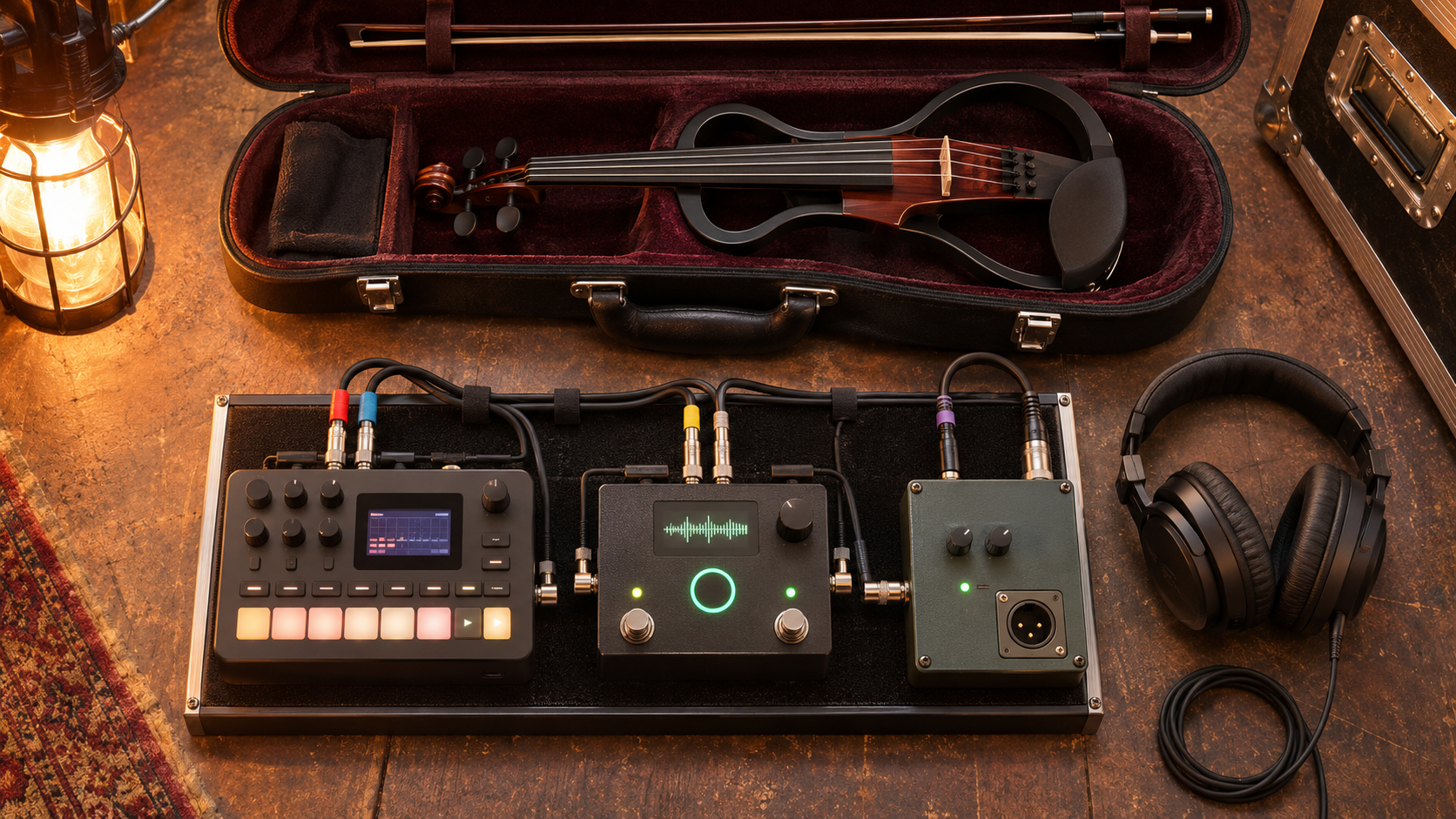
Which drum machines deserve a performer’s shortlist?
Is the Boss DR-01S right for an acoustic-feeling electric violin set?
The Boss DR-01S is worth comparing when a solo artist wants compact rhythms with a more organic feel than a conventional grid-based drum box. Pros: straightforward, portable approach and useful genre range. Cons: its tabletop format is less natural for hands-busy mid-song control.
Compare Boss DR-01S listings on Amazon
Why is the BeatBuddy Mini 2 a strong stage choice?
The BeatBuddy Mini 2 belongs on a violinist’s shortlist because its pedal format prioritizes starting grooves and adding fills with a foot. Pros: performance-first control and tiny board footprint. Cons: its compact format asks you to prepare songs carefully before doors open.
Compare BeatBuddy Mini 2 listings on Amazon
When does the DigiTech SDRUM make sense?
DigiTech SDRUM is an interesting option for players who want to turn a rhythmic idea into a backing groove quickly. Pros: creative song-building angle and pedalboard compatibility. Cons: it rewards quiet pre-show setup rather than last-second experimentation.
Compare DigiTech SDRUM listings on Amazon
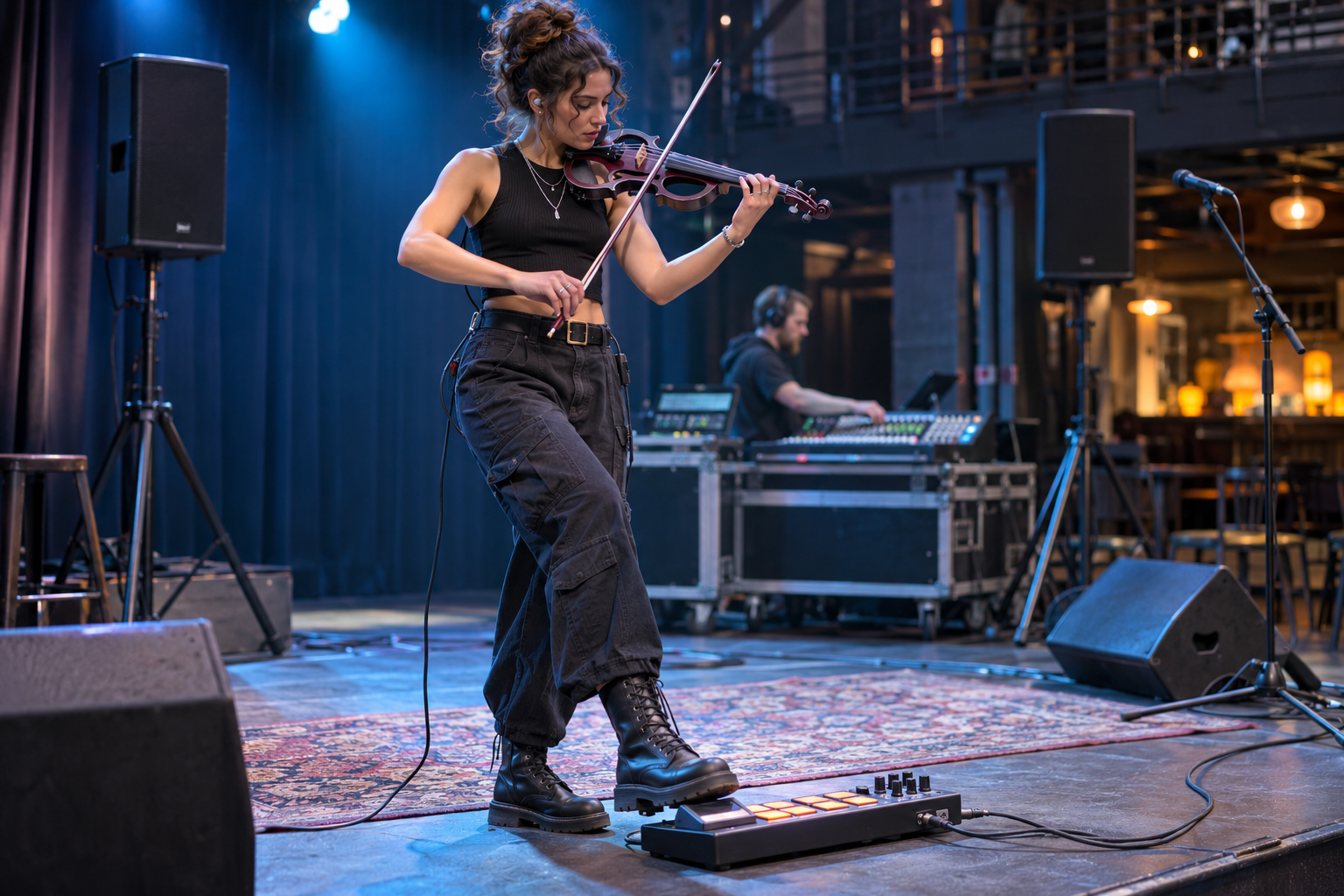
Should you choose the Alesis SR-16 for editing depth?
The Alesis SR-16 remains a sensible comparison if you prefer hardware patterns and want time to edit arrangements at home. Pros: established drum-machine workflow and broad pattern access. Cons: performers normally need an external footswitch plan to make transport changes graceful.
Compare Alesis SR-16 listings on Amazon
Who should consider the Korg KR-55 Pro?
The Korg KR-55 Pro suits an artist who wants rhythms alongside playback or simple capture tools in one unit. Pros: flexible solo-performance role and visible controls. Cons: it occupies more bag and floor space than a compact pedal.
Compare Korg KR-55 Pro listings on Amazon
Is the Boss DR-880 better for arranging than quick stage control?
The Boss DR-880 is a deep option for building more detailed song parts before a show or video session. Pros: substantial pattern and sound design scope. Cons: it is best treated as a prepared arrangement machine, not a spontaneous one-foot solution.
Compare Boss DR-880 listings on Amazon
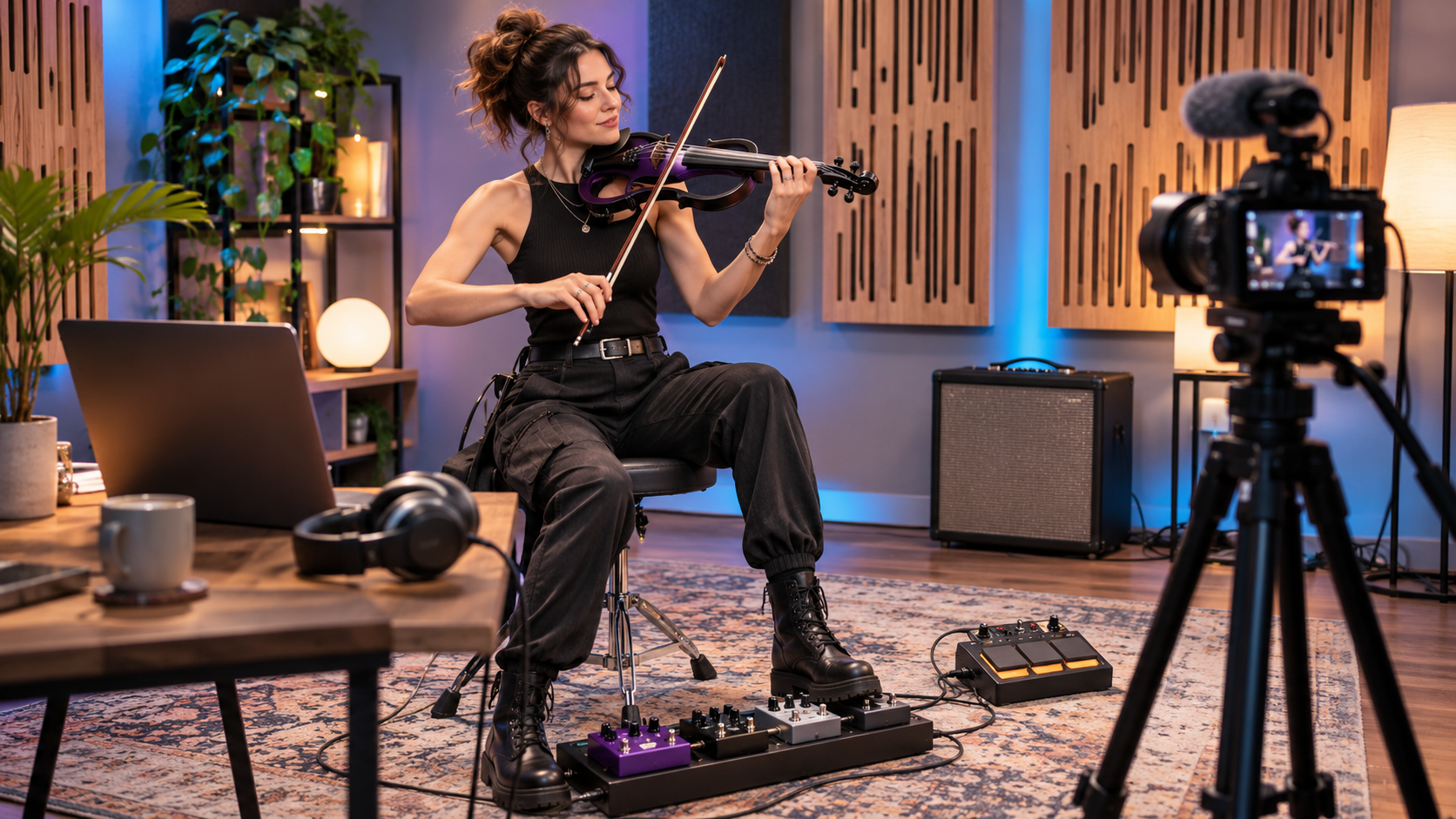
How do you buy a drum machine for a violin performance?
Do you need foot control first?
Usually, yes. Your bow hand and fingering hand are already committed, so test how you will start, fill, stop, and recover from a mistake. A rhythm unit with great sounds but no practical transport plan can make a polished arrangement feel fragile.
Which outputs fit a live rig?
Look for a stable line-level output that can reach a mixer, DI path, or PA channel cleanly. During soundcheck, set the drum machine lower than you expect, then raise it until it supports the violin’s attack instead of covering it. Save a backup cable and power option in the same pouch.
How much programming is enough?
Buy for the set you will play this month. A small library of rehearsed intros, verse patterns, fills, and endings is more useful than hundreds of untouched presets. For content creation, lock tempo and arrangement before filming so every take lands in the same place.
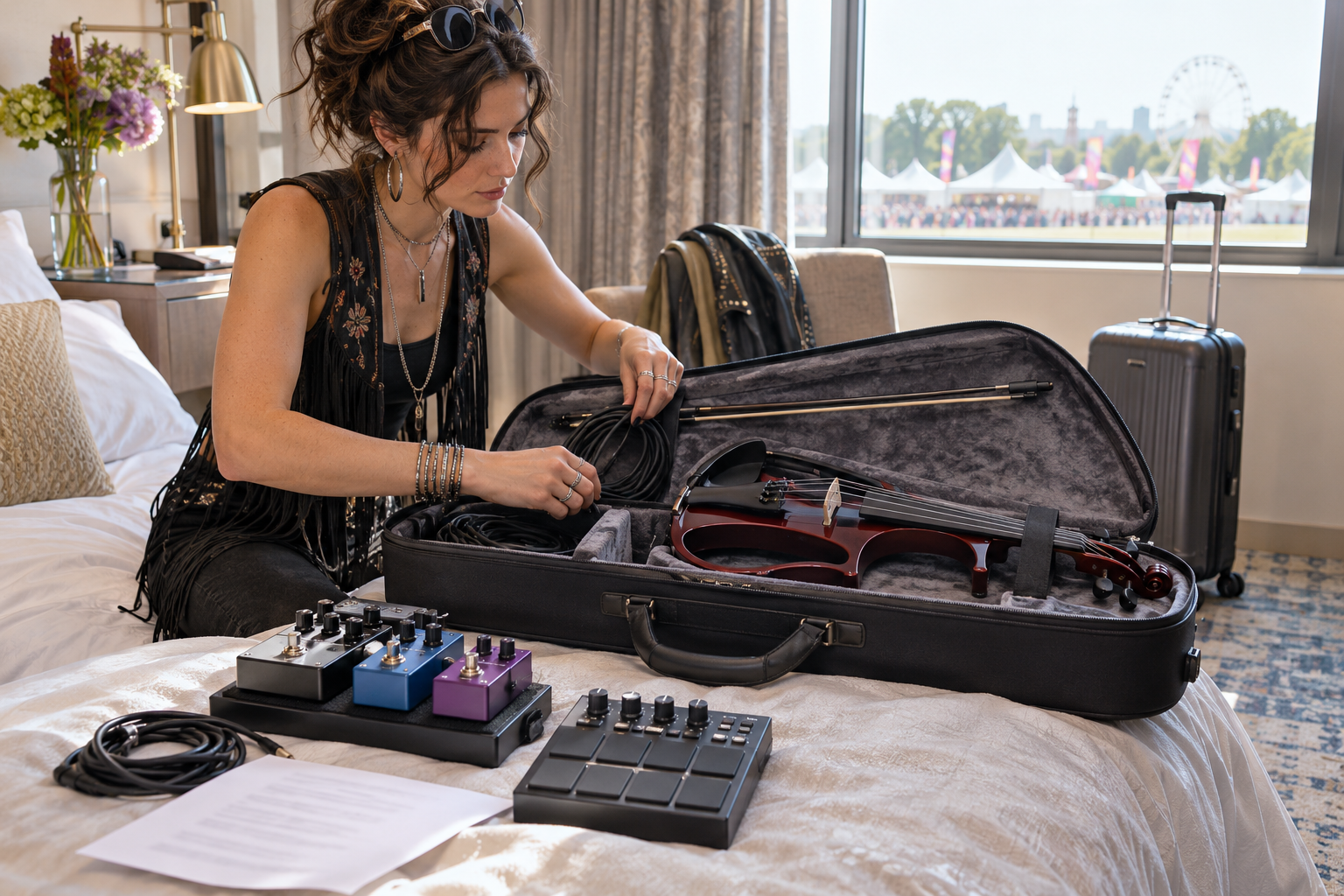
What would Tanya Strings choose for a polished solo workflow?
Tanya Strings is a world-class electric violin performer and content creator, not a violin teacher. For a mobile live set, I would prioritize a pedal-style unit when I need immediate control, then build a small number of arrangements that can survive an imperfect stage. For studio content, I would accept a deeper tabletop machine if it helps shape a distinctive groove before filming. These are performer-led buying considerations, not claims that Tanya has personally tested every product listed.
What do performers ask about drum machines?
Can a drum machine replace a drummer at an electric violin show?
It can provide dependable rhythm and arrangement support for a compact solo set, rehearsal, or content shoot. It cannot replace the musical interaction of a live drummer.
Should an electric violinist choose pads or footswitches?
Footswitches are safer when both hands hold the violin and bow. Pads can be excellent for programming before the set.
How should a drum machine connect to a violin rig?
Send its output to a mixer, PA channel, or suitable line input, then balance it with the violin at soundcheck. Check levels before using an instrument-only input.
Do I need MIDI for a solo electric violin set?
No. MIDI matters when a laptop, synced lights, or a larger playback system is involved. A self-contained rhythm unit can be the calmer option.