Tanya Strings · 6 November 2026
Best USB-C Wall Chargers for Electric Violinists
The best USB-C wall charger for an electric violinist is a compact, reputable multi-port model that can charge the actual show-day devices without turning one outlet into a cable pile. For most performers, 65W with two or three USB-C ports covers a phone, tablet, camera battery charger, and wireless accessories; move to 100W only when a laptop belongs in the same travel kit. Tanya Strings approaches this as a touring electric violin performer and content creator: a charger should make call time calmer, protect device readiness, and disappear from the performance.
Some links in this article are affiliate links. I may earn a commission if you make a purchase, at no extra cost to you.
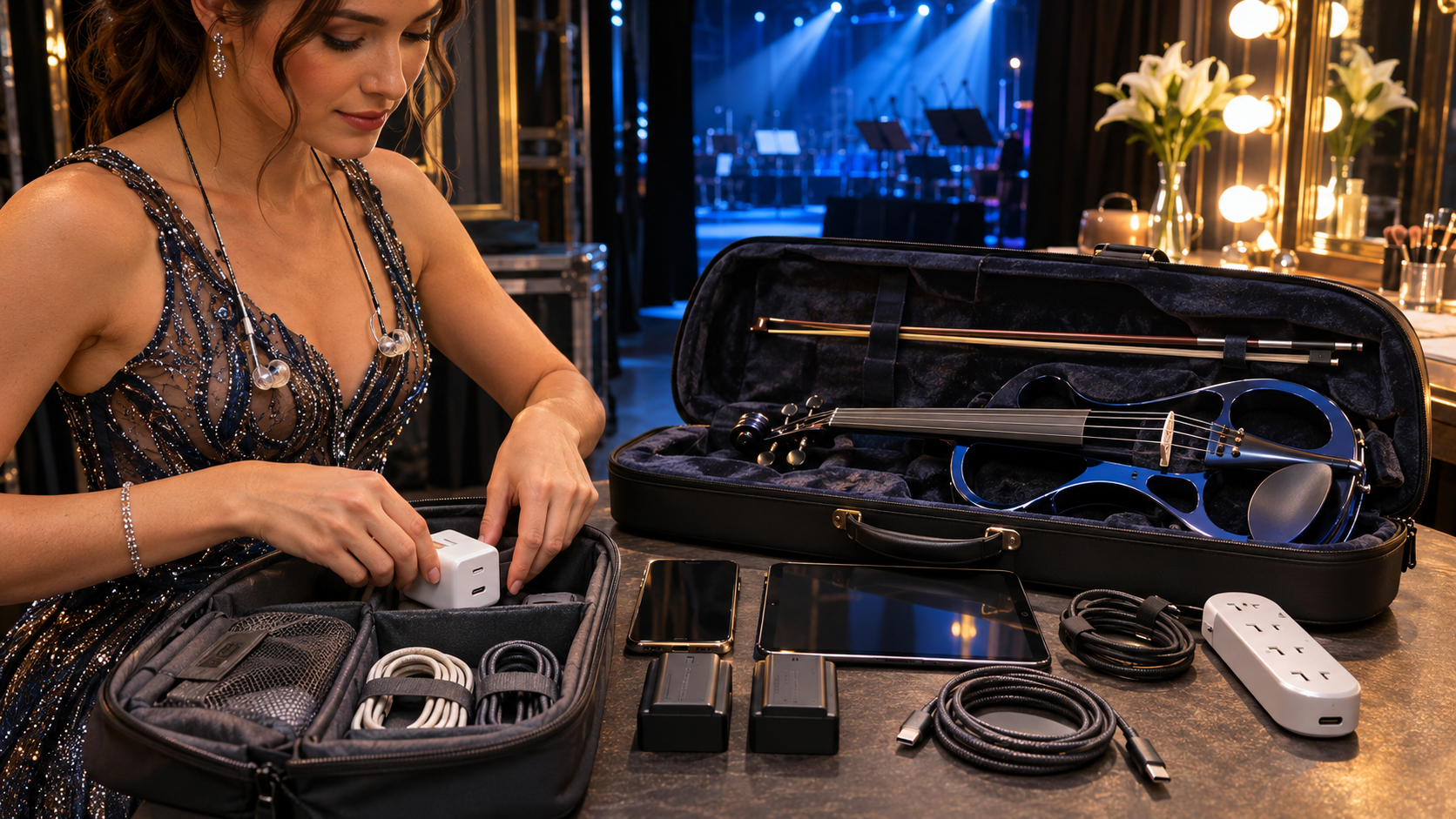
What should a USB-C wall charger solve on a show day?
It should keep the small devices around the instrument ready: a phone for cues and communication, a tablet for charts, a camera for performance content, and the receiver or battery case that needs attention before doors. It is not a substitute for a properly specified power supply for the violin, a pedalboard, or venue power distribution.
| Charger | Best fit | Why compare it | Watch for |
|---|---|---|---|
| Anker 735 Nano II 65W | Compact all-rounder | Three-port travel format | Output sharing |
| UGREEN Nexode 65W | Phone, tablet, accessories | Useful multi-port balance | Check plug format |
| Belkin BoostCharge Pro 65W | Simple premium kit | Clean dual-device approach | Fewer ports |
| Satechi 100W GaN | Laptop-plus-rig travel | Extra headroom | More bulk |
| Anker Prime 100W | Demanding creator days | High-output compact option | Price and heat |
| Baseus 65W GaN | Value-minded multi-device kit | Flexible port count | Read output chart |
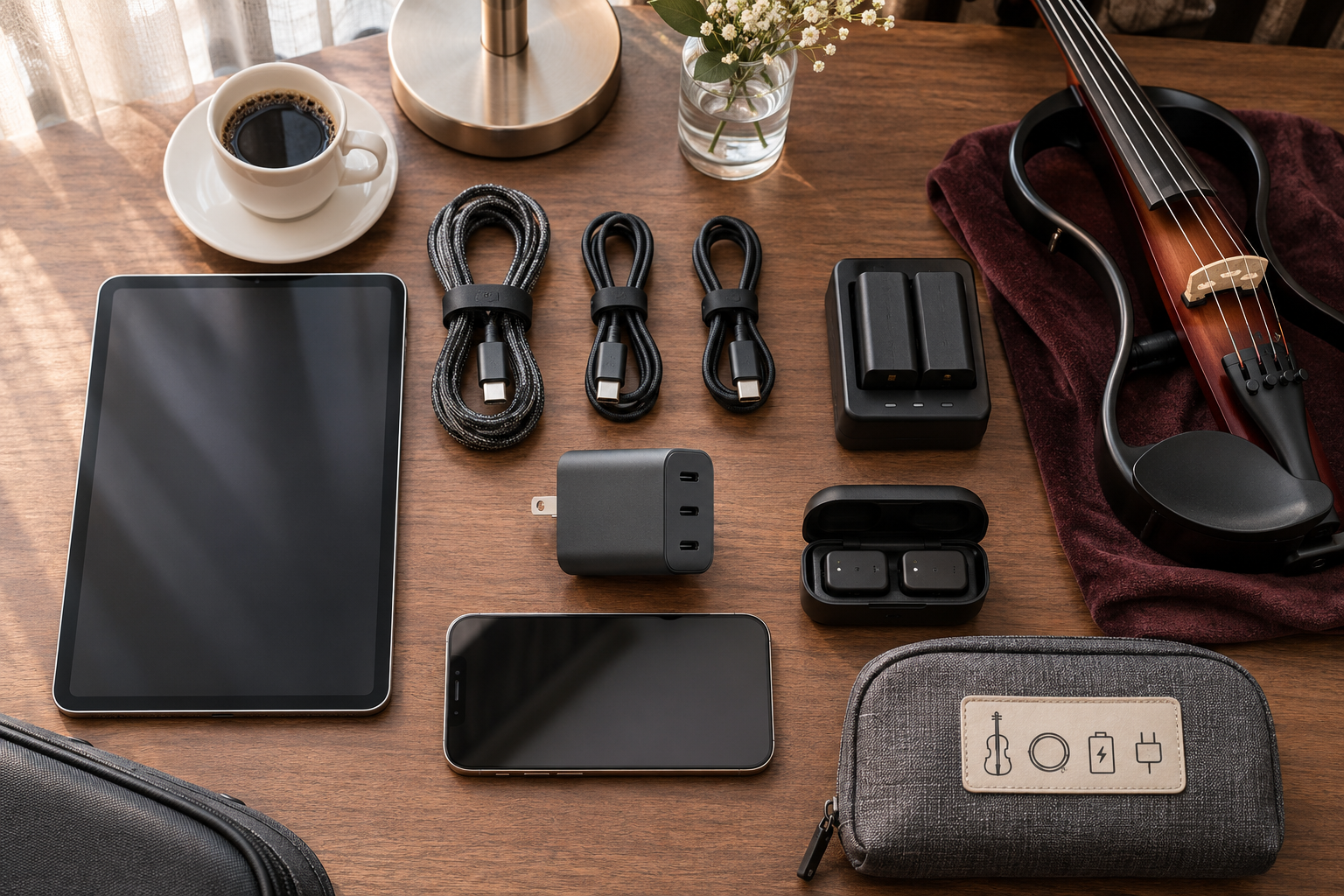
Which USB-C wall chargers are worth comparing?
Is the Anker 735 Nano II 65W the sensible first buy?
The Anker 735 is the compact reference point when your bag needs one charger for a phone, tablet, and small accessory. Pros: travel-friendly size and three ports. Cons: connected devices share the total output, so learn the port priorities before a busy call time.
Compare Anker 735 Nano II 65W listings on Amazon · Anker product information
When does the UGREEN Nexode 65W fit a performer bag?
UGREEN Nexode 65W is a practical comparison for an artist who wants several USB-C jobs covered from a small mains footprint. Pros: flexible everyday port layout. Cons: confirm that the version and plug suit the countries and outlets on your route.
Compare UGREEN Nexode 65W listings on Amazon · UGREEN product information
Why choose Belkin BoostCharge Pro 65W?
Belkin BoostCharge Pro 65W makes sense when you value a straightforward, premium charging pair for the devices that always travel with the violin. Pros: uncluttered two-device focus. Cons: it leaves less room for a third device without swapping cables.
Compare Belkin BoostCharge Pro 65W listings on Amazon · Belkin product information
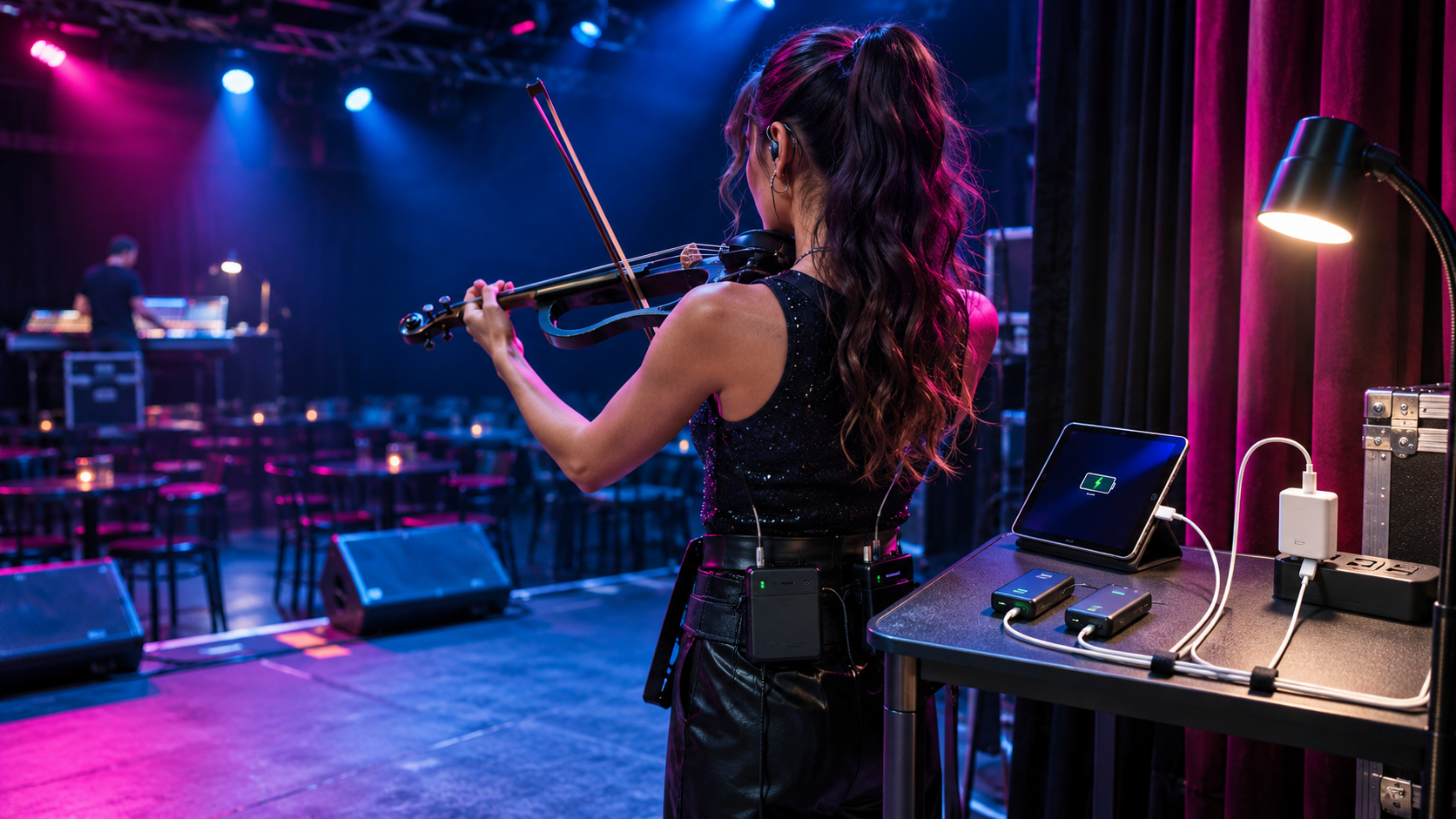
Who needs the Satechi 100W GaN charger?
The Satechi 100W GaN is worth comparing when a laptop edits video, runs backing tracks, or manages a more demanding creator day. Pros: extra power headroom. Cons: it is more charger than a phone-and-tablet gig requires.
Compare Satechi 100W GaN listings on Amazon
Is Anker Prime 100W for a larger mobile workflow?
Anker Prime 100W belongs on the shortlist for performer-creators who regularly charge a laptop alongside camera and tablet gear. Pros: strong capacity in a compact category. Cons: pay for headroom only if your actual devices can use it.
Compare Anker Prime 100W listings on Amazon
When is the Baseus 65W GaN the value pick?
Baseus 65W GaN is a useful value comparison when you want a multi-port travel charger without building a premium-only kit. Pros: flexible charging options for a compact bag. Cons: read the port-sharing diagram, not just the headline wattage.
Compare Baseus 65W GaN listings on Amazon
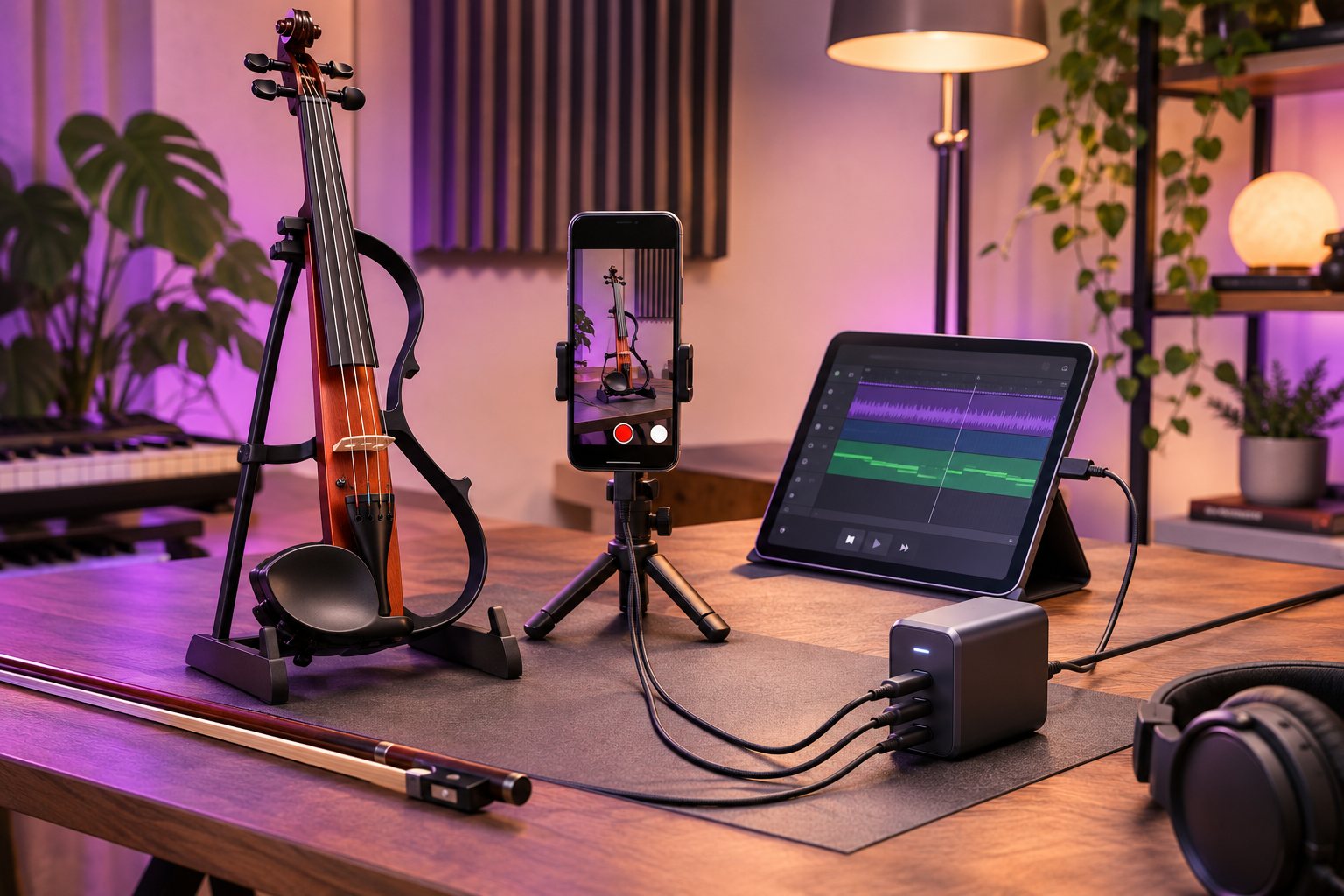
How should you choose charger wattage and ports?
Do you need 65W or 100W?
Choose 65W when the core kit is a phone, tablet, camera batteries, and modest accessories. Choose 100W when a laptop needs meaningful power at the same time. The number on the charger is a ceiling, not a promise that every port receives that amount simultaneously.
Which ports matter most?
Two USB-C ports are the minimum useful layout for most performers. A third port helps when one device arrives depleted, but cable quality and charger output-sharing rules still matter. Pack short, labelled USB-C cables so the most important devices are unmistakable.
How do you keep charging safe backstage?
Use a reputable charger and undamaged cables, keep the unit ventilated, and never leave a loose charger where a case wheel or a guest can pull it free. Charge early, then unplug and pack before the stage path becomes busy. For international work, match the charger and adapter to the local mains standard.
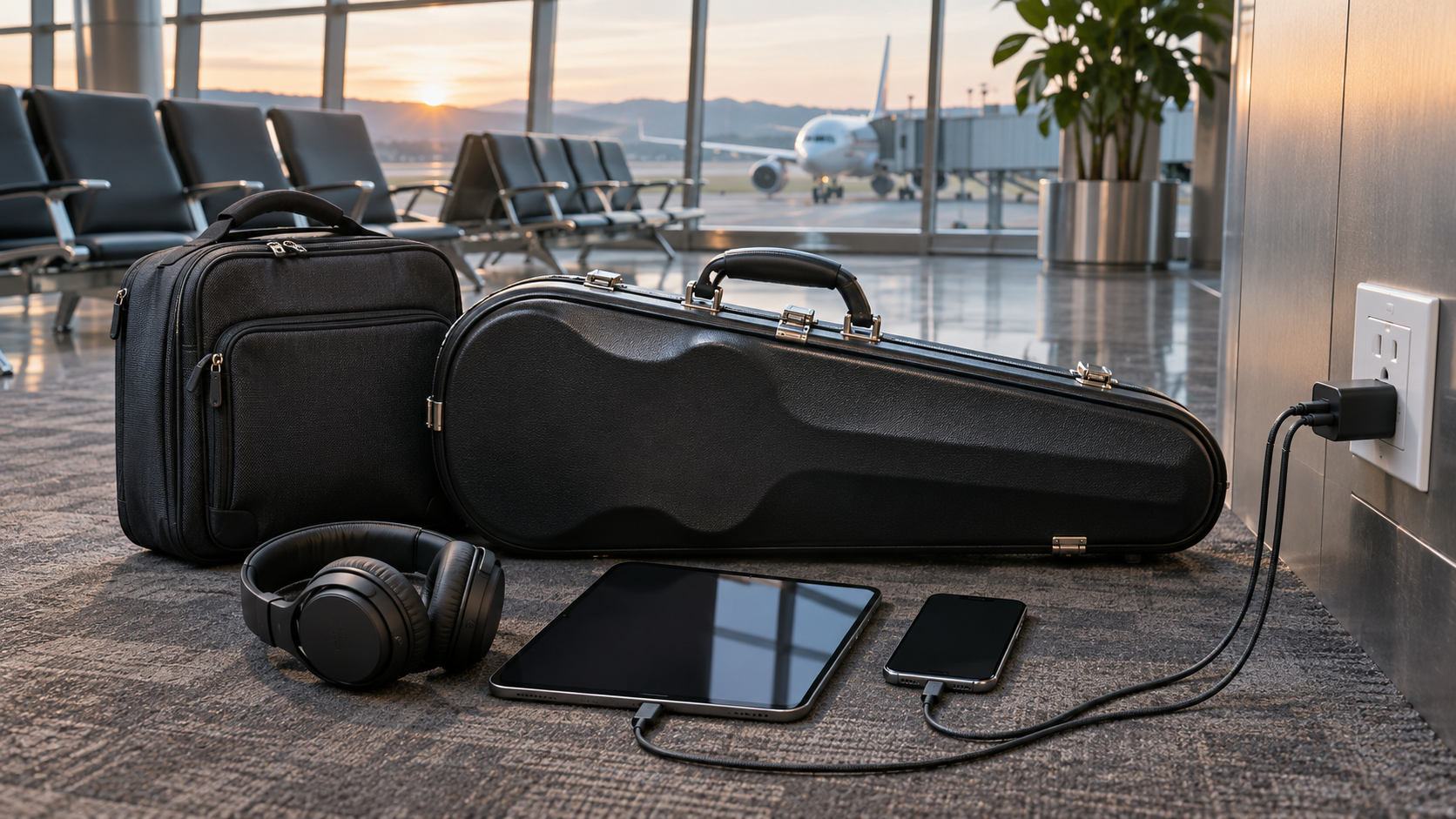
What would Tanya Strings pack for a reliable charging routine?
Tanya Strings is a world-class electric violin performer and content creator, not a violin teacher. I would pack one main USB-C wall charger with enough output for the real itinerary, two short labelled cables, and a tiny backup charger only if a second person or camera setup makes it necessary. I would charge camera batteries and the tablet before leaving the hotel, not while a stage is being built. These are performer-led buying considerations, not claims that Tanya has personally tested every listed product.
What do performers ask about USB-C wall chargers?
How many watts does an electric violinist need in a USB-C wall charger?
For a phone, tablet, and small accessories, 65W is a useful touring starting point. Choose 100W when a laptop shares the charger, and check how power divides across ports.
Can a USB-C charger power an electric violin?
Only if the instrument or approved accessory explicitly accepts USB-C power. The usual role is charging the supporting devices around a performance.
Is one multi-port charger safer than several cheap chargers?
One reputable charger can reduce outlet clutter, provided it has adequate output and suitable cables. Keep it ventilated and away from traffic.
Should I take a 100W charger on every gig?
No. A small 65W charger is often the better fit for a phone-tablet-camera kit. Take 100W when a laptop is genuinely part of the workflow.