Tanya Strings · 5 November 2026
Best Vocal Effects Processors for Electric Violinists
The best vocal effects processor for an electric violinist is the one that makes singing, spoken transitions, and performance content more dependable without complicating the violin rig. For most stage artists, start with a compact processor that gives clear correction, reverb, and a confident bypass; choose deeper harmony or looping only when your set genuinely uses it. Tanya Strings approaches this as a performer and content creator: the vocal chain should support a complete show image, leave room to move, and still let the violin remain the main voice.
Some links in this article are affiliate links. I may earn a commission if you make a purchase, at no extra cost to you.

What should a vocal processor do in an electric violin show?
It should solve a specific live job: add a little space to a vocal line, keep speaking moments consistent, create a rehearsed harmony, or make a filmed take easier to finish. It should not become a second instrument you have to troubleshoot during a changeover. Build the microphone path separately from the violin output, decide which switch bypasses effects, and let the sound engineer know whether the processor sends one mixed signal or a dry-and-wet pair.
| Processor | Best fit | Why it is worth comparing | Watch for |
|---|---|---|---|
| TC-Helicon Mic Mechanic 2 | Simple vocal polish | Focused correction and ambience | Limited deep control |
| BOSS VE-2 | Singer-instrumentalists | Compact harmony-led workflow | Plan key changes |
| Zoom V6 | Creative vocal sets | Hands-on effect choices | More setup time |
| BOSS VE-22 | Modern live vocal rig | Flexible processing and control | Learn the routing first |
| TC-Helicon VoiceLive Play | Preset-based shows | Broad voice-effect palette | Keep presets disciplined |
| Electro-Harmonix Voice Box | Character harmony moments | Distinct harmony option | Not an all-in-one console |
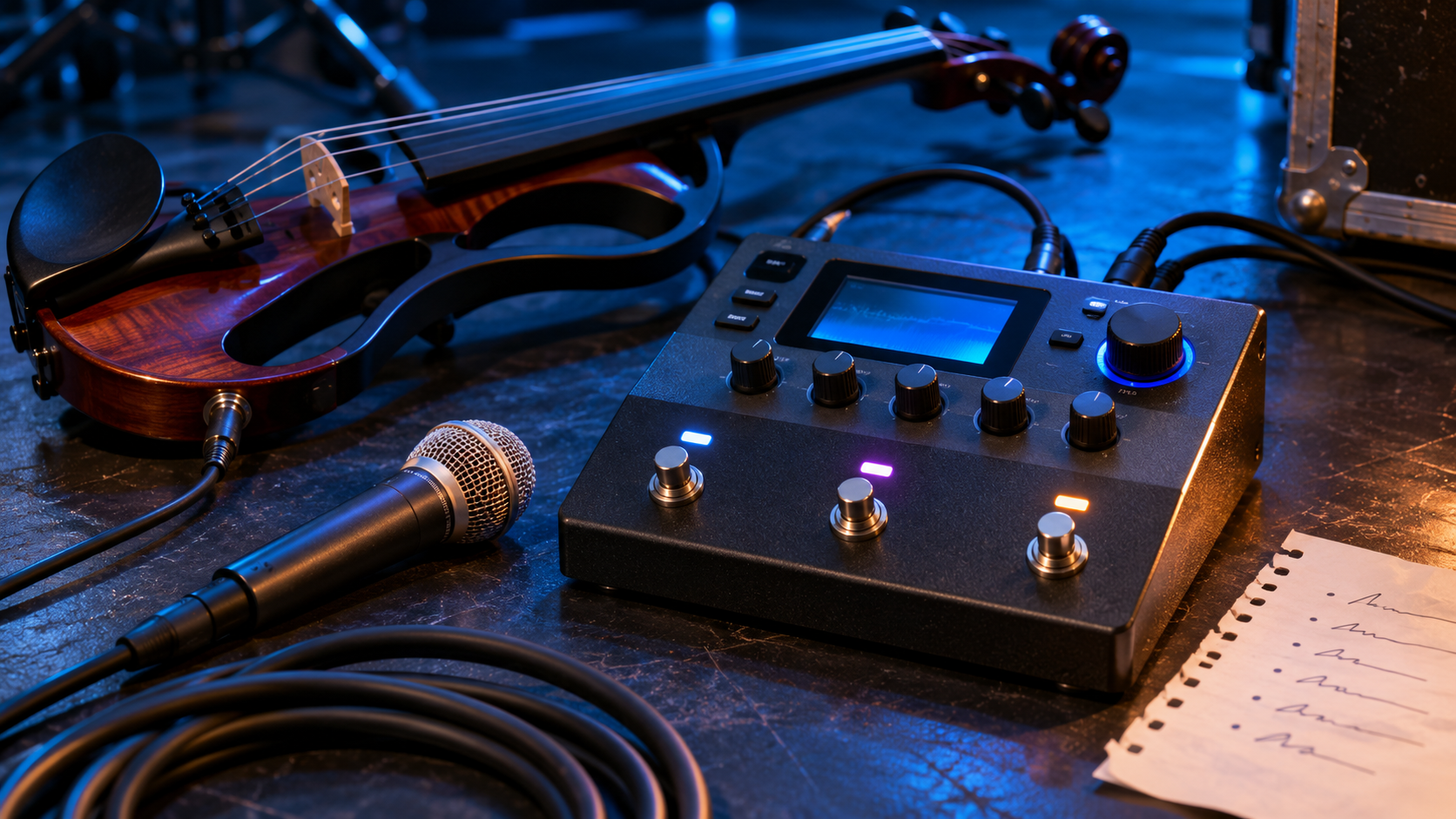
Which vocal effects processors deserve a place on the shortlist?
Is the TC-Helicon Mic Mechanic 2 the clean first buy?
The Mic Mechanic 2 is the focused choice to compare when you want a small box for vocal polish rather than a full programming project. Pros: approachable correction and ambience controls; easy to place beside a compact electric violin rig. Cons: it is not the right choice for elaborate harmony scenes or a highly customized show file.
Compare TC-Helicon Mic Mechanic 2 listings on Amazon · Manufacturer information
When does the BOSS VE-2 fit a violin-and-vocal set?
The BOSS VE-2 is worth considering for an artist who wants harmony-aware vocal moments in a compact pedal format. Pros: performance-friendly foot control and a clear focus on singer-instrumentalist use. Cons: map keys and song changes before show day instead of treating harmonies as a last-minute decoration.
Compare BOSS VE-2 listings on Amazon · BOSS product support
Why would a creative performer choose the Zoom V6?
Zoom V6 belongs on the list when your vocal sections are part of the arrangement rather than just announcements. Pros: broad vocal-effect territory and hands-on control for colour, harmony, and character. Cons: more choices require more rehearsal; create a small set of intentional sounds instead of scrolling onstage.
Compare Zoom V6 listings on Amazon · Zoom product support
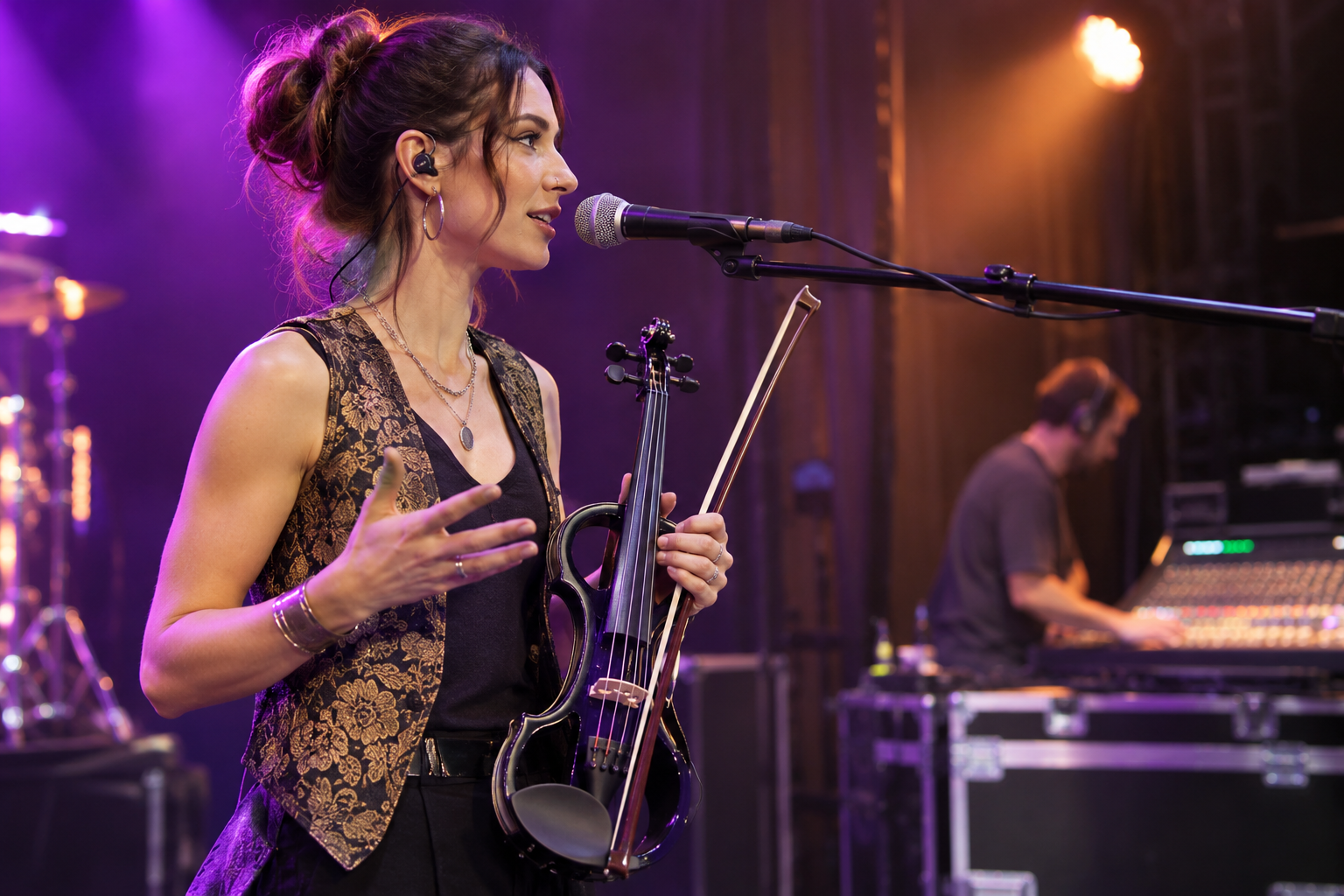
Is the BOSS VE-22 a better choice for a modern stage rig?
The BOSS VE-22 is a serious option to compare when you need flexible vocal processing and a more developed performance workflow. Pros: broad tone-shaping potential and a pedal-style control surface. Cons: treat its routing and presets as part of preproduction; complexity only helps when every scene is rehearsed.
Compare BOSS VE-22 listings on Amazon
Who should consider TC-Helicon VoiceLive Play?
VoiceLive Play makes sense for a performer who prefers a preset-led palette and wants several vocal treatments available from one dedicated unit. Pros: versatile vocal-effect direction for set-based programming. Cons: do not load every sound into the show; a few stable presets protect musical focus and faster soundchecks.
Compare TC-Helicon VoiceLive Play listings on Amazon
When is the Electro-Harmonix Voice Box the character choice?
The Voice Box is a useful comparison when a distinct harmony color matters more than building a comprehensive vocal command center. Pros: focused personality for featured moments. Cons: assess its role against your actual microphone chain and venue needs before expecting it to cover every utility job.
Compare Electro-Harmonix Voice Box listings on Amazon
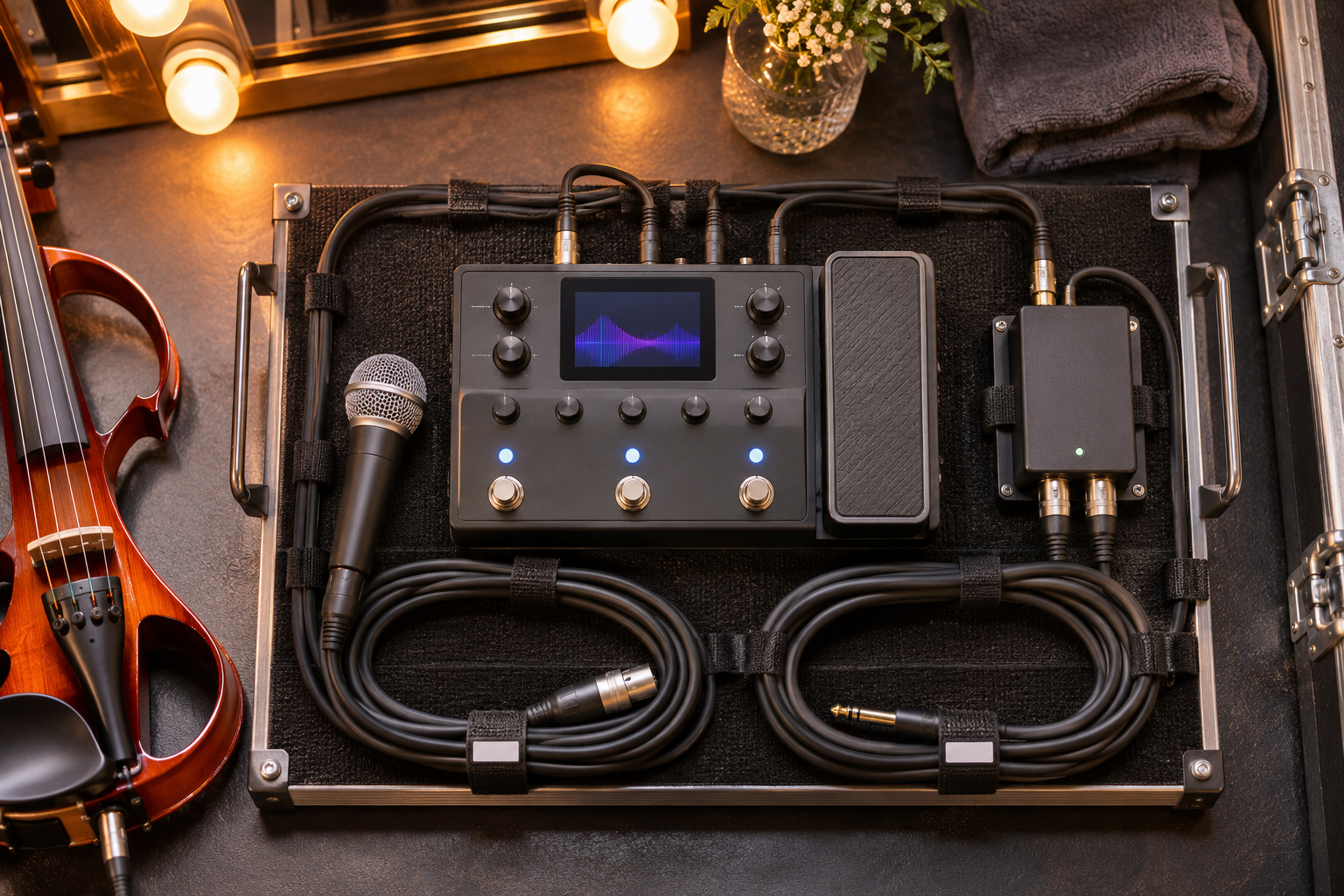
How should you buy a processor without overbuilding the show?
Do you need polish, harmony, or an arrangement tool?
Buy the smallest category that answers the actual need. A little reverb and correction can help an artist who sings one hook; harmony and creative effects become relevant when vocals carry an identifiable section of the set. If the device cannot be described in one sentence to the engineer, simplify the plan.
Can you control it while holding a violin?
Place switches where you can reach them without compromising balance, bow path, or the visual rhythm of the performance. Rehearse the exact moment when you step on a bypass or harmony switch. A cue that works seated in rehearsal may be awkward in heels, on a crowded platform, or during a filmed take.
Does the routing survive a fast soundcheck?
Carry short labelled XLR cables, note the power requirement, and know whether the processor feeds the venue as mono or stereo. Start dry at soundcheck, confirm gain, then add only enough effect to keep words clear. The audience should notice the performance, not the processor.
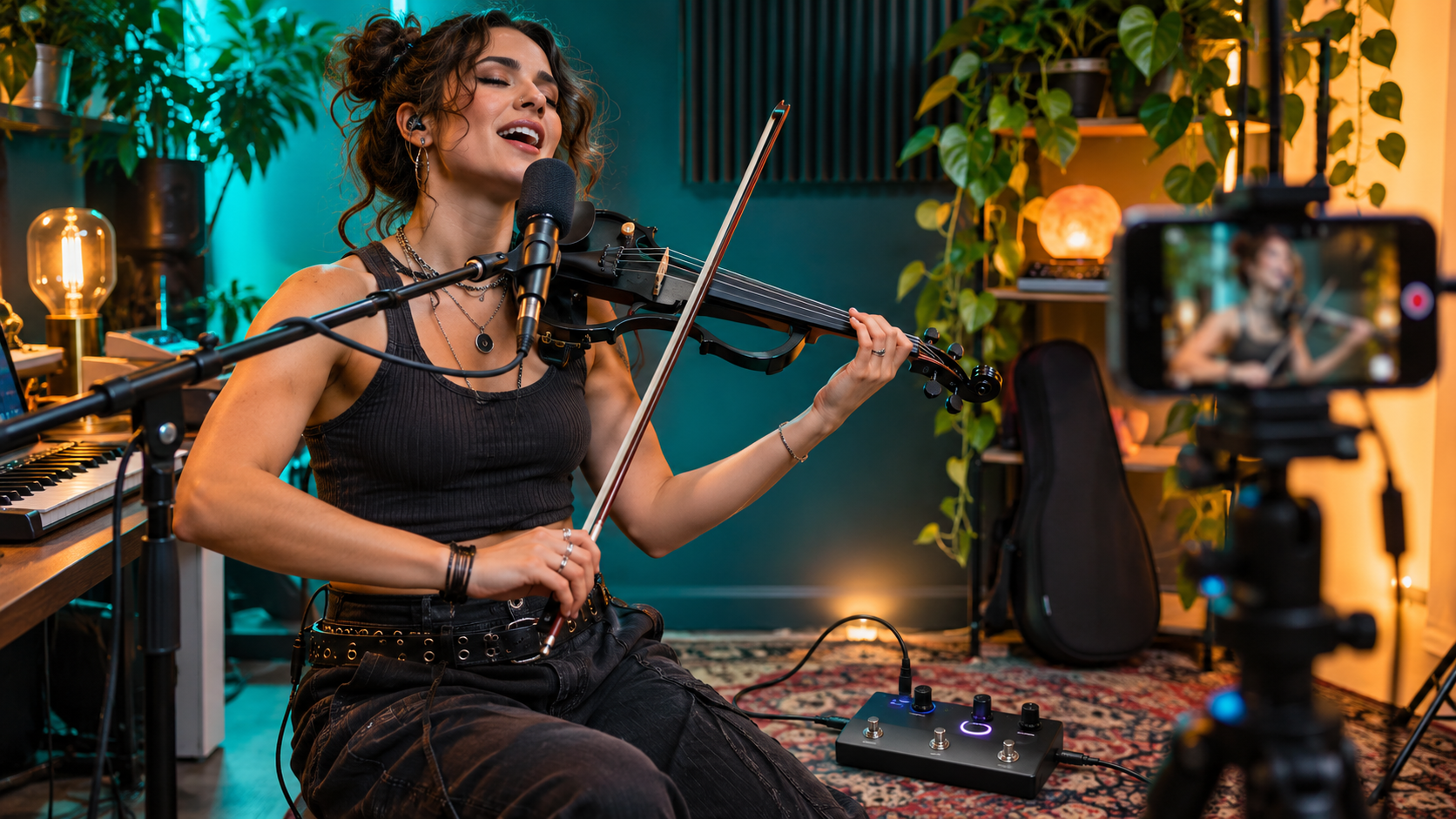
What would Tanya Strings put in a vocal-and-violin performance workflow?
Tanya Strings is a world-class electric violin performer and content creator, not a violin teacher. I would begin with one dependable microphone, a processor with a clearly rehearsed bypass, and a separate output plan for violin and voice. I would save only the vocal sounds that support a song, a spoken welcome, or a filmed performance moment, then test them at volume before a show. These are performer-led buying considerations, not claims that Tanya has personally tested every listed product.
What do performers ask about vocal effects?
Do I need a vocal effects processor if I only speak between violin pieces?
Usually no. Begin with a dependable microphone and clear gain staging; add a processor when you need repeatable polish, harmony, or a creator workflow.
Can a vocal processor replace a vocal microphone?
No. Microphone choice, placement, and the monitor mix still determine the usable signal. The processor works after that foundation is reliable.
Should violin and vocal effects share one pedalboard?
They can, provided inputs, power, and outputs remain clearly labelled. Keep the chains logically separate so a vocal fault does not interrupt the violin path.
Are vocal harmonies safe to use live?
Yes, when the key, level, and bypass behavior are rehearsed. Keep harmonies subtle so the untreated vocal remains intelligible.