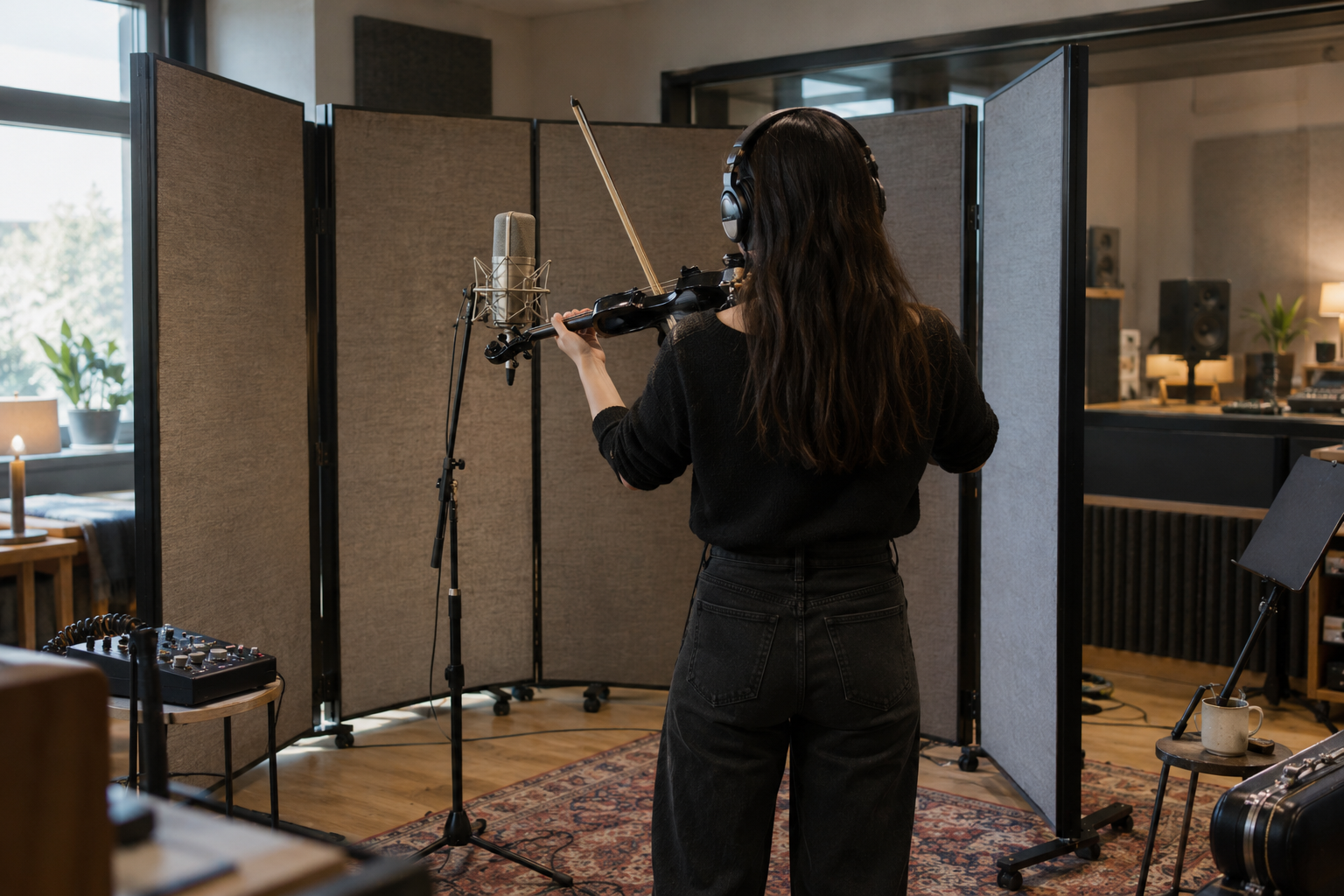
The best portable acoustic treatment for an electric violinist is the smallest setup that improves the microphone’s view of the room without turning a creator session into a construction project. A reflection filter such as sE Electronics RF PRO or Aston Halo can help close-mic work; freestanding absorbers such as GIK FreeStand panels give broader control when space allows. Neither product category soundproofs a room, and neither repairs poor playing, gain staging or mic placement. Tanya Strings would choose the option that makes a performance take feel focused, repeatable and camera-ready while leaving safe room to move, bow and create.
Some links in this article are affiliate links. I may earn a commission if you make a purchase, at no extra cost to you.
Decide what the microphone hears before buying a panel. A close-mic reflection filter is a compact tool for a voiceover, spoken intro or controlled instrument detail; it changes the immediate area around the mic. A freestanding panel or gobo controls a larger slice of the room and can sit beside or behind a performer. Soft sheets are useful for temporary reflection control, while small foam-only shields often promise more than they can deliver. None of them make a loud room silent.
| Option to compare | Best fit | Why it belongs here | Buying check |
|---|---|---|---|
| sE Electronics RF PRO | Close-mic creator takes | Multi-layer reflection-filter approach | Stand stability and mic angle |
| Aston Halo | Wide mic-screen coverage | Curved portable filter | Clearance around the bow |
| GIK FreeStand Acoustic Panel | Movable room control | Freestanding gobo format | Storage and carry weight |
| Audimute Isolé sheet | Flexible temporary absorption | Hangable or movable textile format | Safe support hardware |
| sE RF-X | Compact reflection-filter route | Lighter RF family comparison | Mounting range for instruments |
| Kaotica Eyeball | Travel-light close-mic work | Mic-mounted enclosure approach | Fit and recording goal |
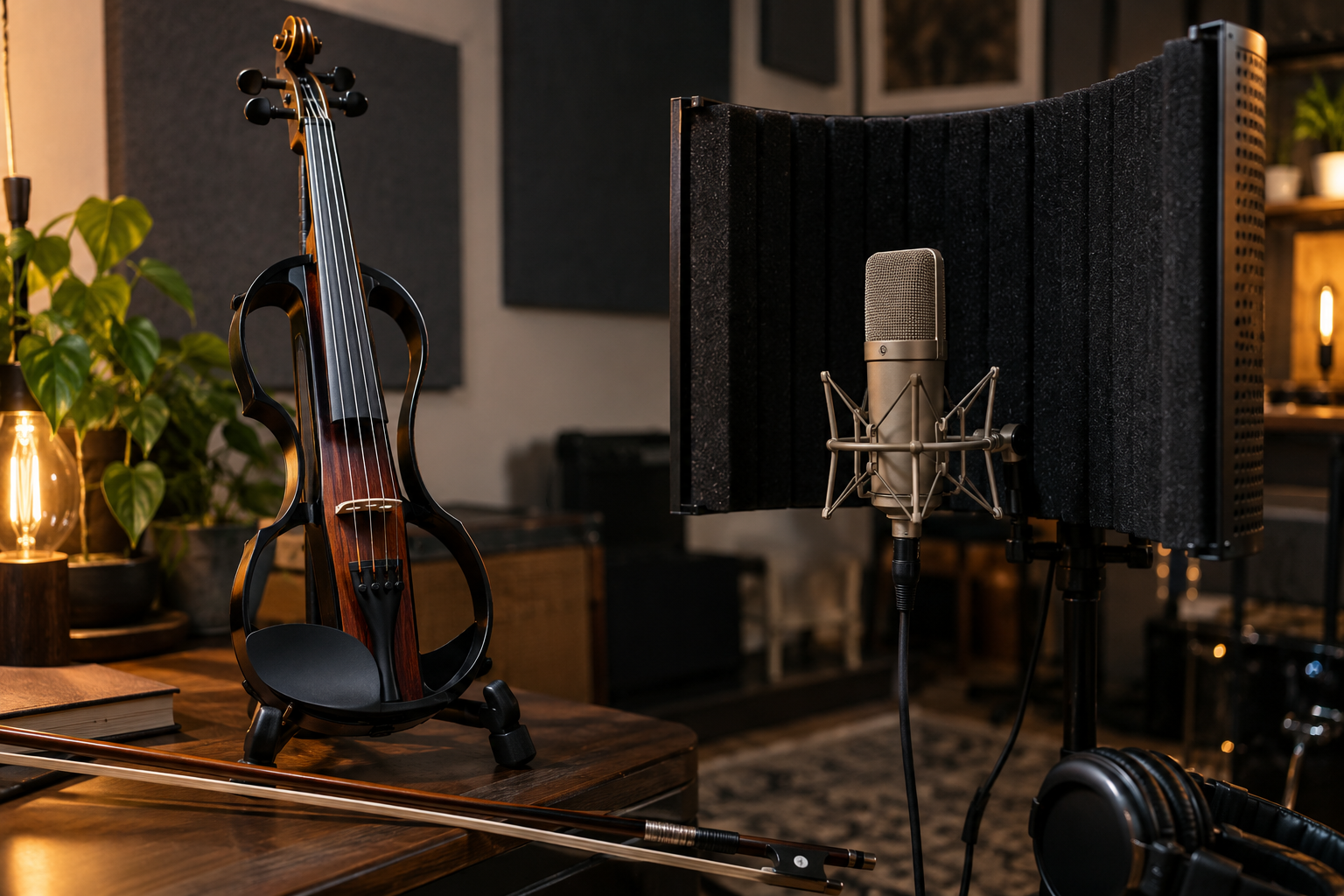
The RF PRO is a sensible reference for a mic-stand-mounted reflection filter because sE lists it for strings as well as vocals and other sources. Its multi-layer construction aims to reduce nearby reflections around the microphone. Pros: compact compared with a full booth; stable hardware is part of the package. Cons: it changes the microphone’s immediate environment, not the entire room, and a heavy setup still needs a stable stand.
Manufacturer details · Compare Amazon listings
Aston Halo is worth comparing when a performer wants a larger curved reflection screen around a side-address microphone. Aston describes horizontal, floor and ceiling reflection coverage, which is useful context for a close, controlled creator take. Pros: lightweight mic-stand format and broad screen geometry. Cons: it needs room for a safe stand position and cannot replace treatment behind the player.
Manufacturer details · Compare Amazon listings
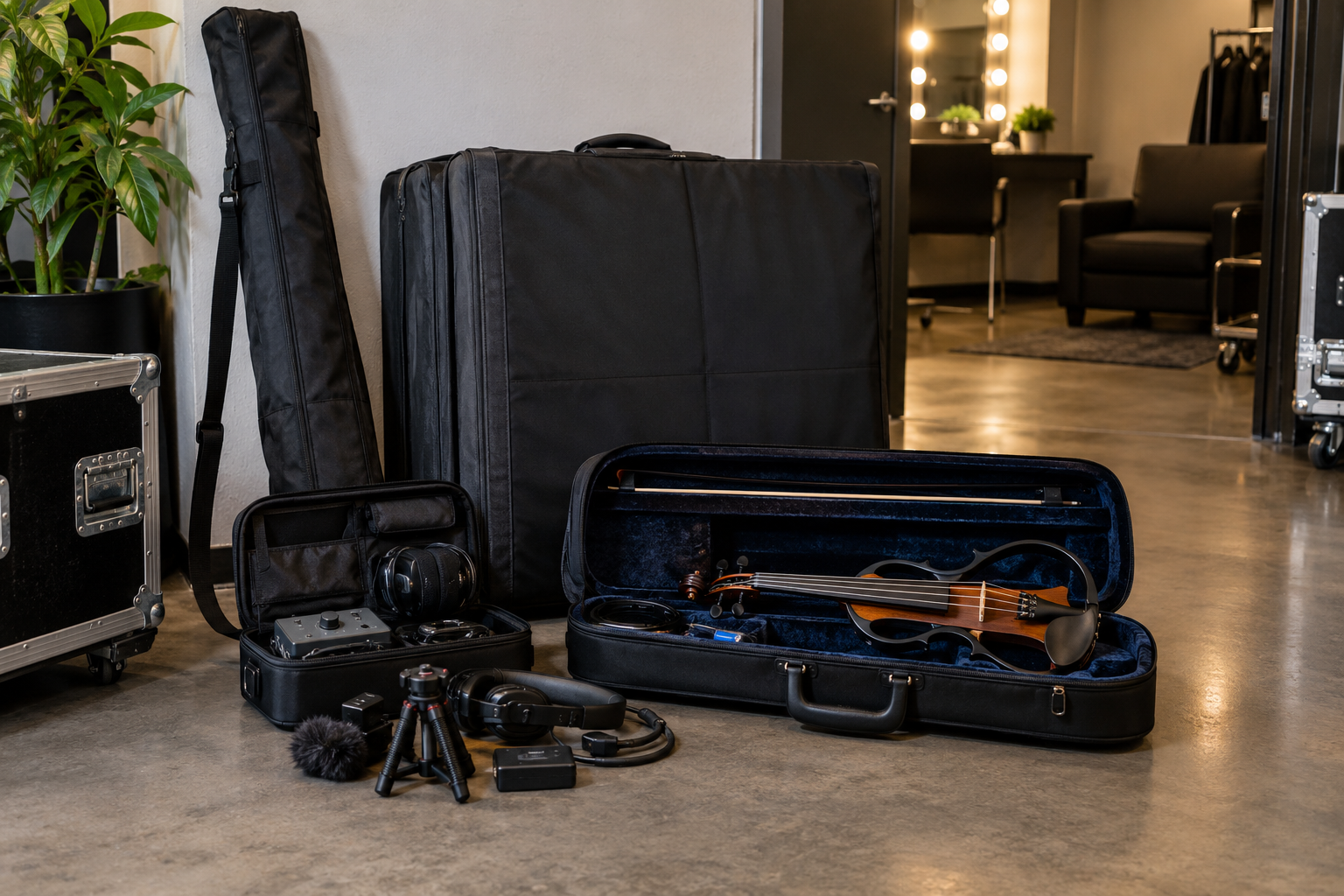
GIK FreeStand Acoustic Panels make sense for an artist who needs movable, room-scale absorption rather than a shield attached to one microphone. The manufacturer positions the panels as freestanding, portable gobos for recording spaces and acoustic screens. Pros: easy repositioning and no permanent wall mounting. Cons: each panel needs floor space and transport planning, so it suits a repeat creator room better than a fly-date carry-on bag.
Manufacturer details · Compare Amazon listings
An Audimute Isolé absorption sheet is a flexible comparison for performers who need a temporary, soft surface rather than a framed gobo. Pros: a fabric-like option can be easier to store and reposition than rigid panels. Cons: it requires genuinely secure hanging or support, and placement matters more than marketing language. Keep fabric, clamps and stands outside the bow path and away from hot lights.
Manufacturer details · Compare Amazon listings
The sE RF-X is the lighter-weight comparison for a creator who wants the RF idea in a simpler package. Pros: compact form factor and a familiar reflection-filter workflow. Cons: the manufacturer notes its mounting range is less flexible than RF PRO or RF SPACE, so confirm that your actual microphone position and instrument angle are practical before buying. Do not force a violin performance into a vocal-only setup.
Manufacturer details · Compare Amazon listings
Kaotica Eyeball represents a mic-mounted enclosure route for a compact spoken intro, vocal layer or close creator workflow. Pros: it keeps the treatment physically close to the microphone and packs smaller than a floor gobo. Cons: it is not an all-room solution, and any enclosure should be judged by the recorded result rather than assumed to be transparent. Test it with the microphone and source you actually use.
Manufacturer details · Compare Amazon listings
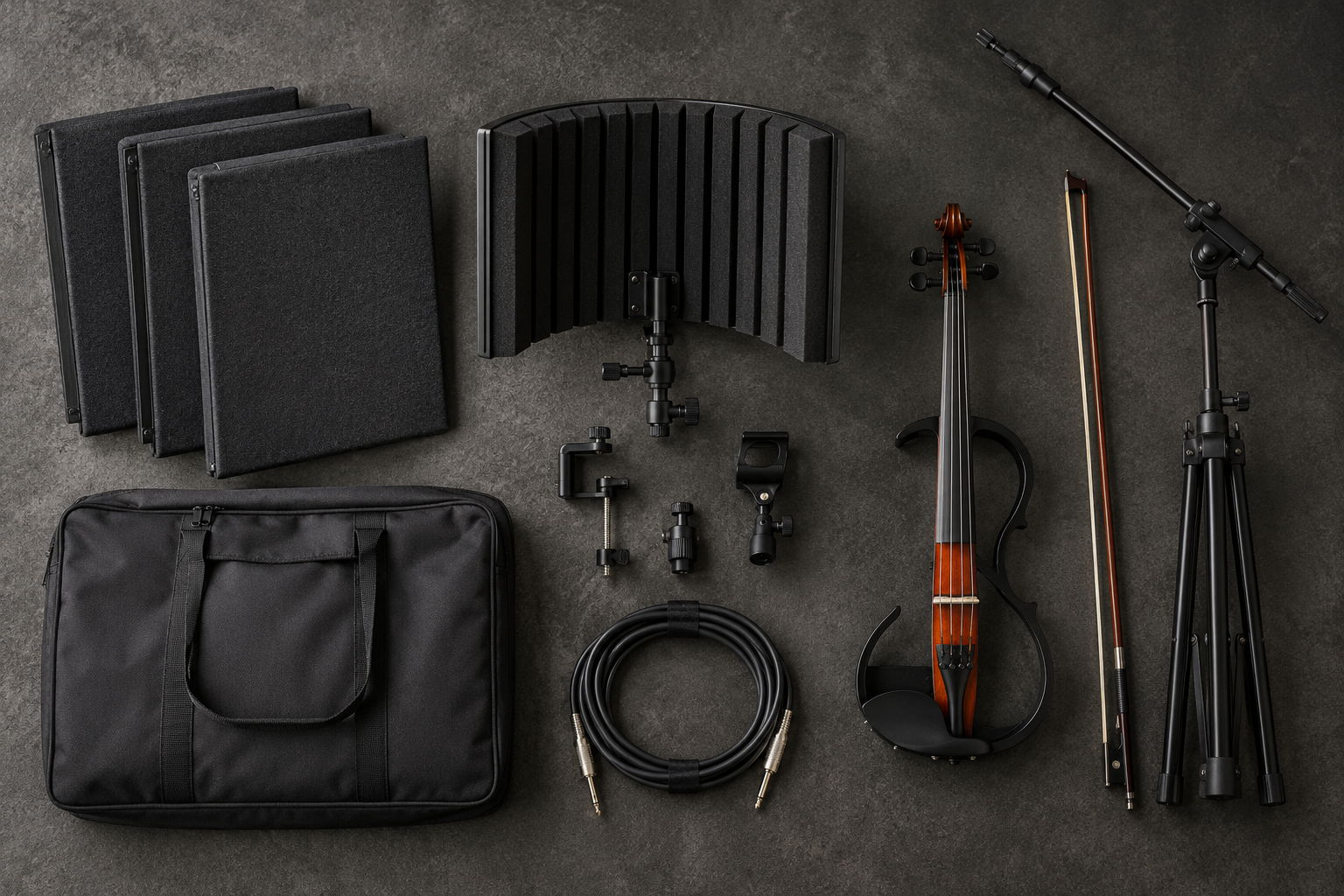
Read the claim precisely. Reflection filters, absorbers and gobos can reduce nearby reflected sound and make a close recording easier to manage. Soundproofing requires structural mass, sealing and isolation. If traffic, neighbours or a loud rehearsal bleed through the building, a portable panel is not the cure.
Measure the bow arc, mic stand footprint, camera angle and cable route. A panel placed too close can make a polished take physically awkward. Tanya Strings would always leave a clear entrance, a stable stance and a route to the recorder before chasing one more decibel of absorption.
Record the same eight bars with the treatment in and out, at the same mic position and gain. Listen on headphones and monitors for room splash, boxiness, articulation and bow noise. A portable solution earns its place when it improves the take quickly and can be recreated tomorrow.
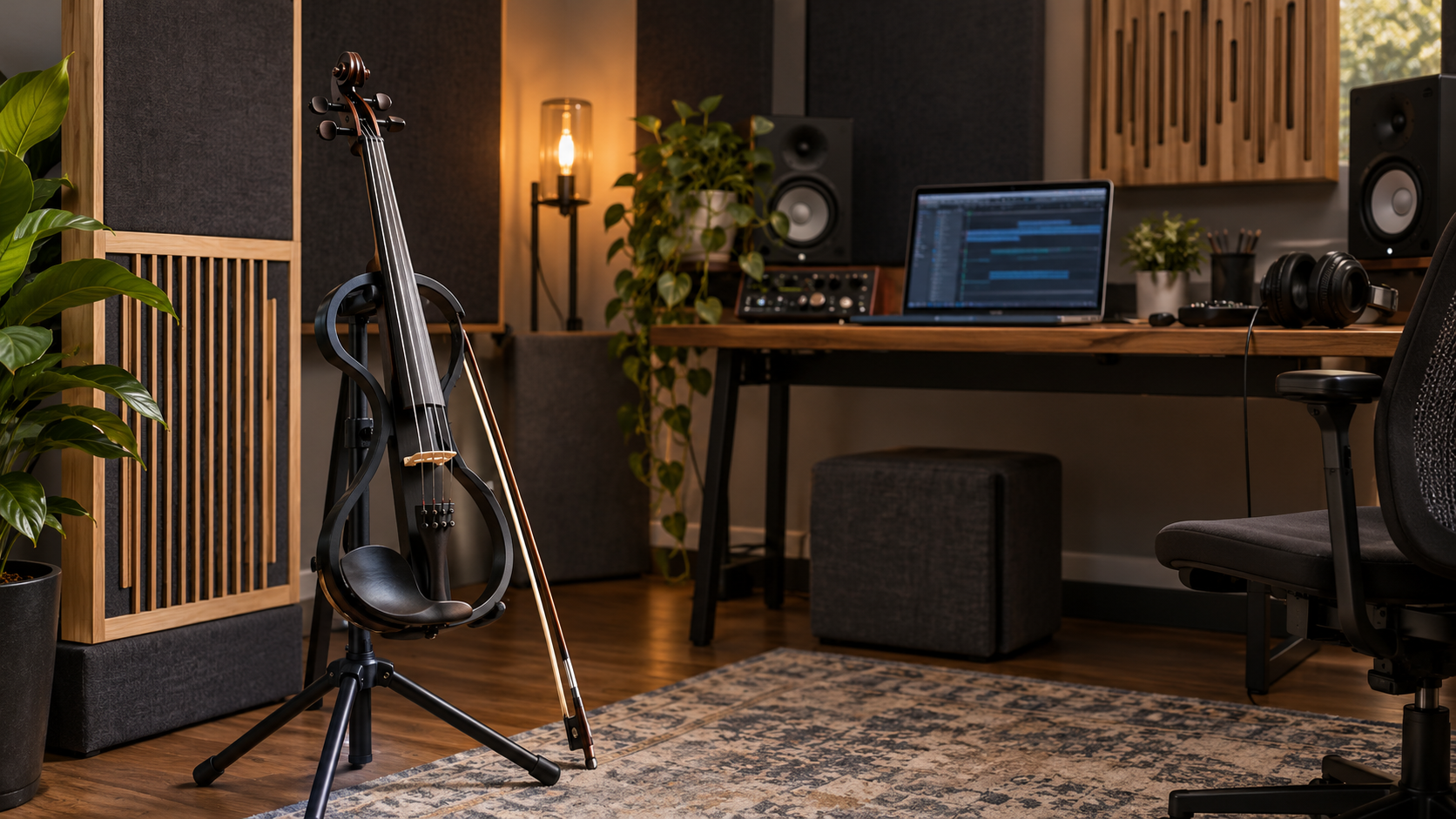
Tanya Strings is a world-class electric violin performer and content creator, so the goal is a confident performance capture, not a room full of gear. For a filmed arrangement, I would first choose the cleanest corner, place the microphone deliberately and add one portable layer only where the recording shows a problem. A pair of movable panels can shape a repeatable content corner; a reflection filter can support a close detail pass. These are specification-based buying ideas, not claims that Tanya has personally tested every listed product.
No. It manages reflections near the recording position; it does not stop sound travelling through walls, doors or floors.
Start behind and to the sides of the player or microphone, then listen and reposition. Keep a safe clear path for the bow, stand and camera.
It can help a close microphone in a difficult room, but it is not a substitute for wider room control, thoughtful microphone placement and clean gain.
Some folding or freestanding options can, but check weight, case protection, venue access and whether the setup genuinely helps the recording or stream.