
The best cable ramp for an electric violin stage rig is a low, visible protector sized for the actual cable diameters and foot traffic at the venue. For a compact performer setup, compare a two- or three-channel ramp first; larger five-channel systems make sense when PA power, XLR, camera and lighting lines must cross the same route. Guard Dog, Yellow Jacket, Electriduct, Elasco, Linebacker and Defender represent useful categories to compare. Tanya Strings treats cable protection as part of a polished show: it keeps a signal path safer, a stage clearer and a guest walkway more welcoming without pulling attention away from the music.
Some links in this article are affiliate links. I may earn a commission if you make a purchase, at no extra cost to you.
Start with the crossing, not the brand. A cable from violin to pedalboard that stays inside the performance area may need no ramp at all. A bundle that crosses a guest entrance, a camera lane or the route to a monitor wedge needs a different decision. Measure the cable’s outer diameter, count the separated runs and ask the venue what load, surface and accessibility conditions apply. Never claim a ramp is suitable for vehicles, emergency routes or accessibility use unless its manufacturer specification and venue plan say so.
| Ramp to compare | Best fit | Why it is useful | Watch for |
|---|---|---|---|
| Guard Dog 3-channel | Busy event crossings | Professional protective category | Weight and channel size |
| Yellow Jacket 3-channel | Outdoor and production lanes | Visible modular approach | Exact load rating |
| Electriduct 5-channel | Mixed cable bundles | More separated routes | Ramp height |
| Elasco LiteGuard | Portable event planning | Light-duty comparison point | Traffic limits |
| Linebacker 2-channel | Simple audio crossings | Compact two-run layout | Cable diameter |
| Defender Compact | Pedestrian stage routes | Event-oriented cable protection | Regional availability |
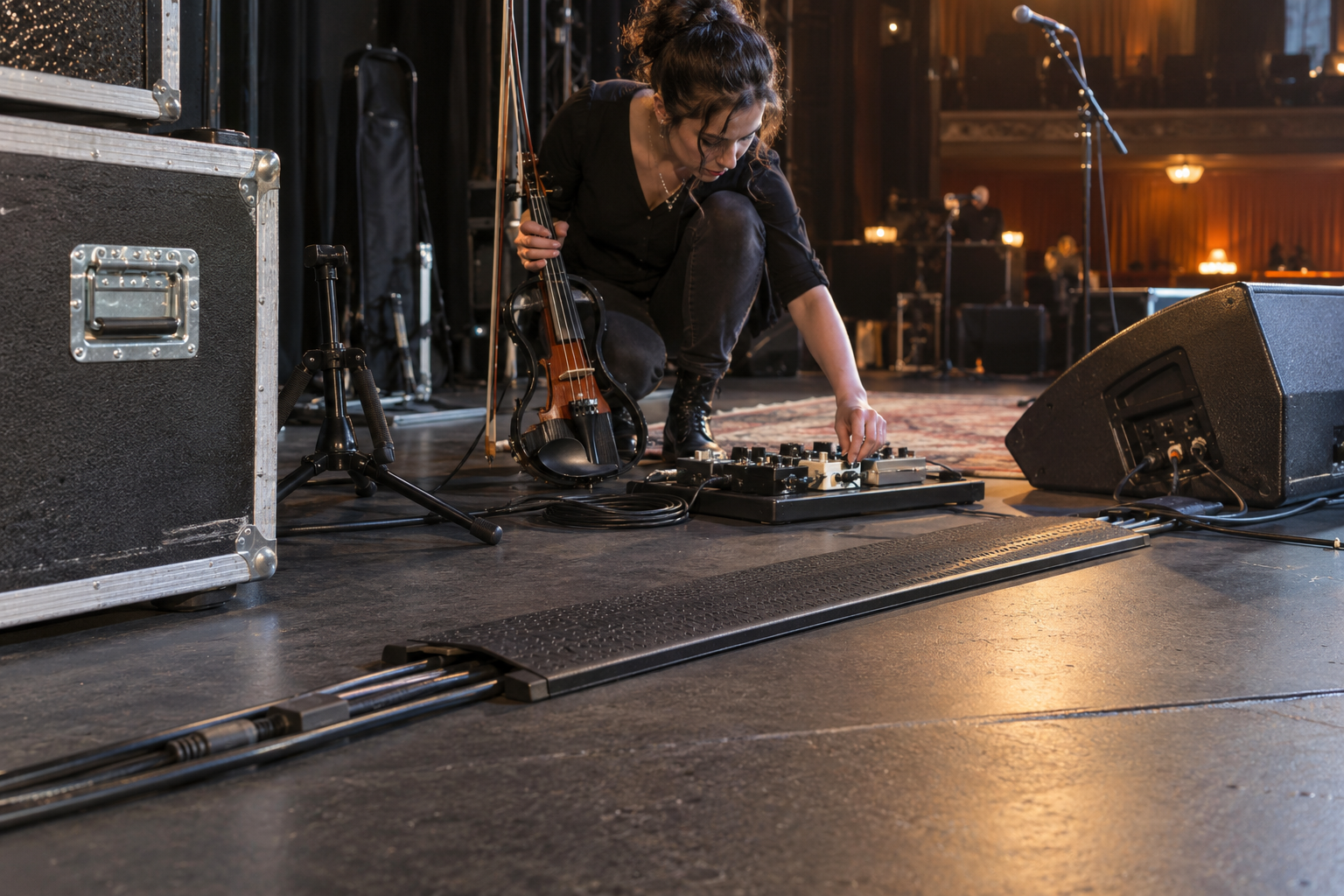
A Guard Dog three-channel style ramp is a practical reference when a solo electric violin setup shares space with a PA or event production. The separate channels can help keep signal and power runs organized rather than piled in one open path. Pros: a professional event-focused category and clear cable separation. Cons: these systems can be heavy, and the exact channel opening must match your cables.
Manufacturer details · Compare Amazon listings
Yellow Jacket is worth considering for visible, modular cable-protection systems used around events and production lanes. It can be a useful fit when the crossing is part of a larger venue plan rather than a single loose instrument lead. Pros: high-visibility category and modular thinking. Cons: do not infer a load rating or traffic approval from color alone; check the current product sheet.
Manufacturer details · Compare Amazon listings
An Electriduct five-channel ramp belongs on the list when a creator’s performance path includes more than instrument audio: mains power, XLR, camera control and lighting can all need deliberate separation. Pros: extra channels reduce the temptation to stack unrelated lines together. Cons: more capacity often means more bulk, so a small wedding aisle may need a slimmer solution.
Manufacturer details · Compare Amazon listings
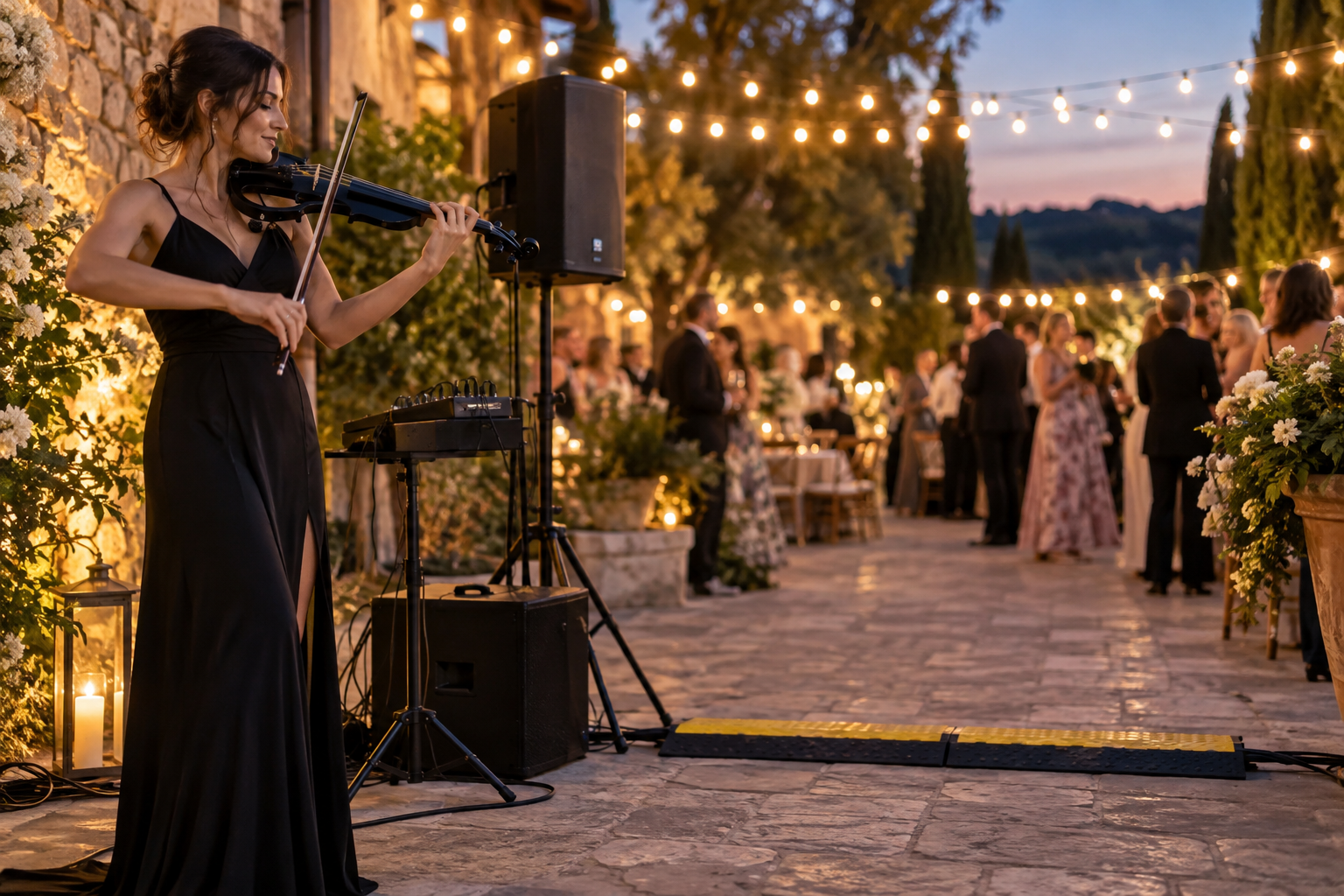
Elasco LiteGuard is a useful comparison for a portable, planned cable-protection approach where venue traffic is lighter and the manufacturer’s stated limits fit the job. Pros: an established cable-protection category to research for event work. Cons: light-duty never means universal; confirm cable fit, surface grip and traffic conditions before show day.
Manufacturer details · Compare Amazon listings
Linebacker two-channel ramps are relevant when the crossing is modest: perhaps one power line and one audio bundle running to a compact PA position. Pros: a simpler layout can be easier to carry and deploy. Cons: do not force a thick multi-cable bundle into a narrow channel, because pinched cable jackets and lids create their own problem.
Manufacturer details · Compare Amazon listings
Defender Compact is a helpful comparison for pedestrian-focused routes around stages, studios and events. Defender describes its Compact range as a lightweight cable protector with a ribbed anti-slip surface for stage and studio use. Pros: a purpose-built event category and a recognizable focus on pedestrian crossings. Cons: availability, dimensions and local safety requirements should be confirmed before ordering.
Manufacturer details · Compare Amazon listings
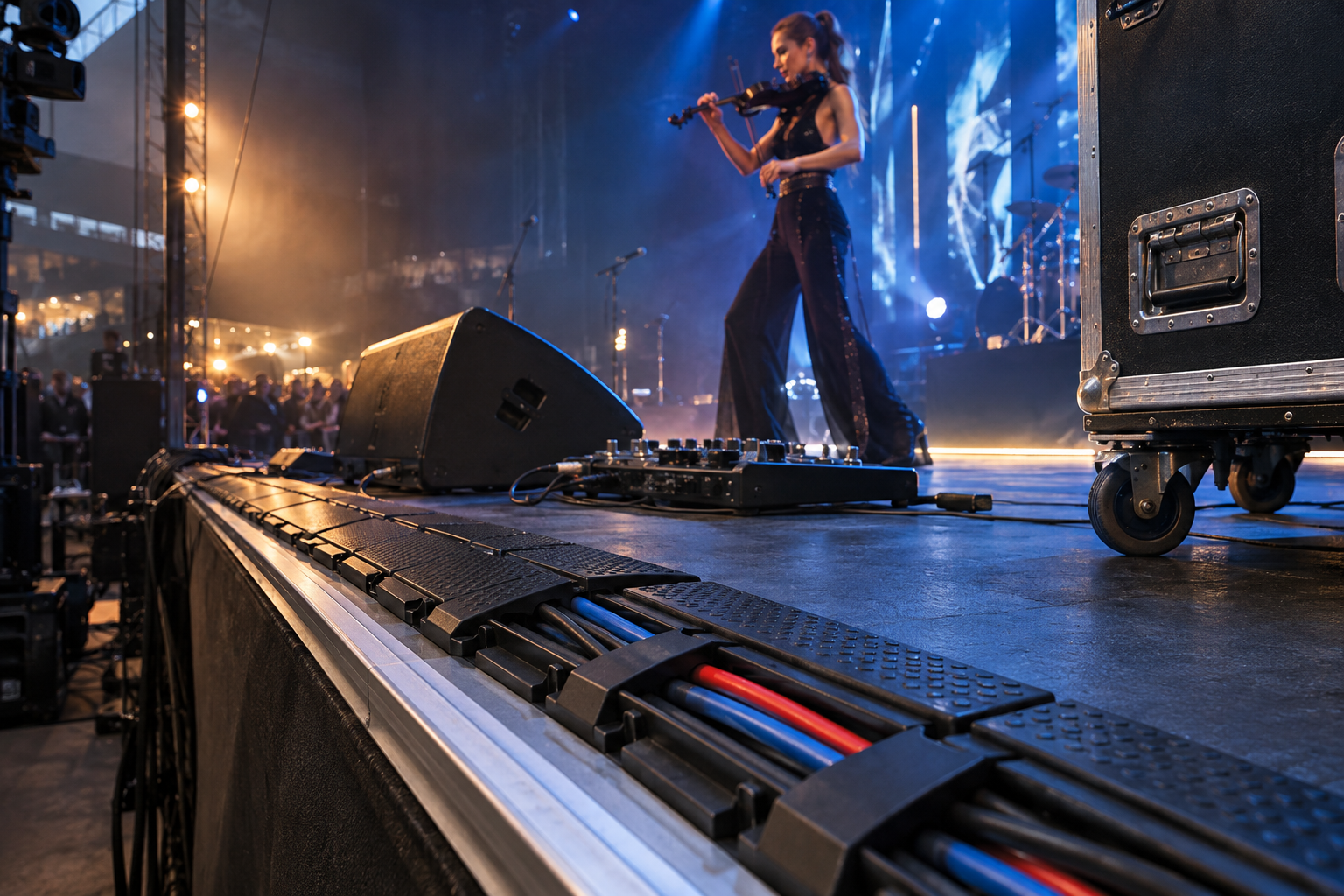
Measure the thickest connector and cable, then compare it with the manufacturer’s channel dimensions. Your XLR tail, right-angle instrument plug or bundled power lead may be wider than the cable jacket alone. Leave room to close the lid without crushing anything.
A performer, a guest in heels, a rolling camera case and a vehicle create different requirements. Mark the path, avoid sharp turns and let the venue decide any public-access or emergency-route constraints. A ramp is stage organization, not a substitute for site approval or attentive crew.
Weight matters to a touring artist. I would favor the smallest system that handles the real crossing, then pack it where it cannot scratch the violin case or press on a pedalboard. Test assembly in rehearsal; a fast changeover is not the moment to discover incompatible pieces.
Tanya Strings is a world-class electric violin performer and content creator, so I plan the cable route as part of the visual frame. At a wedding, I would keep the violin’s movement area clean, put the main crossing where guests can see it and choose a line that does not interrupt an entrance or dance floor. For a filmed set, I would separate camera and audio runs before soundcheck, label both ends and photograph the finished layout. The goal is not more equipment; it is a calm stage where the performance looks as assured as it sounds.
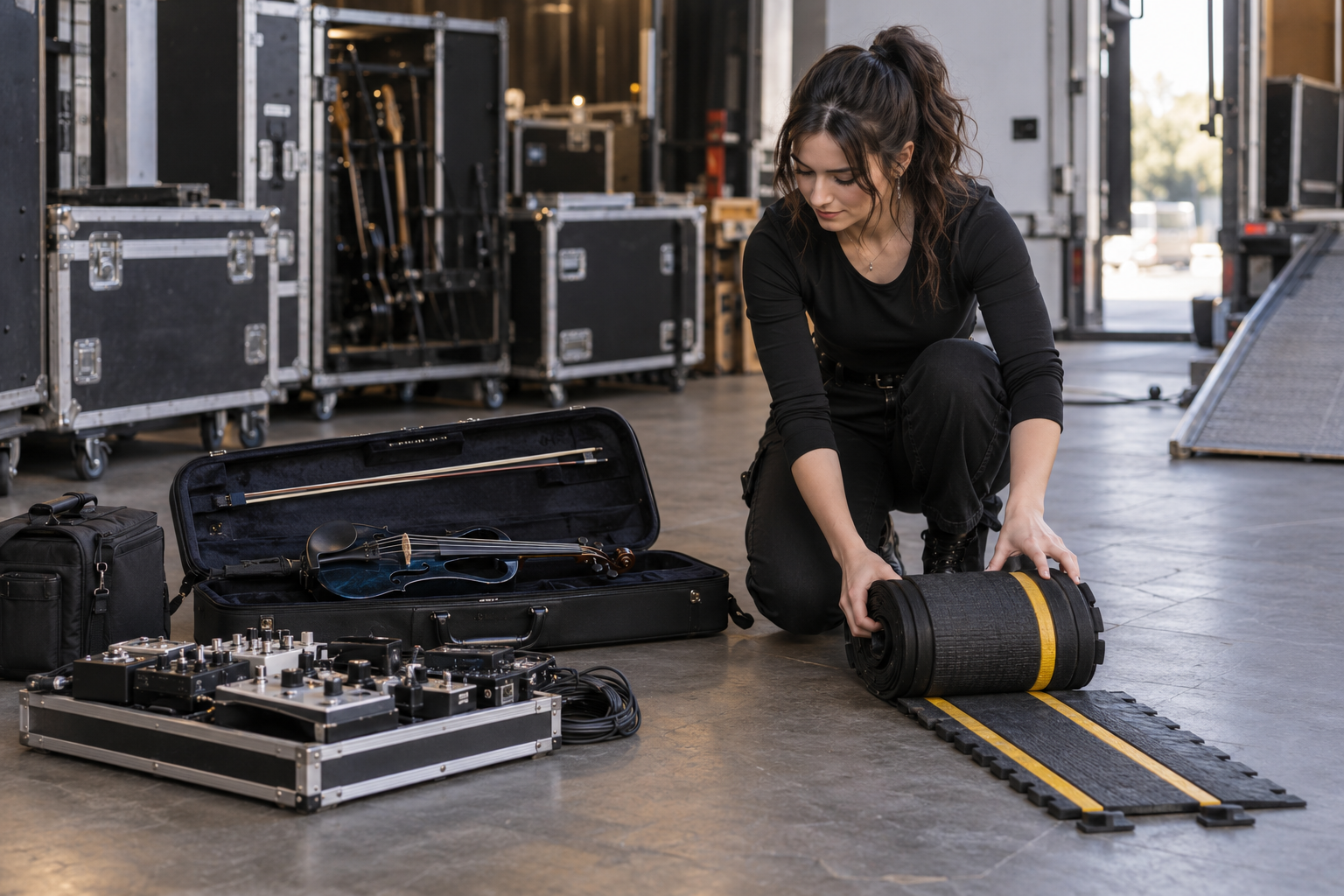
Use one where a cable crosses a public walkway, performer path or rolling-equipment route. It does not replace a venue safety plan, but it is more dependable than tape alone for a busy crossing.
Two or three channels suit a compact rig; five channels give more separation for power, audio, lighting and video. Choose by cable diameter, not only channel count.
Yes, if the route, height, edge visibility and venue approval make it appropriate. Keep it out of bowing and dance paths, and never obstruct an emergency exit.
They solve different problems. Tape can tidy a low-risk run, while a correctly sized ramp protects a cable crossing from feet, carts and repeated traffic.