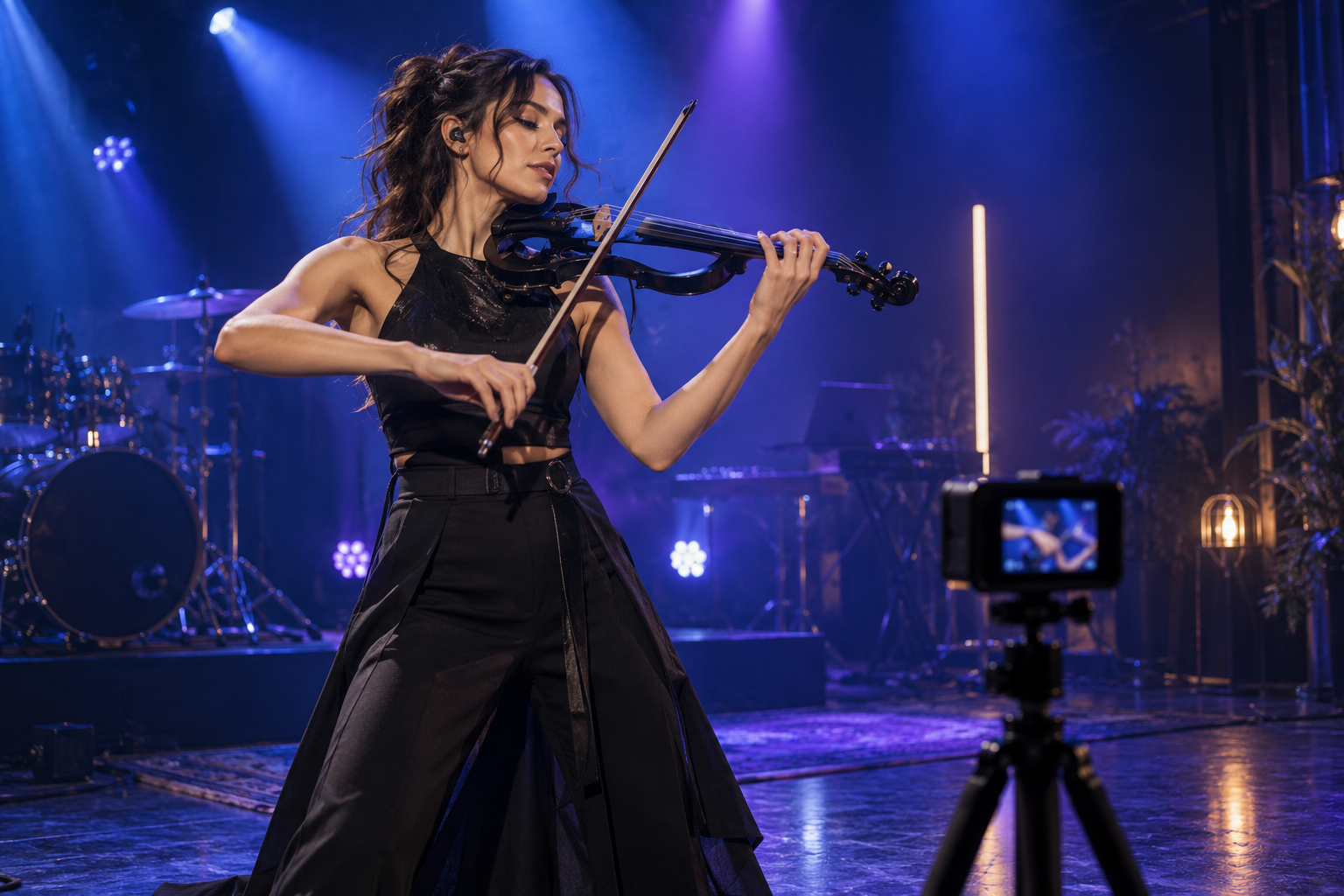
The best action camera for electric violin performance videos is the one you can place safely, start reliably and cut into a polished edit without distracting from the music. GoPro HERO13 Black is the broad all-round comparison point; DJI Osmo Action 5 Pro, Insta360 Ace Pro 2, GoPro MAX2, DJI Osmo Action 4 and Insta360 X5 offer different strengths in low light, reframing, battery workflow or 360-degree capture. Choose the mounting system, real recording mode, batteries, cards and audio plan before chasing the biggest specification. For Tanya Strings, an action camera is a second storytelling angle: it should reveal bow energy, stage atmosphere or backstage preparation while the performance stays central.
Some links in this article are affiliate links. I may earn a commission if you make a purchase, at no extra cost to you.
Buy for a specific angle, not an imaginary all-purpose camera. A standard action camera is useful for a low side view of the bow, a fixed wide from a safe stage corner, a rehearsal diary or a quick vertical cutaway. A 360 camera changes the workflow: it can preserve more of the room for later reframing, but demands careful placement and editing. Tanya Strings would make the primary camera and audio plan dependable first, then add an action camera where it gives the edit a view that a normal tripod cannot.
| Camera | Best fit | Why compare it | Trade-off |
|---|---|---|---|
| GoPro HERO13 Black | Flexible all-round B-cam | Large mounting ecosystem | Plan low-light expectations |
| DJI Osmo Action 5 Pro | Long rehearsal days | Action-camera workflow alternative | Check accessories and app flow |
| Insta360 Ace Pro 2 | Creator-led video | Flexible screen-oriented setup | Confirm current modes per region |
| GoPro MAX2 | 360 reframing | Immersive room coverage | More post-production |
| DJI Osmo Action 4 | Practical established option | Useful price comparison | Older generation features |
| Insta360 X5 | Performance-space capture | 360 creator workflow | Lens protection matters |
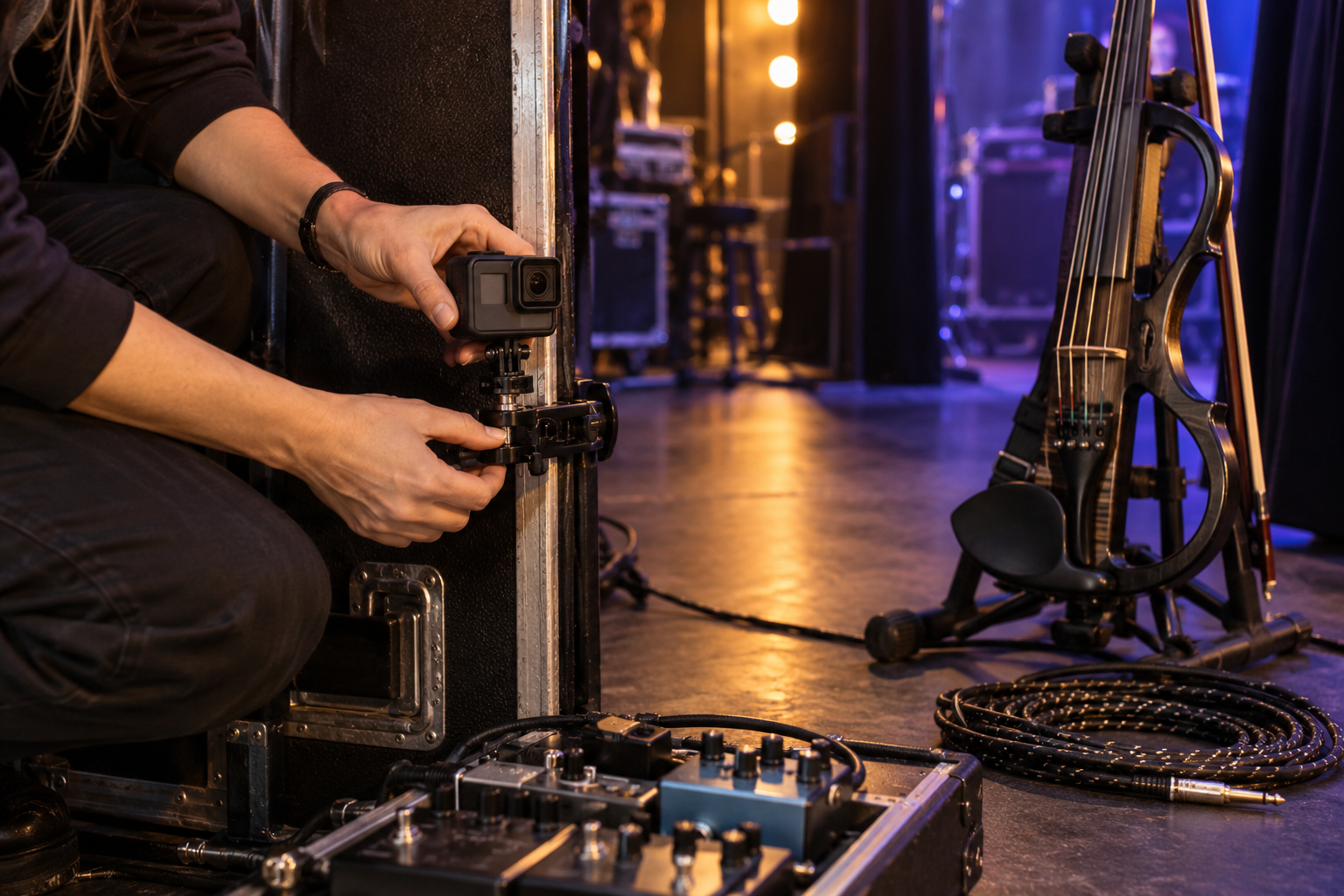
GoPro HERO13 Black is a sensible all-round comparison because its small body and established mount ecosystem suit the unconventional, repeatable viewpoints that make a performance edit feel alive. Use it for a secured low side angle or a compact rehearsal camera, then match frame rate and white balance to the main camera. Pros: flexible placement and familiar accessory ecosystem. Cons: a tiny sensor cannot make a poorly lit venue look like a bright studio.
Manufacturer details · Compare Amazon listings
DJI Osmo Action 5 Pro belongs on the shortlist when a performer wants a modern compact camera for rehearsals, short-form content and secondary concert angles. It is worth comparing on the details that affect a real shoot: recording modes, battery handling, mounting adapters and whether the companion app suits the delivery workflow. Pros: strong current alternative in the category. Cons: buy the mounting and power plan with the camera, not afterward.
Manufacturer details · Compare Amazon listings
Insta360 Ace Pro 2 is relevant for a performer who shoots as a creator and wants a compact camera that can move between a tripod, handheld preparation clip and carefully mounted performance angle. Treat any product listing as a starting point; confirm the current recording modes, storage requirements and accessories before a paid shoot. Pros: creator-focused compact-camera option. Cons: a solo production still needs deliberate framing rather than a convenient screen alone.
Manufacturer details · Compare Amazon listings
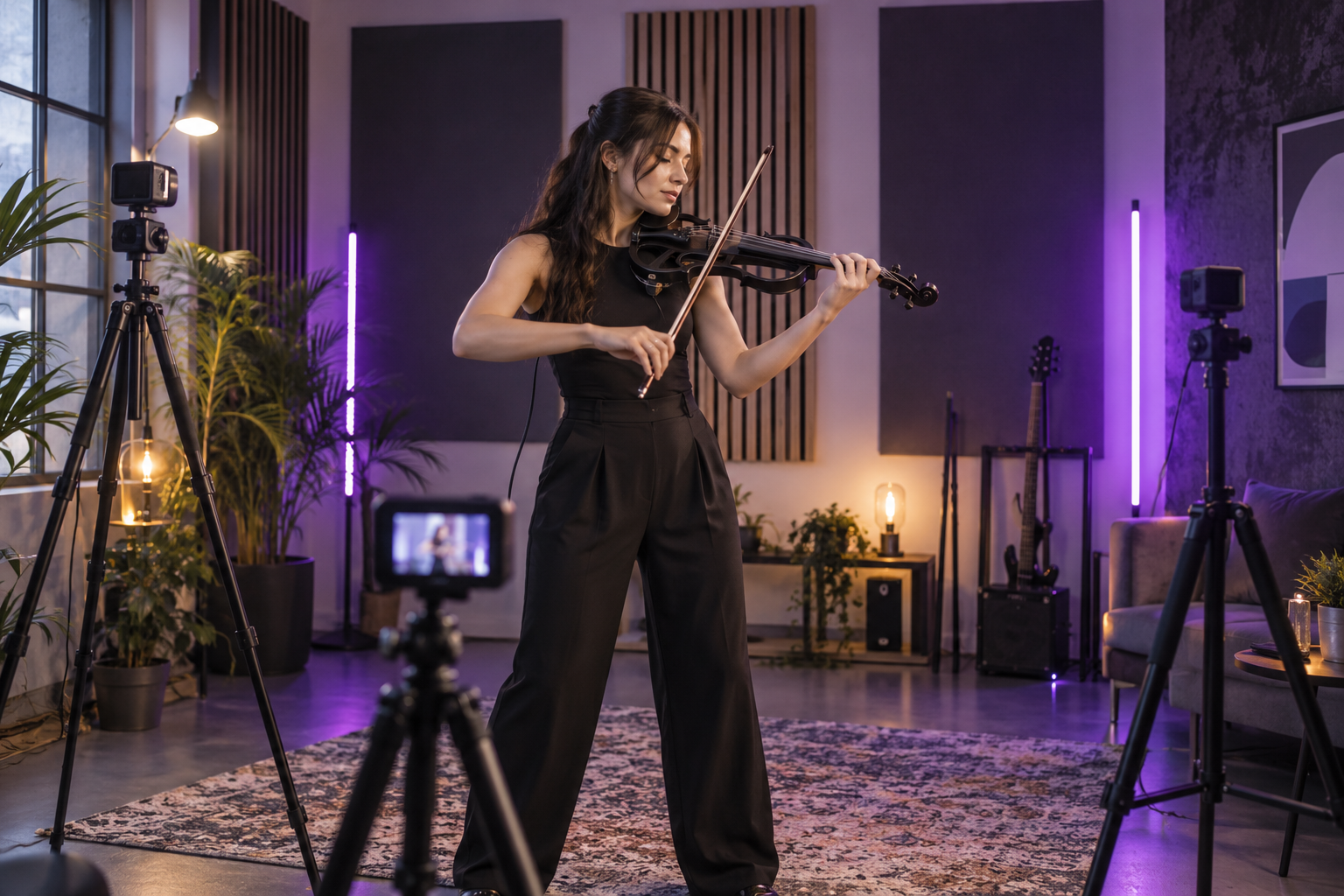
GoPro MAX2 is the 360-degree option to investigate when one securely placed camera must cover more of a room for later reframing. That can be useful for a rehearsal studio, a venue balcony or a clear backstage location. Pros: broad viewpoint capture. Cons: 360 footage increases edit time, and the camera must be positioned where it is unobtrusive, protected and safe.
Manufacturer details · Compare Amazon listings
DJI Osmo Action 4 remains useful as a price and availability reference for a performer who needs a compact secondary viewpoint, not every newest feature. Compare current bundles, batteries and compatibility with the mounts already in the kit. Pros: established action-camera format and potential value. Cons: it is an earlier generation, so distinguish it carefully from current models when shopping.
Manufacturer details · Compare Amazon listings
Insta360 X5 makes sense for a creator who specifically wants 360 capture as part of the visual language: a room reveal, an immersive stage pass or a wide rehearsal document. It is not the simplest route to a finished clip. Pros: highly flexible capture for a planned edit. Cons: exposed lenses need protection, and reframing demands time after the performance.
Manufacturer details · Compare Amazon listings
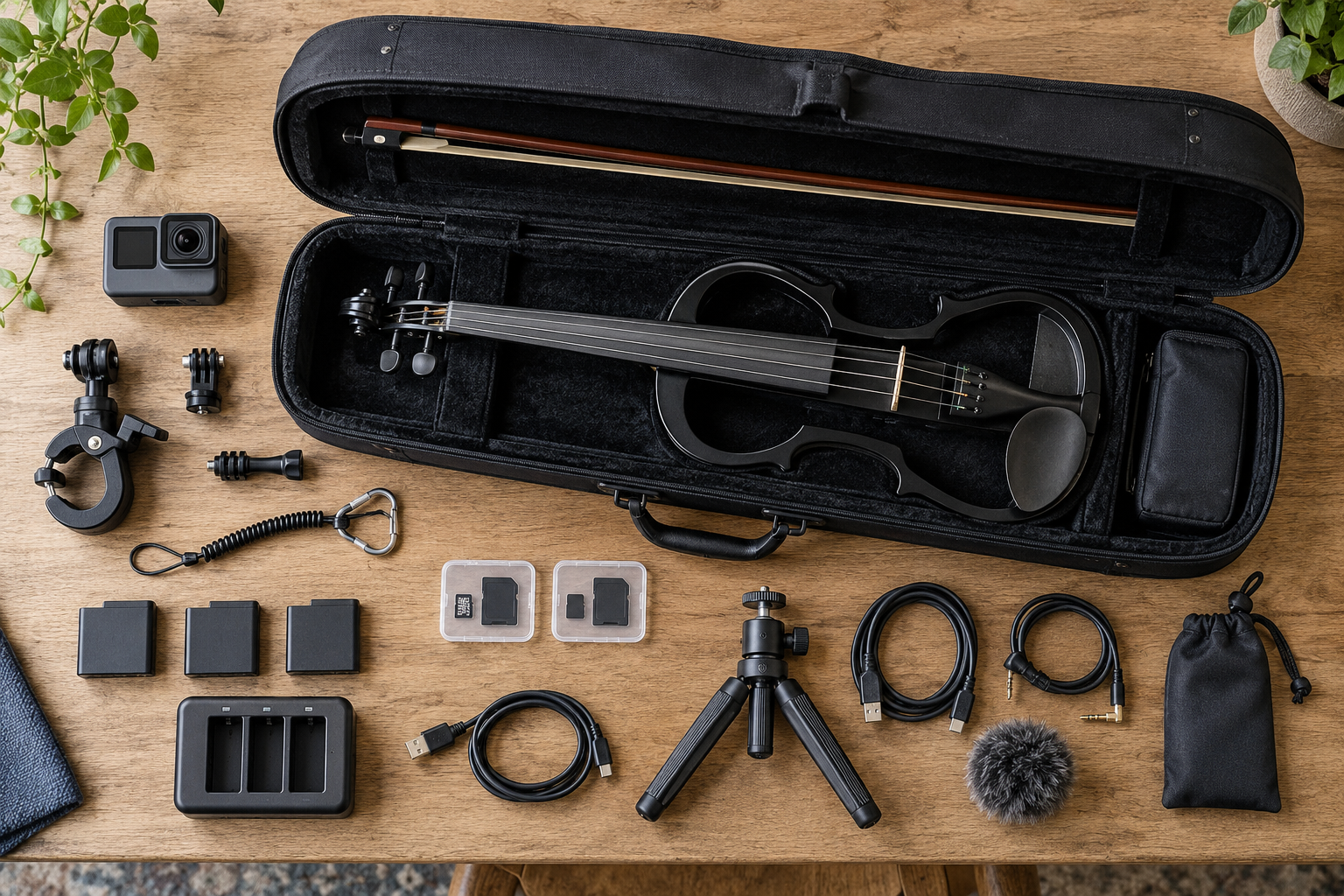
Rehearse with the whole instrument, bow and cable path. Never mount a camera where it can fall toward the performer, touch the bow, block an exit or invite an audience member to trip. Use rated mounts, a safety tether where appropriate and venue approval.
Test the chosen resolution and frame rate with the exact card, battery and editing computer. Record a full rehearsal-length clip, confirm heat behavior and make a labelled backup before leaving the venue. A short card test is not proof that a long set will complete.
Lock white balance and exposure where the camera permits, then shoot a short reference before the show. Action cameras tend toward a wide, energetic view; use that character deliberately as a cutaway, rather than forcing it to imitate the hero camera.
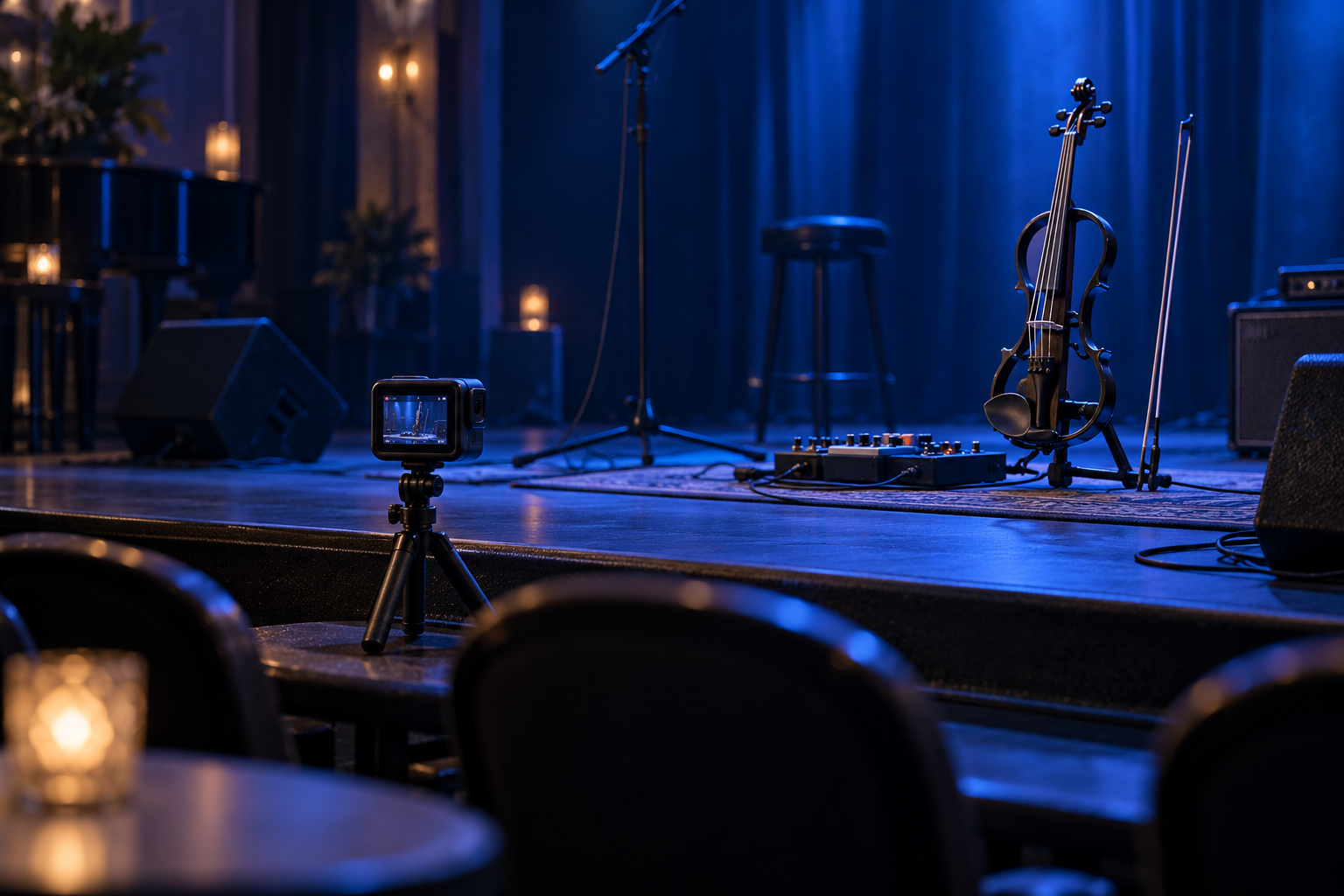
Tanya Strings is a world-class electric violin performer and content creator, so a camera earns its place only when it supports the song and protects the audience experience. I would use a compact action camera for one safe, locked visual: low and outside the bow arc, high in a clear rear corner, or backstage before the set. I would capture the concert audio independently, slate a short test, secure every mount and then stop thinking about the camera. The best second angle feels spontaneous to the viewer because the performer was free to perform.
Yes for a secondary wide, low or backstage angle, provided you lock exposure, use a safe mount and record the important audio separately.
Use the resolution your editing workflow can manage reliably. Higher resolution can help reframing, but a stable card, battery plan and clean exposure matter first.
Usually no. Its wide lens, small sensor and fixed placement make it most valuable as a complementary viewpoint rather than the hero shot.
Keep it outside the bow path and audience walkways. A low side angle, an elevated rear corner or a secured backstage view can work after a full safety rehearsal.