Violin News: Indianapolis Results, New Works and the Soundcheck Signal
This weekend’s violin news is about what happens after the hard work is visible. Karisa Chiu has won the 2026 International Violin Competition of Indianapolis, with a prize package built to turn a major performance into real career momentum. In New York, the MusicON InterArts Festival is presenting new chamber work, including a premiere for violin, clarinet, bassoon and piano. And a recent live-audio update, Shure’s WAVETOOL 4, puts practical listening and replay at the centre of technical teamwork. Tanya’s performer view: artistic identity, new repertoire and a dependable signal path are not separate worlds; they meet at the moment an audience hears you.
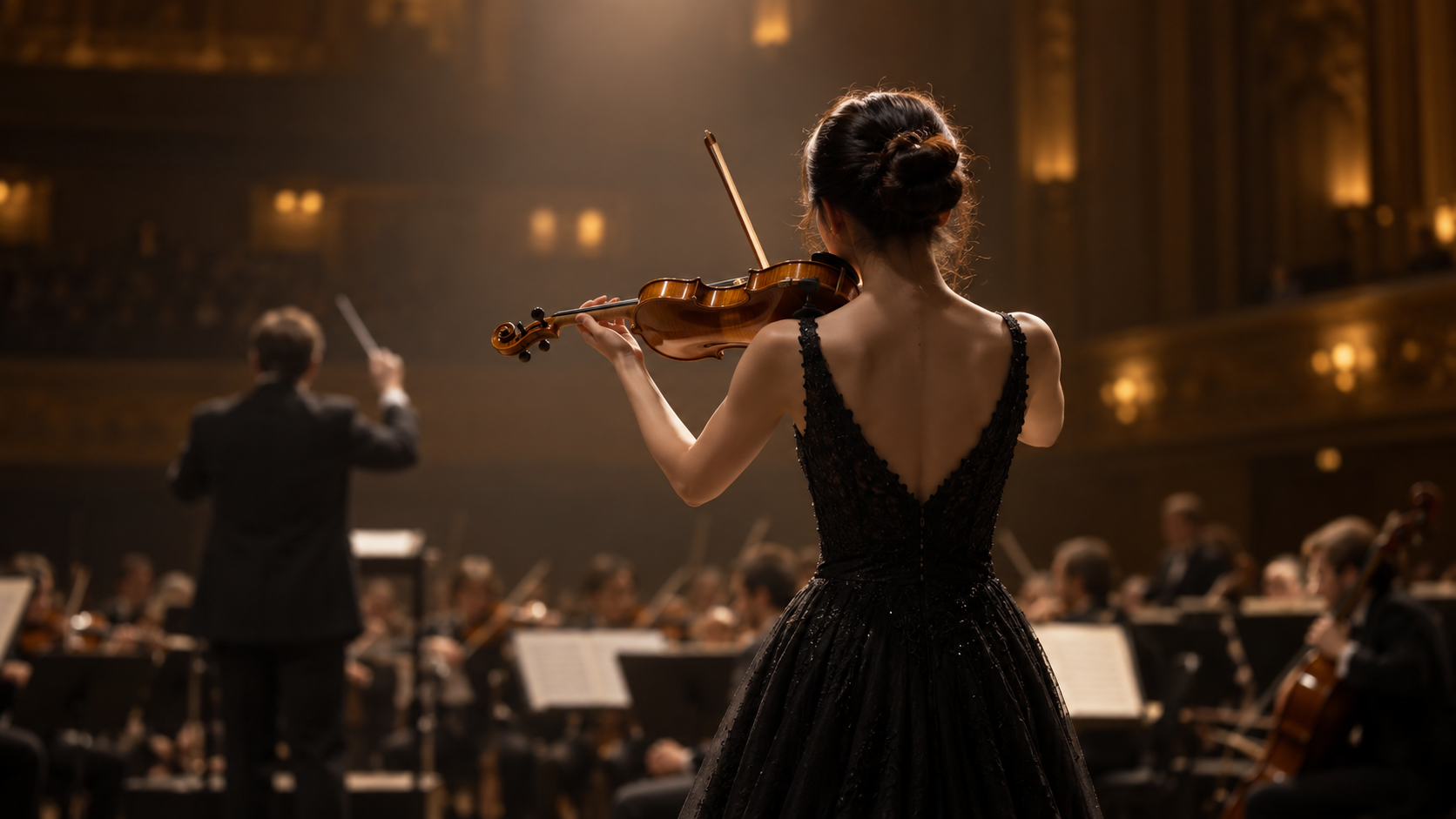
What does Karisa Chiu’s Indianapolis win unlock?
The Violin Channel reported on October 3 that American violinist Karisa Chiu took Gold at the 12th International Violin Competition of Indianapolis after performing Tchaikovsky’s D-major Concerto with the Indianapolis Symphony Orchestra under Leonard Slatkin. Elli Choi received Silver and Aozhe Zhang Bronze; the event’s official competition page confirms that the quadrennial ran through October 4.
The number that matters is not only the $75,000 first prize. The award also includes a Carnegie Hall recital debut, a recording contract, website support, management and international engagements. The competition’s format makes the bridge clear: a player must meet a serious musical test, then be equipped to carry a public story forward.
Why should performers and bookers care?
For artists, the result is a useful reminder that a concert career is built around more than a clean final round. Repertoire choice, communication, reliability, video and professional follow-through shape the opportunities that arrive next. For presenters, new laureates can be a chance to introduce a distinctive voice early, with a programme and audience context that give the artist room to be more than “the competition winner.”
- Build a short, current performance reel before major appearances.
- Keep a clear one-paragraph artistic statement ready for presenters.
- Plan the first post-event release or live clip while the performance is still resonant.
Tanya’s performer take: awards can open the door, but a recognizable sound and a ready-to-share performance story keep it open.
How is MusicON making room for new string writing?
The fifth MusicON InterArts Festival ran in New York on October 3–4 with ten concerts and 63 new chamber works. Its opening programme included Trois nouvelles, Taige Wang’s new work for violin, clarinet, bassoon and piano. It is a modest but meaningful counterpoint to the competition headline: the violin’s future also depends on performers and organisers who put unfamiliar scores in front of a live room.
New music does not need to be framed as homework for an audience. A player can give listeners an entry point with one sentence about colour, rhythm, a personal connection or the moment in a programme where the piece changes the air. That same instinct matters in classical crossover and electric-violin sets: an original work lands better when its sound world and visual pacing have been considered before the lights come up.
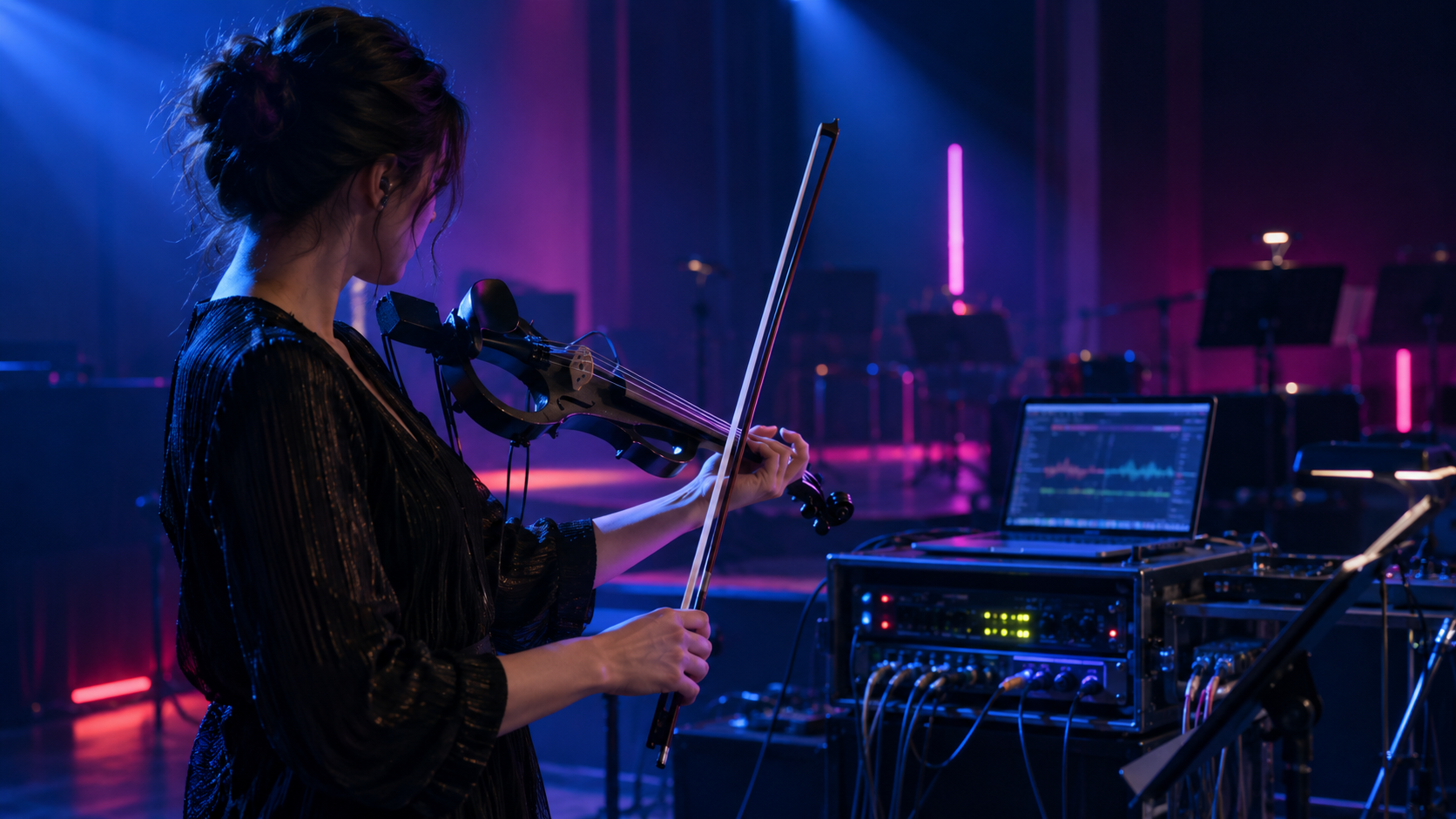
Why is backstage listening part of performance craft?
In its September 9 announcement, Shure introduced WAVETOOL 4, software designed for live, theatre and broadcast teams. Its new version adds system-wide instant replay, expanded channel capacity and shared communications around monitoring. This is not a product cue for every solo violinist to buy software. It is a reminder of a more useful principle: a successful soundcheck is an act of listening, not just watching levels.
For an electric violinist, that means arriving with a simple signal map: instrument or pickup, pedalboard if used, DI or interface, monitor preference and a short reference passage. For an event planner, it means assigning someone who can listen from the room as well as the desk. The best technical team hears the first hint of scratch, hum, latency or an over-bright top end before the audience does.
What should music fans watch next?
Watch the first concerts and recordings that grow out of Indianapolis, the new works that find a second performance after MusicON, and the quieter production choices that let artists sound like themselves. Tanya Strings brings the same performer-first thinking to world-class electric-violin shows and creator-led performance: make the musical voice vivid, make the technology dependable and give every audience a clear reason to remember the moment.