Violin News: An Electric Premiere, Gstaad’s Field and a Live Concerto Weekend
This weekend’s violin news links three different kinds of public performance. In Philadelphia, Network for New Music presents a programme with a solo electric-violin work and five world premieres on October 4. In Switzerland, the Alberto Lysy International Violin Competition has named 18 players for its October 8–10 Gstaad edition. And in Columbus, Aubree Oliverson is playing Dvořák’s Violin Concerto across the October 2–3 Masterworks concerts. Tanya’s performer view: whether the instrument is amplified, judged or placed in a standard concerto programme, the essential job is the same—make a clear musical identity reach a room.
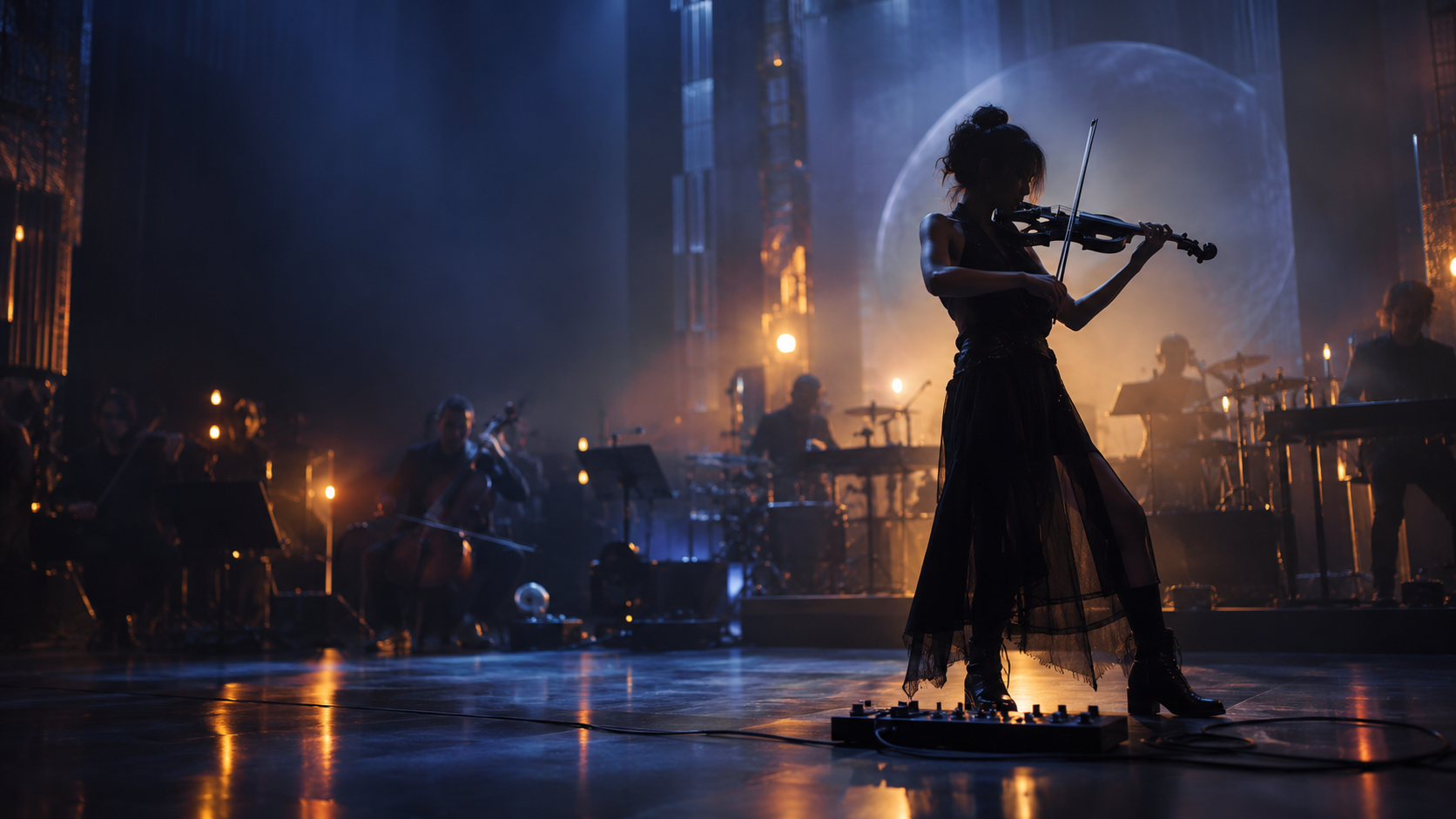
Why does a solo electric-violin premiere matter?
On October 4, Philadelphia’s Network for New Music presents Crossfade: Philadelphia/Network Re-Sounding at Settlement Music School. The organisation bills the afternoon as five world premieres, including Andrew Davis’s Song for the Road for solo electric violin. That single programming detail is important: electric violin is being used as a deliberate concert-music voice, not merely a colour added after the fact.
A new solo work asks the player to solve more than notes and rhythm. The performer must choose an instrument, gain structure and monitoring approach that retain bow detail while allowing the piece’s electronic character to speak. The artistic result depends on phrasing, but it also depends on whether the audience hears the first quiet attack, the decay of a held note and the shape of every dynamic change.
What should a live electric-violin artist take from it?
Build the technical plan into rehearsal from day one. Save a spare cable, write down baseline EQ and leave room for a fast soundcheck adjustment when the room changes. For a promoter, list the electric violin clearly in the programme and provide a short stage plot. That helps audiences understand that the amplified instrument is central to the work, not a novelty.
Tanya’s performer take: electric violin has its strongest impact when the sound design supports the musical sentence. A beautiful tone should still have somewhere to go.
- For performers: rehearse the quietest gesture at realistic monitor volume.
- For planners: confirm power, DI inputs and monitoring before doors open.
- For fans: new-music programmes are a chance to hear an instrument in a role that has not yet become predictable.
What is happening in Gstaad next week?
The official Alberto Lysy International Violin Competition has published its field for October 8–10 in Gstaad: 18 violinists from a preselection of 183 applications representing 44 nationalities. The competition lists a CHF 10,000 first prize, a four-year loan of a Jean-Baptiste Vuillaume violin, and an audience-award recital invitation at the 2027 Gstaad Menuhin Festival & Academy.
Those details explain why a compact competition can have genuine reach. A cash prize helps, but an instrument loan, a return engagement and a visible audience connection can shape the months after the result. For emerging soloists, the performance after the prize often matters more than the prize-night photograph.
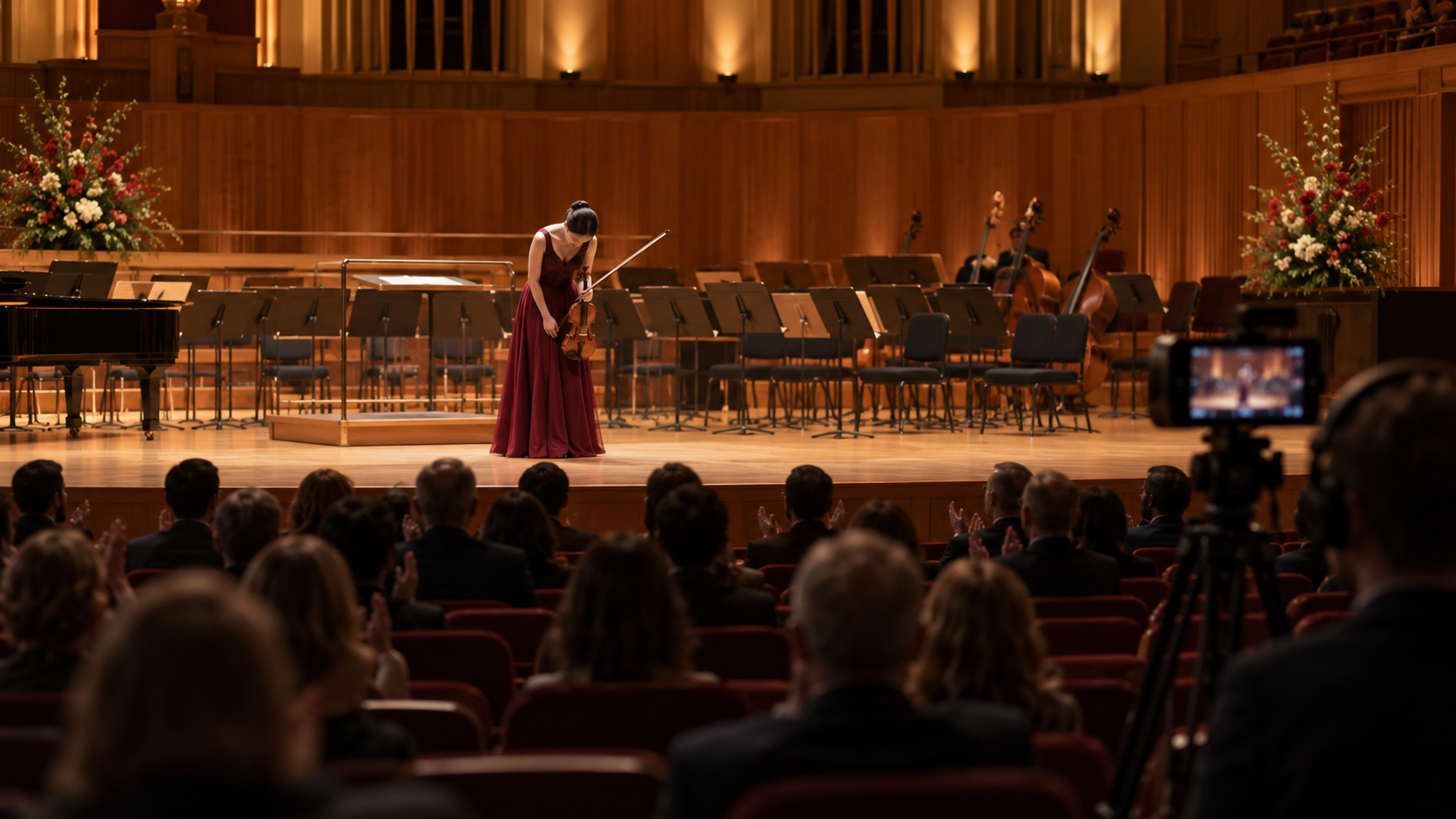
How does a familiar concerto keep its live edge?
The Columbus Symphony closes its October 2–3 programme with violinist Aubree Oliverson in Dvořák’s Violin Concerto, alongside William Grant Still’s Serenade and Brahms’s Second Symphony. The concert is a useful reminder that a standard-repertoire solo turn still needs a distinct point of view. Audiences may know the composer’s name; they come back for the player’s timing, colour and willingness to make the room listen.
That translates directly to crossover and event work. A recognizable melody can give a mixed audience a way in, while arrangement, pacing and a confident stage presence make it personal. For content creators, one short clip should show that contrast: establish the tune, then show the specific tone or rhythmic idea that identifies the artist.
What should performers watch this week?
Watch how a new electric work is presented as repertoire, not accessory. Watch how Gstaad turns competition prizes into future performance opportunities. And watch how a concerto soloist gives familiar material a present-tense feeling. Tanya Strings approaches every stage from that same performer-first place: world-class electric violin means musical command, a vivid visual identity and production choices that let the audience feel the intention behind every phrase.