Violin News: David Garrett, an Electric Concerto and Tour Monitoring
Today’s violin news connects an imminent crossover release, an electric-violin orchestral date and a useful look inside arena monitoring. David Garrett’s Immortal arrives on October 9, while the BBC Scottish Symphony Orchestra will present Enrico Chapela’s Antiphaser, a concerto for electric violin and orchestra, in Glasgow on October 29. Shure has also published a current case study from 5 Seconds of Summer’s tour, where monitor engineers handled 16 stereo wireless mixes. Tanya’s direct takeaway: a compelling violin show now needs a clear artistic premise, a production plan and a reliable way for performers to hear the detail they create.
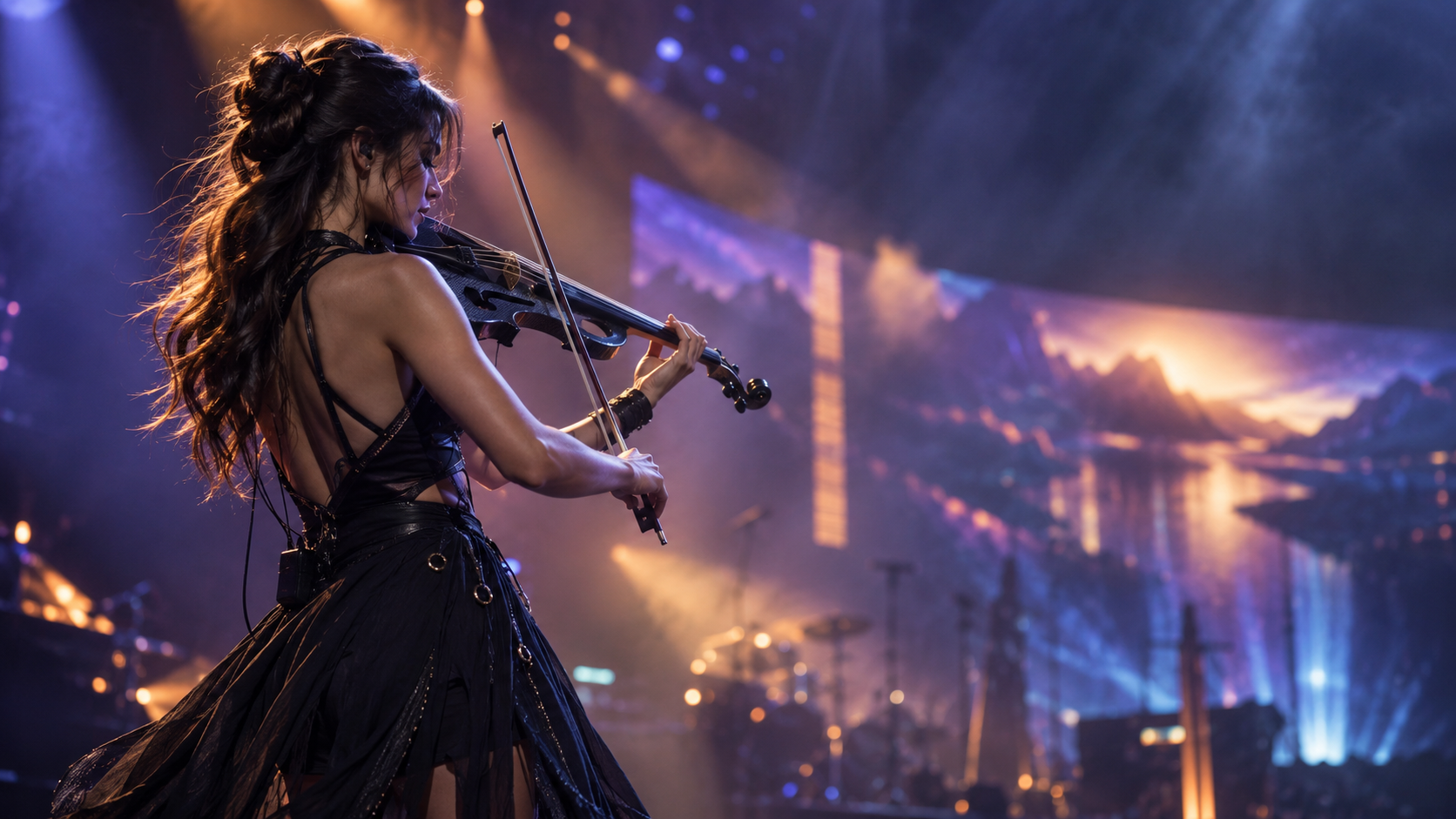
What is David Garrett bringing to the crossover conversation?
Deutsche Grammophon says David Garrett’s new album Immortal is scheduled for October 9. The project moves from Bach and Mozart through Debussy to John Williams, with newly arranged material and a worldwide tour planned from February 2027. That span is not merely a catalogue exercise. It frames one violinist as the person who can carry a listener between concert-hall repertoire, film music and large-scale live presentation.
For a performer, the useful idea is the framing. Crossover works when the audience understands the route before the first note: what familiar sound will return, where will the surprise arrive, and what makes the artist’s version different? A strong title, visual world and sequence of clips can make that premise legible without reducing the music to a gimmick.
Tanya’s performer take: build a short set around a single emotional promise, then let arrangements earn the contrasts. One polished hero performance, a close-up rehearsal moment and a concise show announcement are often a stronger content arc than a stream of unrelated excerpts.
- For event planners: describe the through-line, not only the repertoire list.
- For performers: choose visual cues that change with the musical chapter.
- For fans: listen for how arrangement changes the violin’s role rather than simply adding volume.
Why does Chapela’s electric violin concerto matter?
On October 29, the BBC Scottish Symphony Orchestra brings Enrico Chapela’s Antiphaser, a concerto for electric violin and orchestra, to Glasgow City Halls with Chloë Hanslip and conductor Mihhail Gerts. The official listing places it beside Arvo Pärt and Eduard Tubin and identifies it as a BBC co-commission. In other words, the amplified instrument is entering the programme as a compositional voice with its own dramatic job, rather than appearing as a novelty between familiar pieces.
That matters for the electric-violin field. An orchestral setting makes tone design, stage balance and the player’s movement part of the artistic proposition. The instrument has to read in the room, carry through the orchestra and still feel like a violin rather than a generic lead sound. It is a demanding, exciting brief.
Tanya’s performer take: even on a smaller stage, decide what the electric violin contributes that an acoustic setup cannot: a sustained texture, a rhythmic attack, a filtered solo colour, or a controlled transition into backing tracks. Then speak with the sound team early about inputs, monitoring and the moments that need extra headroom.
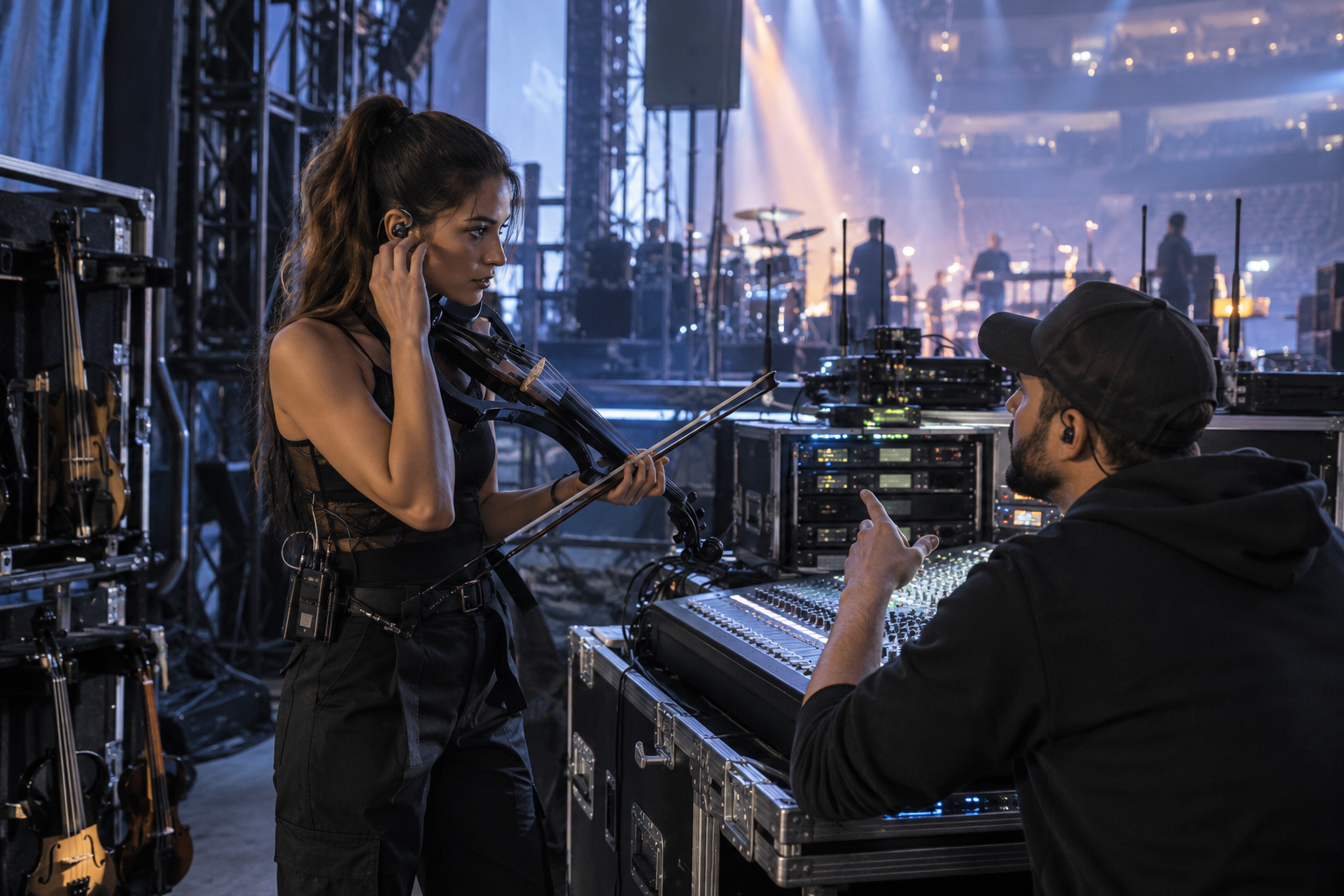
What can a touring monitor story teach a violinist?
Shure’s September 22 touring case study reports that 5 Seconds of Summer’s production used 16 stereo wireless monitor mixes across arenas and festival stages. The article focuses on RF stability, monitoring software and a newly introduced narrowband transmission mode. The exact system is not a shopping list for a solo player; it is evidence that monitoring deserves real production attention when the stage gets complex.
For a violinist, a dependable mix protects musical choices. Intonation, bow contact and timing are easier to trust when the player can hear the direct tone, harmonic information and cues without fighting the room. Before a show, ask for a simple priority list: violin first, playback or rhythm second, talkback or band cues third. Keep one reference track available for soundcheck, and be able to explain whether you need more body, less high-end edge or more click.
What should the next violin show borrow from these stories?
Garrett’s release shows the value of a legible artistic world. Chapela’s concerto shows that electric violin can claim serious space inside an orchestral programme. The Shure report shows that technical confidence has to support the performance, not trail behind it. Tanya Strings works from that performer-led perspective: world-class electric violin playing, clear stage design and creator-ready storytelling that gives an audience a reason to stay with the journey.