Violin News: Indianapolis, Three Strads and a Chamber-Music Weekend
This week’s violin news is about making a live programme feel specific. The International Violin Competition of Indianapolis is moving into recitals with a new Jessie Montgomery work for solo violin; Suntory Hall has just placed three Stradivarius violins in one focused Tokyo programme; and Slovenia’s Sonc Festival has closed with a string-trio night built for its own community. These are different scales of event, but they share a useful idea: a memorable performance is not defined by prestige alone. It needs a clear listening hook, an intentional sequence, and a reason for an audience to stay with the music after the first impressive moment.
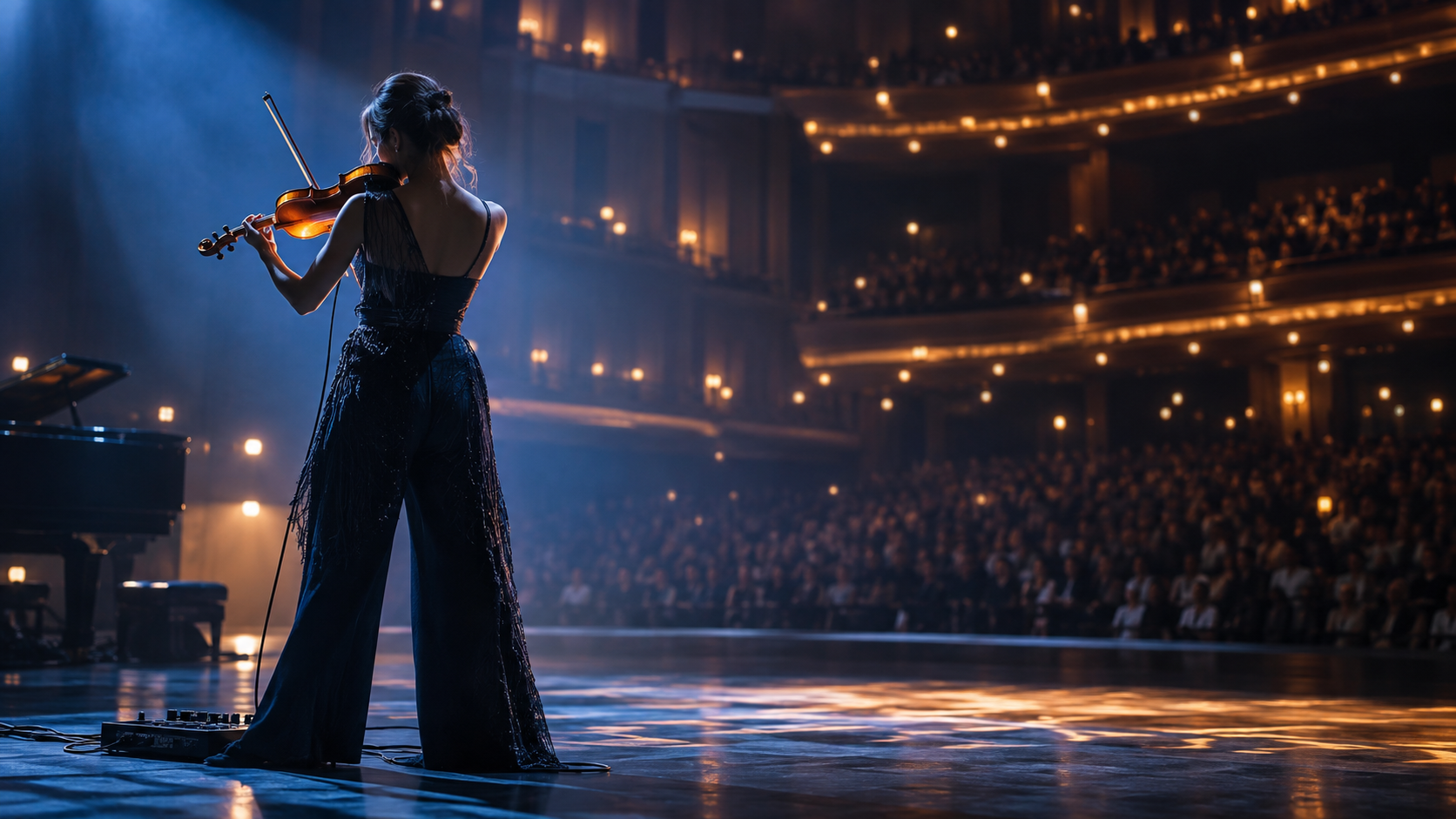
Why is Indianapolis’ new solo-violin commission worth hearing?
The International Violin Competition of Indianapolis schedule places its sixteen advancing participants in full recitals on September 28. Each programme includes the world premiere of Rhapsody No. 3 for Solo Violin, a 2026 commissioned work by Jessie Montgomery. That makes the round more than a standard-repertoire comparison. Every competitor has to make space for a living composer’s language while still shaping the nineteenth- and twentieth-century works around it.
For listeners, a commission is a useful reset button. Familiar pieces arrive with decades of recorded reference points; a new work asks the room to listen in real time. Watch how each player establishes pulse, colour and silence before the difficult details pile up. Those choices often reveal more about a performer than sheer speed.
Tanya’s performer take: an electric violin set also needs one clear present-tense moment. It might be a new arrangement, a loop that begins from a single live phrase, or an unreleased bridge into a known melody. Give the audience something they cannot get from an old clip, then make the transition into it feel inevitable.
- For performers: build a short spoken or visual frame around new material.
- For presenters: name the composer and explain why the commission belongs in the programme.
- For fans: compare the different readings, especially pacing and the shape of the ending.
What can three Stradivarius violins reveal in one evening?
On September 26, Suntory Hall’s Encounter with Stradivari 2026 brought Risa Hokamura, Sergej Krylov and Boha Moon to the Blue Rose hall, each playing a different Stradivarius: the 1715 “Joachim,” 1710 “Camposelice” and 1709 “Engleman.” The programme was built for contrast rather than a museum display. Bach’s reconstructed concerto for three violins sat beside Paganini, Sarasate, Saint-Saëns and Vivaldi concertos, with the Suntory Hall Chamber Music Academy Special Ensemble.
This is a smart lesson in programme design. Historic instruments become meaningful when listeners can hear them working through different musical jobs: a shared baroque texture, a sharply projected virtuoso line, and a dialogue with an ensemble. The evening also makes room for younger academy players, so the concert connects conservation, performance and a next generation of colleagues.
Tanya’s performer take: stage gear tells a similar story. A pickup, wireless system or effects chain is interesting only when it helps an audience hear a musical choice. When you plan a showcase, put contrast in the set list: one dry, close sound; one wide cinematic section; one duet or call-and-response. Let the changes serve the song, not the inventory.
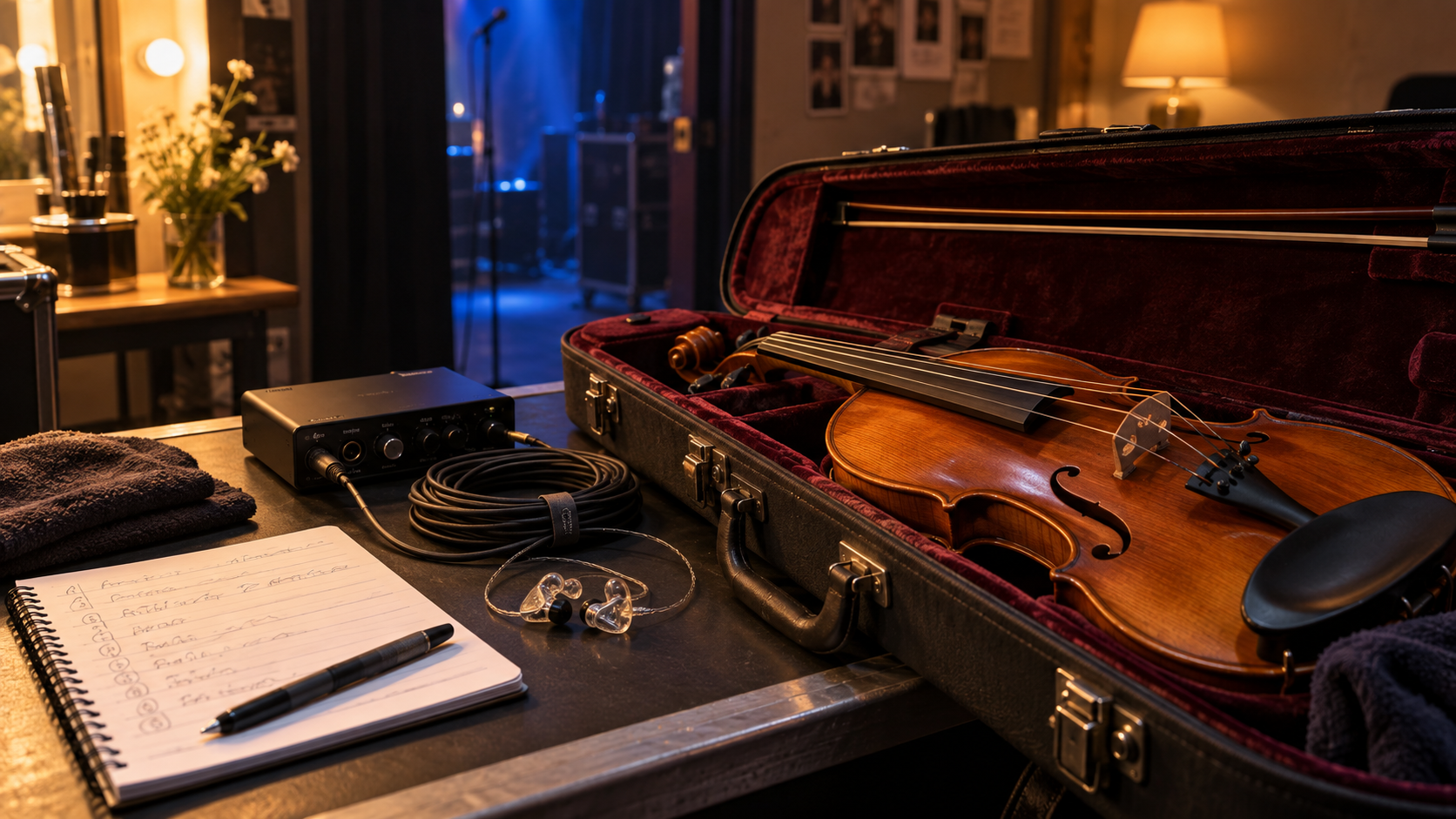
How did the Sonc Festival make chamber music feel local?
The Sonc Festival in Radeče, Slovenia finished its September 22, 25 and 26 run with a string-trio programme performed by founder and violinist Tanja Sonc, violist Ribal Molaeb and cellist Josephine Knight. The final concert paired a Goldberg Variations arrangement with Schubert, Halvorsen, Mozart, Penderecki, Sibelius and Dohnányi. Two days earlier, Daniel Hope joined Sonc, Molaeb, Knight and pianist Jacques Ammon for Grieg, Matija Krečič and Brahms.
What matters here is the scale of the invitation. The festival’s official page describes its aim as bringing high-level chamber music to its home environment, and it backs that up with a children’s matinee as well as the evening concerts. Major visiting names matter, but continuity and local welcome are what turn a date on a tour schedule into a cultural relationship.
For event planners, that is a valuable model. A polished headliner performance can be the centrepiece, while a short afternoon set, an open rehearsal, or a young-audience format gives the programme a longer life. For performers and creators, the equivalent is simple: do not let the show end at the final bow. Publish one useful aftermath: a close-up of the arrangement, a thank-you clip from the room, or a short rehearsal moment that points toward the next date.
What should performers carry forward this week?
Indianapolis asks competitors to give new music a convincing first public life. Suntory Hall uses rare instruments to sharpen listening rather than merely display value. Sonc Festival shows that chamber music can carry international quality and still speak directly to a local room. For every violinist, electric violin performer, presenter or fan, the shared takeaway is practical: build the programme around contrast, give people one new thing to remember, and make the musical story easy to follow from the hall to the next post.