Tanya Strings · 21.09.2026
Best Envelope Filter Pedals for Electric Violin: Let Bow Dynamics Shape the Sweep
For a compact electric violin rig, I would start with the EHX Nano Q-Tron for straightforward sensitivity and output controls, or the DOD 440 for a simple sweep-direction choice. Choose Spatial Delivery V3 when preset recall matters, Spectrum when detailed response shaping matters, and BOSS AW-3 for vowel-style effects. Micro Q-Tron is worth comparing if its larger enclosure and simpler controls suit your board. The deciding test is whether soft and strong bow strokes produce useful, repeatable filter movement. These pedals react to signal dynamics; audition them with your own pickup and preamp before buying for a live set.
Some links in this article are affiliate links. I may earn a commission if you make a purchase, at no extra cost to you.
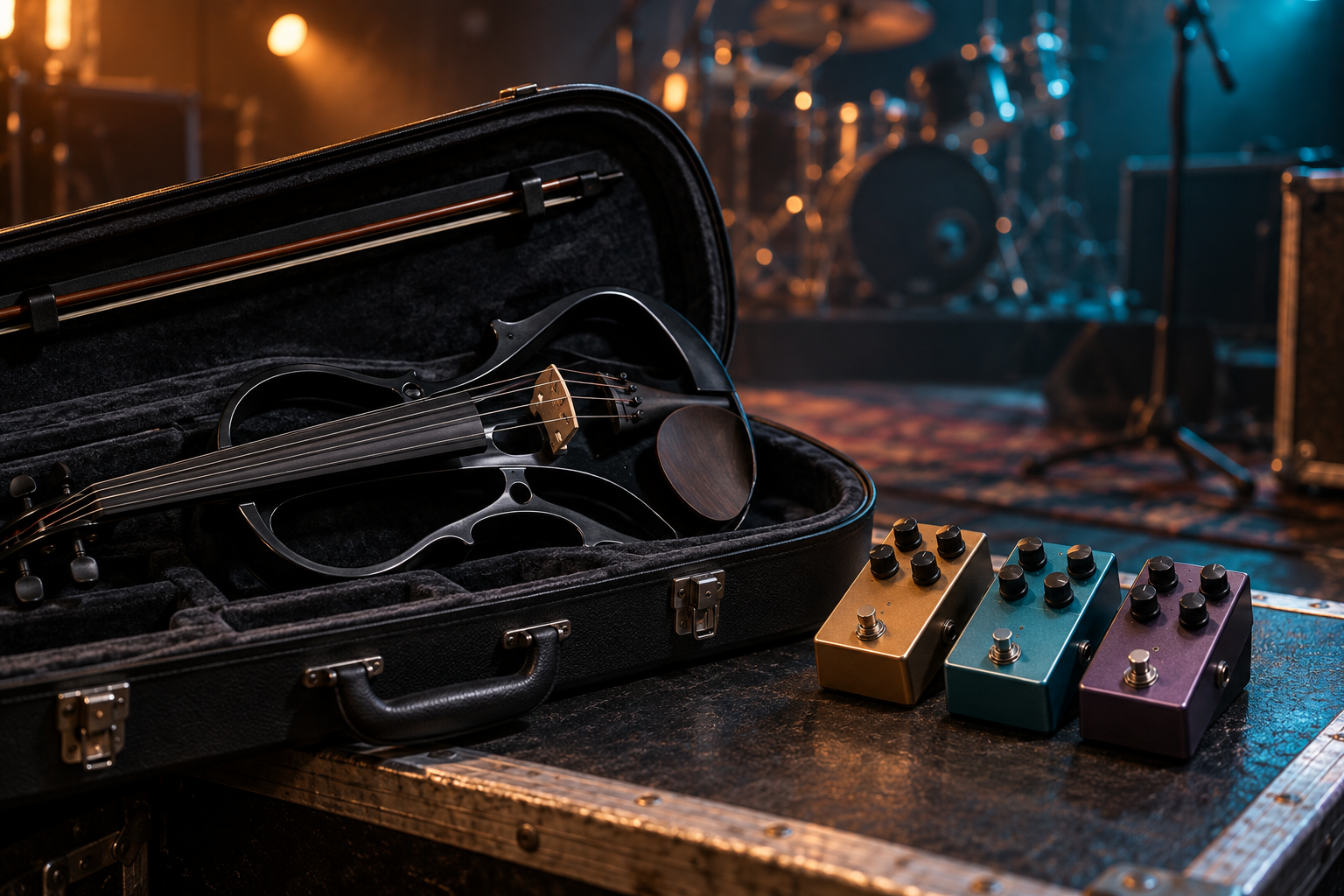
Which envelope filter fits your performance plan?
| Pedal | Key distinction | Suggested use | Tradeoff |
|---|---|---|---|
| Nano Q-Tron | Sensitivity, Q, output volume | Compact analog setup | No preset recall |
| DOD 440 | Sensitivity, range, up/down switch | Quick soundcheck adjustments | Fewer shaping controls |
| Spatial Delivery V3 | Six presets; up/down/sample & hold | Contrasting song textures | Check version before buying |
| Spectrum | Separate response and tone controls | Careful bow-response tuning | More parameters to manage |
| BOSS AW-3 | Dynamic, tempo and vowel modes | Expressive crossover phrases | Controls depend on mode |
| Micro Q-Tron | Three filter modes; analog circuit | Simple alternate enclosure | No separate output-volume knob |
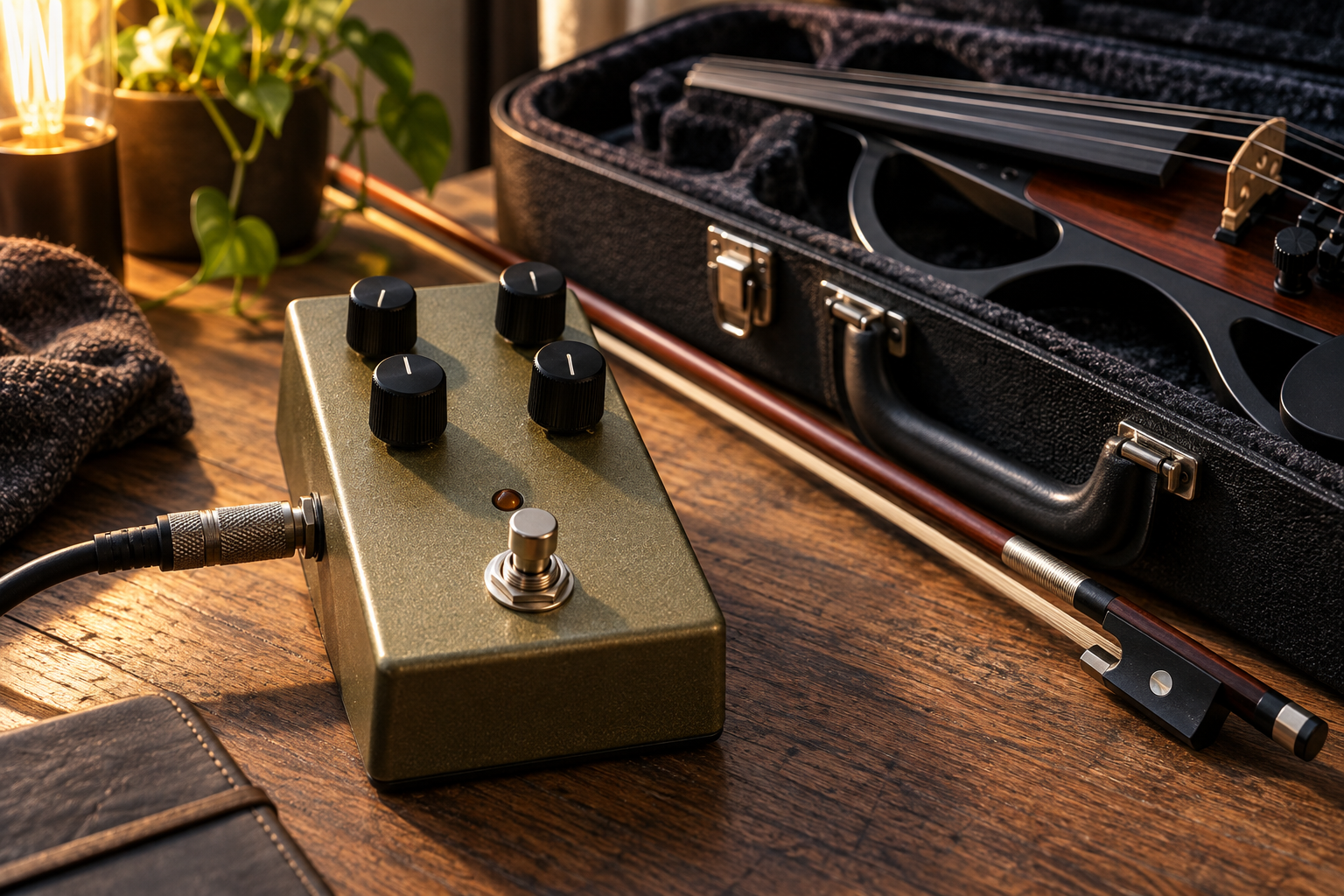
Which six pedals would I shortlist?
Why start with Nano Q-Tron?
Nano Q-Tron gives you Drive for sensitivity, Q for resonance, three filter modes and a separate output-volume control. I would shortlist it for an occasional funk phrase in a wedding or crossover set: match bypass loudness, then find a sensitivity setting that responds to deliberate accents. Too much Drive can leave the filter at the top of its sweep. Its compact enclosure is useful when the instrument rig must share space with show-control pedals. Manufacturer details.
Pros: Compact; independent output trim; three filter modes. Cons: No presets; strong input signals need careful sensitivity adjustment.
Compare listings on Amazon: EHX Nano Q-Tron
When is DOD 440 the clearer choice?
The 440 offers Level, Range and an up/down switch. Despite its name, Level adjusts envelope sensitivity rather than acting as a conventional final volume control. That makes the labeling worth learning before a dark-stage adjustment. I would choose it when one repeatable filter sound matters more than an extensive control panel, then test both switch positions against the lowest and highest strings. The manufacturer lists guitar, bass and keys; violin suitability remains an audition judgment. Manufacturer details.
Pros: Few controls; sweep-direction choice; true bypass. Cons: Less detailed shaping; no dedicated output trim or preset recall.
Compare listings on Amazon: DOD Envelope Filter 440
Why pay attention to Spatial Delivery V3?
The current V3 adds six preset slots and assignable expression control to upward, downward and sample-and-hold modes. I would shortlist it for a set that moves between restrained rhythmic filtering and deliberately synthetic textures. Range affects envelope sensitivity in the sweep modes and speed in sample and hold, so those settings solve different problems. Check the exact revision: an older used Spatial Delivery does not automatically include the V3 recall features. Manufacturer details.
Pros: Six stored settings; three distinct behaviors. Cons: Version confusion in listings; sample and hold does not follow bow accents like envelope mode.
Compare listings on Amazon: EarthQuaker Devices Spatial Delivery V3
Who benefits from Spectrum?
Spectrum separates input gain, sensitivity and speed from frequency, resonance, depth and mix controls, with secondary functions accessed through its ALT button. I would compare it for recorded performance content where a subtle response must survive repeated takes. The useful purchase is the ability to shape how the filter reacts, not simply the largest number of sounds. Prepare the settings ahead of filming and document any secondary controls so a rushed adjustment does not alter the wrong parameter. Manufacturer details.
Pros: Detailed response shaping; mix control; broad tonal range. Cons: More setup decisions; secondary controls need preparation.
Compare listings on Amazon: Source Audio Spectrum Intelligent Filter
When does BOSS AW-3 earn a place?
AW-3 combines dynamic wah with Humanizer vowel effects and additional tempo or expression-control options. I would shortlist it for a short vocal-like hook inside an electric violin arrangement. Start by choosing the mode, because one knob can serve different purposes across modes. Its dedicated bass input is an alternative voicing route, not proof that every five-string violin should use it. Compare the appropriate input choices at matched levels and choose by the actual arrangement. Manufacturer details.
Pros: Vowel textures; dynamic and timed options; optional expression control. Cons: Mode-dependent operation; extra controller costs if needed.
Compare listings on Amazon: BOSS AW-3 Dynamic Wah
Why still compare Micro Q-Tron?
Micro Q-Tron keeps the analog envelope approach with Drive, Q and low-pass, band-pass or high-pass selection. It has a larger enclosure than Nano Q-Tron and lacks the Nano’s separate output-volume knob. I would consider it when the physical control layout suits the board or a well-priced listing makes sense. There is little reason to buy both for the same basic job without first hearing a useful difference in your own rig. Manufacturer details.
Pros: Direct controls; three filter modes; analog design. Cons: Larger footprint; output matching may require another gain stage.
Compare listings on Amazon: EHX Micro Q-Tron
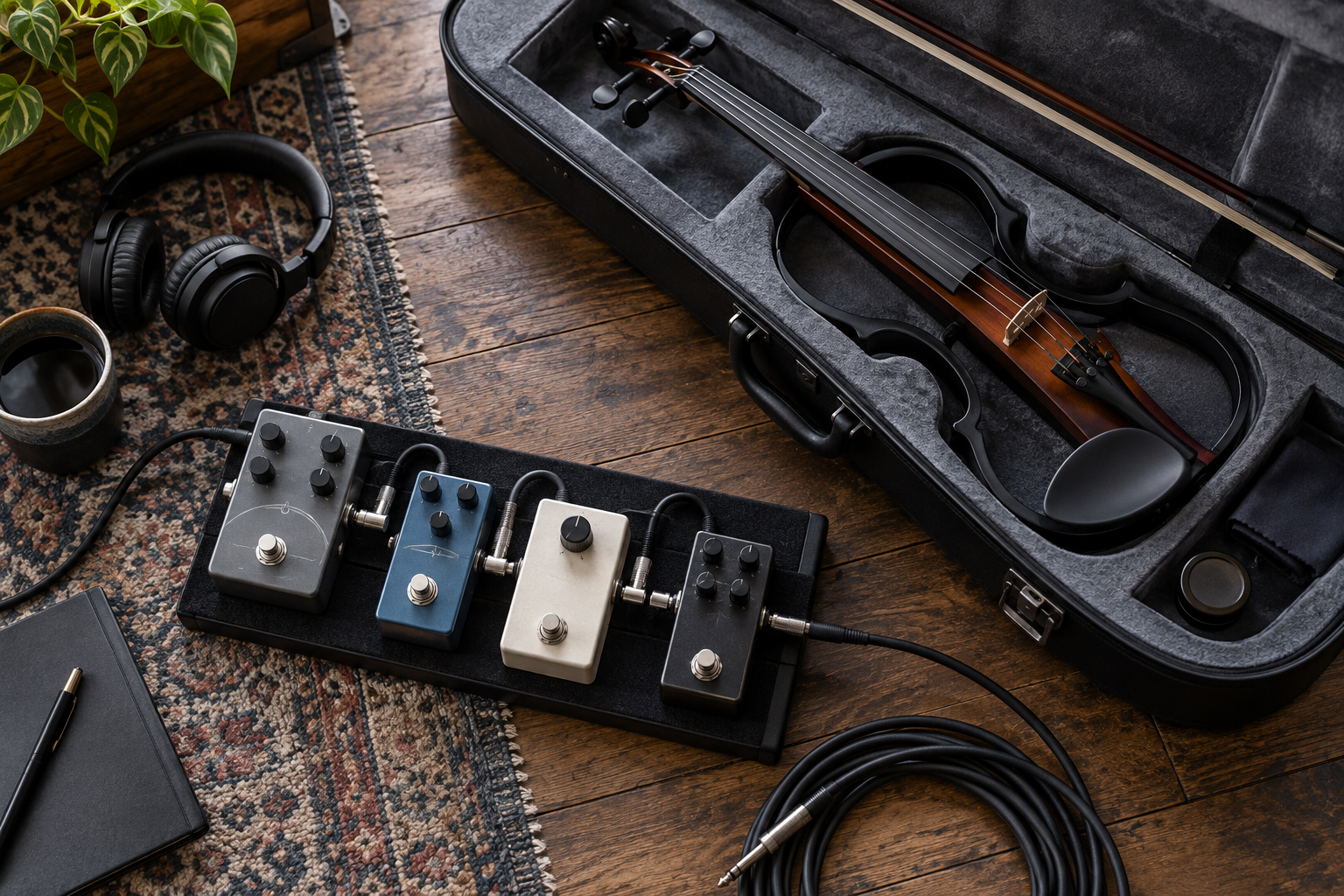
How should you choose an envelope filter before ordering?
Does it respond to your bow rather than just your loudest note?
An envelope follower reads changing signal level. A sustained bow can hold a filter open, while detached strokes give it more opportunity to close and reopen. Test a soft sustained note, an accented phrase and quick separated notes at your normal instrument volume. If the filter stays open throughout, reduce sensitivity or upstream gain. If it barely moves, increase sensitivity gradually before assuming a different pedal is necessary.
Where should the filter sit in the signal chain?
Start with the pickup’s required impedance-matching preamp, then the filter, then drive and time effects. This is a practical audition starting point: a compressor placed first can reduce the dynamic contrast that triggers the sweep, and a boost first changes sensitivity. Passive piezo pickups may need a suitable high-impedance preamp. Keep its output within the pedal’s permitted input range and verify the manual for each device.
Do presets or a mix control justify the extra cost?
Pay for presets if several songs need reliably different settings. Pay attention to a dry/wet mix option if the filtered sound loses too much definition for your arrangement. For one short effect in a set, a simpler pedal can be easier to operate. Include power, patch leads, board space and any controller in the budget; a lower listing price alone does not establish the lower total cost.
What should you confirm in an Amazon listing?
Check the exact model and revision, condition, included power supply, voltage, polarity and current requirement. These Amazon links are product searches, so results may include accessories or other revisions and do not guarantee stock. Compare delivered cost and return terms with local dealers. Manufacturer information was checked on September 21, 2026; these are buying recommendations, not measured violin shootout results.
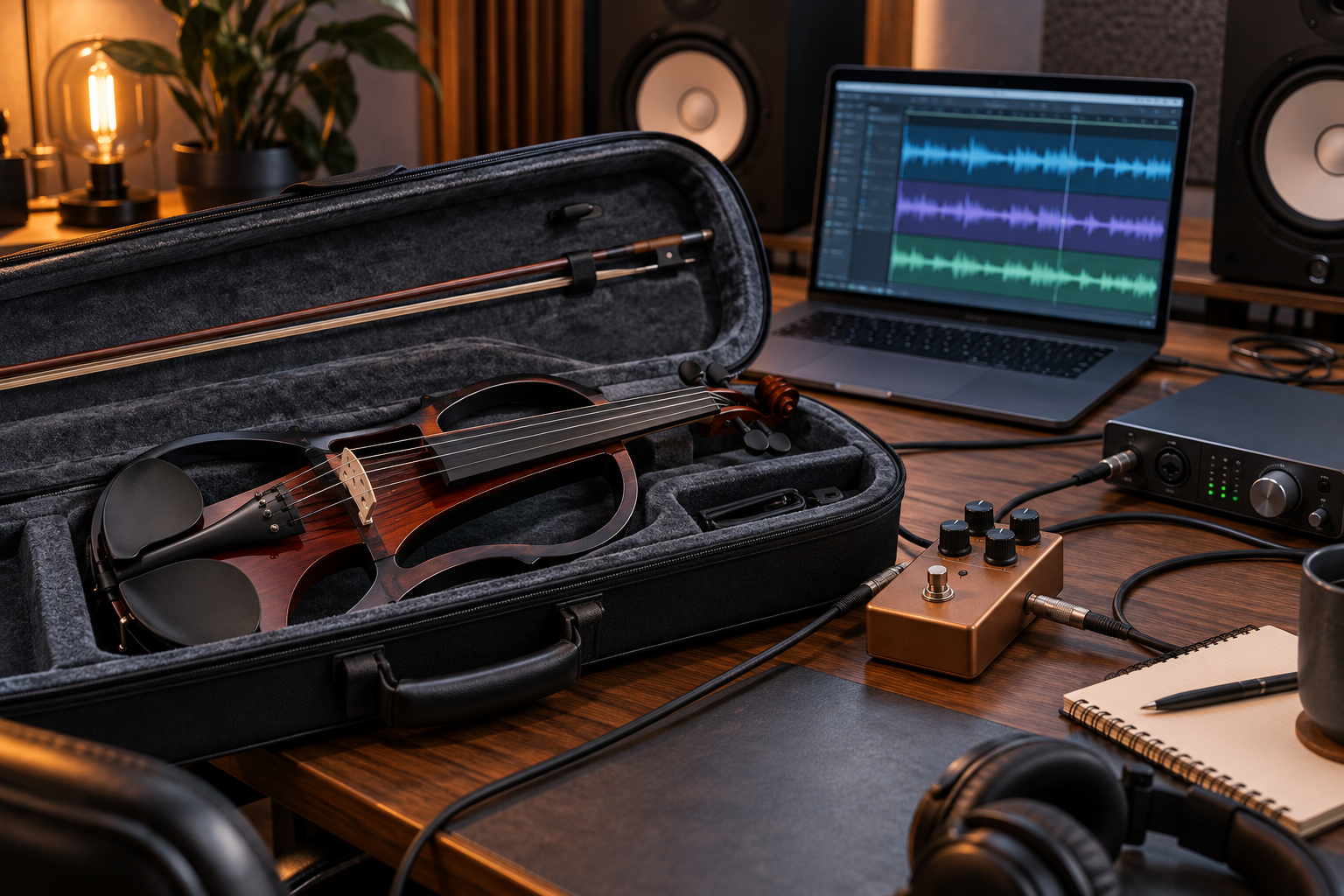
How would Tanya Strings use dynamic filtering in a show?
Tanya Strings is a world-class electric violin performer and content creator. My priority would be a musical gesture that the audience can hear immediately: a short accented phrase, a contrasting solo section or a filmed arrangement with a distinctive timbre. I would reserve the strongest resonance for a deliberate moment, then return to a clear violin sound. These recommendations apply manufacturer features to performance needs; they do not claim personal ownership or hands-on testing of every pedal.
How can you check bow response during soundcheck?
Set a moderate monitor level and compare bypass with the effect engaged. Play the same phrase on every string, first alone and then over the backing track. Listen for lost low notes, piercing resonance and a filter that never resets between accents. Adjust one control at a time, recheck the loudest bow stroke and rehearse the bypass cue while standing in playing position. Record a short direct take and a room clip: both the sound in the mix and the visible movement belong to the performance.
What else should electric violinists know about envelope filters?
FAQ
Is an envelope filter the same as a foot wah?
No. An envelope filter moves according to signal dynamics. A foot wah follows pedal position, allowing a sweep independent of bow attack. Choose according to how you want to perform the phrase.
Will it track the pitch of my violin?
An ordinary envelope filter follows the level envelope, not the musical pitch. A high note does not automatically produce a higher filter setting than a loud low note.
Why does the effect stop moving on long notes?
A sustained input can keep the envelope high. Reduce sensitivity, check upstream gain and test separated articulations. Some settings intentionally create a nearly stationary filtered sound.
Can I use it with an active electric violin?
Often yes, provided the signal level fits the pedal input. Start with a moderate output and adjust sensitivity; verify the manufacturer’s input and power requirements.
Should I buy a filter if my multi-effects unit already has one?
First test the existing effect with your pickup and playing dynamics. Buy a separate pedal when its controls, sound, recall or switching solve a specific limitation in that setup.