News · 2026-09-19
Violin News: Hamburg’s Fantasy, Sant Pau’s Richter and Van Diemen’s Fiddles
September 19 brings three contrasting ways to hear strings travel between musical worlds. Hamburg’s Mendelssohn Festival links violin virtuosity with a fantasy theme; Barcelona’s Sant Pau Festival places Max Richter alongside established chamber repertoire; and Australia’s Canowindra festival hosts Van Diemen’s Fiddles, bringing Baroque and folk approaches into the same ensemble. These are current programme listings checked on September 19, 2026, rather than newly announced projects or concert reviews. For Tanya Strings, a world-class electric violin performer and content creator, the useful question is how a programme makes stylistic changes feel intentional, while keeping the individual sound of each musician audible.
How does Hamburg turn virtuosity into a theme?
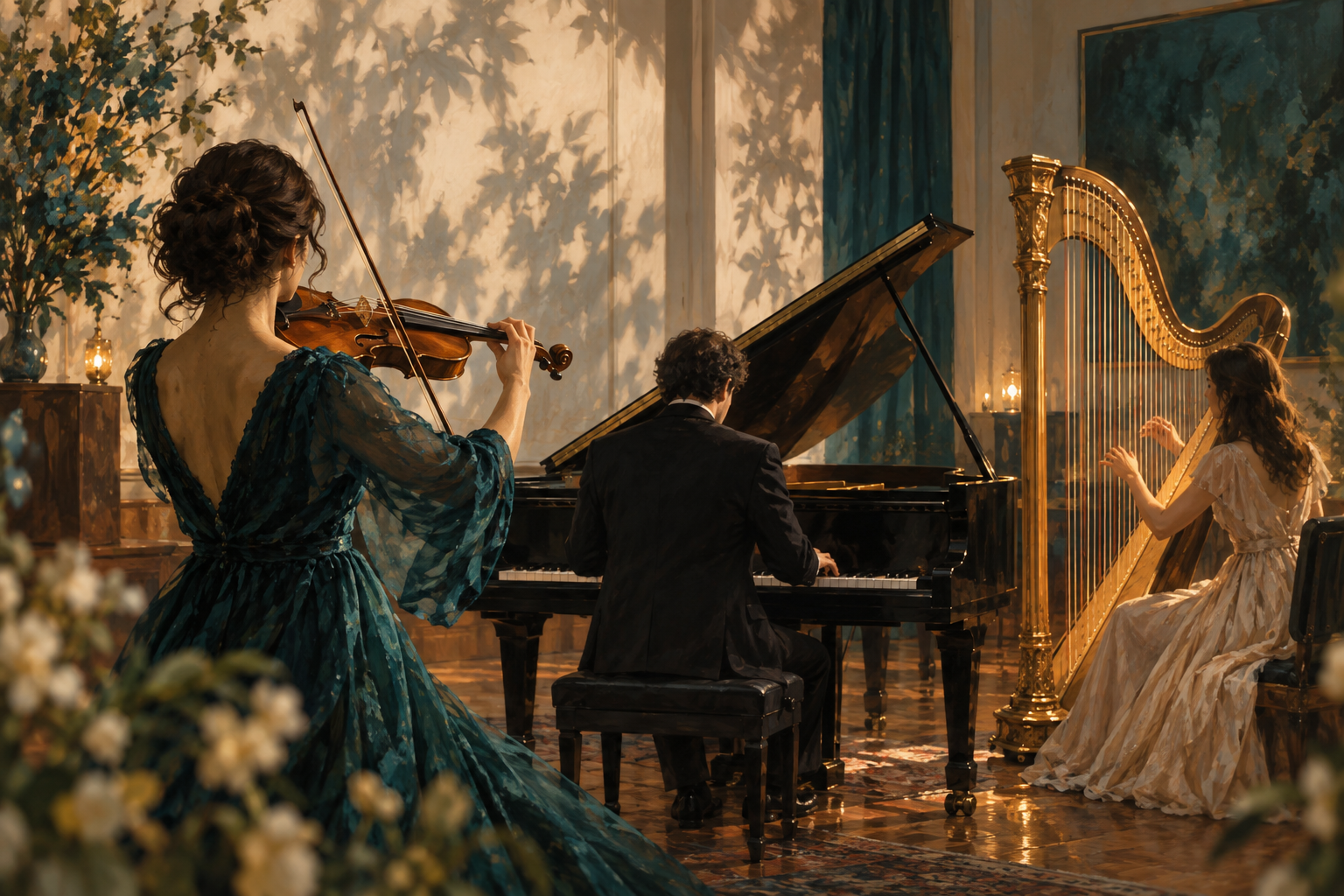
The Elbphilharmonie’s official programme lists Jiyoon Lee in “Elves at the Elphi” on September 19 at 7:30 p.m. in the Kleiner Saal. Weber’s violin sonata and Sarasate’s Carmen Fantasy appear alongside harp and chamber works, with a suite from Mendelssohn’s A Midsummer Night’s Dream.
A fantasy theme can give a varied bill a recognisable identity before the audience knows every composer. The challenge for performers is to carry that idea through musical pacing. A brilliant violin passage, a more transparent texture and a change of instrumental colour each offer a different kind of attention. Putting them together asks for a convincing sequence, rather than simply a collection of impressive pieces.
Tanya’s performer take: a themed electric violin set benefits from the same discipline. Choose what connects the arrangements, then let articulation, register and space provide contrast. A familiar melody can be the entry point, but the next piece needs a reason to follow it. For a short performance video, that connection should already be audible in the opening phrase.
Why put Richter next to Brahms in Barcelona?
The Sant Pau venue listing schedules its September 19 concert for 8 p.m. It includes Richter’s Mercy for violin and piano, On the Nature of Daylight, Shostakovich’s Five Pieces for Two Violins and Piano and Brahms’s First Piano Quartet. George Tudorache, Sebastian Tegzeșiu and Miguel Colom are among the listed violinists.
This pairing invites a practical listening comparison: how does a sustained musical atmosphere prepare the ear for more sharply changing material? Audiences do not need to rank those approaches to enjoy their differences. A programme can offer both immediate emotional recognition and a longer musical argument, provided the transition gives listeners enough time to adjust.
Tanya’s performer take: arrangement length deserves as much attention as the choice of song. In a crossover show, a repeating texture can establish a mood, while a more active violin line changes the sense of motion. Event planners should hear the proposed sequence, including the spaces between pieces, before deciding where speeches or other programme elements belong.
What happens when Baroque and folk players share a stage?
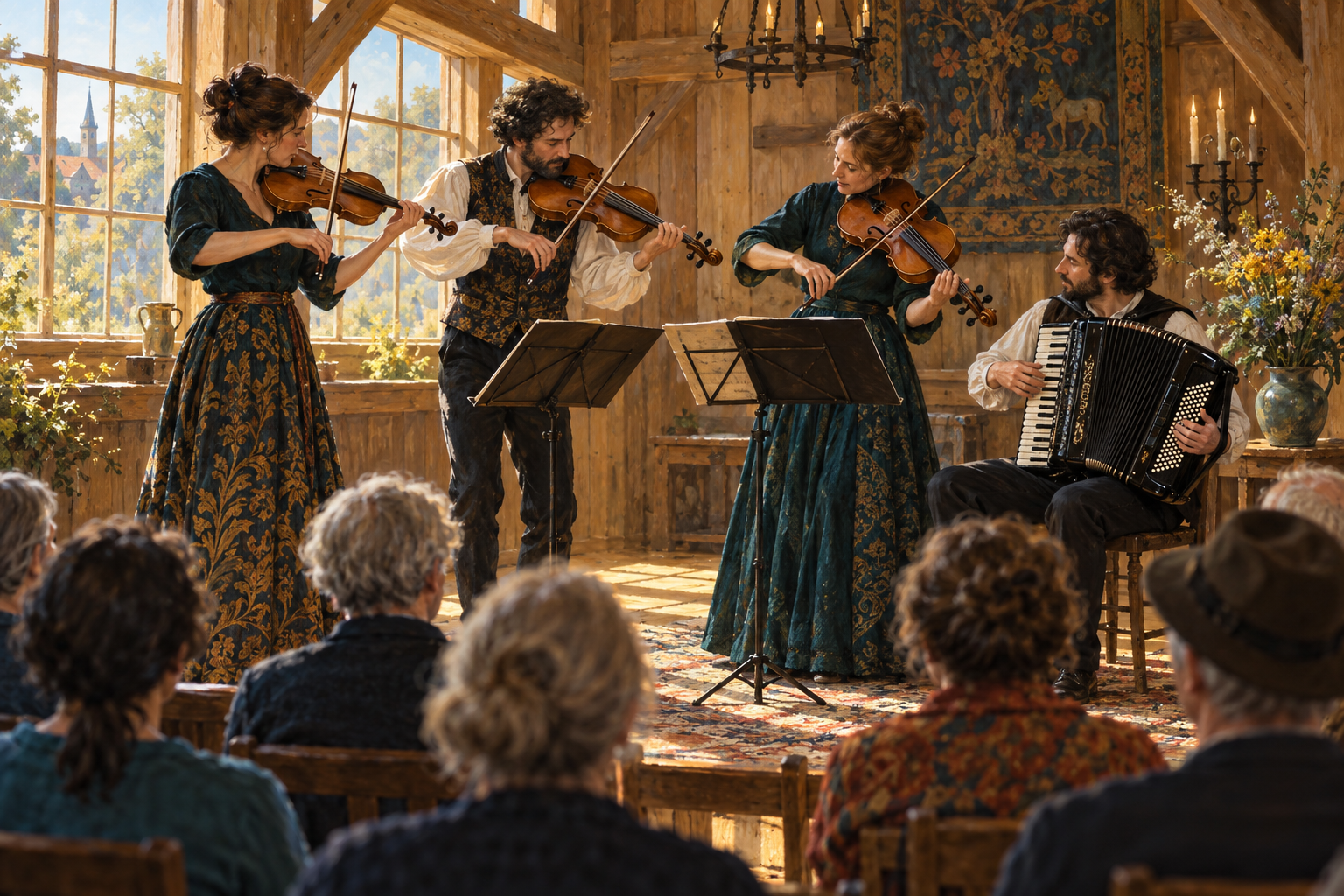
Van Diemen’s Band’s festival page lists Van Diemen’s Fiddles at Gooloogong Log Cabin Hall on September 19. Julia Fredersdorff, Rachel Meyers and Katie Yap bring Baroque violin, klezmer and folk fiddling, and viola experience; Dave McNamara joins them on piano accordion. Their advertised repertoire reaches from Hildegard of Bingen to the present.
The interest here is in how musicians with different habits negotiate a shared phrase. Bow attack, ornament, pulse and the point at which a note relaxes can all carry stylistic identity. A mixed ensemble gives listeners a chance to notice those choices. It also gives performers an alternative to treating crossover as a change of backing track around an otherwise unchanged solo part.
Tanya’s performer take: collaboration works best when each player brings a specific musical contribution. Before adding effects or a programmed beat, agree on where the pulse sits and who leads a transition. Leaving another musician’s accent intact can make a shared arrangement more memorable than smoothing every difference into one uniform sound.
What should listeners and event planners take from today’s programmes?
These three listings offer ideas for hearing transitions: between instrumental colours, between different kinds of musical development, and between playing traditions. They do not establish how the concerts sounded or how audiences responded. The performer observations here are editorial interpretations of the advertised programmes.
- Music fans: follow the official event links for attendance details and any programme changes. Times quoted are local to the venues.
- Performers: listen to a rehearsal recording of the joins between pieces, as well as the pieces themselves.
- Planners: ask what connects the set, how long each section lasts and where the room needs quiet.