News · 2026-09-18
Violin News: Ottawa Welcomes Two Players, Gatto Meets Film and Kansas City Offers Moonlight
Today’s violin roundup connects an orchestral appointment announcement with two very different concert invitations. Canada’s National Arts Centre introduced two incoming violinists yesterday; Brussels pairs Lorenzo Gatto’s Vasks concerto with a Shostakovich film concert tonight; and Kansas City offers a free, informal programme built around moonlight and dance. The announcement is dated September 17, while both concerts are scheduled for September 18, 2026. For Tanya Strings, a world-class electric violin performer and content creator, the shared interest is how musicians make their work legible to an audience: through the people in an ensemble, a visual frame or an inviting concert format.
Who is joining Ottawa’s NAC Orchestra?
The National Arts Centre’s September 17 announcement welcomes Edmund Chung and Hee-Soo Yoon. Chung arrives after eight years with the Calgary Philharmonic; Yoon most recently played with the Canadian Opera Orchestra in Toronto. The introduction also highlights her interest in contemporary music.
An appointment story can sound administrative until it gives listeners a way to recognise the people behind a large orchestral sound. Here, the interesting editorial angle is the movement between different kinds of ensemble experience. A section player’s public identity can contain much more than a chair number, even when the performance itself asks individual personalities to work together.
Tanya’s performer take: ensemble experience matters in crossover work too. An electric violin can lead a show, but it still needs to respond to the rhythm section, guest artists and musical director. For a creator introducing collaborators, one concrete musical interest usually tells the audience more than a long list of credentials. The introduction should make the next performance easier to follow.
How will Gatto’s violin programme meet the screen?
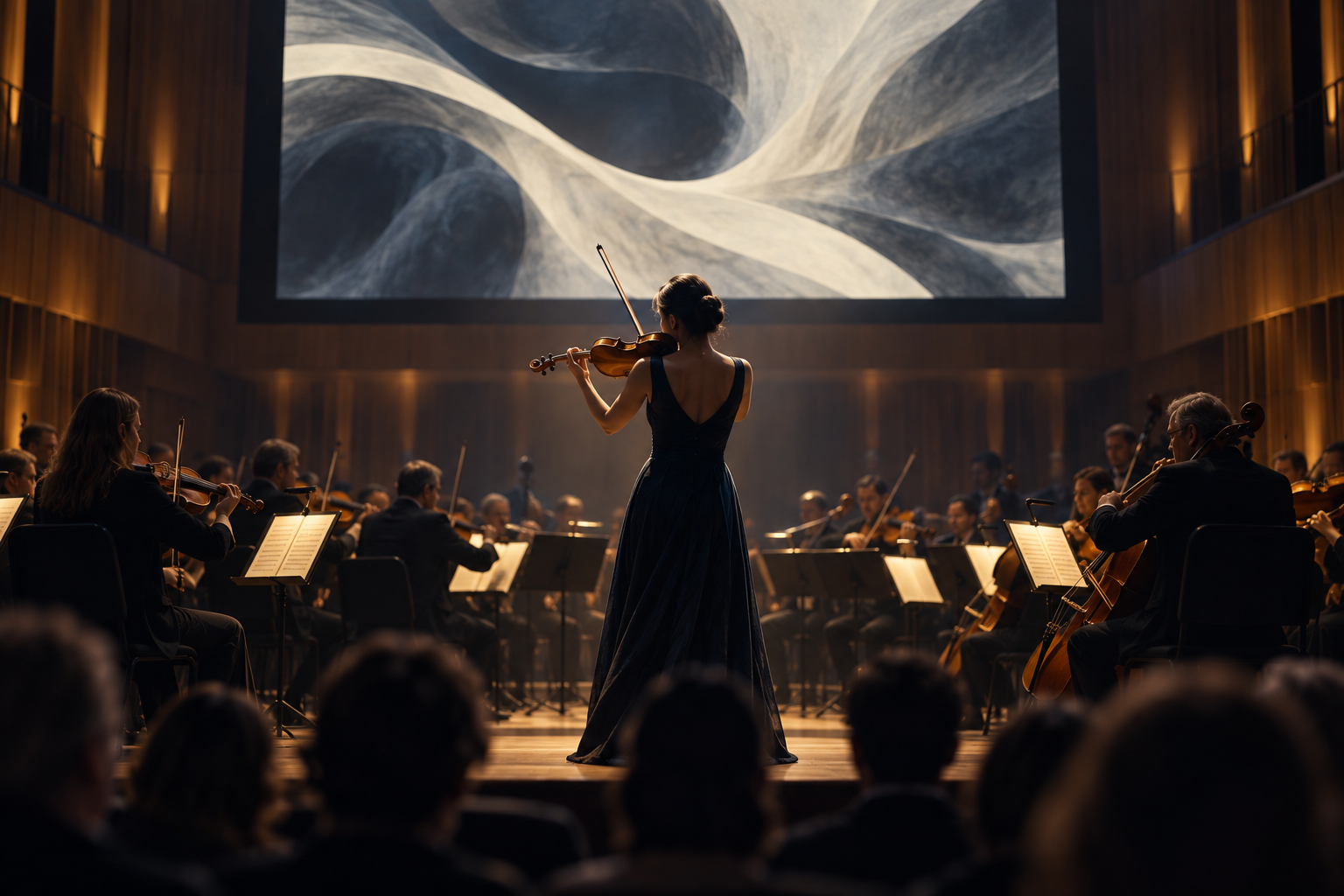
The Belgian National Orchestra’s official listing schedules Lorenzo Gatto in Pēteris Vasks’s Distant Light at Bozar on September 18 at 8 p.m., conducted by Eivind Aadland. Shostakovich’s Tenth Symphony follows with William Kentridge’s film Oh To Believe in Another World. The film accompanies the symphony; it is not advertised as a visual accompaniment to the violin concerto.
That distinction matters for listeners choosing the evening and for anyone borrowing ideas for a multimedia show. A programme can connect live music and moving images while giving different works different presentation rules. The violin does not need to compete continuously with a screen for the entire event to feel visually considered.
Tanya’s performer take: decide when an image earns its place. In an amplified violin performance, an uncluttered passage can restore attention to phrasing and physical gesture after a visually busy section. Event planners should discuss those transitions alongside lighting and playback cues. Visual production becomes more useful when the performer and production team agree on what the audience should notice at each point.
What makes Kansas City’s Moonlight concert approachable?
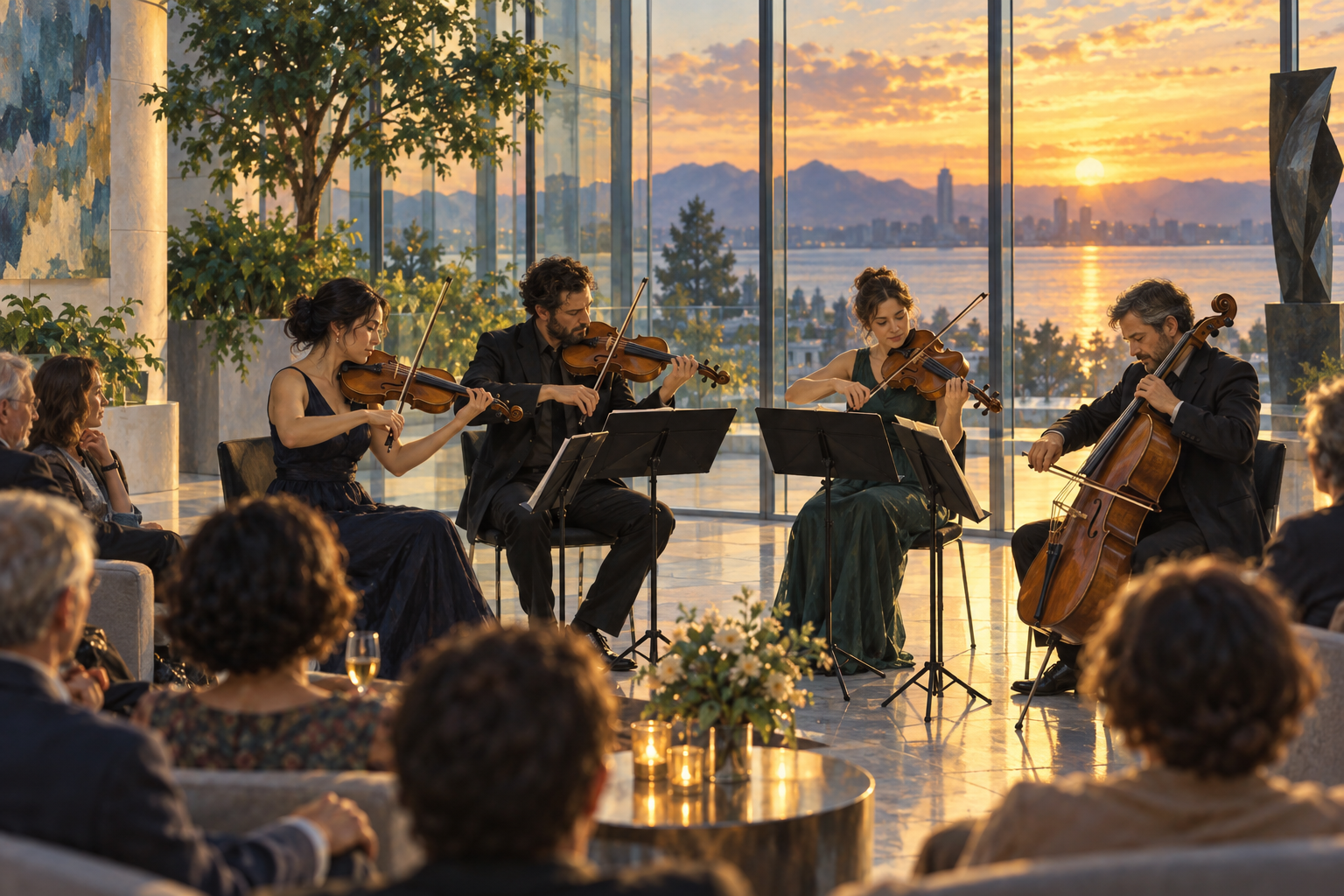
The Kansas City Symphony’s September 18 listing announces a free Happy Hour concert at 6 p.m., with lobby drinks from 5 p.m. Its programme includes William Grant Still, Boccherini and Debussy arrangements by Evan Halloin. Violinists Anne-Marie Brown and Rena Ishii are among the named musicians. Concert times here and above are local to each venue.
The invitation offers an immediate picture of the experience: an after-work arrival, a short concert and a theme that needs no specialist vocabulary. For a listener trying chamber music for the first time, those practical details can be as useful as the repertoire list. They answer the question of how the evening fits into ordinary life.
Tanya’s performer take: accessibility begins before the first note. A clear start time, a readable programme and a welcoming arrival can help a string performance reach people who would hesitate over a formal concert. For hospitality and corporate events, protect a defined listening period; a relaxed atmosphere still benefits from an agreed moment when conversation gives way to music.
What should performers and fans watch next?
These are an appointment report and concert previews, not reviews or claims about audience response. The useful comparison is between three ways of preparing attention. An artist introduction makes an ensemble more personal; a screen changes where the eye travels; a casual invitation reduces uncertainty about attending.
- Fans: use the official links for current attendance information and programme changes.
- Performers: choose one clear idea that introduces the music before adding more production.
- Planners: make arrival, listening conditions and transitions part of the event brief.