News · 2026-09-17
Violin News: Dego’s Poetry Project, Miami Duos and Ravaei’s Narrated Quartet
September 17 brings two different ways to connect string music with spoken ideas: a contemporary violin-and-cello programme in Miami and Kian Ravaei’s narrated quartet in Charlottesville. This week’s coverage of Francesca Dego’s Wigmore Hall residency adds another angle, with a solo-violin commissioning project inspired by poetry. The concerts are scheduled for today; the residency was announced earlier and begins in November. For Tanya Strings, a world-class electric violin performer and content creator, these stories raise a useful performance question: how can a few words, a personal connection or a carefully chosen setting help listeners enter music they have never heard before?
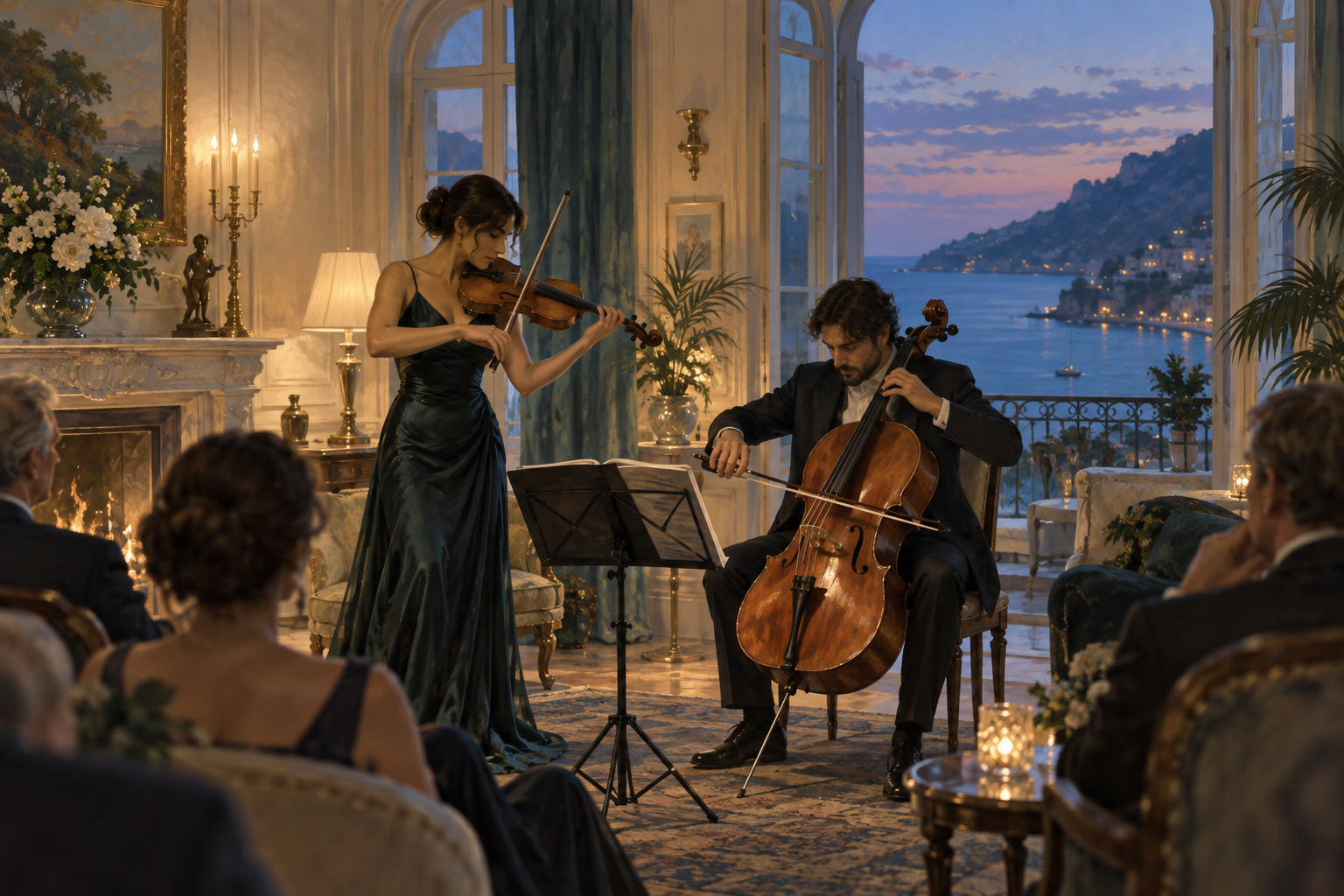
Why is Dego’s residency in the news this week?
The Strad reported the residency on September 15. Dego’s own announcement is dated June 15, so this is renewed coverage rather than a new appointment today. It lists a November 20 opening recital with Francesca Leonardi and French and Italian repertoire. Later appearances include her Piume nel Tempo project, commissioning solo works inspired by her late father Giuliano Dego’s poetry.
The artistic interest lies in the relationship between a recognisable performer and a specific body of work. A residency offers room to develop that relationship across several visits. An audience can arrive for familiar repertoire, then follow the same musician into a less familiar sound world with a reason to stay curious.
Tanya’s performer take: a personal story works best when it explains a musical decision. For an electric-violin set or a performance video, that might mean introducing the image behind a phrase, then allowing the music to answer. A long biography can delay the connection; one concrete detail can give the listener something to hear.
What is happening at The Betsy in Miami tonight?
The official Greater Miami event listing schedules FIU’s New Music Miami Festival fall concert at The Betsy for September 17, 7:30–9 p.m. Violinist Mari-Liis Pakk and cellist Jason Calloway are featured, with commentary by Orlando Jacinto Garcia. The free programme includes Garcia’s fragmented light and music by Chinary Ung, Mena Mark Hanna and Toshio Hosokawa.
For listeners, the attraction is the chance to hear contemporary writing in a small instrumental format. With only a few musical voices, exchanges of register, texture and silence can become unusually clear. Composer commentary also offers an entry point without requiring everyone in the room to recognise the names on the programme.
Tanya’s performer take: intimacy still needs planning. Presenters should protect listening conditions, sightlines and quiet transitions when programming strings in a hospitality setting. For performers, a short spoken introduction should prepare the ear for one feature of the next piece. The practical goal is a room ready to listen when the first note begins.
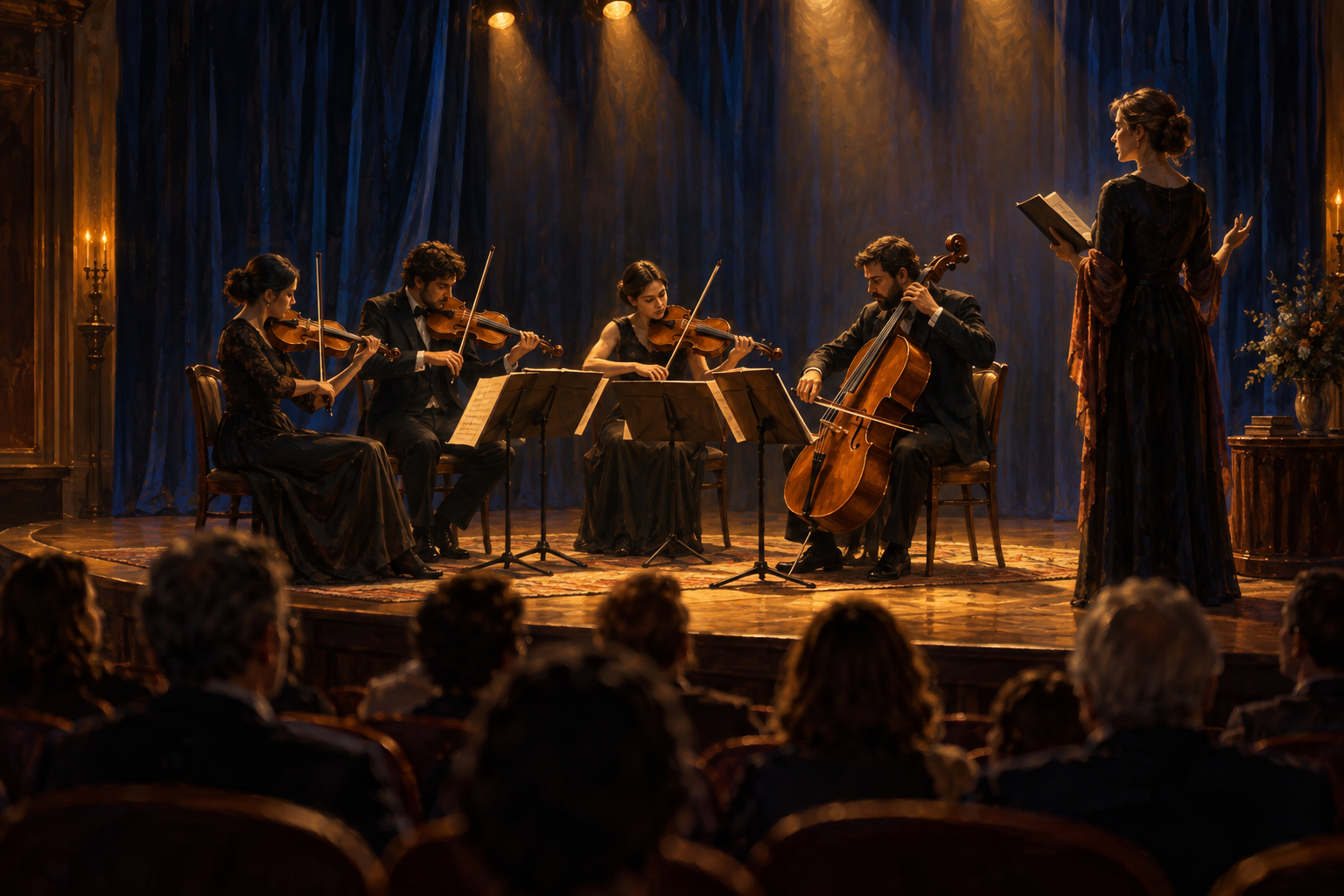
How does Ravaei place a narrator beside a quartet?
The Paramount’s September 17 programme lists Kian Ravaei’s A Free People for string quartet and narrator at 7:30 p.m. in Charlottesville. The 2026 co-commission engages with the Declaration of Independence, with Doug Schneider narrating. Amy Beach’s Piano Quintet and Fauré’s First Piano Quartet complete the listed programme. This is a preview of the scheduled performance, not a review or a claim about its reception.
A narrator changes the audience’s task: listeners move between following language and hearing relationships among instruments. That creates a different kind of pacing from an uninterrupted instrumental set. The surrounding chamber works also give the new piece a musical context, so the evening has more than a single topical hook.
Tanya’s performer take: spoken voice is another part of the ensemble. In amplified crossover work, clear diction, deliberate cueing and a sensible balance matter as much as the violin tone. Rehearsing the handover between speech and music deserves real time; it can determine whether a story feels continuous or repeatedly interrupted.
What should performers and music fans take from these stories?
These programmes suggest three distinct listening routes: a personal poetic connection, direct composer commentary and narration built into a score. None guarantees an audience response. Each does give performers a clearer question to ask before stepping onstage: what does the listener need to understand now, and what can the music reveal by itself?
- For fans: follow the official event links for current attendance details; times above are local to each venue.
- For event planners: match spoken content to the room’s acoustics and the audience’s attention.
- For performers and creators: choose one useful introduction, then leave enough space for the actual performance.