News · 2026-09-15
Violin News: Jayden King Wins Enescu, Prague Premieres Kučera and Perlman Celebrates with Klezmer
September 15 brings a confirmed competition result and two distinctive concert plans. Eleven-year-old Jayden King has won the violin section of the George Enescu International Competition; Prague is preparing a new double concerto for violin and cello; and Itzhak Perlman is scheduled to celebrate at New York’s Beacon Theatre with klezmer musicians. The result comes from Sunday’s final, while both concerts are listed for tonight in their respective cities. Tanya Strings, a world-class electric violin performer and content creator, looks at what these stories offer audiences and performers: a new name to follow, fresh repertoire and a celebration built around musical character.
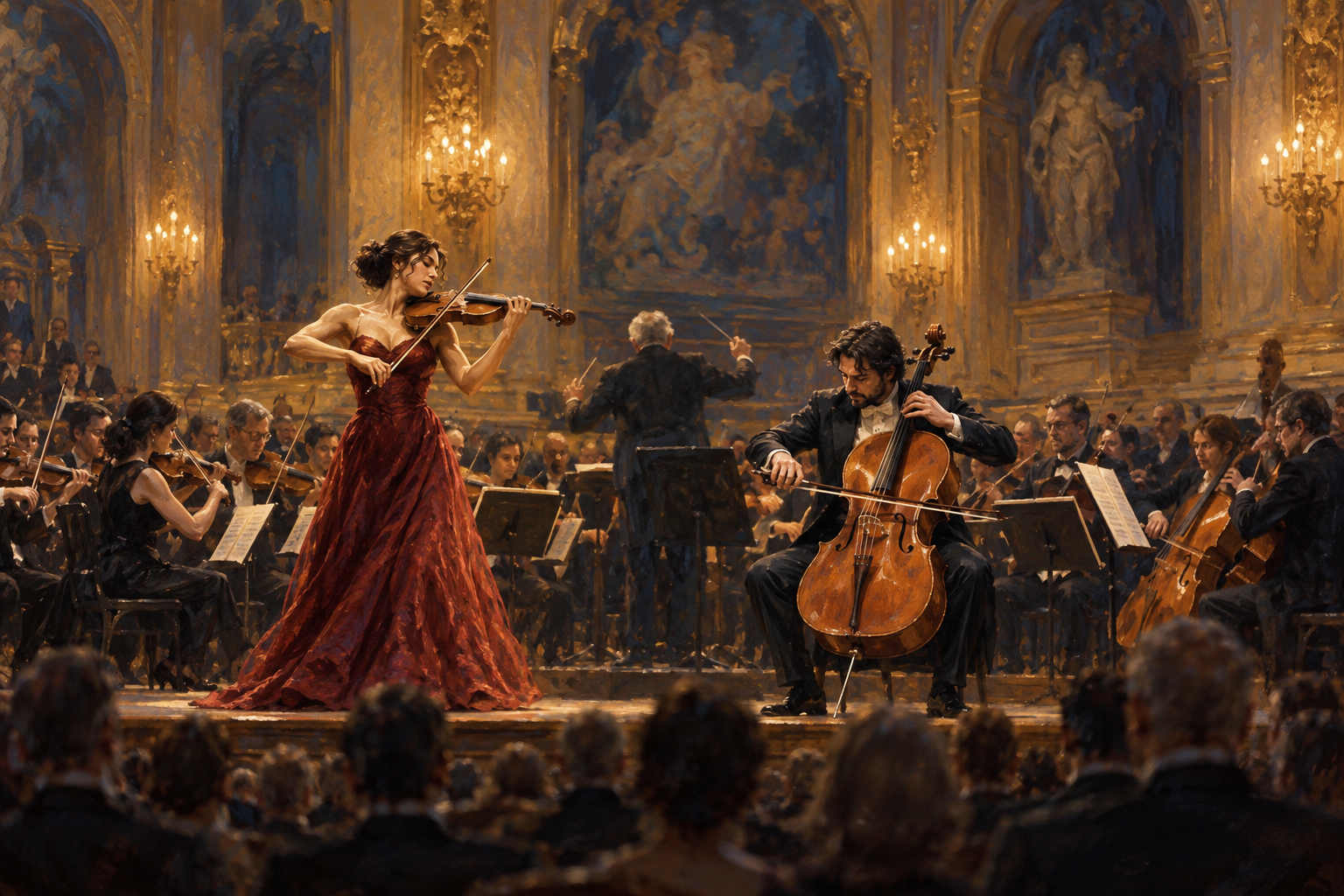
Who won the Enescu violin final?
According to the organiser’s official results, American violinist Jayden King took first prize after the September 13 final at the Romanian Athenaeum, becoming the competition’s youngest winner. Francesco Papa placed second and Eun Che Kim third. King also received the audience award and the prize for performing Lembit Beecher’s required work, Still Life with Fallen Stone.
Our earlier coverage followed the competition’s first-round selection. This result changes the story: the focus now moves from who advances to how listeners can follow the laureates’ next performances. A ranking is a useful introduction, but it leaves plenty of musical discovery ahead.
Tanya’s performer take: let the playing remain the centre of attention when a remarkable age becomes the headline. For music fans discovering a prizewinner, a complete musical movement offers more context than a few seconds of virtuosity. For creators, the challenge is to choose an excerpt that preserves a phrase’s direction and gives viewers a reason to hear the longer performance.
Event planners can apply the same care to an artist introduction. Name the achievement accurately, then give the audience an accessible musical point of entry. Avoid making every programme note a prediction about the future. A debut becomes more interesting when the audience has space to form its own response to the performer’s sound and personality.
What is premiering in Prague tonight?
The Czech Philharmonic’s event listing schedules Jan Kučera’s 2026 Double Concerto for Violin and Cello for its world premiere on September 15 at 8 p.m. in the Rudolfinum’s Dvořák Hall. Daniel Matejča and Sakura Toba are the soloists, with Elias Grandy conducting the Prague Radio Symphony Orchestra’s centenary concert. Debussy, Schulhoff and Ravel complete the programme.
This is a preview of the published programme. It does not establish how the premiere sounded or how the audience received it. The immediate interest for string listeners is the opportunity to encounter a new work through two contrasting solo voices.
Tanya’s performer take: a violin-and-cello pairing invites attention to musical conversation. In an electric string duo, that becomes a practical arrangement question: when should one instrument lead, answer or leave space? A fuller sound is not always the most communicative sound. The handover between voices can be the moment that makes an audience lean in.
For performers preparing original material, a premiere also suggests a useful presentation habit. Give listeners one concrete thing to follow, such as an exchange between the soloists, without attempting to explain every bar. For content creators, a short rehearsal conversation can introduce that relationship before a concert clip appears. These are editorial ideas inspired by the format, rather than claims about this new score.
Why is Perlman’s New York celebration worth following?
Metropolitan Presents lists Perlman’s “80ish Birthday Celebration” at the Beacon Theatre on September 15 at 7:30 p.m. The announced format brings him together with klezmer musicians, with production in association with Michael Dorf/City Winery. The event page’s displayed date is September 15, despite the September 13 wording in its URL.
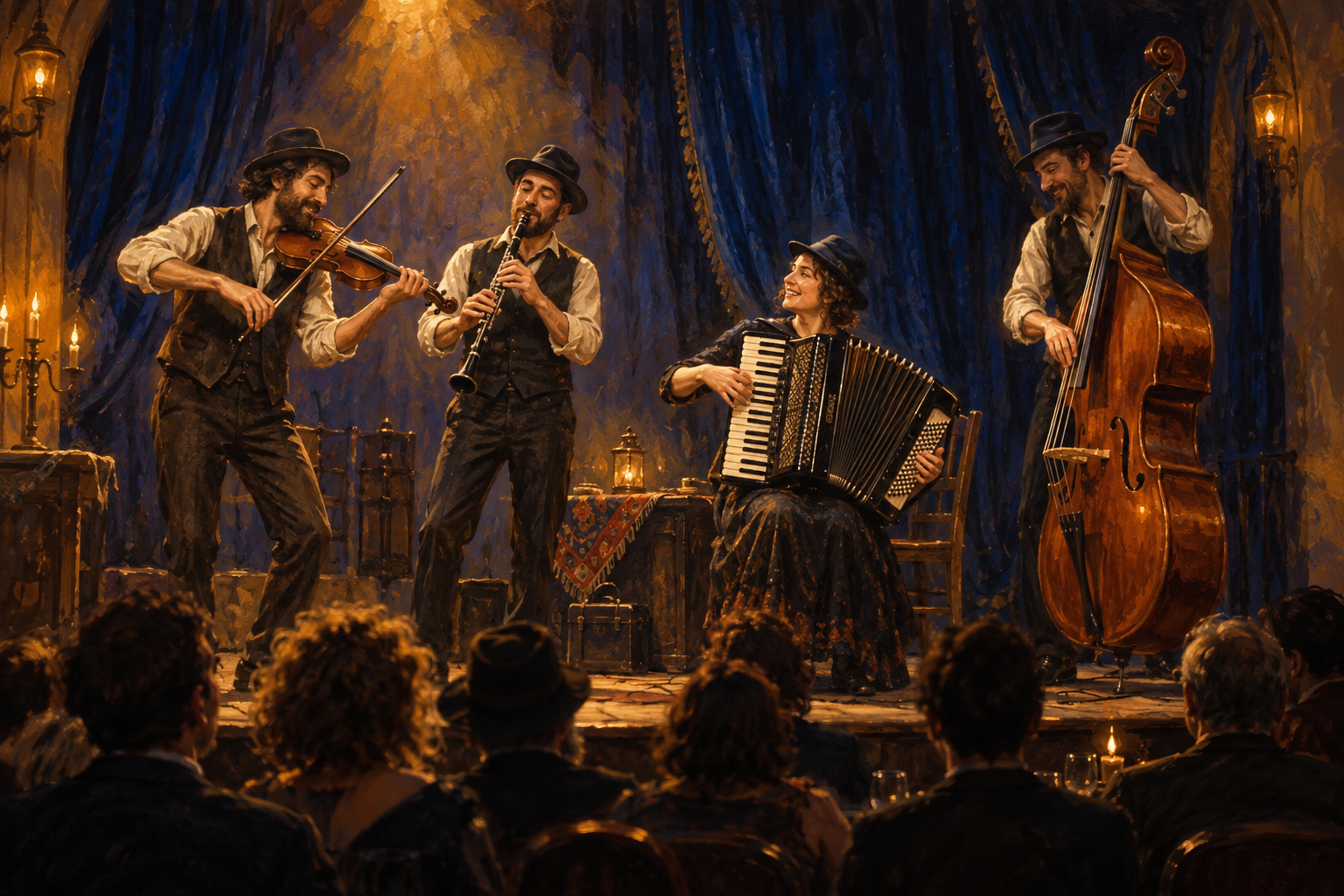
Tanya’s performer take: celebration works best when the repertoire has a clear identity. For an electric violin event set, energy can come from articulation, rhythmic exchange and the relationship between musicians. Effects and lighting can support that character, but the musical choices need to carry the invitation to participate.
For event planners, the useful question is what guests are being invited to share: focused listening, a communal celebration or a more informal musical encounter. Clear expectations help shape the running order, stage layout and introductions. This concert’s announced identity offers a specific example of how a familiar artist can frame an evening around a musical tradition.
What should listeners keep on their radar?
- Follow Enescu’s newly announced violin laureates beyond the prize headline.
- Check the Prague presenter’s listing for tonight’s premiere and any programme changes.
- Use the displayed September 15 date for Perlman’s Beacon appearance.
Today’s thread is the violin’s range of public roles: competition soloist, partner in a new score and voice in a shared celebration. Each asks for a different kind of attention, while keeping the performer’s musical identity audible.