News · 2026-08-27
Violin News Roundup: Suntory's Strings-and-Electronics Night, Vittorio Veneto's La Fenice Runway, Reykjavik's New Violin-Jazz Premiere, and Shure's Remote-Festival Push
As of Thursday, August 27, 2026, the sharpest violin signal is not one celebrity headline. It is how serious string performance is being built into the wider live experience. Tonight, Suntory Hall's "Weaving Time, Weaving Resonance" in Tokyo pairs quartet writing, a nine-string work by Ryoji Ikeda, and Thomas Ades's violin-and-orchestra Air. In Italy, the European Violin Competition in Vittorio Veneto moves from Wednesday's semi-final into Thursday rehearsals with the Orchestra of Teatro La Fenice ahead of Saturday's final. On Saturday, August 29, the Reykjavik Jazz Festival hosts a new violin-and-trumpet premiere. And on Wednesday, August 26, Shure mapped out a more immersive remote-festival future.
Follow Tanya Strings on Google
Add the site as a preferred source to see more new violin posts from Tanya Strings in Google.

Why does Suntory Hall's August 27 program matter to violinists beyond Tokyo?
Because it treats strings as part of contemporary event design rather than as prestige decoration. The official Suntory Hall Summer Festival press release frames this year's edition as a 40th-anniversary special, and the current event page shows exactly how that plays out tonight: Camille Pepin's Feuilles d'eau de Silvacane for string quartet, Ryoji Ikeda's op. 1 for nine strings, and Thomas Ades's Air for violin and orchestra with Tatsuki Narita, all under Ryusuke Numajiri and the Tokyo Symphony Orchestra. It is a useful clue about where violin can live in 2026: still carrying line and virtuosity, but now inside a larger sonic architecture of texture, electronics, and hall-scale design.
Tanya's performer take: electric and crossover violinists should study this kind of booking closely. Repertoire alone is not enough. Scene, scale, and sonic contrast matter too.
What is Vittorio Veneto proving by sending finalists toward La Fenice this week?
The most useful point is structural. The competition's official rules place the semi-final on Wednesday, August 26, orchestra rehearsals on Thursday, August 27, and the final with orchestra on Saturday, August 29. The same rules confirm that the final round is carried out with the Orchestra of the Teatro La Fenice in Venice, while the competition's 2026 edition page and rules list award concerts tied to institutions including Teatro alla Scala and Teatro La Fenice. I am inferring the broader takeaway from those documents, not from an official finalists article, because the public pages I verified today are stronger on format than on same-day names. That format still says plenty: it connects solo technique, orchestral pressure, and real follow-on engagements in one system.
Tanya's performer take: violinists should respect any competition that does more than hand out cash and applause. The real test is whether the event pushes a player toward rooms, orchestras, and repeat bookings that can actually build a career.
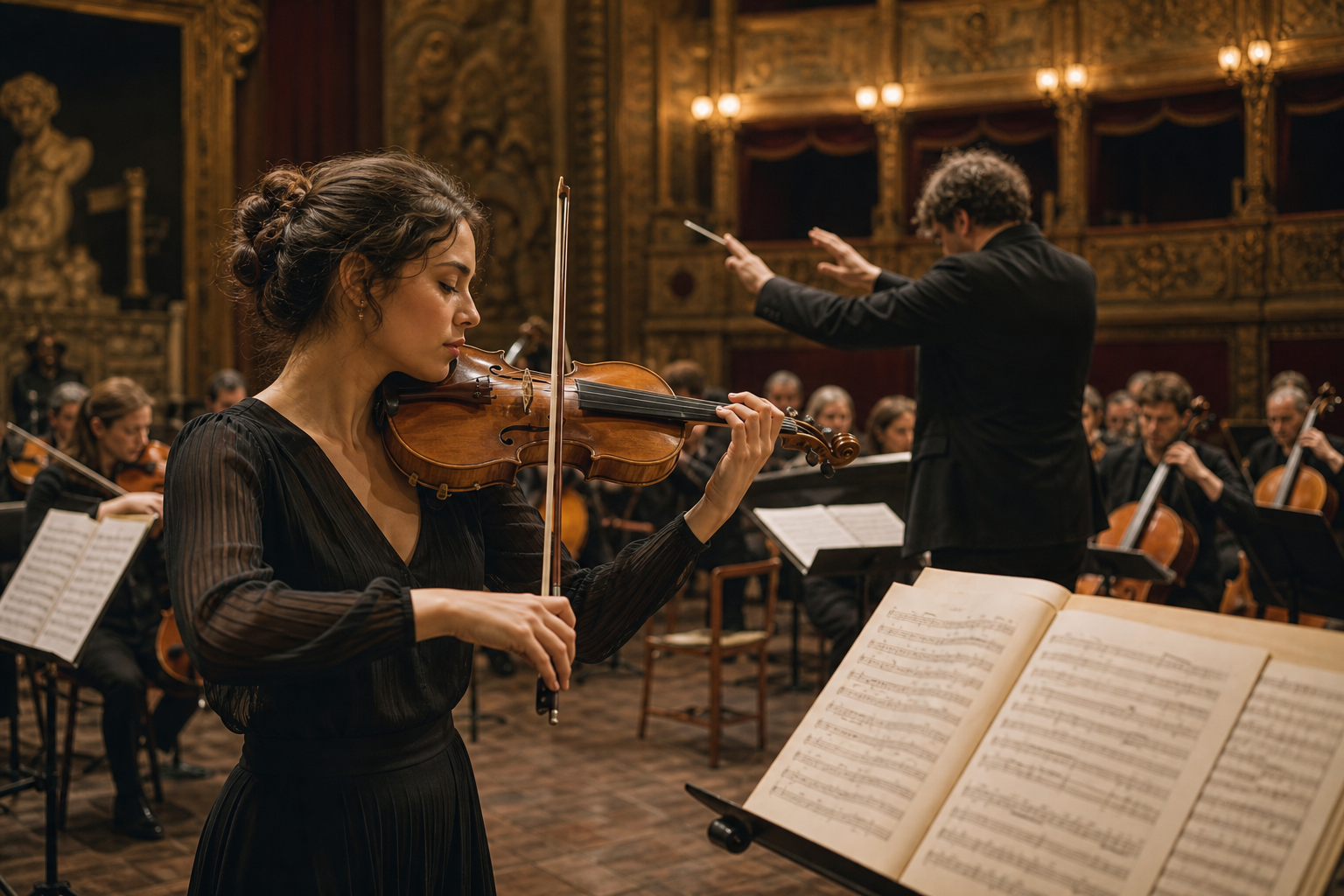
Why is Reykjavik's new violin-and-trumpet premiere worth watching?
Because it shows how violin keeps gaining relevance when it leaves stylistic fences behind without losing seriousness. The official Reykjavik Jazz Festival page says Elegy for Grindavik, a new work by Maciej Fortuna, receives its world premiere on Saturday, August 29 at Frikirkjan i Reykjavik, performed by violinist Marta Gidaszewska and Fortuna on trumpet. The festival describes the piece as a response to memory, place, evacuation, and Icelandic landscape, built through the dialogue between violin and trumpet. That matters because it is not crossover as cosmetic branding. It is site-specific, contemporary, and emotionally legible, which is a much stronger formula for audiences than generic genre fusion.
Tanya's performer take: a violin enters new scenes most convincingly when the concept is specific, the collaborators are credible, and the musical reason is bigger than novelty.
What does Shure's August 26 IBC announcement change for live-string thinking?
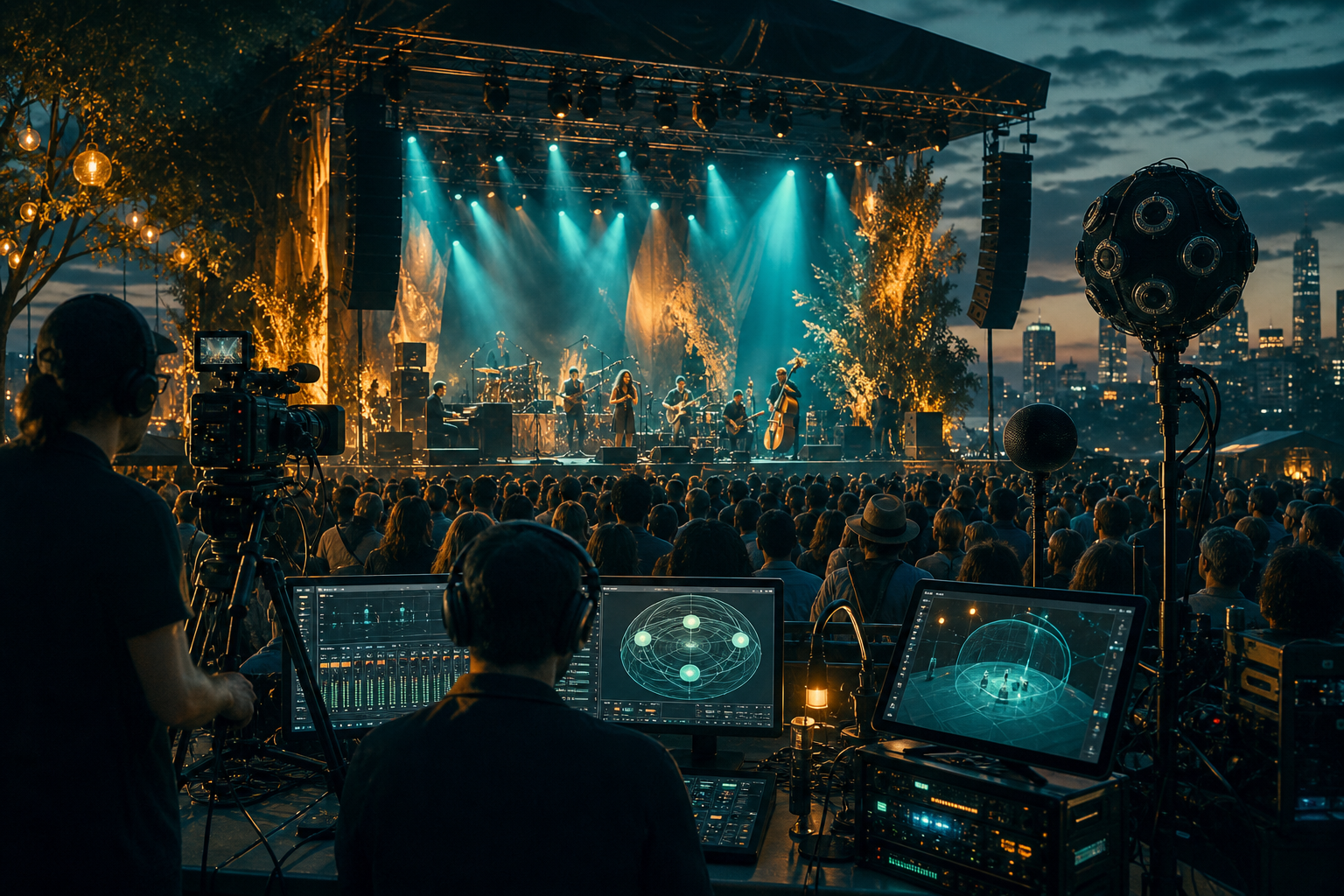
It sharpens the remote-audience question. In its August 26 newsroom announcement, Shure said it will bring five IBC Accelerator projects to IBC 2026, including IFeL: Immersive Festival Live, which explores remote presence at scale, and meCast, which explores more personalized broadcasts. Shure's own explanation is about broadcast and live production broadly, not violin specifically. My violin takeaway is an inference from that official announcement: if major audio companies are building capture and spatial workflows around immersive remote attendance, performers and planners should treat the camera-and-audio version of the show as part of the main event design.
Tanya's performer take: world-class stage work now includes understanding how your tone, movement, and monitoring translate beyond the room. The audience in front of you matters, but so does the audience hearing the set through a future-facing capture chain.
What should violinists, planners, and fans watch next?
- Watch which presenters keep placing violin inside bold contemporary formats instead of treating it as a heritage-only instrument.
- Watch competitions that connect finalists to orchestras and real engagements, because that is where career value becomes tangible.
- Watch site-specific premieres closely, since cross-genre violin work lands best when the concept has a clear place and purpose.
- Watch broadcast-audio developments now, because the next leap for live string performance will be heard both in the hall and far beyond it.