News · 2026-08-26
Violin News Roundup: Lake Champlain's Free Violin Noon, MiraTone's Budapest Week, Berlin Phil on Radio, and Sennheiser's Festival-Scale Wireless Test
As of Wednesday, August 26, 2026, the most useful violin story is about access with standards still intact. On Tuesday, August 25, the Lake Champlain Chamber Music Festival put a free solo-violin program and a same-day young-composers session in public view. Tonight in Budapest, MiraTone's French Evening sits inside an active festival-and-academy week with online options. On Saturday, August 29, members of the Berliner Philharmoniker bring chamber playing and BBC Radio 3 capture together in Edinburgh. And on the production side, Sennheiser's August 19 Spectera festival case study is a reminder that live reliability is now part of the performance itself.
Follow Tanya Strings on Google
Add the site as a preferred source to see more new violin posts from Tanya Strings in Google.
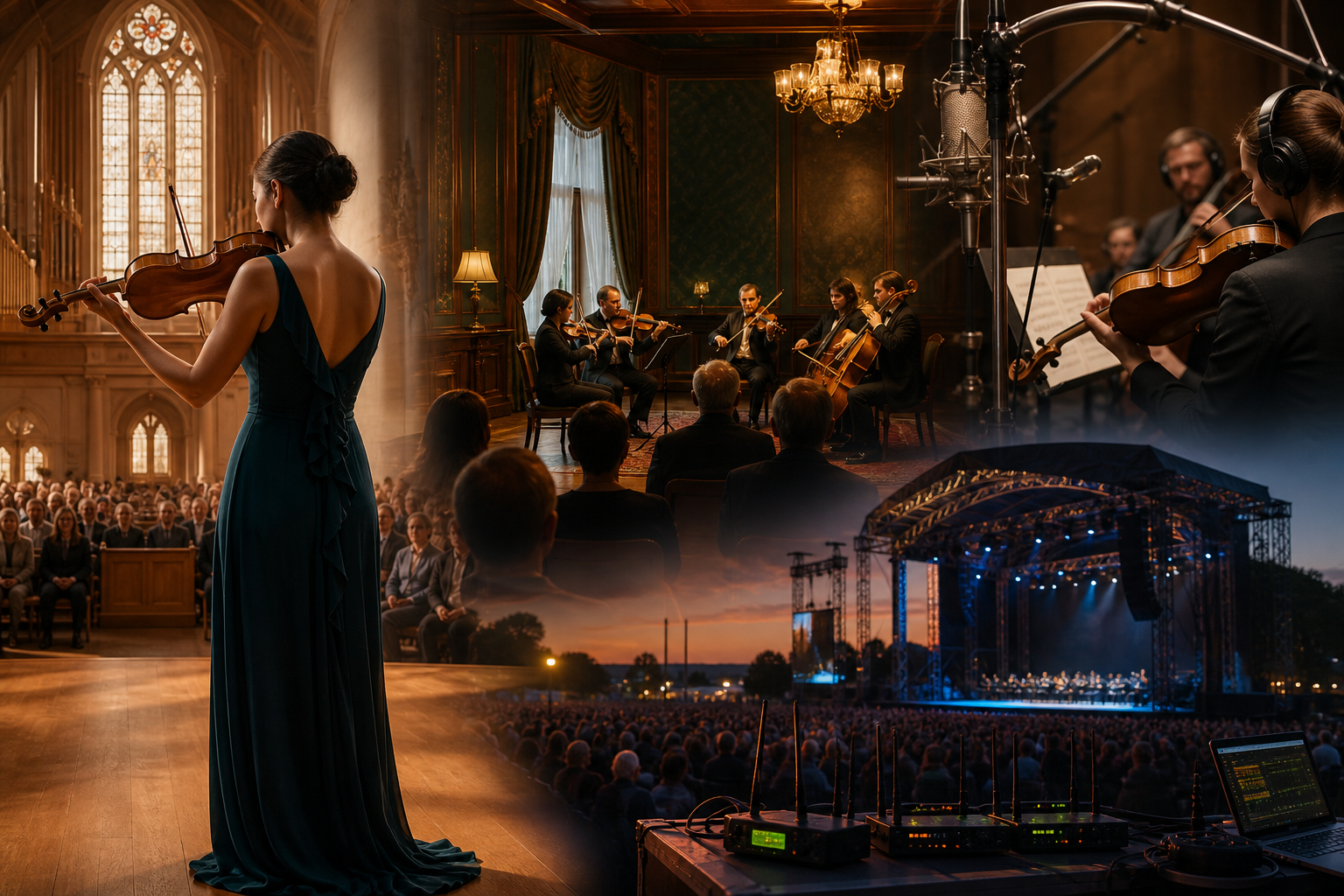
Why did Lake Champlain's free violin noon feel smarter than a side event?
Because it treated solo violin as a public magnet, not a quiet add-on. The festival's official Tuesday, August 25 page shows a free noon concert built around Ysaÿe, Perkinson, Bartók, and a world premiere of Weighless by Dai Wei, performed by Joshua Brown and Bella Hristova. On the same page, the afternoon shifts to a passholder-only young-composers sounding board. That combination matters. It tells audiences that violin virtuosity, living repertoire, and composer development all belong in one current-facing day rather than in separate institutional boxes.
Tanya's performer take: this is the kind of programming working violinists should respect. A free concert is not a downgrade when the repertoire is serious and the players are trusted to carry it without gimmicks.
What is MiraTone getting right in Budapest this week?
The big point is format discipline. MiraTone's official academy page frames August 22 to 30 as one joined-up system of concerts, masterclasses, and online participation, while tonight's August 26 French Evening page shows Miranda Liu, Bartosz Koziak, Tomáš Jamník, Adriana Ferreira, Sérgio Pires, Angela Draghicescu, and François Dumont in a Debussy-Ravel-Bonis-Boulanger program at the French Institute of Hungary. That is a strong late-August signal because it does not hide behind vague educational branding. The academy is visible, the concert identity is clear, and the violin still sits inside a wider chamber conversation.
Tanya's performer take: for presenters and content-minded artists, this model is useful. If you want audiences to care about chamber music, give them a real event shape and an intelligible artistic world, not just a list of classes.
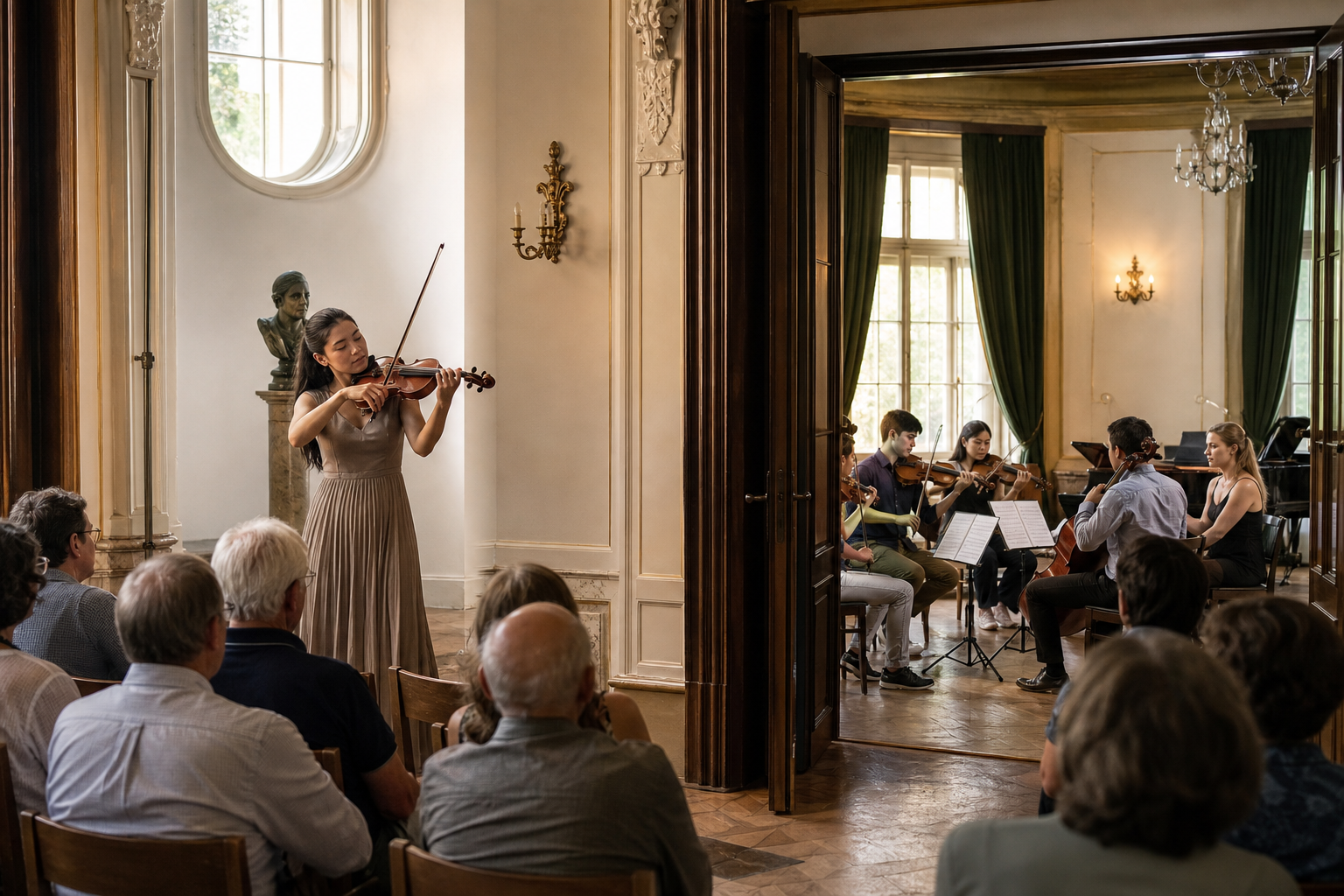
Why does the Berlin Philharmoniker chamber date matter even before Saturday arrives?
Because it gives violin visibility a second lane beyond the prestige headline concert. Edinburgh's official event page for Saturday, August 29 lists Daishin Kashimoto, Diyang Mei, Bruno Delepelaire, Wenzel Fuchs, Stefan Dohr, and Alessio Bax in Fibich, Brahms, and Dohnányi, and it also notes that the concert will be recorded for broadcast by BBC Radio 3. That makes the event more than a local morning recital. It becomes a durable chamber signal tied to one of the world's strongest orchestral brands, with radio extending the room after the last note.
Tanya's performer take: violin careers grow when chamber work is treated as a broadcast-worthy main statement, not just backstage proof that someone can also play nicely with others.
What does Sennheiser's Spectera case study actually change for electric violinists and planners?
The article is not about violin directly, but the lesson transfers. In its August 19 newsroom report, Sennheiser says Woodstock der Blasmusik drew around 110,000 visitors, presented about 150 acts with roughly 1,500 musicians across nine stages, and used Spectera plus EW-DX systems in multiple zones. The report also highlights the appeal of faster setup, dense channel handling, and preserving instrumental transient detail. I am inferring the violin takeaway from that official case study: if a modern wireless ecosystem proves itself at that kind of scale, string performers and event planners should pay attention to what it suggests about future stage movement, cleaner changeovers, and more reliable creator-style hybrid rigs.
Tanya's performer take: world-class electric violin performance is not only about phrasing and presence. It is also about whether your monitoring, RF plan, and signal path let the audience hear that phrasing under real pressure.
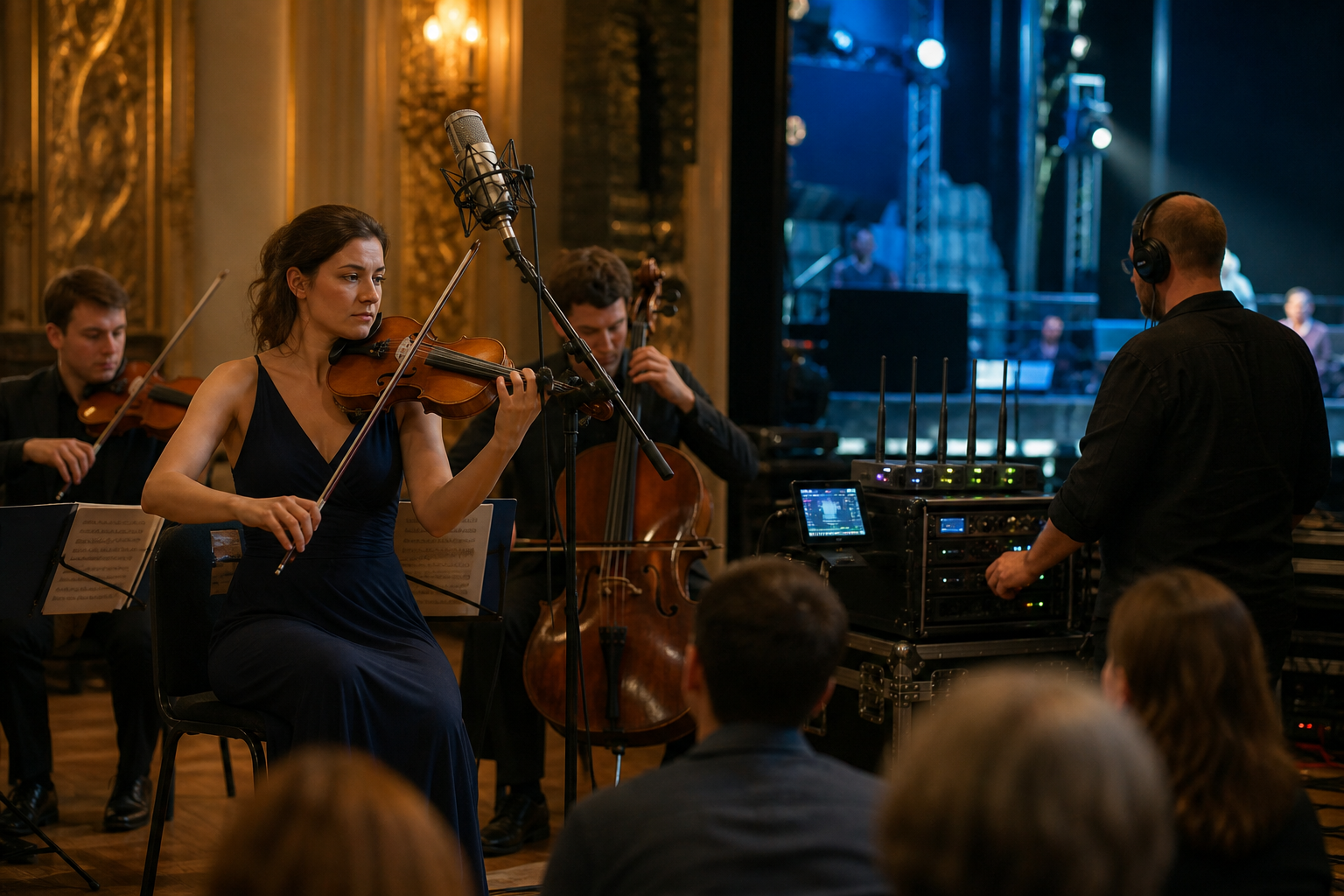
What should violinists, electric violinists, planners, and fans watch next?
- Watch which festivals keep making solo or chamber violin events free, public, or radio-visible without diluting repertoire ambition.
- Watch whether academy-linked festivals keep presenting mentorship and performance as one public story rather than two separate products.
- Watch how often top institutions use chamber broadcasts to extend artist visibility beyond the marquee evening slot.
- Watch live-audio case studies closely, because the next jump for electric violin is as much about repeatable stage infrastructure as it is about musicianship.