News · 2026-08-23
Violin News Roundup: Enescu Opens, Santa Fe Premieres Lindberg, Szeps-Znaider Lands in Gstaad, and apARTE Closes with a Youth-Strings Signal
As of Sunday, August 23, 2026, the most interesting violin story is not one single star turn. It is the way institutions are connecting elite playing, premieres, touring, and talent pipelines in one weekend. The Enescu Competition opens tonight in Bucharest with recent laureates back on stage, and its official livestream page shows just how wide the audience door now is. In Santa Fe, the chamber-music center of gravity shifts to the world premiere of Magnus Lindberg's Piano Trio No. 2. The Royal Danish Orchestra just used Nikolaj Szeps-Znaider's August 22 Gstaad stop to frame Brahms as touring infrastructure, while apARTE closes in Rio today with a more public, more side-by-side model for young string players.
Follow Tanya Strings on Google
Add the site as a preferred source to see more new violin posts from Tanya Strings in Google.

Why does the Enescu opening concert matter beyond the gala itself?
Because it packages violin excellence as an ongoing public story instead of a closed-room competition ritual. The competition's official opening-concert page for Sunday, August 23, places Mayumi Kanagawa, Yo Kitamura, and Roman Lopatynskyi back at the Romanian Athenaeum with Cristian Măcelaru and the Romanian Radio National Orchestra in a program that includes Diego Santamaria's The Stone and the Ivy, Dan Dediu's Brahmsodia, and Enescu's First Symphony. The official livestream schedule also says the event will run across TVR Cultural, TVR 1, Radio România, the festival site, and medici.tv. That reach matters. It turns one competition opener into a proper audience funnel for players, presenters, and fans who may not be in Bucharest at all.
Tanya's performer take: this is what world-class positioning looks like in 2026. Great playing is still the core, but the event becomes much stronger when the institution makes the pathway visible, watchable, and easy to follow from anywhere.
What makes Santa Fe's Magnus Lindberg premiere a stronger signal than a routine new-work listing?
Scale and placement. Santa Fe's August 23 Schubert & Brahms page puts Lindberg's Piano Trio No. 2 right in the center of the evening, with Juho Pohjonen, John Storgårds, and Anssi Karttunen giving the world premiere between Schubert and Brahms. The festival also notes that this trio is the first of ten commissions supported by Susan and Conrad De Jong. That is not filler programming. It is a reminder that premium chamber institutions still know how to frame a new score as the reason to show up, not as the polite modern item audiences wait out before the familiar closer.
Tanya's performer take: performers should notice the sequencing. When a presenter places new music between two trusted anchors and backs it with first-rate names, the premiere feels like a headline, not a homework assignment.
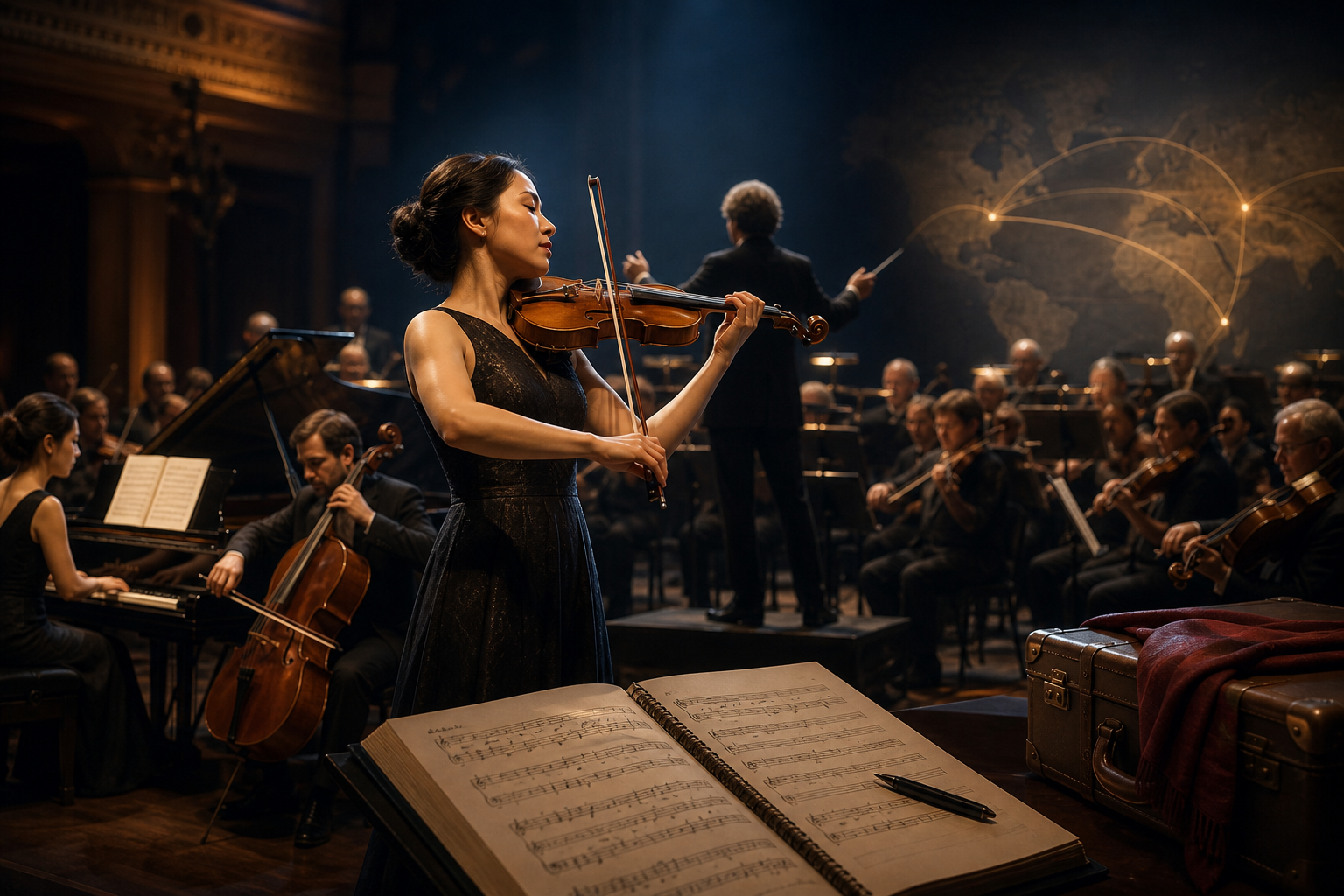
What did Nikolaj Szeps-Znaider's August 22 Gstaad stop show about violin touring?
That big-ticket violin touring still works best when the message is simple and the repertoire does real work. In the Royal Danish Orchestra's official July 28 press release, the ensemble laid out a concise August route: Amsterdam on August 21, Gstaad on August 22, Marie Jacquot on the podium, and Szeps-Znaider as Brahms soloist before Prokofiev's Romeo and Juliet highlights. That is a clean proposition. It gives audiences one immediately legible violin stake inside a broader orchestral program, and it lets the orchestra's history and scale support, rather than bury, the soloist's role.
Tanya's performer take: for artists and planners, this is a useful touring lesson. You do not always need a concept-heavy pitch. Sometimes one major concerto, one trusted soloist, and one confident route through top halls is the entire strategy.
Why is apARTE's closing day worth watching if you care about the future of strings?
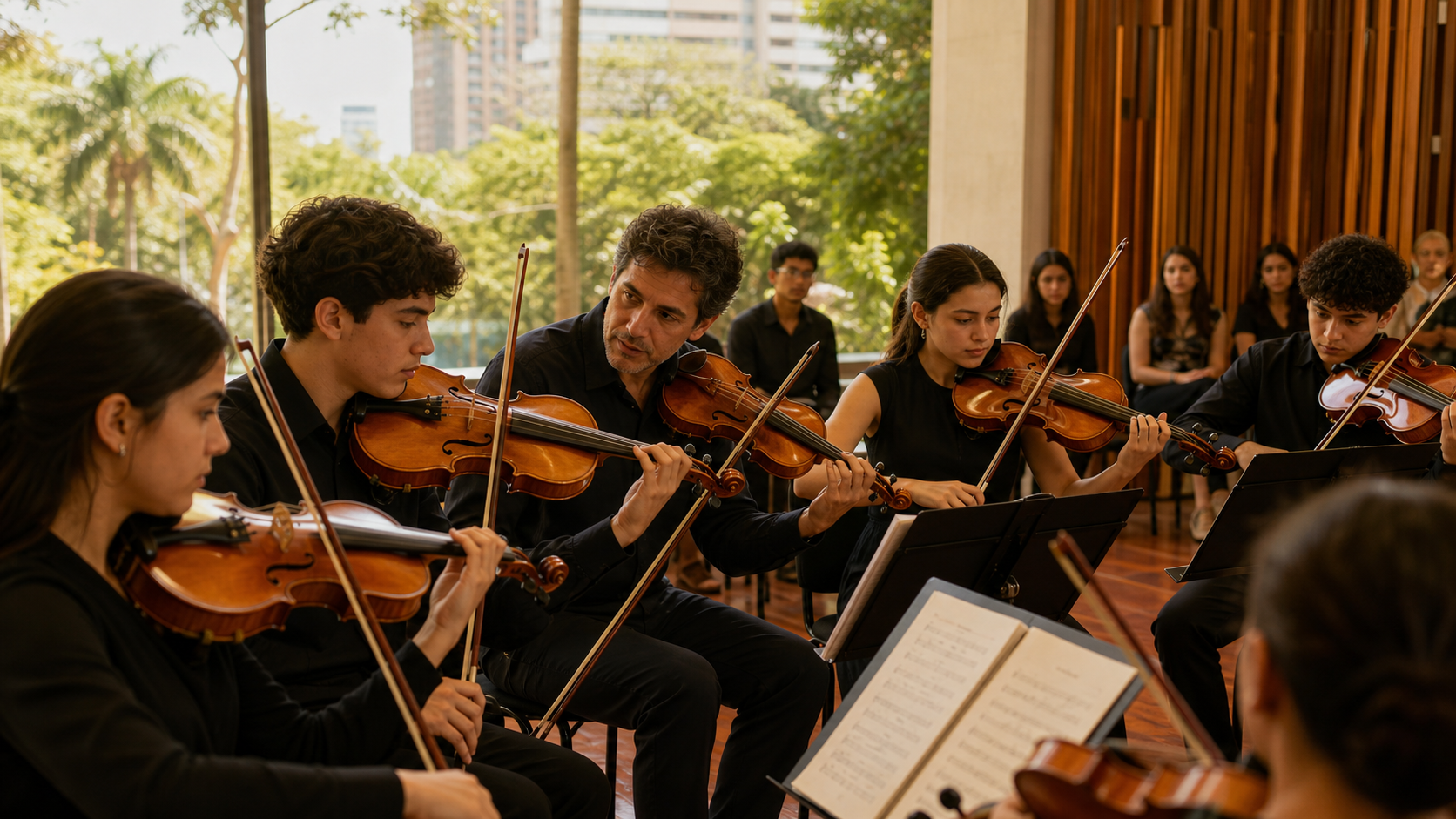
Because it treats talent development as public performance, not private training. apARTE's official site describes the festival as an international chamber-music platform built around young Brazilian string players growing on stage with invited artists. It highlights full scholarships, free public concerts, and outreach activity, then closes the 2026 edition on Sunday, August 23 at Sala Cecilia Meireles with Mozart, a work by Pereira, and Beethoven. That matters because the violin world keeps talking about pipelines, but apARTE shows one concrete model: scholarship support, visible programming, and side-by-side stage time rather than generic education branding.
Tanya's performer take: if you want more serious young players later, build more serious public environments now. The strongest youth projects do not make students feel separate from the real stage. They move them onto it early, with standards attached.
What should violinists, planners, and fans watch next?
- Watch how Enescu converts one opening night into weeks of violin visibility, because access now matters almost as much as prestige.
- Watch whether more chamber presenters give premieres the central slot instead of hiding them in mixed programs.
- Watch orchestra tours that keep the violin message crisp, because simple programming often travels better than overloaded branding.
- Watch youth festivals that let emerging players perform in public-facing contexts, because those models tend to build stronger long-term audiences too.